

Managing Grasslands for Sharp-tailed Grouse, Prairie Chickens, and Other Upland Birds
Practical strategies for using fire, grazing, and vegetation management to create thriving grassland habitat for upland birds
When people think of grasslands, the picture that comes to mind depends on where they live or hunt. Some may imagine native prairies like those of the Flint Hills of Kansas or Sandhills of Nebraska. These areas have never been touched by the plow and represent some of the very rare, intact remnant native grasslands remaining in the United States. For others, the Dakotas’ extensive fields of brome may come to mind, while for many, a Conservation Reserve Program (CRP) field would pop into their head. No matter your mental picture of a grassland, all of these landscapes can be managed for upland birds.
All of these places are grasslands. However, for the sake of this article, we will focus on habitat management of large grassland landscapes, native and non-native alike. In another article, we will delve specifically into CRP management. If you haven’t read the opening article of this four-part series, “Upland Game Bird Habitat Requirements and Management Tips,” please read it before continuing on. It is a primer explaining basic upland bird habitat needs that will not be covered here.
This article is a deeper dive into grassland management techniques that landowners can employ in hopes of increasing bird numbers on their farm or ranch.
Sharp-tailed Grouse, Prairie Chickens, And More Live in Grasslands
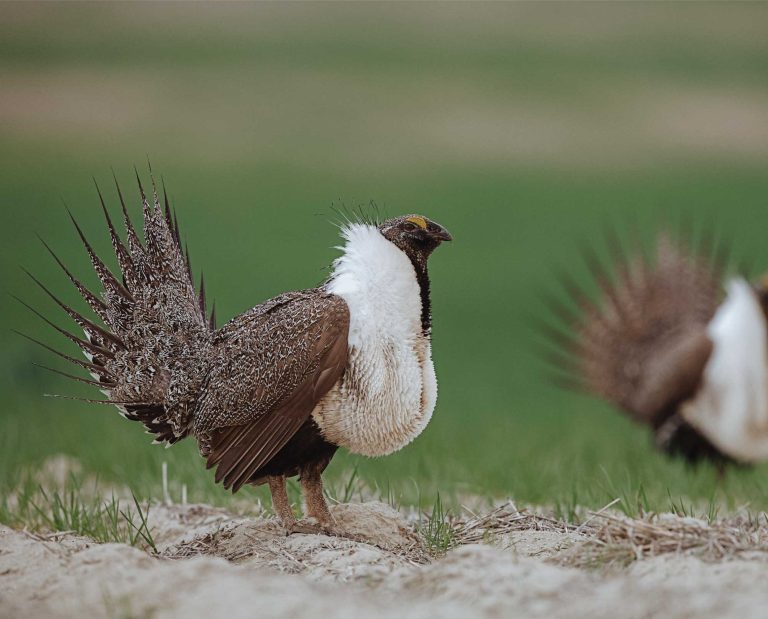
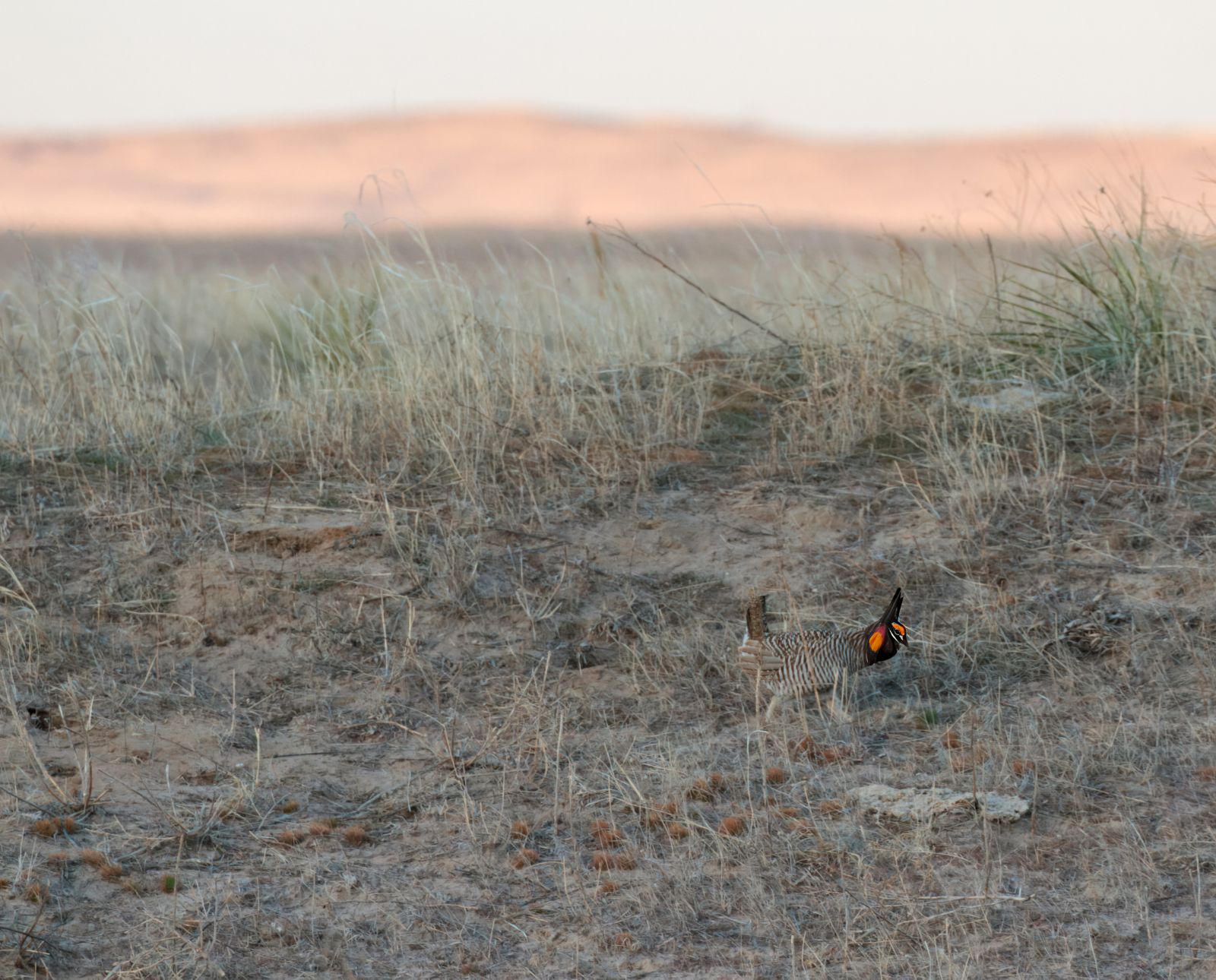
The techniques recommended below are intended to help improve the production of sharp-tailed grouse and prairie chickens, and to a lesser extent, Hungarian partridge, pheasants, and bobwhite quail. Prairie grouse like sharptails and chickens require expansive areas of diverse grasslands. By expansive, we mean thousands of acres of grasslands.
The term grassland can be misleading as it suggests that “grass” is the most important component. However, the reality is a diversity of broadleafed plants interspersed amongst the grasses, along with some scattered shrubby cover, are what makes grasslands function at the highest level.
Large grasslands also produce Huns and pheasants, but these areas do not typically maximize their population numbers. Ideal habitat for these species is usually a mix of grasslands interspersed with cropland. Bobwhite quail thrive in all kinds of habitats, and large grasslands in places like Oklahoma and Texas are no exception.
How Rainfall Shapes Grassland Habitat
If we consider grasslands from North Dakota all the way to West Texas, the amount of precipitation makes a significant difference in the plant diversity and density. Additionally, the length of the growing season differs by several weeks, making the habitat vastly different. However, all upland birds residing in grassland habitats have the same requirements for nesting, brood rearing, and escape cover.
In the northern latitudes or higher rainfall areas (35+ inches annually), nesting cover is rarely a limiting factor. Grass is abundant and there are plenty of places to hide a clutch of eggs as long as the grassland isn’t overgrazed, or the entire landscape burned all at once.
READ: How Rainfall Influences Quail Populations
Brood-rearing habitat is typically the biggest issue in these landscapes. Grasses thicken, limiting the diversity of leafy vegetation while crowding out much-needed bare ground for chick mobility. On the other hand, extremely dry grasslands found in western Oklahoma or Texas often struggle to produce adequate vegetation to even allow for nesting attempts during droughty years.
The amount of precipitation is something landowners cannot control. But considering the average conditions based on average rainfall needs to be factored into management plans. A prescribed fire in eastern Kansas may only provide ideal brood cover for 12 to 18 months, whereas a prescribed fire in western Kansas may change the vegetation structure for four or five years, even without a drought.
Types of Grasslands
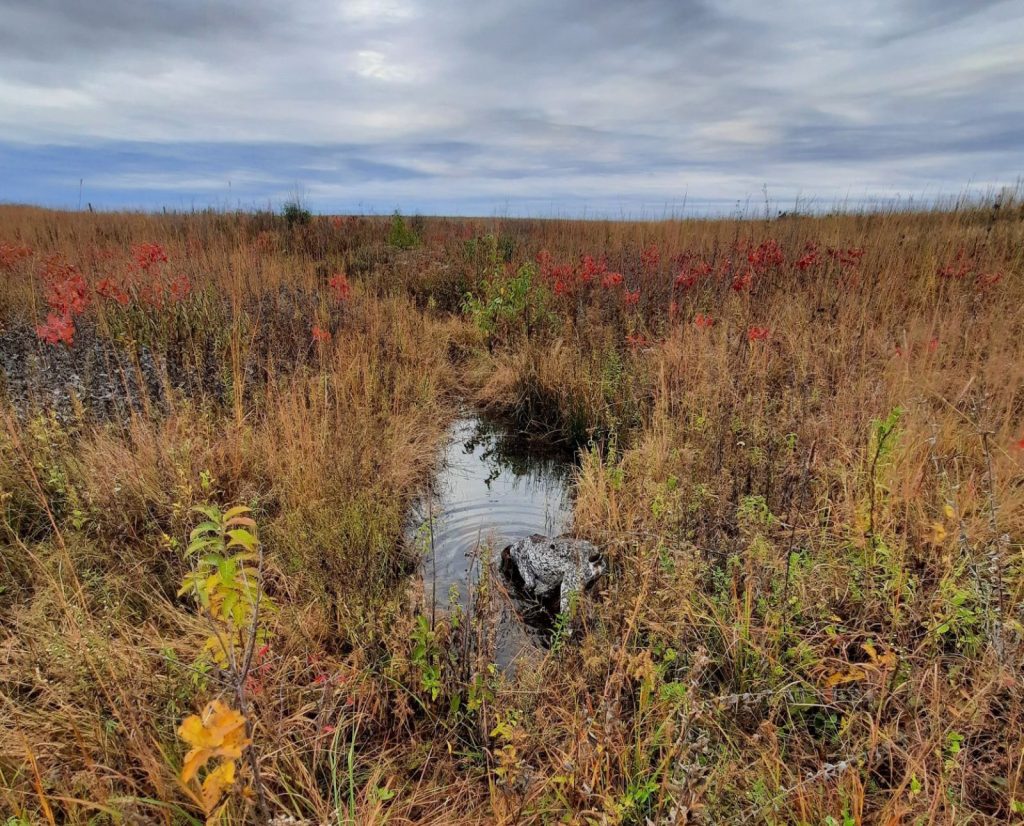
If you own or manage a grassland that consists of native vegetation, then you are well on your way to quality habitat. In northern states where brome abounds, sharpie and chicken production can be successful, despite the fact that brome is non-native. However, most other non-native grasslands are poor for upland bird production.
READ: Important Plants for Sharp-tailed Grouse
Fescue dominates much of the eastern United States grasslands. In the South, bermuda or bahiagrass covers countless acres where native vegetation once existed. Fescue, bermuda, and bahia grasses form a blanket of sod across the ground, leaving little room for forbs and bare ground. This results in a nearly impossible situation for broods to be successful. Most native grasses grow in clumps, leaving space between plants for forbs to grow and bare ground to persist.
One of the quickest ways to improve game bird habitat where non-native grasses dominate is to convert those acres into desirable species. This can be accomplished in a variety of ways. Oftentimes, simply spraying the non-native grass with an appropriate herbicide and allowing the seed bank to respond will yield a flush of native vegetation from seeds that have been laying in the ground for years, waiting for an opportunity to thrive. In other cases, spraying out the undesirable grasses can be followed by planting a mix of native forbs and grasses.
Keep in mind that site preparation is important prior to spraying. It is critical to ensure good chemical contact with the vegetation. Burning or haying can be an effective way to reduce the vegetation height and thatch. Allow the area to regrow, then spray when the vegetation reaches eight to 12 inches in height. Fescue, a cool season non-native, can easily be removed with any herbicide containing glyphosate. Warm season non-natives like bermuda or bahia need a little more kick, so herbicides containing imazapyr are preferred.
When ready to plant native forbs and grasses, we typically recommend landowners utilize local ecotype seed and plant more forbs than grasses to maximize the attractiveness for game bird broods. In brome country, the interseeding of alfalfa can spike brood success because alfalfa attracts an enormous number of invertebrates.
The Role of Fire and Grazing in Grassland Management
All grasslands evolved with disturbance. Historically, fire and grazing shaped these landscapes. Fire kept trees at bay and grazing animals created a mosaic of vegetation structure and plant diversity. Today, both fire and grazing can be used separately or in combination with one another to create prime habitat for upland birds.
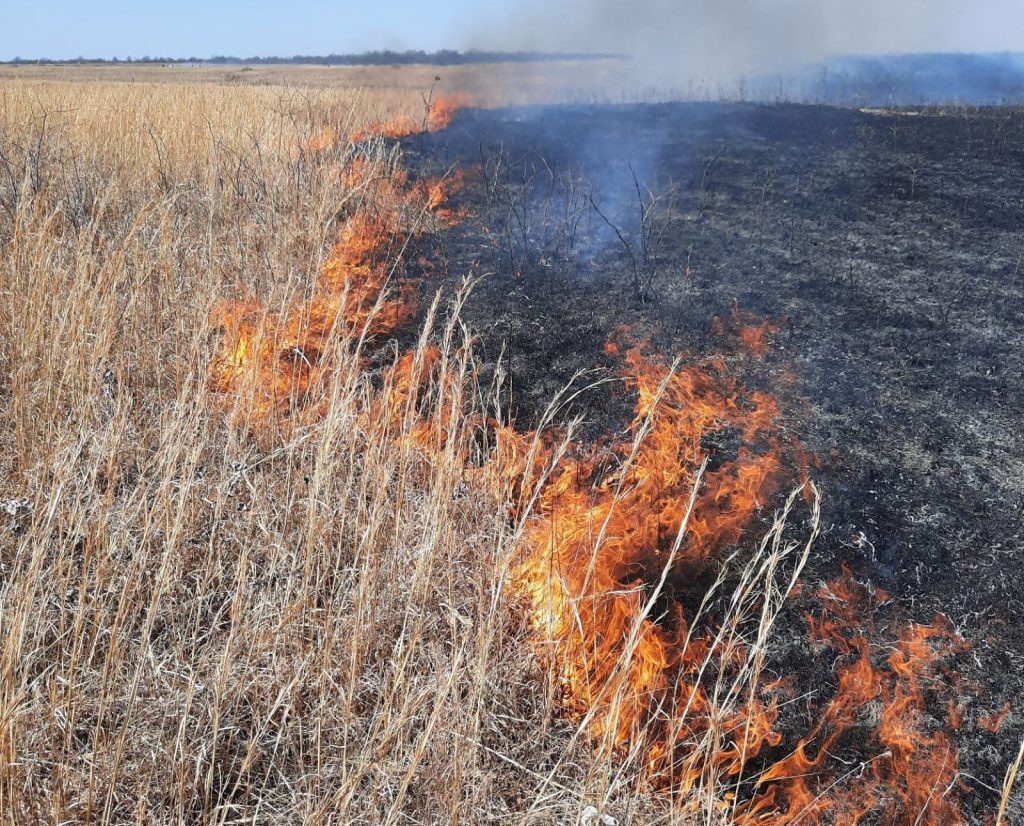
When using prescribed fire, the frequency of its use is the most important consideration. The time of year of a fire can also make a difference in the subsequent vegetation response. Early spring burns tend to increase grass vigor whereas fall or winter burns can reduce grass vigor, thus increasing forbs. Our quail research in Missouri showed broods spent the majority of their time in grassland areas that were either burned or grazed within the previous twelve months. Areas that were idle for longer than a year received minimal use, likely due to the vegetation becoming too thick with limited bare ground.
Prescribed Fire
If you are a landowner considering how often to utilize fire, you must routinely inspect the habitat condition to identify when the grass has become too dominant or bare ground too scarce due to excessive thatch. As a general rule, areas that average 35+ inches of rainfall annually need to be burned at least once every three years. Areas where annual rainfall averages less than 20 inches can use a five or six year fire return interval.
Burn unit size must also be considered. Keep in mind birds cannot nest in a burn unit during the early portion of the breeding season since there will not be adequate vegetation to hide a nest and the incubating adult. Birds will utilize unburned units to nest and then prefer burned units for brood rearing. The shorter the distance birds have to relocate from the nest to quality brood rearing habitat, the better chance the brood gets a successful start. In higher rainfall areas where the burn interval is shorter, smaller burn units are preferred. Smaller is all relative. If managing a 10,000-acre grassland, burn units of 500 acres might be appropriate, whereas 100-acre burn units or smaller would be preferred on a 1,000-acre grassland.
Prescriptive Grazing
Grazing is another option for creating disturbance in grasslands in an effort to improve upland bird habitat suitability. In many parts of the country, grazing adversely affects habitat quality due to excessive stocking rates. This isn’t because grazing itself is bad, rather it’s the intensity of the grazing that dictates the amount of vegetation removed and how much remains.
We often call our grazing prescriptions “conservation grazing.” This is where we utilize cattle to shape the habitat in an effort to maximize usable space for game bird production, rather than maximizing cattle production. Don’t misunderstand, there is money to be made from the cattle used in conservation grazing, but the top priority is habitat management, not cattle profits.
Grazing provides flexibility to adjust the stocking rate or grazing duration within a growing season based on environmental conditions, particularly rainfall. If the summer turns out abnormally dry, cattle can be removed completely or the stocking rate reduced to prevent overgrazing. On the contrary, if a wet summer results in thick vegetation, the herd can be left on site into the fall to reduce grass dominance, which will result in more forbs the following spring and summer.
Using Fire and Cattle Together
The ultimate goal of conservation grazing is to create a variety of vegetation heights, reduce grass dominance, and remove thatch, thus increasing bare ground. We typically accomplish this by grazing entire pastures as one unit, not with rotational or high intensity grazing regimes.
Burning a portion of a pasture in the spring can more dramatically create a mosaic of vegetation heights. The cattle will spend more time grazing the regrowth in the burned area, thus grazing it shorter, creating quality brood cover. They will spend less time in the unburned portions, thus leaving those areas for ideal nesting cover. We utilize this technique on several grasslands in our home state of Missouri.
Grazed areas should be monitored regularly. In general, vegetation should not be grazed below shin height. If portions of a pasture become overgrazed due to the location of water or other features that attract cattle, that’s acceptable and actually desirable. These shorter grazed areas often provide lekking areas for prairie chickens and sharptails and many songbirds require this type of habitat as well.
Shrubs and Woody Plants are Escape Cover
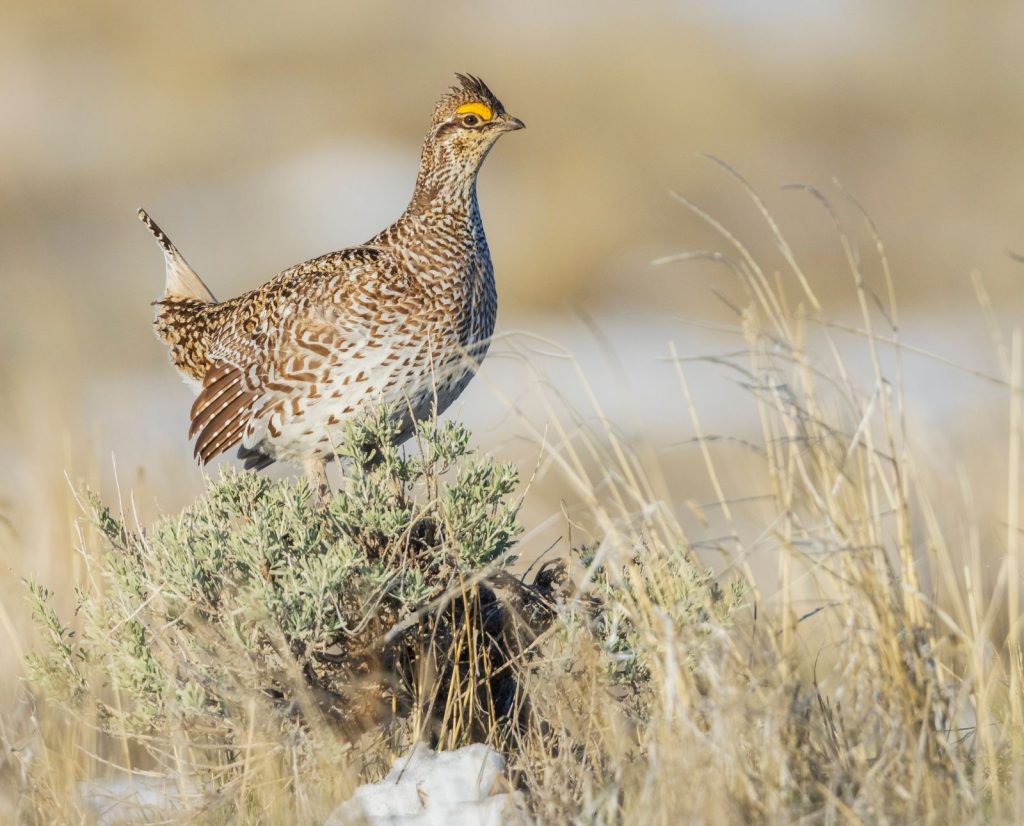
The final piece of the puzzle is providing woody or brushy cover for birds to use as escape cover. This escape cover is used for shade in the summer, refuge from harsh weather in the winter, and escape predation year-round. In some cases, stiff herbaceous vegetation can serve as a surrogate for woody escape cover, like a patch of wild sunflowers or kochia.
Species like quail or Huns need a considerable amount of escape cover distributed across the landscape. For prairie grouse, escape cover is also important, but the quantity needed is much lower than necessary for quail. In the north, species like snowberry serve as escape cover and winter food for sharp-tails. In other areas, wild plum and dogwood are the primary shrub thickets that game birds utilize. In arid environments, shinnery oak, young mesquite thickets, or even prickly pear cacti can provide much needed escape cover for quail.
Regardless of the species, the management of escape cover can be challenging. In many areas, excessive woody encroachment threatens grasslands. Cedar trees across much of the Midwest have destroyed the functionality of thousands of acres of grasslands for the birds that depend on open spaces. Removing unwanted trees is a basic component of grassland management. Even shrubby species can take over in areas with significant rainfall—sumac and dogwood can be very aggressive. Scattered thickets of these species are desirable, but widespread dominance is not.
Prescribed fire or chemical treatments are sometimes required to keep excessive shrub coverage in check. On the contrary, some grasslands lack the necessary escape cover needed to optimize game bird production. Protecting developing thickets from destruction by cattle or fire can allow them to reach a functional height and retain the ability to resprout after a fire.
Evaluate Your Grasslands and Take Action
In the end, each property must be evaluated based on its current and potential future condition. Landowners and managers must assess the limiting factors on their property or each management unit. On some properties, multiple issues are limiting game bird production. On others, just one component needs adjustment. More often than not, when we tour private farms and ranches, quality brood-rearing cover is the most limiting factor. Maintaining quality brood-rearing habitat takes more work than managing the other facets of game bird habitat, which is likely why it’s the first thing to fall into an unusable state.
Get out and do some habitat evaluation. Consider all the components necessary for success and identify the deficiencies in usable habitat. Make a plan to correct those deficiencies sooner than later. The satisfaction of hunting birds on land where you successfully manipulated the habitat and saw a positive response is a feeling you won’t soon forget.