


Helping Aging Hunters: How to Go Upland Hunting with an Elderly Parent
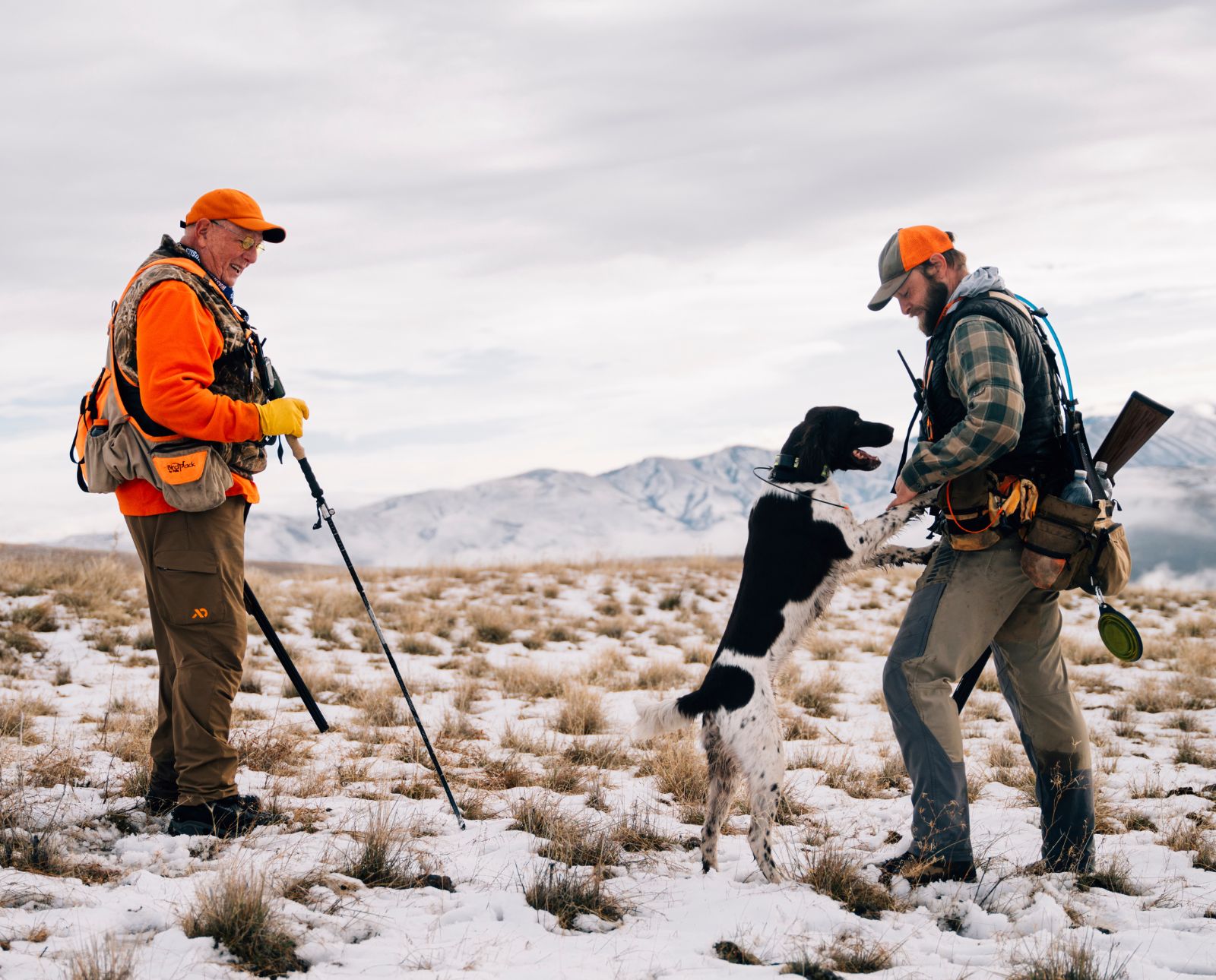
Younger generations can help keep the uplands accessible to aging bird hunters with mobility and health restrictions
Watching a loved one get older is often hard enough on its own. It’s even harder when that person is also an avid lover of the outdoors and can no longer take part in hunts that they may have spearheaded a decade ago. These difficult situations make for many moments spent pondering how we extend our time spent afield together into our later years.
My own journey into this subject started when my father suffered a debilitating series of seizures while in camp a few years ago. It was a harrowing experience for all parties involved. Now, at seventy years of age, he’s begun to slow down, unable to do the beloved small game hunts that used to involve numerous miles under boot in strenuous terrain. Last year, it really became evident that Dad is slowing down physically, but that doesn’t mean our days afield have to come to an end. So, this season I’m taking the initiative to make sure that he stays active and we still have plenty of hunts left together.
Before we get any further, I want to point out that the following suggestions are subjective to my personal experiences; everyone’s will be slightly different, sometimes a great deal different. With that said, here’s how I’m making more opportunities to take my 70-year-old father hunting.
How to Take an Elderly Person Upland Hunting
- Choose easy-access hunting spots.
- Use lightweight shotguns and reduce pack weight.
- Assign roles like blocker instead of pusher and take frequent breaks.
- Carry a first aid kit and know CPR.
Choosing Accessible Hunting Spots When Hunting with an Elderly Parent
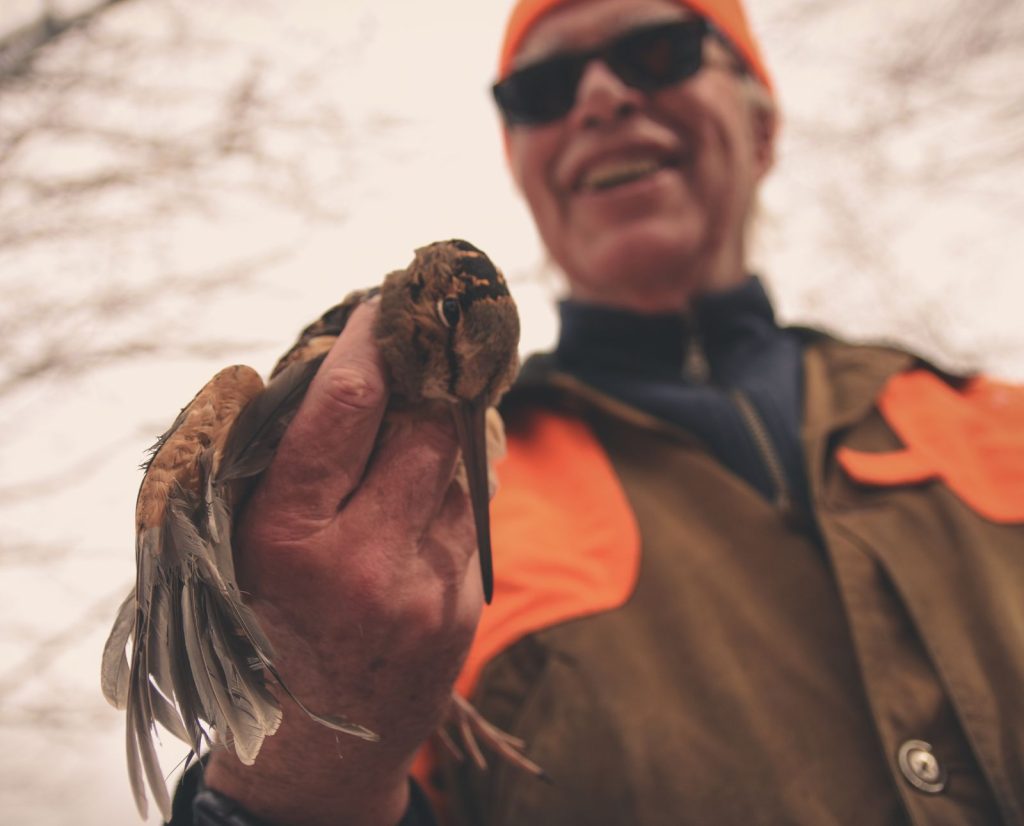
Making sure that my dad can get into and out of places looks a little different than it did a decade ago. Because of that, accessibility into hunting spots has significantly changed how and where we go hunting. Now that I am planning hunting trips for a senior, access is everything. It’s a big reason why I now lean more toward waterfowl hunting as well. Even if it involves a canoe, which it often does, my dad can paddle a lot better than he can cover miles by foot. In that regard, we both reach a collective agreement on his limitations while still being able to get out and have a great time.
Additionally, now, prior to him coming out with me, I tend to scout locations ahead of time rather than show up with no prior knowledge. This way, I can scope the place out, understand whether his physical abilities will be able to get him into, and even more importantly, out of, that particular location. I’ve also begun to knock on the doors of more landowners in rural areas where opportunities to hunt small game are a little closer to home. Private lands are also easier to get in and out of.
We also spend more time these days chasing things like grey squirrels and cottontails. In the places where we hunt, these two species are very common. They don’t require a lot of bushwhacking to reach. It also gives my father the opportunity to use his 20-gauge a lot more, instead of hauling a balky twelve around, which he did for years.
Lightweight Gear for Hunting with an Senior Citizens
Now is also a good opportunity to bring up the weight of shotguns and backpacks. My dad still has no issue with a vest full of shells, a water bottle, and maybe a couple grouse tucked away in the back. But anything heavy, like extra clothing, food, or water, is always packed away into mine. If we’re committed to doing a long walk, I carry extra electrolytes for him, too.
The overall weight of his shotgun is important, too. While he now exclusively hunts with twenty gauges, I’ve begun to explore the pros and cons of 28-gauge shotguns with him, if for no other reason than to shave a bit of weight off his shoulder.
Communicate Physical Limits While Hunting with an Aging Parent
My dad can be as stubborn as a mule. He may or may not suffer from a serious case of FOMO (Fear Of Missing Out). Sometimes, he won’t express just how much a certain walk affected him until one break turns into six before we even reach where we’re supposed to be hunting.
Communication in any relationship is critical. In this situation, it’s no different. If we’re at our hunting camp and the plan is to trudge into some awful spot too difficult for my dad to access, I’ll bring it up with him in private. I ask him how he feels about going there, and mention that he should not feel any obligation to take part in it. However, this could, in certain situations, lead to FOMO. Regardless of how I’m feeling, I always make sure to plan an afternoon or evening hunt closer to camp with my dad.
WATCH: Names For the Hills: A Father and Son Hunting Trip
Let’s say we’re out pushing cottontails around. I’ll set my father up as a blocker (someone with a shotgun stationed at a precise location where the suspected cottontail may try escaping through) rather than a pusher (a hunter given the task to push through thick, nasty areas where cottontails live). Doing so gives him more opportunities to touch the trigger while still minimizing the physical effort exerted.
Communication goes both ways between us. Sometimes I’ve asked too many times if my dad is comfortable, sore, too warm or two cold, or just downright tired, and he’s quick to let me know it. But one thing I’ll always do is take a few more breaks than I normally would if it were just me in the field. Not once have I had him complain about this, so I take it as a win.
Emergency Preparedness When Hunting with an Elderly Person
People should practice preparedness regardless of their age. I won’t sit here and preach about the need to be ready for every single situation that could possibly befall my father and I, but if you’re hunting with an elderly person, get a general understanding of their health. For example, my dad has smoked like a chimney since he was fifteen years old. In that regard, knowing CPR would come in handy should he go into cardiac arrest.
The reality is that there are many different things that could potentially come in handy if you or the person you’re with gets injured. However, it’s tenfold if they are up there in years. At seventy years of age, basic human biology reminds me that my fathers’ bone density is a lot different than mine. Do you know how to make a splint? How do you properly help a person that’s having a seizure? Most people don’t actually know how to properly use a tourniquet.
I always carry a well-stocked first aid kit. This was something that up until recently had slipped my mind. Over the last ten years, there have been a few occasions when my father and I got away from situations unscathed that, had circumstances veered in the other direction, a first aid kit would’ve been potentially lifesaving.
Don’t make the same naïve mistake that I did for years. Always have a first aid kit handy. Heck, have one with you and one in the truck, just for extra assurance. Additionally, consider taking a CPR training course, practice applying a tourniquet, know the signs that someone is having a stroke, and know what to do if someone has a seizure. Taking the time to learn these things now may save you or your loved ones down the road.
How Would You Like To Be Treated As An Elderly Upland Hunter?
This may not seem important now, but hear me out: there’s a very strong possibility that years from now, someone much younger than you will take the same things that we’ve talked about here into consideration when accompanying you afield. Ask yourself how you would want to be treated as an elderly hunter. Ponder the answer for a while, and go from there.
In the grand scheme of things, hunting no doubt becomes more of an escape for all of us, no matter our age. When we share our passion for the pursuit with those who have been at it far longer than us, in the end, we are all left with merely the memories.

I’m 82 and hunt pheasants with my 86 year old buddy. We make sure that others know where we will be hunting, and have an agreed upon schedule for keeping in contact with our families. Also, I suggest that you have the ability to call first aid or medical assistance in to your specific location.If cell phone access is not available, then use some emergency satellite system such as ResQLink+.
Good job adding emergency communication to the list. I’ve been carrying a Garmin satellite device, but will soon have an IPhone that does the same, plus more (e.g., fall detection, but designed to pair with Apple Watch—I use Garmin watch with my collars).
Mike, I appreciate this article so much. Im faced with some of the same challenges you describe with my father. I like your suggestions, and I hadn’t even thought of the first aid issue. I’ll add that in my scenario Im often bring along my own children who are able to participate in upland hunting with their grandfather (three generations afield together). I hope my actions with my father sets a good example for how I hope they hunt with me on down the road.
Thanks so much for writing on this great topic!
Thank you for recognizing the need to assist those of us who have hunted for 55-60 years and want to continue to do so. When media sources point out that we are losing so many hunters across the country, I am disappointed that there has not been more focus on retaining aging hunters. R3 efforts are good but they won’t compete with the baby boomers who are leaving the game. I have lobbied to multiple hunting orgs (Delta Waterfowl, PF, etc. ) to bring this issue to the forefront to retain aging hunters. Mike, thanks for thinking of your father; as well as all of us seniors that still have the fire burning in our belly to hunt but, not the same mobility to do so. This article should be in every national hunting publication! Thanks again.