

What Is Really Happening to Birds Across North America?
In this episode, we explore the 2025 State of the Birds Report—a comprehensive look at the health of bird populations across North America—with Dr. Mike Brasher, a senior waterfowl scientist at Ducks Unlimited and co-chair of the report’s science committee.
In the Project Upland Podcast episode “The Birds Aren’t Alright,” hosts Gabby Zaldumbide and A.J. DeRosa speak with Dr. Michael Brasher, senior waterfowl scientist at Ducks Unlimited and co-chair of the State of the Birds Report Science Committee, to uncover what the latest data reveal about bird population trends—and what is at stake if federal funding for avian research disappears.
Bird species have been monitored for more than a century, but if federal funding for avian research is lost, what else will vanish with it? The conversation traces the roots of modern bird monitoring back to the first Christmas Bird Count in 1900 and explains how decades of citizen science, state surveys, and federal efforts now feed into one of the most important bird conservation reports of our time. Dr. Brasher shares how long-term data collection reveals population changes in ducks, seabirds, upland game birds, and more, underscoring that the greatest driver of decline is widespread habitat loss.
The discussion highlights the concept of “tipping point species”—birds that have lost more than 50 percent of their population over the last 50 years, including iconic game birds such as the greater sage-grouse and the lesser prairie-chicken. The hosts emphasize both the hope and urgency contained in the report: citizen science tools like eBird empower everyday birders to contribute critical data, while conservation policies such as the Duck Stamp Program have proven their value in reversing declines. Yet the episode also warns of looming threats, including deep funding cuts to federal conservation programs and the risk of losing the scientific foundation for hunting regulations. Ultimately, the conversation serves as a call to action for hunters, birders, and citizens alike to participate in monitoring, advocacy, and habitat conservation to ensure the future of North America’s birds.
Listen to past episodes here: Project Upland Podcast
Get access to behind-the-scenes content and full, unedited guest interviews while supporting independent storytelling.
Podcast Episode Transcript
AJ: Have you ever wondered what the state of the birds in North America is? Are they doing okay, or are things not looking so great? It turns out there’s a document out there that comes out every few years called the State of the Birds Report to tell us just that.
Gabby: The report covers every region of the United States. It’s basically a comprehensive check-in as to how the birds are doing. And after AJ and I read this year’s report, we had a ton of questions. We also wanted to share this information with the broader Project Upland audience because we think it’s something everyone who loves birds would be interested in.
AJ: We talked to Dr. Mike Brasher, a senior waterfowl scientist with Ducks Unlimited and Co-chair for the State of the Birds Report Science Committee. He told us about the significance of the report in the scientific community, how much effort went into creating the report, and what would happen if research like this lost its federal funding.
Gabby: Before we dive in much deeper, let’s first explore how people began collecting data on birds. At the turn of the 20th century, the first Christmas Bird Counts were conducted—which is crazy, because that means in 2025 we’re celebrating 125 years of the Christmas Bird Count. That’s 125 years of regular people deciding to collect data on birds.
Frank M. Chapman: It is not many years ago that sportsmen were accustomed to meet on Christmas Day, choose sides, and then, as representatives of the two bands resulting, hie them to the fields and woods on the cheerful mission of killing practically everything in fur or feathers that crossed their path, if they could. These exceptional opportunities for winning the laurels of the chase were termed “side hunts,” and reports of the hundreds of non-game birds sometimes slaughtered during a single hunt were often published in our leading sportsmen’s journals, with perhaps a word of editorial commendation for the winning side.
We are not certain that the side hunt is wholly a thing of the past, but we feel assured that no reputable sportsman’s journal of today would venture to publish an account of one unless it were to condemn it. And this very radical change of tone is one of the significant signs of the times. Now Bird-Lore proposes a new kind of Christmas side hunt in the form of a Christmas bird census, and we hope that all our readers who have the opportunity will aid us in making it a success by spending a portion of Christmas Day with the birds and sending a report of their hunt to Bird-Lore before they retire that night.
Such reports should be headed by the locality; hour of starting and of returning; character of the weather; direction and force of the wind; and the temperature, the latter taken when starting. The birds observed should then be added, following the order in which they are given in the AOU checklist, with, if possible, the exact or approximate number of individuals of each species observed.
Frank M. Chapman in Bird-Lore, 1900, Volume Two, Issue Six.
Gabby: The first Christmas Bird Count took place on December 25, 1900, after being promoted by ornithologist Frank M. Chapman in a publication called Bird-Lore. Bird-Lore became the Audubon Magazine in 1941. During the first Christmas Bird Count, 27 birders conducted 25 counts and identified 89 bird species. Their locations ranged from Ontario to California. Species identified during the first count included ruffed grouse, greater prairie-chickens, northern bobwhites, California quail, mallards, and many finches, warblers, vireos, wrens, and birds of prey.
AJ: The Christmas Bird Count has been going on for 125 years now, and today it’s not the only way the public can get involved with bird research. eBird is the most popular way the public shares and records information on birds. In fact, eBird has about a million users who have collected over 1.6 billion bird observations from around the world.
Gabby: Additionally, the public isn’t the only group of people counting birds. State wildlife agencies and federal agencies like the U.S. Fish and Wildlife Service have been conducting their own bird counts, like the drumming surveys ruffed grouse specialist Elena Roth talked about in a previous Project Upland podcast episode, and other breeding bird surveys, for decades.
Frank M. Chapman: While the exceptionally fine weather on Christmas Day was a sufficient inducement to take one afield, we trust that the spirit of wholesome competition aroused by Bird-Lore’s bird census added materially to the pleasure of those who took part in it.
The results of the census are both interesting and instructive—interesting because they are definite, comparative, and in a sense personal; instructive because they give a very good idea of the distribution of winter birds on Christmas Day, with some indication of the number of individuals that may be observed in a given time.
On the one hand, the almost entire absence of such northern species as the crossbill is noticeable. On the other, the mild season and prevailing absence of snow evidently account for the presence of a number of species rarely observed in December. It has not been possible to publish all the notes that have been received, and it has been necessary to omit the descriptive matter, which in some instances was given.
At another time, we hope to suggest a bird census on somewhat more exact lines, through the enumeration not of the birds observed on a given day, but of those occupying a certain area, when a description of the character of the ground, et cetera, will be of importance.
A summary of the first Christmas Bird Count, Bird-Lore, 1901, Volume Three, Issue One.
AJ: To help us get a better understanding of how data can inform us about the status of a bird species population, Gabby and I talked to Mike Brasher, a senior waterfowl biologist with Ducks Unlimited. He told us about the history of bird counts and the importance of citizen participation in ornithology from the early 1900s until now.
Today, all of this data collected by the public and by agencies is compiled as part of a massive project called the State of the Birds Report.
Dr. Mike Brasher: I’m Mike Brasher. I’m a senior waterfowl scientist for Ducks Unlimited at our national headquarters in Memphis, Tennessee. I’ve worked for Ducks Unlimited for nearly 20 years now, and I’ve been involved with migratory bird science and conservation for the better part of that time, working in a variety of capacities in different locations.
I worked along the Gulf Coast for about 13 years, and now I’m at Ducks Unlimited’s national headquarters. But even here, I’m able to work across pretty much all of North America with colleagues in the migratory bird profession, studying a lot of these birds and trying to figure out conservation solutions for their populations.
I’ve been involved with the North American Bird Conservation Initiative for the past four or five years and have had the pleasure of serving as one of the co-chairs of the State of the Birds Report Committee. So it’s been a very rewarding experience to get to work with that group of scientists and researchers to assemble all this information to describe a snapshot of what’s happening with America’s birds.
Gabby: The State of the Birds Report has been published every two or three years since 2012. It provides a snapshot of the status of different bird species across North America, which are grouped into different categories based on their habitats. Some of these categories include grassland birds, western forest birds, seabirds, and more—plus a special category called tipping point species, which we’ll talk more about later.
The people who put together this report are some of the most prominent ornithologists of our time.
Dr. Mike Brasher: Oh gosh, there were probably 30 to 40 leading avian scientists from across North America. Although this report focuses on bird populations and trends in the U.S., we did have representation of scientists from other countries—Mexico and Canada, in addition to the U.S. Many of these people have been in bird science and bird conservation for three, four, or more decades. They are some of our leading scientists, including colleagues from the Cornell Lab of Ornithology, Audubon, Bird Conservancy of the Rockies, and a whole host of others, as well as various state and federal agency representatives in some cases.
They’re essentially the best of the best—bird scientists representing the best conservation organizations and agencies in America and North America. One of the neat aspects of this report, and the effort it takes to produce it, is that it reminds us of the importance of collecting data to understand what’s happening with America’s birds. Without information, we’re flying blind in terms of our understanding of what’s happening to the birds we love, and we love them for many different reasons.
That was one of the things this report tried to emphasize: the value of data and different types of data. In particular, if folks check out the report, they’ll notice some new maps produced through the Cornell Lab of Ornithology’s use of eBird. eBird is an application people can download on their phones, and they can participate in the collection of data based on the birds they see on a given day or during a given period of time. That information is one example of a dataset used to describe trends in bird populations as they differ across the landscape.
In other words, the data help identify one part of a certain state or region where bird populations of a certain type are increasing, versus another location where those same bird populations are decreasing. If you begin to understand where birds are increasing or decreasing, you can better identify some of what may be causing those changes—whether declines or, as we hope in some cases, increases.
Other sources of data used in this report include the Breeding Bird Survey, the Christmas Bird Count, and other professionally conducted, very well-structured, long-running surveys of migratory bird populations. One of the best examples highlighted in this report is the annual Waterfowl Breeding Population and Habitat Survey. Those data are used to help us understand, on an annual basis, the status and trend of duck populations. That information is used to help set harvest regulations for waterfowl, but in this case, the same data were used in the State of the Birds Report to share what we are learning and what we know about the trajectories of duck populations.
So there’s a whole host of datasets used to summarize our knowledge of bird populations.
AJ: In some cases, the data used to create this report goes back decades. Some of these datasets date as far back as the 1950s and 1970s. This is pretty awesome, because when you consider that the State of the Birds Report includes data from the early 2020s, it provides a really comprehensive look at the changes in bird populations over time via population indices. Since it’s impossible to count every single bird in a population, using an index is the best way to track population changes.
Dr. Mike Brasher: It’s important to remember that when we talk about trying to figure out the status of a bird population or a bird species, most of these animals are migratory in nature, which means they move long distances. Most also have very large ranges, which means they can be found across vast areas. So it’s virtually impossible to do a complete count of all the individuals of a given bird species. A lot of times they’re hard to see, you can’t access all the areas where they are, and again, many of these species occur across dozens of states and multiple countries—multiple provinces if we’re talking about Canada.
So what we do is develop surveys that provide a representative number of those birds across areas where we can find them. Then we conduct that same survey year after year. If you conduct the same survey in the same way, with standard protocols, then the numbers you get from those successive years give you an index of whether those bird populations are increasing, decreasing, or stable.
Depending on how the survey is conducted, we can also estimate the population size of different bird populations. Even in those instances, there’s going to be some unknown level of birds we probably haven’t fully captured. But nevertheless, if you are conducting that survey and estimation method consistently year after year, the most important thing is that you gain an understanding of where bird populations are increasing or decreasing.
That’s what’s most important—the trajectory, the trend of bird populations—because it helps us identify situations where bird populations are declining. And when we see declining bird populations, that means we have a concern. That means we have to try to figure out, through science and other research endeavors, what may be driving those declines. Once we figure that out, we can hopefully develop and deliver useful conservation solutions.
Most of the time, those conservation solutions involve restoring, protecting, or enhancing the habitats that these birds depend upon. That’s the one thing all these different datasets have told us: overwhelmingly, it is the decline and degradation in the quality of habitat for these birds that is responsible for their population declines.
The State of the Birds Report also has a category of bird species labeled “tipping point species.” These are species around which there is heightened urgency because of fairly dramatic population declines. In particular, for a bird to make it into this tipping point category, its population will have declined by 50 percent or more over the past 50 years.
Gabby: As Mike mentioned, many different groups of people collect, compile, and curate the State of the Birds Report. Federal agencies like the U.S. Fish and Wildlife Service, many state wildlife agencies, universities, nonprofits, and even the greater public contribute to the data found in the report.
Dr. Mike Brasher: Ducks Unlimited is not directly involved as an organization in collecting any of this data. The individuals and agencies responsible for it are many and varied. A lot of state agencies are involved in the collection of this information. There are also many federal agencies involved in collecting, curating, and analyzing these data. The U.S. Fish and Wildlife Service plays a prominent role in collecting some of the data, and the U.S. Geological Survey plays a prominent role in curating, storing, and analyzing it.
But a lot of the datasets featured in the report are collected and supported through the efforts of ordinary folks like you and me. Whether we’re talking about the Christmas Bird Count or the Breeding Bird Survey—although there are established agencies and organizations that oversee those efforts—in many cases they rely on passionate birders who are great at identification. These people go out and conduct surveys, providing that extra level of participatory or citizen science—essentially crowdsourcing the collection of information to help us understand what’s happening with our wild bird populations.
The best example of that is the Cornell Lab of Ornithology’s eBird app, where anyone who downloads the app can observe birds and log their information. Cornell then has a team of scientists who have developed very sophisticated methods to maximize the value of that information, which now comes from people all across the world. This report shows the results of massive amounts of data collected and stored, and it emphasizes the importance of having that information—because without knowledge of bird abundances and the status of bird populations, we cannot effectively devise conservation solutions to ensure healthy bird populations for our kids, grandkids, and future generations.
AJ: One really important thing worth mentioning about the data used in this report is its age. As we learned from Bird-Lore, the Christmas Bird Count began in the year 1900. Many state and federal wildlife agencies began collecting data on birds in the 1950s through the 1970s, and those same agencies, as well as universities and public citizens, continue to collect data today. This means the data used to measure changes in bird populations in the State of the Birds Report spans several decades.
Gabby: The fact that this report references over 75 years of bird monitoring data is truly impressive. It really speaks to the scale and longevity of avian research.
State of the Birds Report (2025): In past State of the Birds reports, waterfowl and waterbirds were the only groups that really showed population gains, with waterfowl showing the greatest increases. Duck populations are now 24 percent higher than they were in 1970—the result of foundational policies such as the North American Wetlands Conservation Act, the Duck Stamp Program, and the conservation title of the Farm Bill, which have long safeguarded wetland resources and associated habitats. But today, this legacy is in jeopardy.
AJ: A great way to better understand how important long-term data collection on birds is, is to look at how duck populations change over time. Obviously, ducks are tied to water, and as water levels in wetlands change, duck populations do too. If it weren’t for long-term population monitoring, how else would researchers be able to measure how duck numbers change during periods of drought, or how quickly their numbers can rebound during years of high rainfall?
Gabby: To me, one of the most interesting parts of the State of the Birds Report are the eBird abundance trend maps. Color-coded dots are overlaid on a map of the United States, and the maps provide a very visual way to understand how bird populations are changing over time. Sticking with our duck example, in the dabbling and diving ducks map, a thin strip of light and dark blue spots covers eastern North and South Dakota, while the surrounding area is shrouded in red.
The map shows how duck abundance is increasing in the blue area while shrinking in the broader red area. And the report states that the map correlates with the loss of wetlands in the Prairie Pothole Region.
Dr. Mike Brasher: What we’ve seen over the past 10 or so years is a sort of deepening and persistent drought across the prairies, and that has led to a short-term decline in duck populations. Now, we do expect duck populations to recover whenever prairie wetlands—whenever rain—returns to the prairies and wetlands start holding more water, get resupplied with water.
But we also know that we’ve continued to lose wetlands and lose grasslands in that really important landscape. And so this report, along with other data, gives us an opportunity to see what our duck populations might look like if we lost those wetlands and grasslands permanently. Because a duck returning to the prairies really doesn’t care if a wetland is dry because it’s in the middle of a drought, or if it’s dry because it has been drained. It’s still a dry wetland to that duck returning to the prairies to breed.
This provides a lens through which to view these darker future landscape scenarios and what they would mean for duck populations. There are also a number of other instances where we have seen rebounds in certain bird populations.
Local 12 News: The 2025 State of the Birds Report shows that about a third of all American bird species are considered a high or moderate concern. But maybe you’re thinking, why should I care? Because a blow to birds is a blow to humans. Birds are critical for healthy ecosystems and economies. They help control pests, disperse seeds, and pollinate plants. They also generate nearly $280 billion a year for the U.S. economy through birding tourism and pest control.
AJ: Another important aspect of this report is its identification of tipping point species. The report defines these species as having lost more than 50 percent of their population within the past 50 years.
Gabby: And there are three types of tipping point species—red, orange, and yellow. The yellow alert means that while these birds have experienced long-term population declines and will benefit from continued conservation efforts, they’ve been relatively stable in recent years. The Pinyon Jay, the non-game bird Dr. Dave Dahlgren mentioned in the first episode of the Project Upland Podcast, is an example of a yellow alert species.
AJ: The orange alert birds are defined as birds showing long-term population losses and accelerated recent declines within the past decade. Many waterbirds like whooping cranes, long-tailed ducks, and several species of gulls fall into this category.
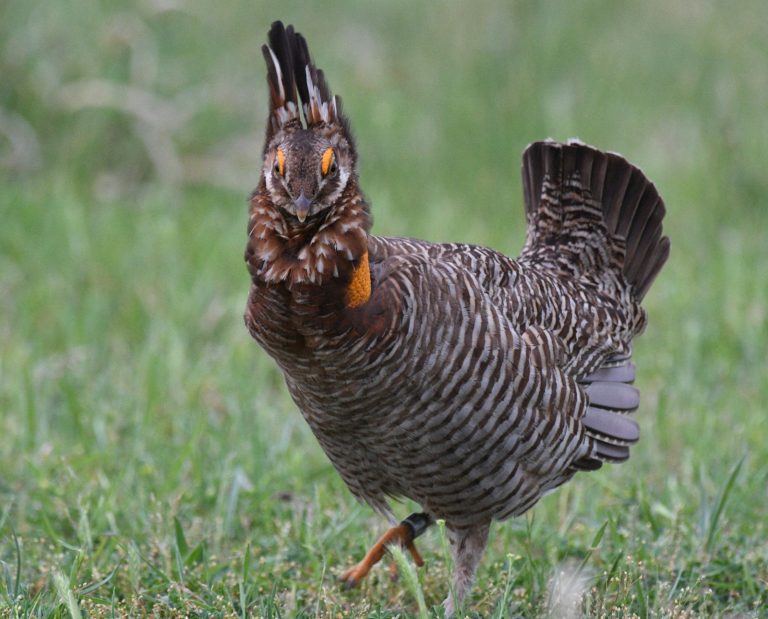
Gabby: Finally, the red alert is the most dire of the three. Red alert birds are those with perilously low populations and steep declining trends. Four upland game birds—the Gunnison sage-grouse, the greater sage-grouse, the greater prairie-chicken, and the lesser prairie-chicken—are red alert birds.
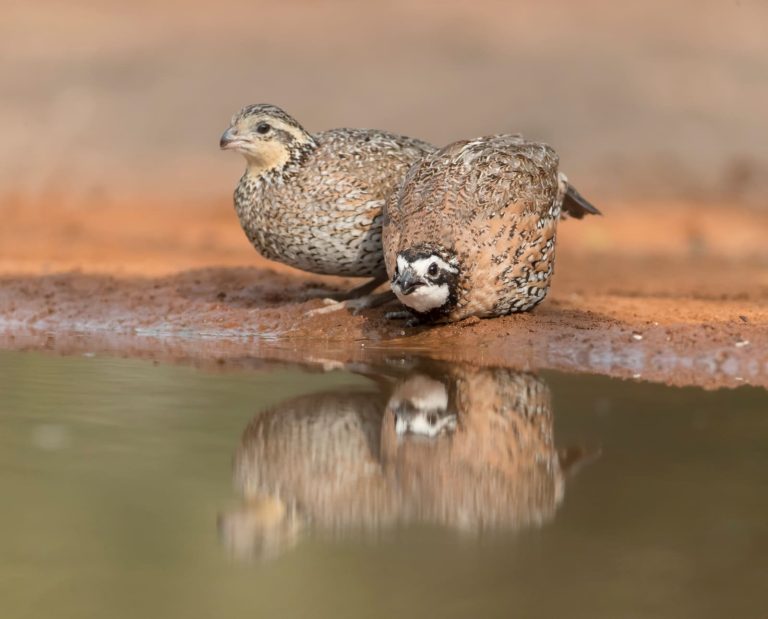
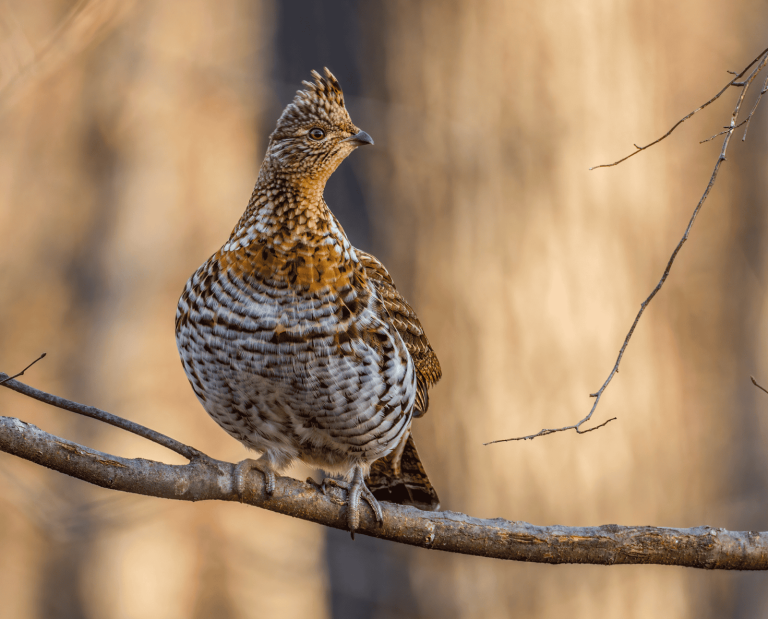
AJ: This should be alarming to those of us passionate about native game birds, as the long-term trends of other species could be an indication of a similar future. Think of the ruffed grouse, sharp-tailed grouse, and of course, the northern bobwhite quail.
Dr. Mike Brasher: Some of my colleagues and I talked about this as we were looking at the tipping point species list and asking, is there any single thing responsible for these birds? And the answer is: there is no single factor.
The overwhelming common factor is a decline in habitat of some form or another. But that decline in habitat can take many different forms. It could be a decline in some of the resources provided by the areas they occupy. It could be a total loss of those areas—at least in terms of usable habitat. A lot of these species occur in grasslands, and grasslands are one of the ecosystems most threatened across North America and, really, across the world. It’s a fundamental loss of that critical landscape and the resources it provides.
But there are also a lot of seabirds on this list. And you might think, well, we haven’t taken away the seawater; we haven’t taken away the places where these birds go. What has happened in many of these cases is we’ve seen a decline in the resources those waters and habitats provide. There could be a number of reasons for that. In some cases, you can point to warming seas and shifting waters that alter the distribution of prey resources—essentially their food. So in some cases, it may be a shift in food resources; in others, it may be a fundamental decline in the availability of those food resources across their entire range.
There are also some species that are vulnerable to fishing bycatch, which leads to more direct mortality. Some species are inherently small in population size and thus vulnerable to a variety of threats. Shorebirds are also on the tipping point list; they use coastlines and mudflats, but they also migrate to areas in Central and South America where they may not have the same protections from exploitation that they do in North America.
Overall, the loss and degradation of habitat is the overwhelming cause of declines for these tipping point species. But there are other causes not directly tied to habitat loss, and that makes it complicated to figure out how to reverse these trends. Some of them must be addressed on an individual basis. It’s not as simple as saying, “It’s all habitat, so we just need to put more habitat on the landscape.” In some cases, these species are affected by changing environmental conditions, and those are harder to address with conservation solutions.
It’s a very diverse list of birds facing a complex set of threats. Some, like aerial insectivores, are likely affected by pesticide use in some of the areas they occupy, which impacts the abundance of insects and other food resources they depend on. In short, it’s a wide variety of threats affecting these birds.
Gabby: Luckily, a ton of information included in the State of the Birds Report was collected by the public—by people like you. eBird users who create digital lists of the birds they identify at their feeders or along their favorite nature trails. Folks who take part in the Christmas Bird Count. And even people who volunteer with their state wildlife agency to conduct Breeding Bird Surveys all help compile this information.
Dr. Mike Brasher: If you’re interested in contributing to the science, investigate the Breeding Bird Survey, the Christmas Bird Count, and eBird. See if there’s a way you can contribute to collecting data that will be used to help us understand bird populations and conserve them into the future.
Join one or more conservation organizations that fit your view of the world and why you’re enthusiastic about birds. I would also say: buy a Duck Stamp. You don’t have to be a waterfowl hunter to buy a Duck Stamp. Ninety-eight cents out of every dollar spent on the Duck Stamp goes directly to conserving and protecting key migratory bird habitats. A lot of that money goes to the prairies, where it permanently protects grasslands and wetlands through voluntary easements.
And just as important—help introduce other people to birds, whatever way you enjoy them. If it’s bird watching, if it’s hunting, do your part to help facilitate somebody else’s connection to birds and bird conservation.
Gabby: While you might have assumed that we were going to talk about the impact of climate change on bird populations next, you’d be incorrect. The most significant thing impacting birds right now is actually funding.
According to The Wildlife Society, the Trump administration has requested the following cuts in the fiscal year 2026 budget:
- U.S. National Park Service Operations: –$900 million
- U.S. Geological Survey Investigations and Research: –$564 million
- U.S. Fish and Wildlife Service Ecological Services: –$37 million
- U.S. Fish and Wildlife Service State, Tribal, and Non-Governmental Organization Grants: –$170 million
- U.S. Fish and Wildlife Service and Rangeland Research (except Forest Inventory and Analysis): –$300 million
- Natural Resources Conservation Service Private Lands Conservation Operations: –$754 million
- Bureau of Land Management Conservation Programs: –$198 million
While these cuts haven’t been finalized, the broader message here is that conservation isn’t being prioritized as worth spending money on.
AJ: What we already know—as reported by Field & Stream—is that the Department of Government Efficiency has cut both veteran and new employees tasked with monitoring the annual waterfowl survey. But both DOEE and the U.S. Fish and Wildlife Service will not provide exact numbers. This includes experienced pilot biologists, which is a rare expertise, as well as the infrastructure that supports this survey operation.
According to Discover Wild Science, “Without adequate staffing and funding, the survey faces challenges in maintaining aircraft, renewing electronic subscriptions, and conducting cross-border operations requiring Canadian visas.”
These surveys are required by the Migratory Bird Treaty Act to set our annual waterfowl season. This has implications for hunters because the Fish and Wildlife Service controls migratory bird hunting seasons. If the agency can no longer measure how many woodcock, mourning doves, ducks, and geese there are, how can they set seasons and species limits? Furthermore, how can we, as a hunting community, claim we use science-based management?
Gabby: Logan Clark is a PhD student who has studied dusky grouse and migratory songbirds. In a recent Project Upland article titled Why Losing Funding for Songbird Science Would Hurt All Bird Species, Logan wrote that:
“Under the Trump Administration’s FY 2026 budget proposal, funding for US Geological Survey’s Ecosystems Mission Area (or EMA) would be cut by 90 percent, dropping from $293 million to $29 million. That cut alone would eliminate 1,000 staff, or about 80 percent of the EMA workforce, which is almost entirely biologists, technicians, and data analysts. And for what? That $264 million savings represents just 0.014 percent of the current $1.9 trillion federal budget deficit—the amount the government is projected to overspend in a single fiscal year. In other words, gutting nearly all federal wildlife science would have virtually no impact on balancing the budget but would carry enormous consequences for conservation and management across the country.”
AJ: I like to think the recent pushback against the public land sale was not an anomaly, and that we, as the public, can bring that same energy to our elected officials and tell them that scientific management and research do not just matter to us—it is imperative to the future of our lifestyle.
Dr. Mike Brasher: Well, I wouldn’t be who I am if it wasn’t for birds. They’ve kind of defined who I am and how I’ve lived my life. They’ve even defined how my wife and I care for our property. We have purple martins, we have barn swallows—these aerial insectivores that fly around and eat mosquitoes and other flying insects are absolutely fascinating and charismatic.
I mean, obviously, I grew up hunting. My exposure to birds came through waterfowl and waterfowl hunting. But I am hopeful for bird populations in North America because people love birds.

Yea, we all know about the problem being Habitat loss but why don’t you folks focus more on WHY there is habitat loss and what to do about that. Other than sprawl or conversion on land into housing and vacation / trophy homes, discuss what things like the affect of what Monsanto/Sygenta do with their Roundup ready seed programs allowing widespread use of herbicide weed killers and insecticides for higher crop yields. Ever wonder why you see very little vegetation in the corners of circular irrigated crop circles?