


Avoiding Common Chukar Hunting Mistakes
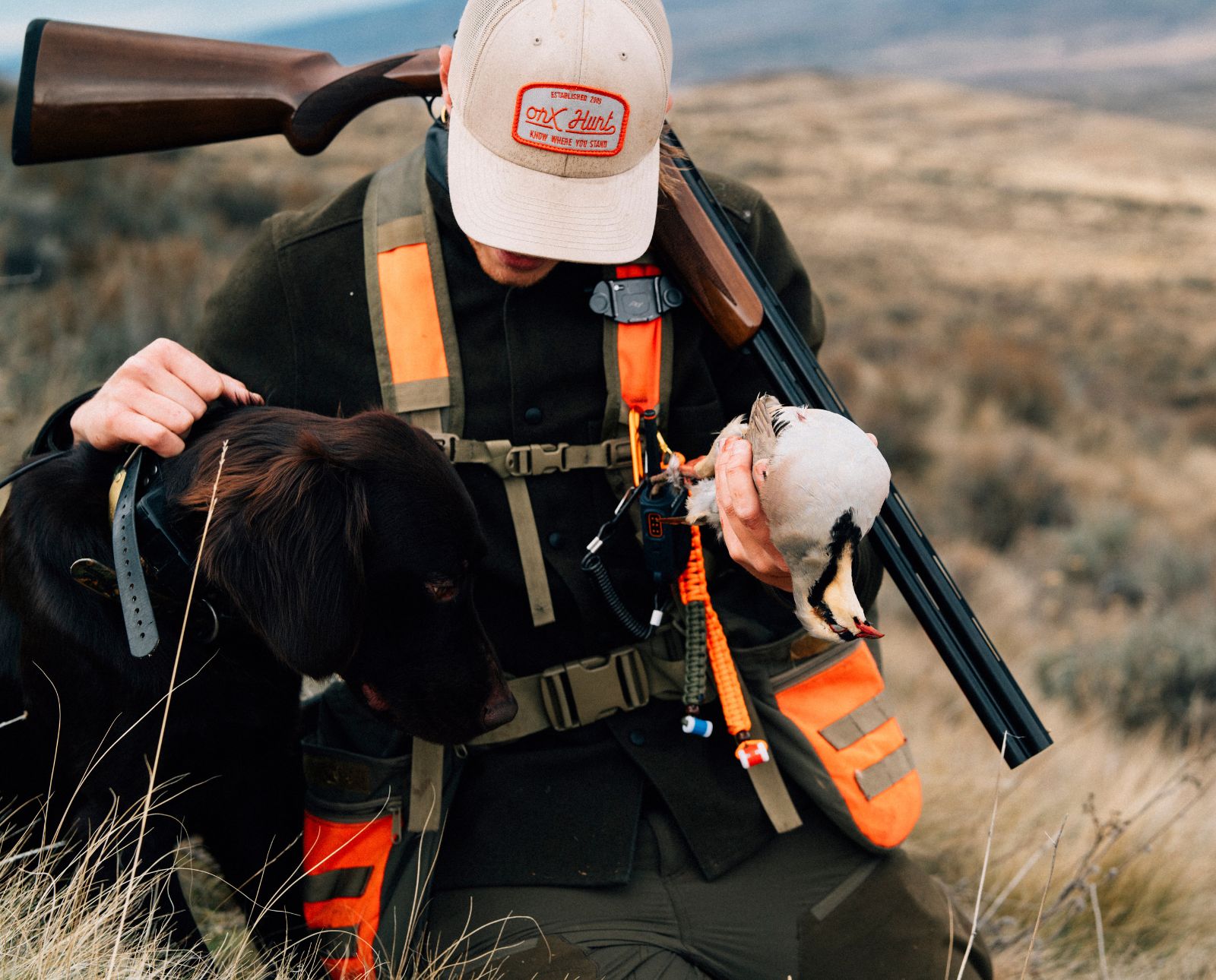
Avoiding these common errors can lead to more success in the chukar hills and shorten the learning curve
Chukar hunting is for people who enjoy type two fun. There’s nothing quite like the emotional roller coaster that begins with the rush of seeing your dog on point 200 yards straight above you. You suck air as you haul yourself up the mountain as quickly as possible, then experience the soul-crushing disappointment of watching the birds flush over the top of the ridge and out of view before you get close. Inevitably, though, by the time you’ve stepped out of your boots and into your post-hunt slippers, the memory will have transformed itself into the greatest day you’ve ever spent outdoors. That’s just how it works.
Spend enough time in the chukar hills and you’ll start to compile your own mental scrapbook of mistakes that ought not be repeated. These birds are survivalists, thriving in some of the harshest terrain and environments, and they’ll teach you plenty of lessons if you’re willing to learn. Admittedly, my book of mistakes is fairly thick with vivid memories of things gone wrong. But it’s the opportunity to right those wrongs that keeps me coming back, making the successes oh so sweet.
Ask a friend for their input about common chukar hunting mistakes and you’re likely to get a list even longer than your own. Why? Because we’ve all made lots of errors and have had plenty of time to ruminate on them on the long drive home, determined to do better next time. So without further ado, here are six lessons generously taught by the winged masters of upland survival.
In This Article:
- Mistake #1: Hunting the Same Places in the Same Way Over the Course of the Season
- Mistake #2: Approaching Your Dog On Point Without a Plan
- Mistake #3: Following Up on a Covey You Didn’t Actually See Land
- Mistake #4: Taking a Shot That Results in an Unrecoverable Bird
- Mistake #5: Working Harder, Not Smarter
- Mistake #6: Encroaching on Other Hunters
Mistake #1: Hunting the Same Places in the Same Way Over the Course of the Season
In a harsh desert environment, water is the driving force that determines survival. However, in the mountains where chukar live, water access isn’t limited to springs and streams. Other sources of water could include seeps, frost, dew, or even moisture stored in vegetation. The important thing to know is that these sources of water (and the relative reliance by the chukar) changes dramatically over the course of the season. This means that covey patterns will look a lot different in the hot, dry months (where water access is critical) than they do in the snowy months (where water can be abundant). This is one thing to know in your head, but another to apply to your hunting tactics. Study it. Think about it. Plan for it.
READ: Complete Guide to Chukar Hunting
Weather patterns aren’t the only condition that changes over the course of the season. Hunting pressure adds up, especially around more populated areas, and inevitably changes the behavioral patterns of the birds. Birds that have survived into January have likely seen a number of dogs and hunters try to outsmart them, and they are unlikely to stick around to see what your new tactic might be. It’s important to recognize the signs of hunting pressure and be aware of which areas are likely to get hunted harder over the course of the season. Give the birds a break and give yourself an advantage by not continuing to go after the same coveys week after week.
Bottom line, be a mindful hunter and pay attention to changing patterns. Continuing to do the same thing and expecting the same results over the course of the long season will result in disappointment.
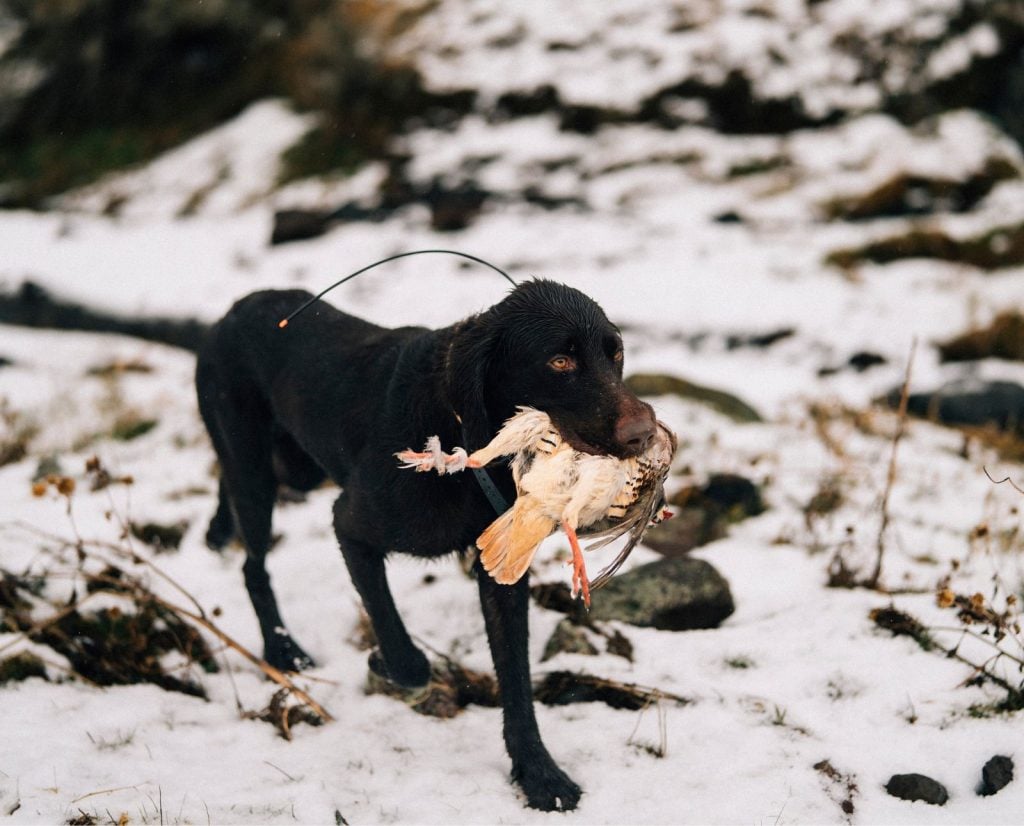
Mistake #2: Approaching Your Dog On Point Without a Plan
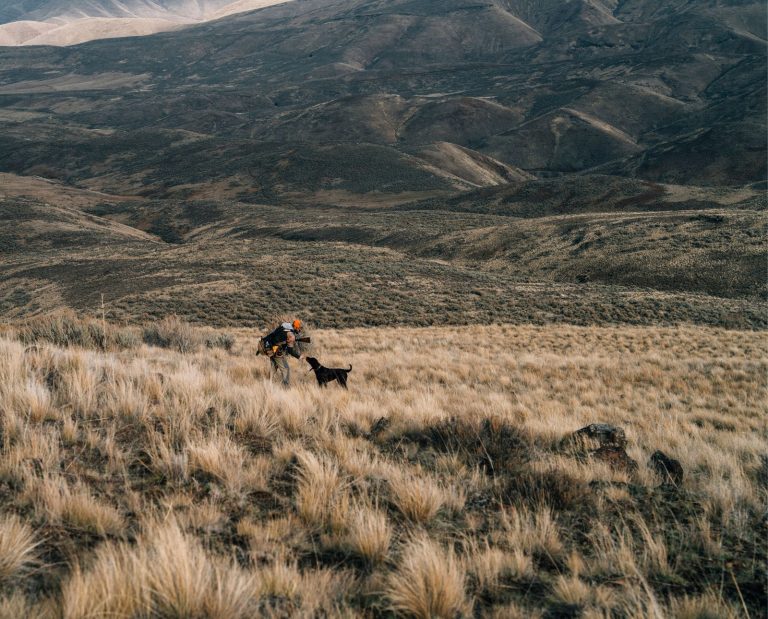
It’s fairly common wisdom that chukar tend to run uphill and fly downhill. For this reason, it’s rarely a good idea to approach a covey from directly below, or else you’ll have the distinct pleasure of hearing them chuckle as they launch off the top of the ridge. But approaching from directly above isn’t always the right answer, either, especially if you find the down-and-away shot to be as challenging as I do. The important point here is to anticipate what the birds are likely to do, quickly assess the available shooting opportunities, and approach accordingly.
Also, resist the urge to run in and start firing. It’s tempting, especially if coveys have been running from you all day and you’re tired of seeing them scurry away from your dog’s point by the time you arrive. But no shooter is at their best when their chest is heaving. Take a moment to catch your breath and prepare for a safe and effective shot before you walk in.
If the covey does get up before you’re in range, don’t stop moving. I am perhaps most guilty of this mistake. It is human nature to stand and watch them fly away, with perhaps a few words muttered under your breath, but there’s a good chance that a lingering bird or two could still be hunkered down. Close the distance quickly and be ready to shoot at any stragglers that flush once you’re in range.
Mistake #3: Following Up on a Covey You Didn’t Actually See Land
When a covey takes flight and soars over the next ridge, it’s easy for your mind’s eye to take over and imagine that they’ve simply settled right there and will patiently await your arrival. This has cost me a lot of frustrating miles. I’ve even had the opportunity to study this phenomenon from the perfect vantage point of an opposing ridge when birds are flushed by a hunting partner, but for some reason I can always convince myself that I know exactly where the birds just landed.
In reality, chukar are using the terrain to their advantage and masking their escape over the undulating ridges. They will often soar over an edge, then abruptly change direction and perhaps continue their flight down a draw or across a wide gap. They may cut back and take cover in a hidden crevice, or they could keep flying to the next county. In other words, they aren’t simply going the shortest distance to get out of your sight and then settling down. Unless you’ve seen feet out and wings stowed, you really don’t know where those birds touched down. Trust me.
Mistake #4: Taking a Shot That Results in an Unrecoverable Bird
The tendency of chukar to flush over terrain edges means that the bird marked by your bead could be hundreds of feet above solid ground, and even further from a point where their momentum will finally stop. Take a moment to assess the likelihood of recovery before you pull the trigger and take a life. This is also a critical decision point for the safety of your dog. An overly excited dog could see a bird fall and take off without thinking about steep dropoffs or crumbling cliff edges. No bird is worth seriously injuring your dog in a fall.
On a related note, be sure that you’re hunting with a dog that can reliably recover birds that have dropped out of sight. Chukar retrieves can be long and tricky, especially if the bird is wounded and takes cover in a crevice or keeps rolling until gravity catches up. Time spent in the off-season to create a reliable retrieve can go a long way toward reducing lost birds.
Finally, don’t be too quick to give up on finding a downed bird. Shot birds can travel deceptively far, especially down a slope, and might be a long way from where you think they went down. Trust your dog and keep searching to do your best to minimize waste.
Mistake #5: Working Harder, Not Smarter
There are a lot of tips that could fit under this heading, but the point is to just be smart about how you approach chukar hunting. There’s a push on social media to portray chukar hunting as some kind of action hero feat that only the toughest can endure. Yes, the hiking is physically demanding—but it’s not out of reach for the average among us. It doesn’t have to involve going straight up the steepest ridge or clinging to a rock face. Learn the patterns of the birds and study a smart way to approach them. Don’t bother with the birds that are perched on the cliffs if that makes you uncomfortable. Instead, focus on the coveys in the draws or grassy slopes.
Part of smart preparation is tending to your off-season fitness. This doesn’t have to mean a new CrossFit personality, but just enough to keep your body used to moving for hours at a time and climbing up and down uneven terrain. This will make your hunts more enjoyable as well as help to prevent injuries.
Also under the category of smart chukar hunting is being prepared with first aid supplies, vehicle recovery devices, and plenty of water for you and your dog. A few minutes of preparation before you leave home could help avoid serious problems in a remote area.
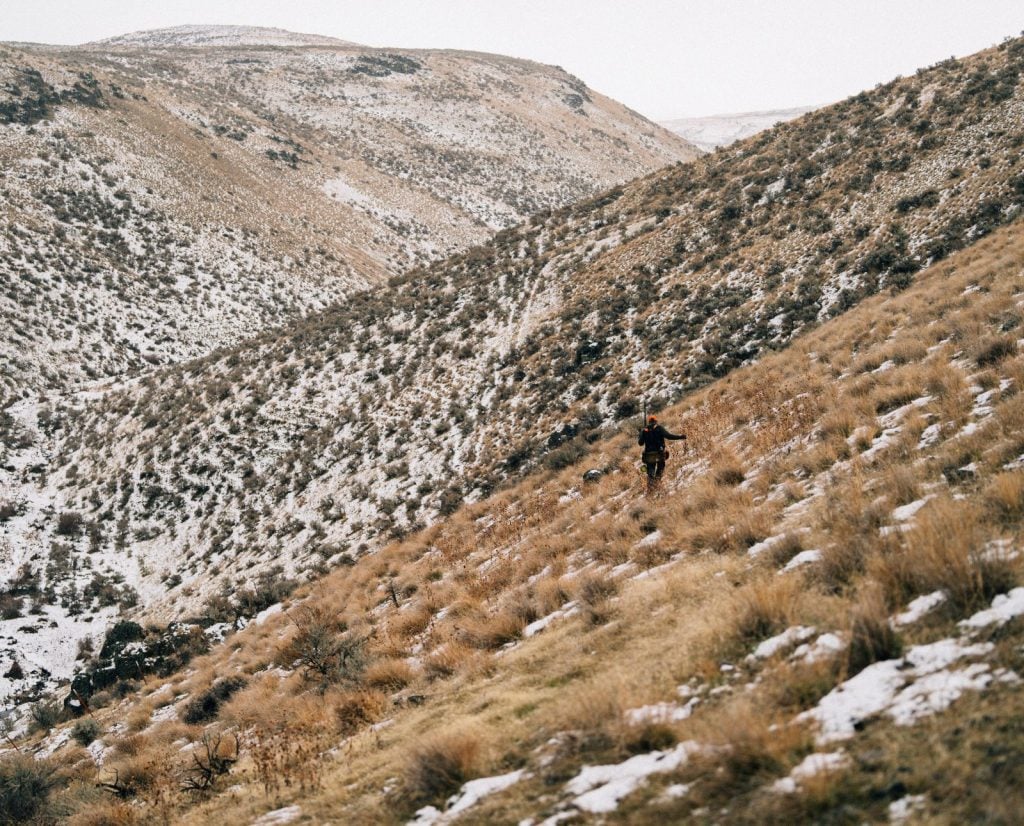
Mistake #6: Encroaching on Other Hunters
Chukar terrain is vast. It’s not uncommon to cover 10 or more miles on any given day. Elevation gain is hard-fought and it’s not that easy to cross several steep ridges to change the direction of your hunt. For that reason, be respectful of other hunters in the area. If there’s already a car at your intended location, keep going until you are sure that you have put enough distance between you to avoid disrupting each others’ hunts. If you hunt from a UTV, never use the vehicle to get ahead of foot hunters and start hunting in front of them. If in doubt, ask. There’s enough land for everyone to spread out, even if it means skipping your favorite spot because someone beat you to it.
It’s more than just chukar hunting etiquette, even though etiquette alone should be enough of a reason to spread out. Birds change their behavior when they experience hunting pressure, which makes them increasingly more difficult to hunt as the season goes on. Spreading out the pressure will prevent your favorite spot from becoming unhuntable—not to mention challenging you to find new areas and new tactics to practice.
And that’s perhaps the most important lesson of all: to keep learning. The birds, the dogs, and the land will teach you immeasurably if you are willing to pay attention, accept their feedback, and avoid making common chukar hunting mistakes. At the end of the day, if continually growing and improving isn’t the whole point of this, then maybe it’s time to find a new hobby.

Lovely article.
As a 50-year Chukar hunter, there is a lot to unpack, for those beginning, and even those that have hunted birds for decades.
Many of the best lessons I have learned, was learned when I was dogless, raising my two young girls.
The dozens of lessons learned, dogless, I use every hunt.
I think one of the biggest errors I’ve seen, oft repeated when hunting with other friends, is when group hunting, not having a plan about the hunt, or if there is a “plan” it falls apart fairly quickly.
Thanks for the good press on the best bird there is, to hunt.
Hunting the same spot multiple times during the same year is a huge mistake in itself. Get out, find more areas to hunt, and don’t over hunt a spot. At the very least, if it takes you a couple times in the same spot to shoot a limit worth of birds that should be the max time spent hunting a single spot.