

Taiwanese Three-Cup Muskrat
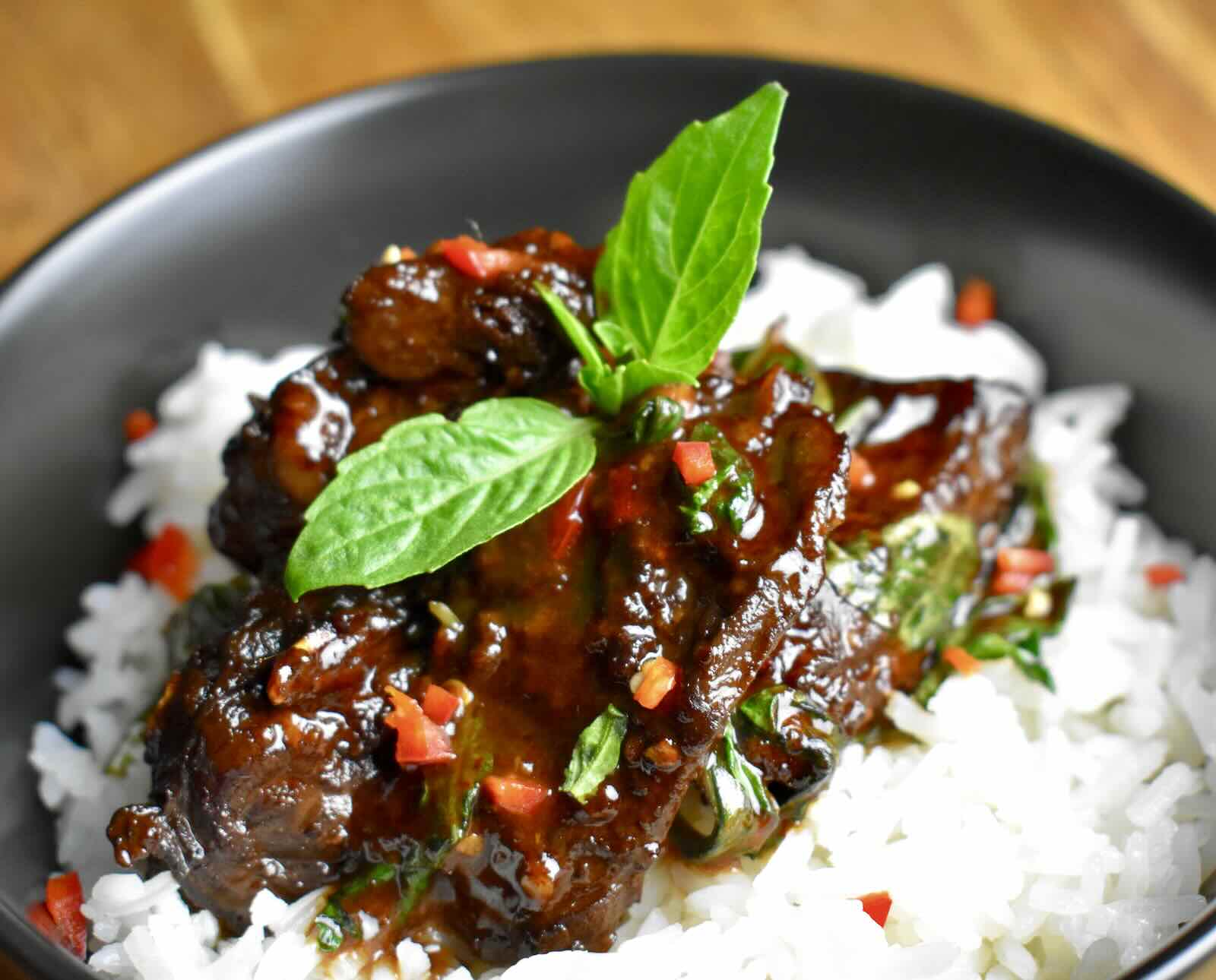
Muskrat may not be common table fare, but bold flavors and a low-and-slow cooking method make it worth trying
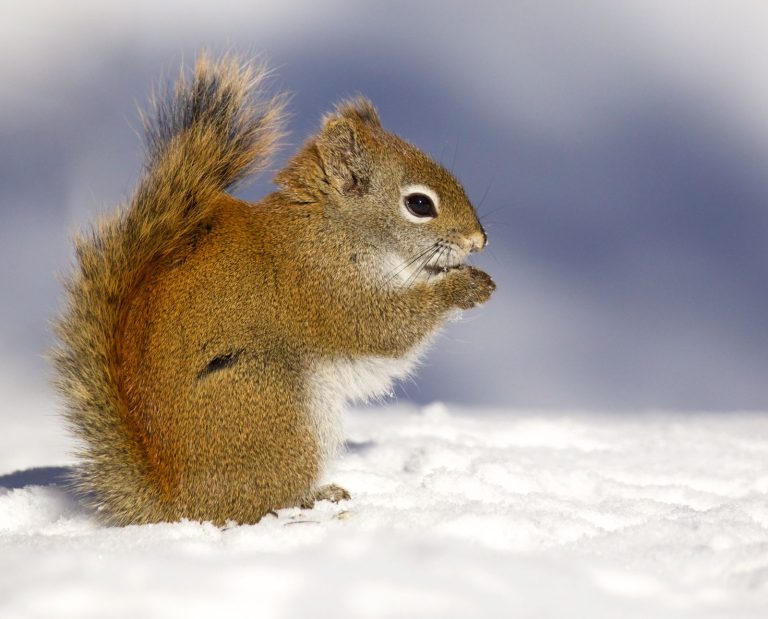
A buddy of mine recently got his trapper’s license and invited me to trap muskrats in the cattail marsh on the backside of his property. He had noticed a huge amount of activity from the semi-aquatic rodents and wanted to trap a handful of them to practice working the hides and furs.
We strapped on snowshoes and lumbered through the deep snow, encumbered by all of the tools of the trade and followed by our dogs, who took turns exuberantly breaking trail and tripping us by stepping on the backs of our ‘shoes.
Finally making it to the back of his property, out of breath and muttering about needing to get in better shape, we took in the frozen maze of brown cattails that poked out of the ice, fluffy tops slowly letting go and drifting into the wind. The dogs bounded energetically into the marsh, luckily staying on top of the ice, and immediately found some dead thing to roll in.
“Dammit dogs! Git! Git out of there!”
Both dogs came running back to us, stinking to high heaven with their tongues happily lolling out of big, stupid grins. Great.
My friend began pointing out likely muskrat lodges and feeding platforms. We got to work chopping ice and debris with his old axe in order to install the traps we’d brought with us. After setting several traps and tying them to sticks to help locate them again and to prevent them from slipping away under the ice, we packed up and shuffled home. The deadened quiet of the winter woods provided complete silence other than the squeak of the snow, the jingle of dog collars, and our breath which plumed into the air.
I tried washing my dog Arrow, a joyful Small Münsterländer, but without running water in the cabin I could only do so much. The smell of dead something-or-other permeated the air in my sleeping bag, which she had crawled into to stay warm. New, sulfurous odors coming from her backside punctuated the general miasma, probably a result of the leftovers she had stolen from the counter when we weren’t looking. Gotta love dog life.
The next morning, we hiked back to the spot over an inch of new snow, noting that there were fresh canine tracks making their way into the marsh.
“Think it’s a wolf?” I speculated. “Those prints seem too big for a coyote.”
“I hope not,” my buddy replied. “It might have eaten all of my muskrats!”
We arrived at the edge of the cattails and saw the prints zig-zagging all over the place.
“Weird!” we both exclaimed in unison.
We began looking for the sticks he had left the traps attached to and couldn’t find them.
“What the hell…?”
Canine prints had visited each site, so whatever it was seemed to have stolen all of the sticks.
“Weird!” we both said again.
Just then, his black lab trotted up with one of the sticks in her mouth, looking proud as ever. I looked down and noticed that her tracks were the exact same size as the prints we’d been following earlier.
“Dammit Elly!”
It seems she had snuck out at some point, run down to the marsh, and retrieved every stick we had left there. Good dog…?
After some digging around which left our fingers numb, we eventually found all of the traps we had set, three of which were attached to muskrats. We brought them back to the cabin where my friend carefully skinned them.
“You want the meat?” he asked.
“You know I do!” I replied.
Muskrats as food can be pretty polarizing in the wild game world. For some, a muskrat roast conjures up simple, nostalgic meals eaten back home; for others, it isn’t worth considering as table fare at all.
In my opinion? It’s not that bad!
While muskrat might not beat out a perfectly-grilled venison loin steak or a medium-rare seared duck breast, I find that the flavor is perfectly acceptable for making a great meal out of it—you just have to do it right. That involves brining to reduce strong flavors and cooking for long enough to break down what can be tough meat.
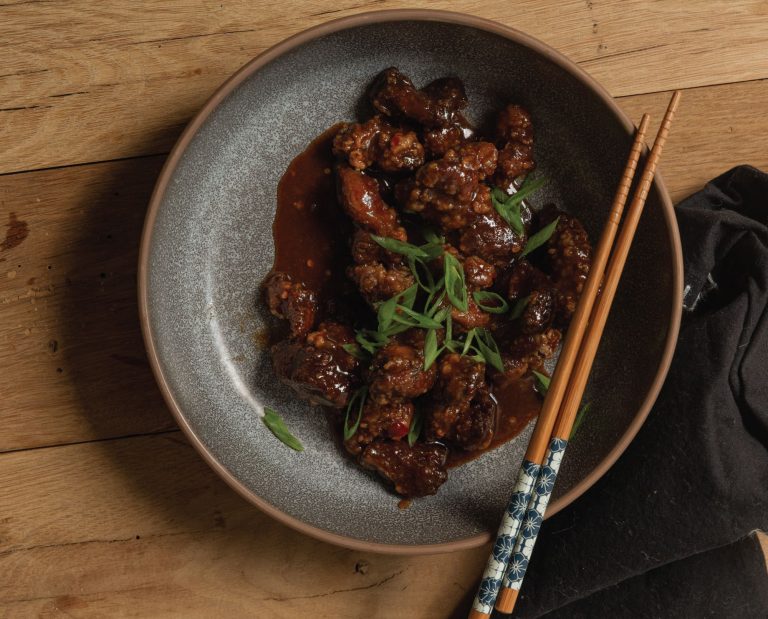
Using bold flavors also helps, especially when you’re not used to eating it. Whenever I need bold flavors, I look to Asia for inspiration. For this recipe, inspiration came from Taiwan, whose cuisine is famous for a dish called three-cup chicken, or san bei ji. The recipe was traditionally made with one cup of sesame oil, one cup of soy sauce, and one cup of rice wine, but has since been tweaked for a more modern palate. I found the flavors of the dish paired perfectly well with muskrat!

Taiwanese Three-Cup Muskrat
Ingredients
Method
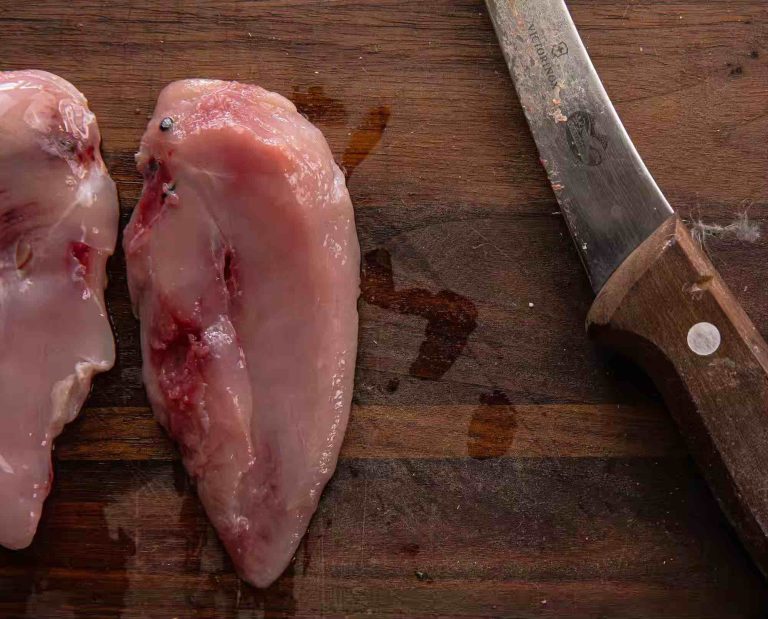
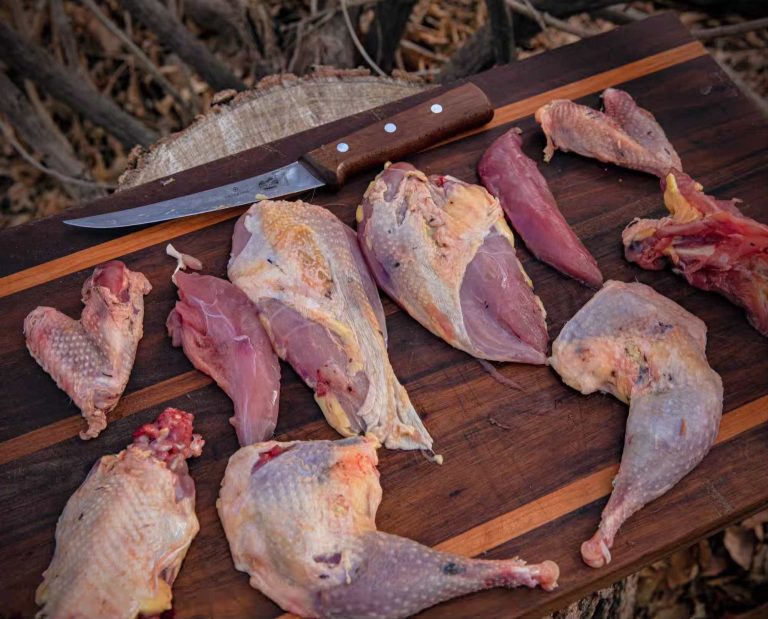
- The day before, make a brine by combining 3 tablespoons of salt and 3 cups of water. Stir until salt dissolves. Cut the muskrat into 8 pieces, then submerge them in the brine. Cover and transfer to the fridge for 12-24 hours.
- Once ready to cook, remove the meat from the brine and pat it dry with paper towel.
- Add the sesame and lard/vegetable oil to a skillet over medium heat. Add the garlic, ginger, and chili slices and cook, stirring, for about 3 minutes. Add the muskrat pieces, flipping the aromatics on top of the meat if possible. Cook for 2 minutes, then flip and cook for another 2 minutes. Add the wine, water, soy sauces, and sugar and mix well, bringing to a boil. Reduce to a low simmer and cover the skillet.
- Simmer for 30 minutes, checking intermittently so that nothing burns. Remove the lid and reduce the liquid until it thickly coats the meat, stirring constantly. Once the liquid is thick, take it off the heat and add the basil leaves, stirring them in and letting them wilt. Serve with jasmine rice. Enjoy!