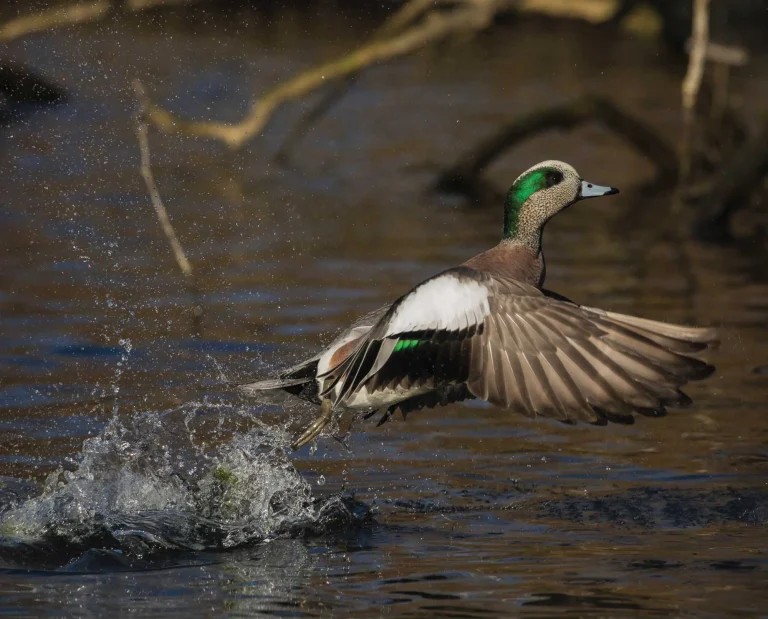


Guide to Hunting American Wigeon
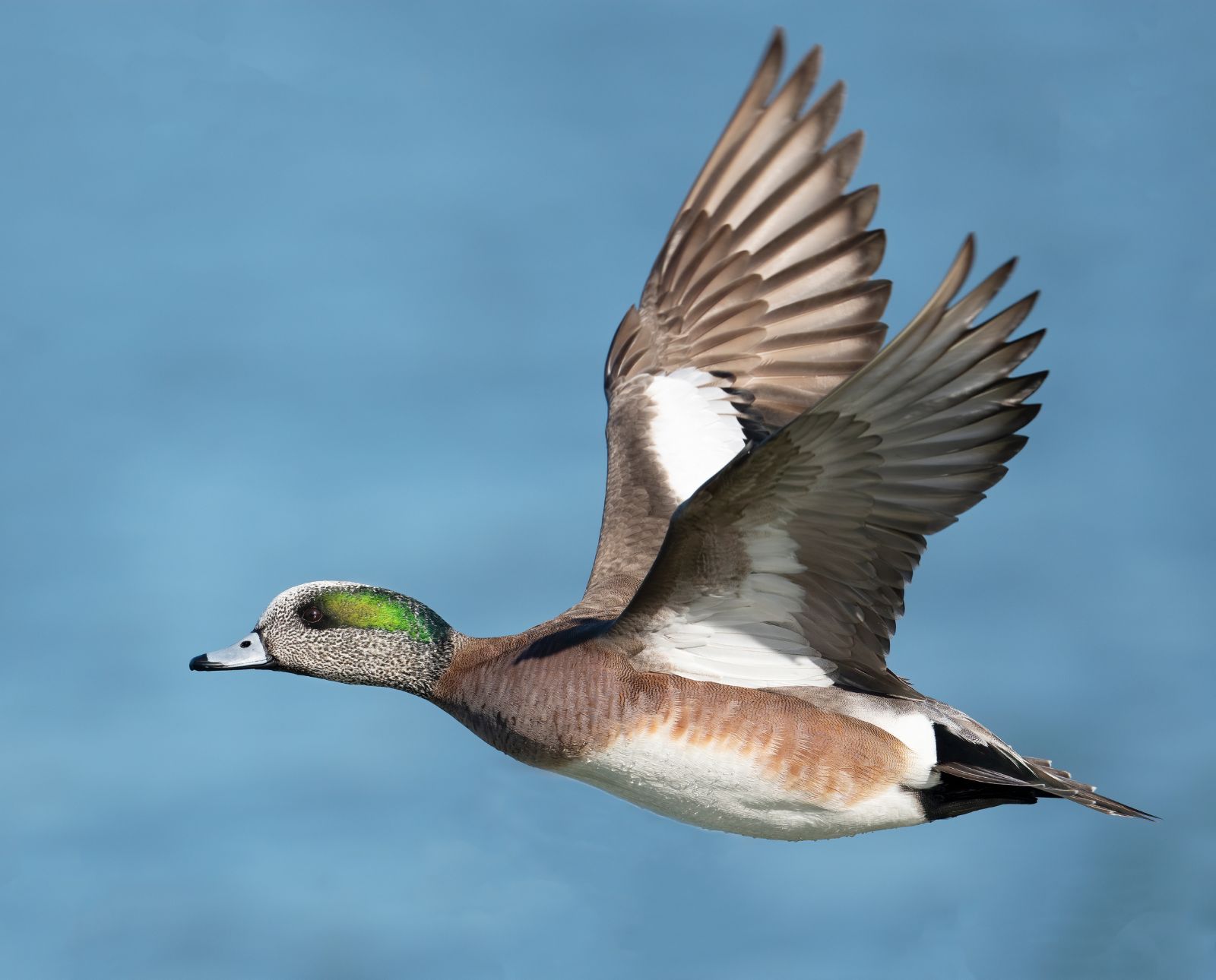
A practical guide to decoying, calling, and scouting for one of the most forgiving puddle duck species
Over the last decade. I cannot count the number of times that a couple flights of American wigeon have saved an otherwise dull morning of flaring mallards that seem to land everywhere but my decoy spread. They even have a knack for showing up right when I’m getting ready to call it a day, too. It’s something that not only makes me smile when these cotton-top angels descend from the clouds, but also earns them a top-ranking spot in my invisible book of favourite species of waterfowl to hunt.
Hunting American wigeon has a lot going for it. While wigeon might not be the most highly technical puddle duck a prospecting waterfowler can target, wigeon can help us prepare for more advanced hunting opportunities for species like mallards.
In my area, American wigeon are an early to mid-season duck. They arrive in exceptionally large numbers and sticking around for weeks on end, which is something I can really get behind. Depending on how November goes weather-wise, they might stick around. However, most years, I can usually bet money on our wigeon having left for warmer climes by Thanksgiving.
If you’re chasing wigeon during the waterfowl migration, here are a few tips when it comes to decoying, calling, scouting, and hunting American wigeon.
Wigeon Decoy Spreads
Wigeon are very generous when it comes to what kind of decoy spread you have. In my collection of dekes, there are approximately eighteen full body floater wigeon decoys that come with me on every puddle duck hunt, almost all of which take place on the water. Sure, it’s entirely possible, and often common, to run a spread of mallard decoys and have a couple wigeon drop into them out of the blue. However, to really cash in on the mid-morning flights, I recommend adding at least a dozen wigeon decoys to your spread.
When setting up a spread that is heavy on wigeon decoys, a simple tactic that works very well is leaving more space than you might otherwise have between other decoys like pintails or mallards. A look at basic wigeon behaviour will explain why this is: wigeon can be fairly aggressive feeders. They often drive other ducks from an area or, in some extreme cases, steal food right out of the bills of other ducks. Rude, right?
When I set up my wigeon decoys, I have the tendency to use their mean behaviour to my advantage. I leave at least twelve to fifteen feet between my decoys and set my mallards on the outer edges or tight to shoreline. Essentially all that open water between the wigeon decoys becomes one big “X” where other ducks will end up landing. It might sound strange, but you wouldn’t believe how well this works.
Like most ducks, a bit of motion often goes a long way toward putting ducks in front of our spreads. American wigeon are no exception, though I have found that this puddle duck can be far more forgiving when conditions lack the proper breeze that often makes decoys come alive. Still though, because the prospect of having some mallards dip into the decoys is still tantalizing, I usually have a half dozen decoys connected to a jerk rig, three of which are mallards and the other three are wigeon. I’m not sure how much difference the motion makes, but if I hear wigeon coming, you better believe that those decoys will be moving, one way or another. Having said that, there have been several occasions when I haven’t been paying attention and had multiple wigeon drop into my spread when the water was smoother than glass.
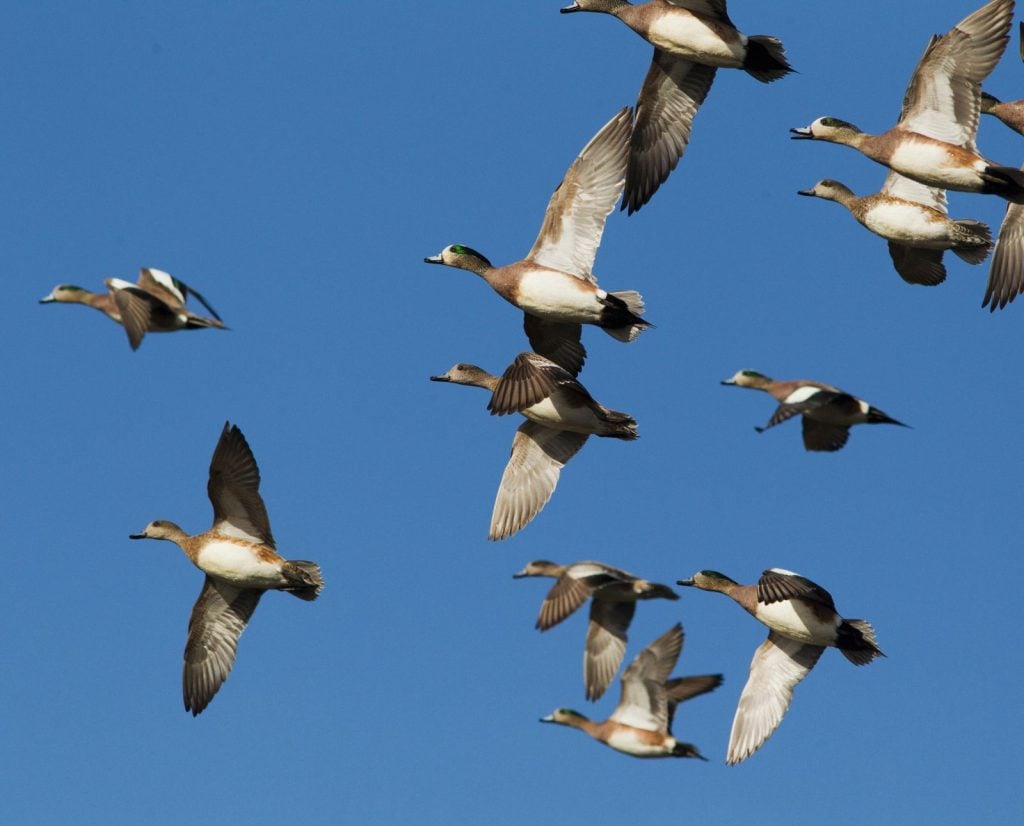
Tips for Calling Wigeon
Wigeon are exceptionally vocal little ducks. They use a series of whistles that don’t sound all that different from the whistle that a wood duck might make. In fact, it sort of sounds like a referee’s whistle being blown twice in rapid succession. There are several companies that sell wigeon/pintail calls, and I’ve yet to use one that didn’t do the job well. For the most part, wigeon don’t take all that much convincing when it comes to calling. When hunting wigeon, my usual calling technique is to wait until I hear the wigeon calling, give them a couple of “peep-peeps” in response so they have an accurate idea of the spreads’ whereabouts, and let the decoys do the rest.
Scouting for American Wigeon
When specifically targeting wigeon, scouting plays a big role in finding where and when birds are using a specific area. Those mid-morning birds I talked about earlier could have been coming from several different locations. But the one common denominator was that they wanted to be in the milfoil after the sun had risen and the early morning flight of mallards had come and gone. On big water like where I hunt, the birds have a lot of places they can go. Figuring out where the big numbers want to be is imperative—I might even go so far as to say it’s the number one factor—to get into these ducks. Find where they want to be, and you’ll find that you’ve already won half the battle.
READ: How to E-Scout for Ducks
Because wigeon aren’t as sought after as other species of puddle ducks like pintails and mallards, I’ve found that asking around if anyone has been seeing big flocks of wigeon is usually met with accurate reports from firsthand encounters. These reports usually pay off, especially if you’re hunting wigeon in cut agricultural fields.
Wigeon, of course, can throw a curve ball at a hunter every now and again. The one thing that stumps me every single year is how sometimes it seems the entire migration simply ups and leaves overnight. If you’re serious about wigeon, this is something you have to prepare for. They don’t seem to linger in small numbers like mallards or teal. My experience has taught me that once they’re gone, they’re gone for good. When it happens, it’ll seem like it occurs all at once.
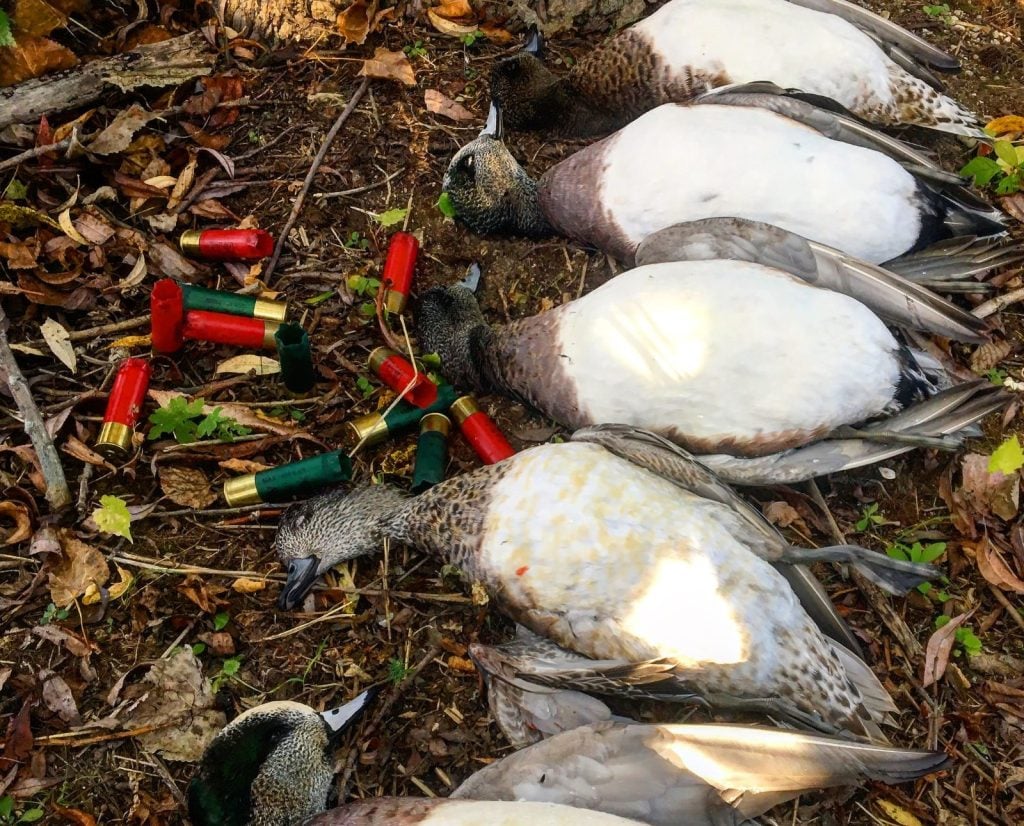
Chokes and Shot Size for Wigeon Hunting
Generally I run the same exact setup that I’d use for mallards, geese, and pintails. Three-inch shells loaded with No. 2 shot are more than enough, and I can’t think of any situation that I’ve found myself in when an extended modified choke wasn’t enough to get the job done. More often than not, wigeon circle in very tightly to a spread and then bank straight in for a landing (not nearly as pretty as a mallard will, but it’s still a sight to behold, nonetheless).
The Bottom Line About Wigeon Hunting
The wonderful thing about wigeon, as far as I’m concerned, is that there are plenty of days afield when the birds don’t really seem to care what your setup looks like, what decoys are in it, or how bad your calling is. On those days, it’s important to give a nod of approval to a duck like this. These are the sort of ducks that can get a new hunter, young or old, into waterfowling for life. For this reason alone, I love these ducks. Never mind the fact that they’re delicious.
All in all, I sincerely encourage you to give hunting wigeon some serious contemplation this season. Hunting wigeon is like eating pizza. When it’s good, it’s great. And when it’s bad, it’s still pretty good!