

Rabbit Hunting with Dogs: Strategies for Running Cottontails
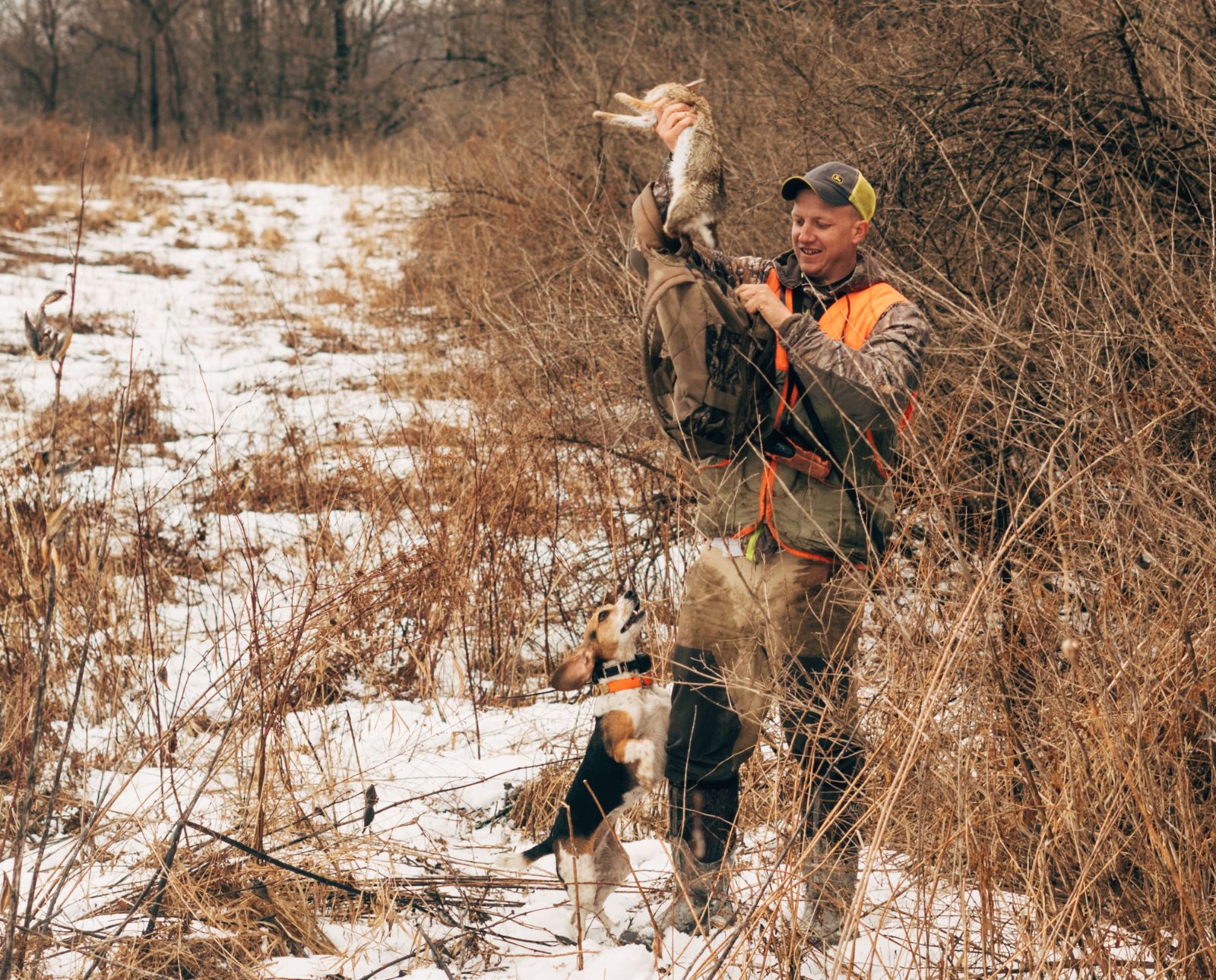
Tips and tactics for finding and chasing rabbits through brushy cover with hounds
Like any self-respecting upland hunter, my lifetime of pursuing upland birds has resulted in a passion for watching dogs work. When a dog has mastered its craft, a bond is created with the hunter that most people can never completely appreciate. This bond is not just exclusive to bird hunters. This same bond is just as strong with hounds and their owners. I will confess, I’m not a beagle owner. However, I’ve been fortunate to have acquaintances who own beagles, and I always jump at every invite I get to hunt rabbits with a pack of hounds.
This article breaks down where to find rabbits, how beagles and hounds work a track, and how hunters can position themselves to make the most of a running cottontail. Additionally, there are some tips for upland bird hunters about how hunting rabbits with beagles differs from upland bird hunting.
Finding Rabbits and Starting the Chase
Obviously, the key to any good day chasing rabbits is to be somewhere with a decent population of bunnies. A mix of herbaceous vegetation including grasses and forbs is a good starting point, but brush or briars is an absolute must. Rabbits rely on brushy cover to escape predators, both mammalian and avian. They also utilize woody sprouts for nutrition, especially later in the season. Look for cut off stems of broad leaf plants as well as chewings on the bark of small shrubs. These observations confirm rabbits are in the vicinity.
Read more: What is it like to Hunt Rabbits with Beagles? A First-Hand Account
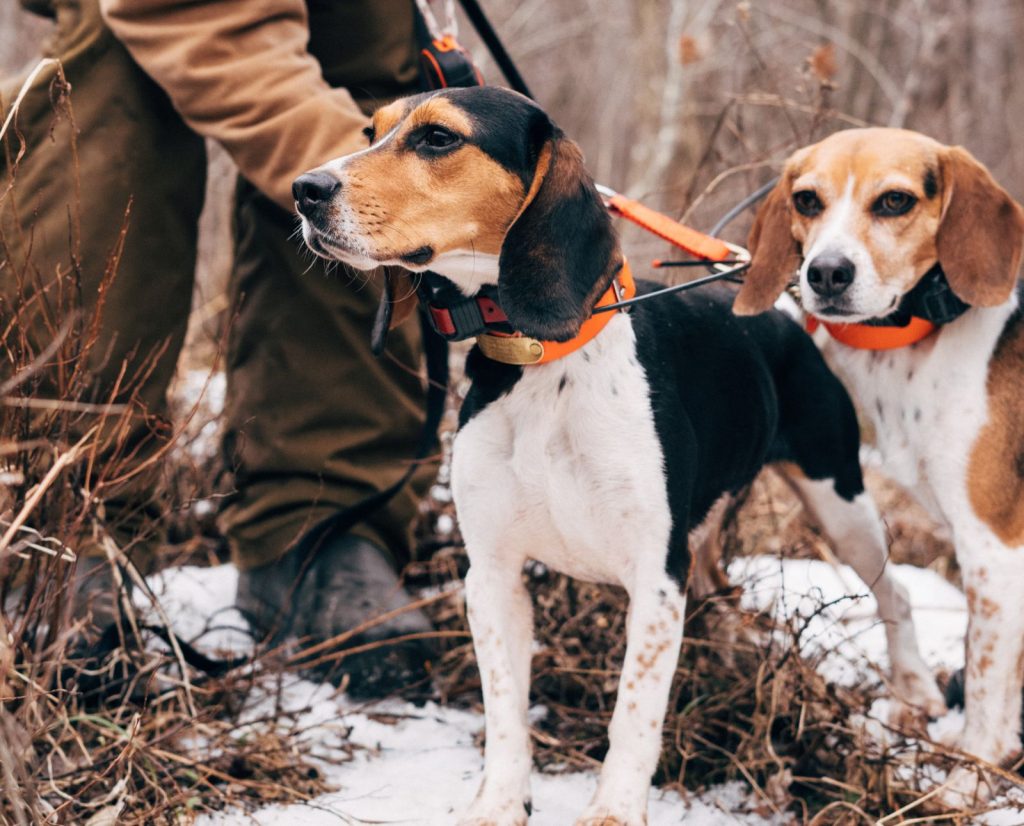
For those of you that are bird hunters, there are a few adjustments that must be made when following hounds. The first of those adjustments is understanding how hounds scent. Unlike bird dogs that primarily hunt by scenting the air, hounds need a track on the ground to follow. I’ve seen rabbits sitting within mere feet of a beagle with the dog completely oblivious to the rabbit’s presence. But as soon as the rabbit begins running, an experienced pack of beagles becomes a tracking machine. Because hounds need ground scent, the first priority is to get a rabbit on the move.
When hunting, we typically spread out amongst prime habitat, loosely walking in a line similar to bird hunting. As we work through the habitat, we make sure to kick brush piles and work past any briar patches. Sometimes as the pack of beagles works across the landscape, they bump a rabbit themselves. However, more than half the time one of the hunters bumps a rabbit first. As soon as a cottontail is on the move, the hound’s owner gets at least one dog on the trail. That’s all it takes. As soon as one dog “opens,” the rest of the pack converges on the area and the chase begins.
Following the Chase Without Watching the Dogs
Once the pack is in pursuit, there is another key difference in working with hounds versus bird dogs. This difference has always been the most difficult adjustment for me to make. That adjustment is where to focus your attention.
As a bird hunter, my instinct is to watch my dogs and read their body language, looking for any indication that they detect birds. When hunting with hounds, watching the dogs will cause you to miss the action. Hunters must focus their attention well ahead of the barking pack. The rabbit they are tracking can be anywhere from 10 yards to as much as 100 yards in front of the hounds. It’s surprisingly difficult to take your eyes off the dogs because it is fascinating to watch them work together to stay on the trail.
It is often mentioned that a rabbit will run a circle when being pursued by a pack of beagles. The reality is the rabbit is simply traveling on known trails within its territory. Most rabbits have home ranges of a few acres. Thus, the rabbit tends to double back as it gets pushed to the edge of its area. The key for the hunters is to position themselves in likely locations for an open shot opportunity. The edges of draws or brush piles can be effective places to post up for a shot. I like to gain elevation, when possible, by standing on a stump or log when available. A slightly higher position can increase visibility significantly, particularly when the chase is going through vegetation above knee height.
If the rabbit successfully passes your position because you missed or your reactions were too slow, don’t fret. Maintain your position and let the chase continue. Often, the rabbit will eventually come back through the same trail or another one nearby.
Common Rabbit Escape Tactics
Some chases simply end due to the pack losing the trail. It can be difficult for beagles to track across gravel or pavement. Don’t be surprised to see a rabbit cross a gravel lane or dry creek bed, using it as an opportunity to throw off the pack. Abnormally dry ground conditions can also benefit the rabbit by limiting ground scenting conditions.
Read more: Stand Hunting Rabbits and Hares
In other instances, the chase ends due to the rabbit eluding the pack. Sometimes this is because the rabbit goes underground. There are always holes scattered throughout brushy habitat, including those made by groundhogs, coyotes, armadillos, and a variety of other critters. Sometimes, particularly where hunting pressure is high, rabbits will dive down a hole seeking refuge from the trailing hounds.
Another escape tactic rabbits will use is hiding in a dense brush pile. Small or loose brush piles can usually be infiltrated by the beagles, resulting in flushing the rabbit and continuing the chase. Larger, tight brush piles can sometimes be impossible for the hounds to penetrate, which ends the chase and gives the rabbit the victory.
When the Chase Ends With a Harvest
Ideally, the chase ends with a harvest. As long as the pack of beagles can stay on the trail, the chase will continue indefinitely. I’ve experienced chases that lasted a few seconds and others that lasted over 30 minutes. When everything comes together and a rabbit is harvested, it’s typically customary to allow the pack to catch up to the kill site so they understand the chase is over and they can move on to explore new habitat. This is a very rewarding moment for both hunter and hound.
The sound of a pack of beagles running a rabbit is incredibly distinct. Add those sounds with the strategy of trying to select a shooting position combined with the challenge of hitting a fleeing cottontail and it’s an experience you will never forget. If you have never had the opportunity to follow a pack of hounds, trust me, it’s worth searching out a beagle owner somewhere near you. You might just find yourself addicted and starting your own pack.