


Hunting Geese From a Pit Blind
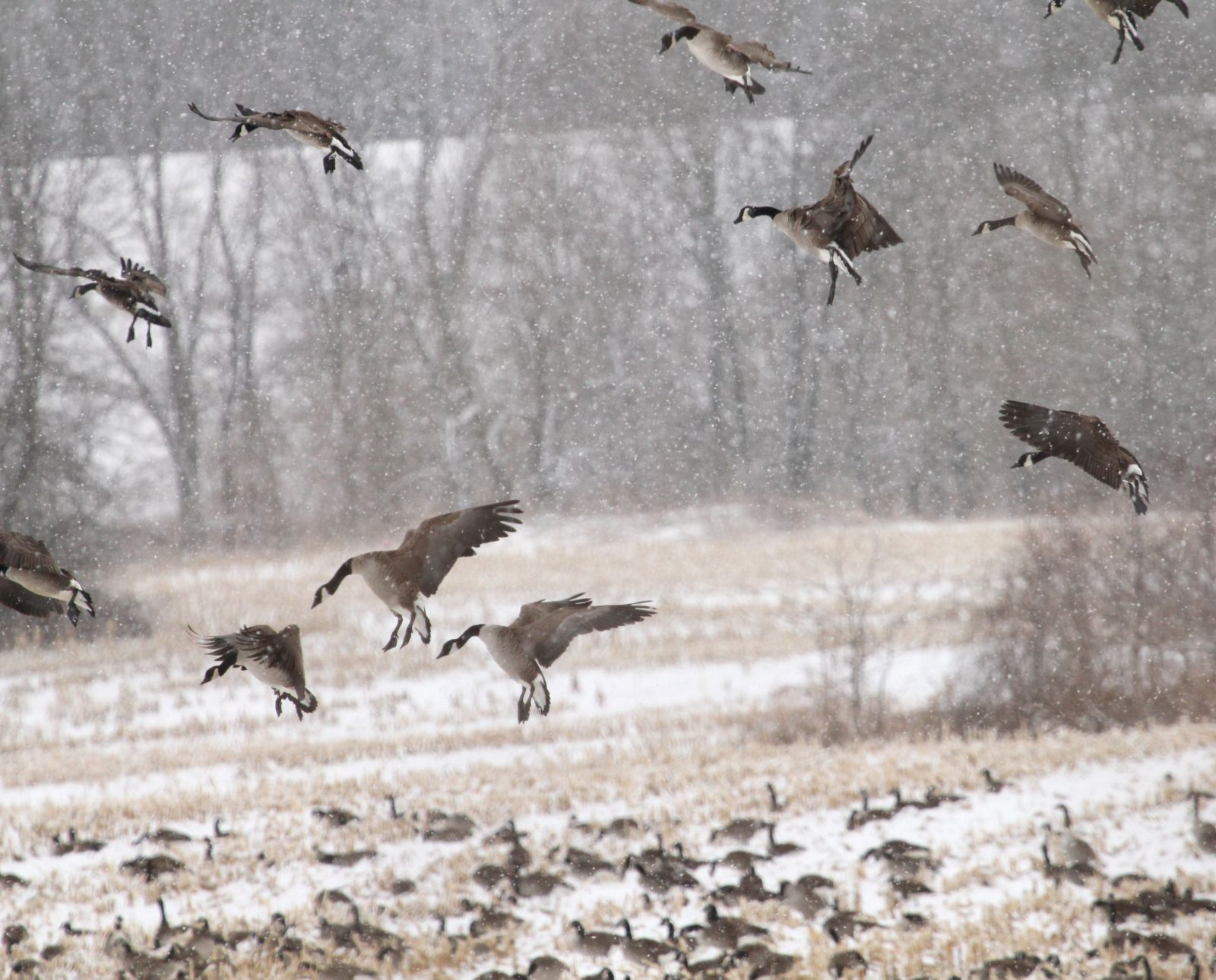
Field-tested lessons from decades of hunting Canada geese from a pit blind
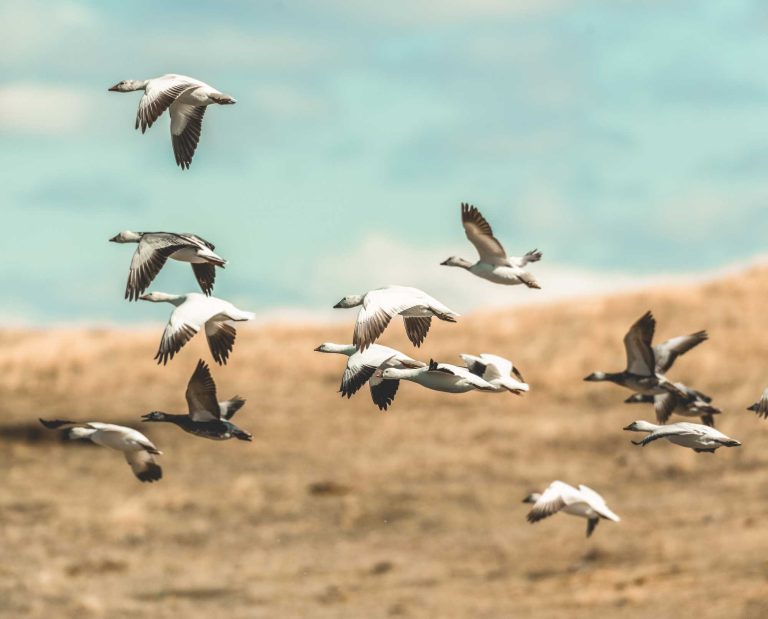
If you want to know how to hunt Canada geese from a pit blind, first, you’d better like frozen fingers and toes, snow, sleet, fog, and that little breeze that freezes your eyebrows. And don’t forget that dirt that filters down into your pants and everywhere else. However, you will live for the moment that you throw off that pit cover and raise up with hundreds of geese around you only to miss three shots in a row. I’m warning you now that you’ll lay awake at night because you can hear geese honking in your dreams.
Once I had geese come right in over my decoys and when I tried to stand up and shoot, two of those big honkers landed on top of my pit cover. One fell inside with me. There ensued a mighty struggle that the goose won; his pecking my hands and face while flapping his wings was just too much for me.
Which flyway are you in? What species of waterfowl use it? Most importantly, do geese use this pathway south? Where in your flyway do these big birds stop to feed? What food, or more importantly, grain crops do they like best? Where are these crops grown? Each flyway is different, so do your homework. You can set up your decoys and sit in a pit in the ground with absolutely no success if the geese don’t want to eat or land where you are.
I specialized in hunting Canada geese for over thirty years and averaged 50-60 days in the field each year. You’d better be in the right place: where they want to be!
Scouting for Canada Geese and Gaining Private Land Access
To start with, purchase a pair of binoculars, a low light model, and watch where the geese are landing and dining. Then, find out who owns the ground and get ready for the tricky part. I hunted on some of the best private grain farms in southern California. How did I do it? I just asked for permission.
I’d patiently wait until the owner or farmer wasn’t busy, stick out my hand and while shaking his, I’d tell him or her who I was, where I lived, and that I’d be so grateful if I could hunt geese in one of their fields. They almost never say yes right out. Tell the farmer that you’ll help him on your days off, or if you’re able, offer a little cash. I hunted some very private places, and it took up to two years to get that permission. Additionally, for that first year or two, do not ask if your buddies can hunt; only your wife or children.
Once I asked a farmer for permission to hunt and he put me to work. I worked all day, and he never said a word until at the end of the day when he finally gave me permission to hunt on what I later discovered was someone else’s land. It was a tough start but ended well. I used to own and raise a lot of grain, and I grew tired of people bothering me to hunt. Be different—be honest and polite no matter the answer you get.
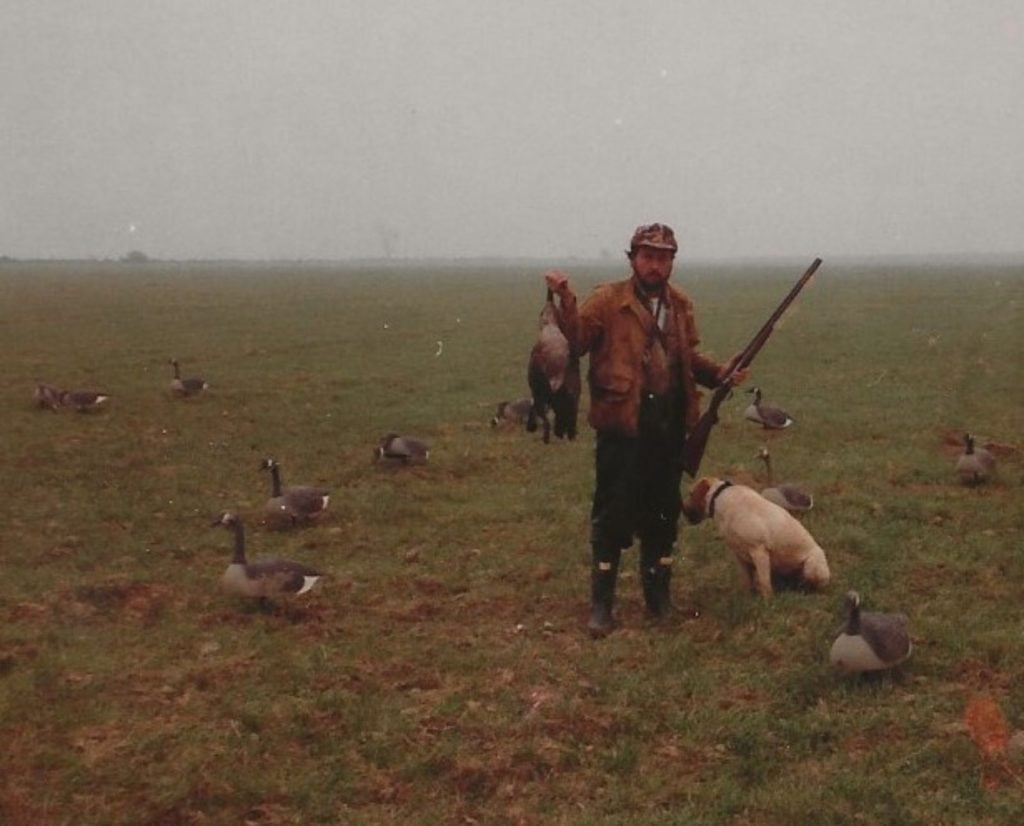
The Ethics of Digging Pits and Hunting Geese on Private Land
When you ask about field hunting geese, always ask if you can dig a pit and be prepared to hear the word no. A lot of hunters dig pits and never come back to fill them, leaving the farmer’s tractor to fall in the hole. Typically, I never got permission to hunt geese from a pit the first year. I generally had to lay on top of the ground and cover myself with sewn-together gunny sacks. Eventually the farmer always offered to let me dig, but it had to be his idea. After all, the farmer owns the ground, and he is the boss.
For the purpose of this story, let’s say that you’ve finally gotten permission, and you are ready to dig. In some states, you need written permission almost on a daily basis. Ask your local game warden about this.
Pit Blind Techniques and Placements
Pit blinds should be big enough for only one man and deep enough that you can sit in it but still stand for shooting. All the dirt needs to be spread away from the pit. If not, from the air, those honkers will spot your blind from a mile away. If the field isn’t flat, try to dig your pit on the downhill side of any hills in the field, but not the lowest spot because the rain will fill your hole in the ground.
After the pit is dug, you’ll want to cover it. I generally covered mine with a piece of welded wire with a burlap cloth attached as a cover. Here again, be careful because that burlap cover has to look like the surrounding crop and ground. If it doesn’t, you will stick out like a sore thumb. Those honkers all have two eyes and they are looking down. They can see you through that burlap cloth better than you can see them.
Read: History of the Sinkbox – A Historic Waterfowling Tool
Always place your pit near the center of the field as far away as possible from roads and buildings. Never park your vehicle within half a mile of the pit; those honkers know what your vehicle means. Memorize where your pit is because you will have to find it in the predawn darkness. I know a hunter who fell into his own pit more than once: me! Additionally, always use a different path to and from your pit. From up above, the path you make in the grain sticks out like a chicken in a room full of coyotes.
Never get up out of your pit if there are geese in the air or sitting in the same field. All you’ll do is educate them. I sat in my pit until 10:00 AM one morning while several hundred geese made an agonizingly slow walk to my decoys. Yes, I got home late, but with three big honkers.
Lastly, keep the area around your pit clean. Those keen eyes can easily see a gum wrapper left on the field and that includes those shot wads. Let them lay around and you might as well stay home.
Placing Canada Goose Decoys Around a Pit Blind
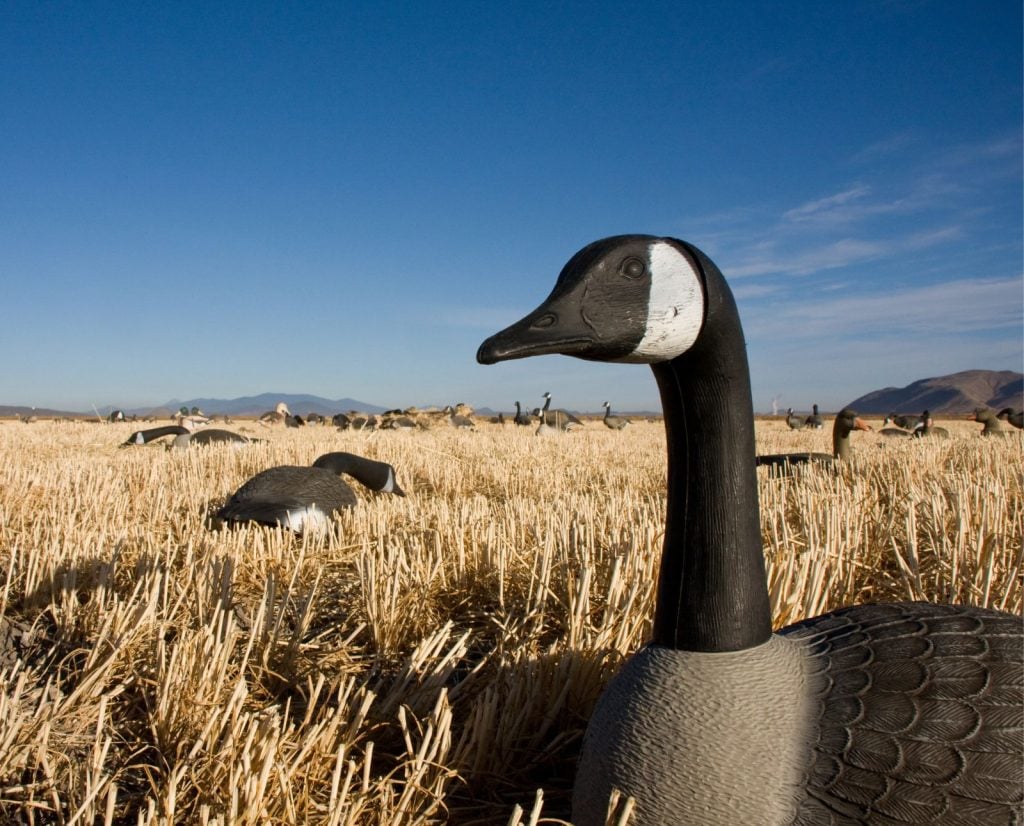
Put your decoys on the top of the high ground where they can be seen for miles. On a side note, if you aren’t going to hunt, take those decoys down. If the geese see them every day, your goose is cooked. If it’s safe, leave them in the pit and put them out before dawn.
I started out with my dad’s old cardboard Dupa goose decoys and then graduated to two dozen Henrietta half shells. I never used full bodied, and I would suggest using what your budget can afford.
Some real advice here: out of two dozen decoys, sixteen should be feeders and eight should be sentinels. Geese are more likely to land where their buddies are almost all eating, not standing up in an alert position. I set my decoys using the shape of a horse shoe with the sentinel decoys scattered throughout the whole group. My pit would always be in the middle about twenty yards behind the nearest decoys. When geese look over your decoys, do not have the pit too close; there are too many eyes. Geese normally land into the rear of your decoys but not always.
Calling Canada Geese
I started my goose hunting career with a slate box call and one mouth call. Which calls you use doesn’t really matter. Just learn to use your choice of calls or every goose in the flyway will be laughing at you. Call to them when they are a long way off, but be careful when they are close and coming your way. It was then that I used that old box call because it was hard to make a mistake with it.
Generally speaking, if geese want to land, they will and their honking will be deafening. Otherwise, they will honk until they get close and if they see that candy bar wrapper in the grass next to your blind, they will turn silent just like turning off a water faucet.
Goose Hunting Gear, Shotguns, and Ammunition
Now before we talk about shooting, let’s get you dressed. For almost all of my goose chasing days, I wore an old set of canvas Bone Dry pants and jacket with a pair of Red Wing boots topped with a brown colored hat. Remember, your outfit must match the field, not your imagination.
Now, for that shotgun. You can kill a goose with almost any gauge, but I recommend not less than a 16-gauge and no bigger than a 12-gauge. The most important detail here is your ability to shoot and understand how far away a big Canadian honker actually is. As for shot shells, I used anything from magnum No. 2s to magnum No. 4s. Size won’t matter if you don’t understand the pattern and killing range of your shells and your choice of shotgun. I harvested most of my geese with 2 ¾-inch shells; shot placement is what counts.
Today, there are some great 3-inch shells out there to purchase. In my day, we used lead shot, but now nontoxic shot is required for waterfowl hunting. I’m going to repeat here that knowing the killing range of your shotgun, shells, and how far away those geese actually are is your responsibility as a hunter.
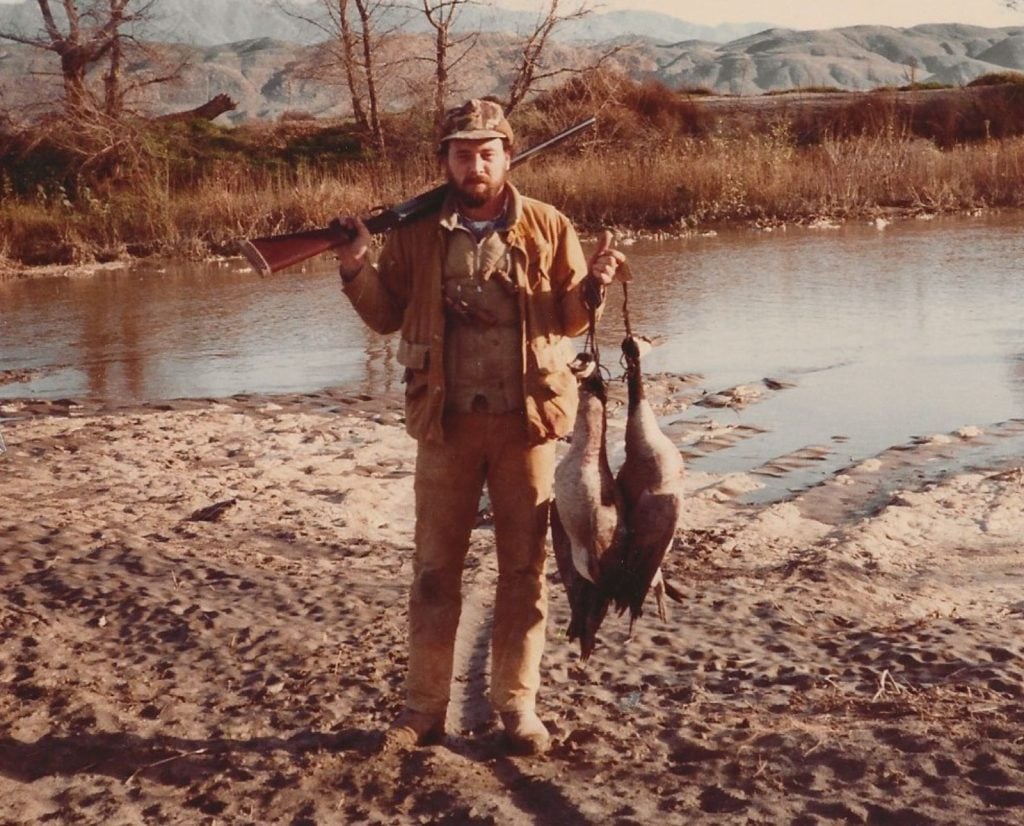
Shooting Canada Geese from a Pit Blind
No matter what else you do, know and follow the game laws, especially the shooting hours. Geese love to fly in before and after shooting hours; don’t break the law. When the moon is full, geese just sit on the water until after shooting time. I’ve harvested a goose or two during a full moon, but they were lone geese out early looking for a home.
Read: Why Biologists Band Waterfowl
When geese come in, never try to jump out of the pit; just throw off the cover and get to shooting. Shooting range for those big honkers should be limited to 45-50 yards—harvest them, don’t wound them. And remember, you have no decent shot pattern for the first twenty yards. When you stand up, choose one goose and stay with him until he hits the ground. I learned this lesson the hard way. On more occasions than I’ll tell here, I shot at three separate birds and ended up with nothing.
The Ethics of Harvesting Canada Geese
Now for one of my favorite subjects: how many geese do I harvest? If you’ve done your homework, you will have answered this question. One goose is a real job to pluck and clean. If you expect your partner or wife to cook it, it had better be spic and span.
Cook: Canada Goose Recipes
The limit of Canadian honkers varies from flyway to flyway, but even if the limit is three, do you need that many geese? They are truly a special bird, and we should all be thoughtful about how many we harvest. A great morning in the field and the harvest of a goose or two is called hunting—more just might not be.
Preparing for Next Year’s Goose Season
At the end of the season, if you decide you’d like to hunt the same field the next year, be sure to fill that pit, compact the soil, then rake the ground flat. If the ground is seeded, do any reseeding that’s necessary. But my next piece of advice is probably the most important: thank the landowners again. Offer them a goose or two for the freezer, take them to dinner, and by all means, write them a thank you note. Don’t forget to stop and see them once in a while during the off season, and if they need help, give them some. Long ago, it took me three years to finally get permission to hunt the best piece of ground in the valley, but I ended up with a five-acre pond surrounded with three thousand acres of grain. It was a goose, pheasant, and duck Disneyland. It was then and only then that I asked permission to bring a buddy.
The land and the game that feeds or lives upon it come first. The owner will appreciate it, and you will find great satisfaction in being an ethical hunter. Always do the right thing and take the high road—after all, that’s where the geese fly!

Bill,
Enjoyed your article on Goose Hunting from a pit … we hunt geese here on Long Island NY from Pits. Our pits are built with pressure treated plywood, and have sliding garage type doors. Our decoys are the old school suffers… we do use some plastics at times. Our setups vary according to the different weather and wind conditions.
Our Pits hold 4 hunters very comfortably.
We remove and reinstall our pits each season.
Pit Photos on request.
Bill,
Thank You for reading and enjoying my article. My dad and I certainly roughed it but they were some of the best hours of my life! Yes, I’d love to hear more about your goose hunting and a photo or two would be more than welcome!
The Best To You
William Murray
Bill
Give your email address I would love to send you a few photos of our pits.
Regards,
Bill Spadafora
Great
wgmurray04@gmail.com