

The Surf Scoter (Melanitta perspicillata): An Eye-Catching Sea Duck
Learn about the surf scoter’s life history, range, conservation concerns, and how hunters pursue this striking sea duck across North America
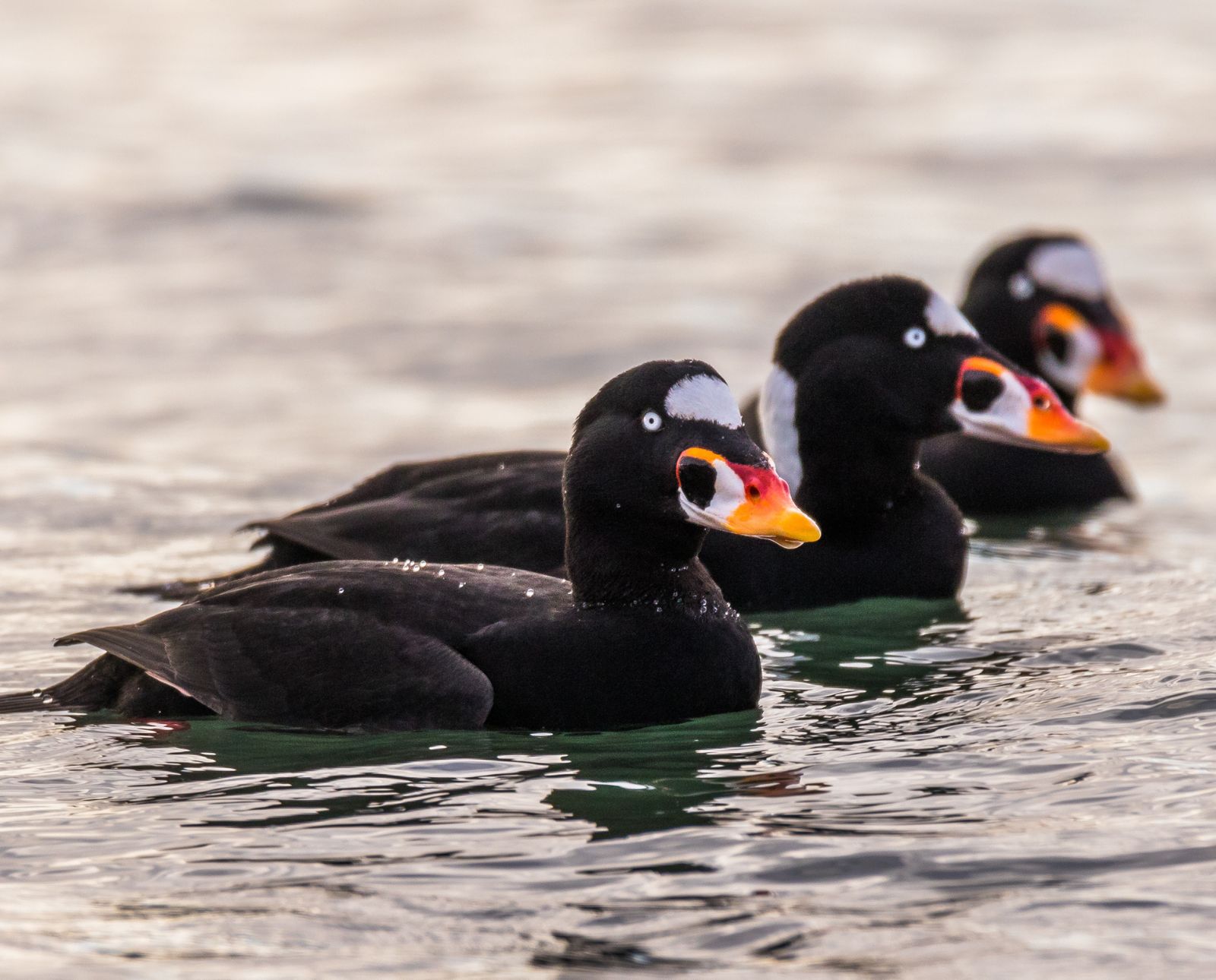
If there is one duck family in North America whose appearance can be described as truly strange, it certainly must be the scoter family. The surf scoter is without a doubt no exception. The wild, piercing eyes and candy corn-colored bill are the two most notable features of these sea-dwelling denizens. The trademark white patch that lies between its eyes has led some hunters to refer to these birds as “skunkheads.”
Surf scoters, like all scoters, are unique and special sea ducks. Hunters welcome them from coast to coast throughout the colder months of the waterfowl season. They are a challenging bird to hunt in some of the most beautiful coastal settings that you can imagine.
Surf Scoter Description, Life History, and Feeding Behaviors
| Characteristic | Comment |
| Scientific Name | Melanitta perspicillata |
| Taxonomic Family and Order | Order Anseriformes, Family Anatidae |
| Average Measurements | Length: 18 to 23 inches Wingspan: 29 to 30 inches Weight: 31 to 45 ounces, or 1.9-2.8 lbs |
| Egg Characteristics | Lays one brood of 6-9 cream-colored eggs per year |
| Nest Characteristics | Ground nests are heavily camouflaged and are generally close to water but above the shoreline’s marshy vegetation. Lined with down and moss |
| Diet | Invertebrates living on the ocean floor, such as mussels, clams, snails, worms, and small crustaceans |
| Habitat | Nests in the taiga shield. Otherwise lives in coastal landscapes near the ocean |
| Range | Northern Alaska and Canada, the Great Lakes Region, British Columbia, and the Pacific and Atlantics coastlines of North America. |
| Estimated Population | According to Partners In Flight, an estimated 470,000 birds |
| Conservation Status | Low conservation concern |
| Conservation Concerns | Habitat degradation, oil spills, heavy metal pollution and other types of water pollution. Scientists believe that high-latitude nesting birds will be “severely impacted by climate change” due to ecological mismatch |
| Similar Species | White-winged scoter, black scoter |
The National Audubon Society lists the average length of an adult surf scoter to be between 43 and 53 cm. According to Ducks Unlimited (DU), the average weight of these sea dwellers is 2.2 lbs for males and 2.0 lbs for females. DU also mentions that surf scoters are a duck that only occur in North America and, for the most part, remain unstudied, particularly during the breeding season.
Breeding generally takes place near lakes and slow-moving rivers in the far north of Canada and Alaska, known as the taiga shield ecotone. The National Audubon Society and Cornell Lab of Ornithology state that nests are found in sparsely forested or semi-open terrain, or sometimes out on open tundra. Female surf scoters prefer to nest in brushy tundra or wooded areas near a pond, bog, or stream, and lay an average of seven to eight eggs (Ducks Unlimited). The female surf scoter builds a nest, creating a depression in the ground and lines it with down (All About Birds). Male and female surf scoters begin to pair up while overwintering.
Read: American Black Duck (Anas rubripes): An Elusive Yet Treasured Duck Species
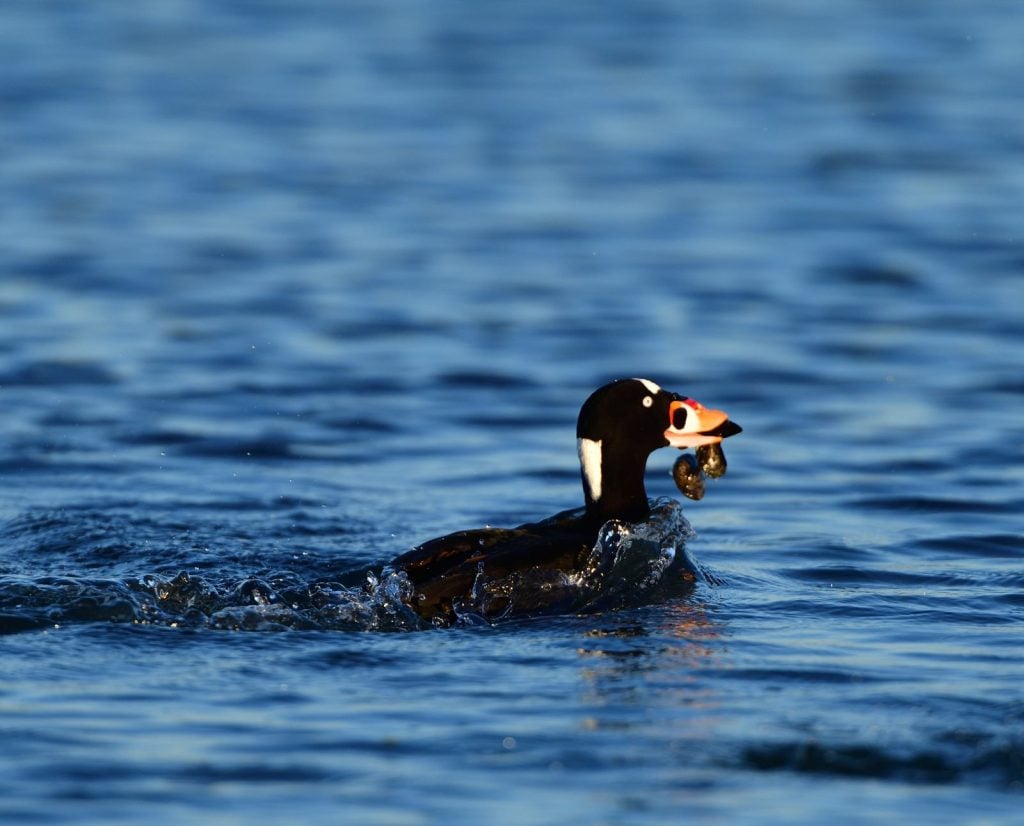
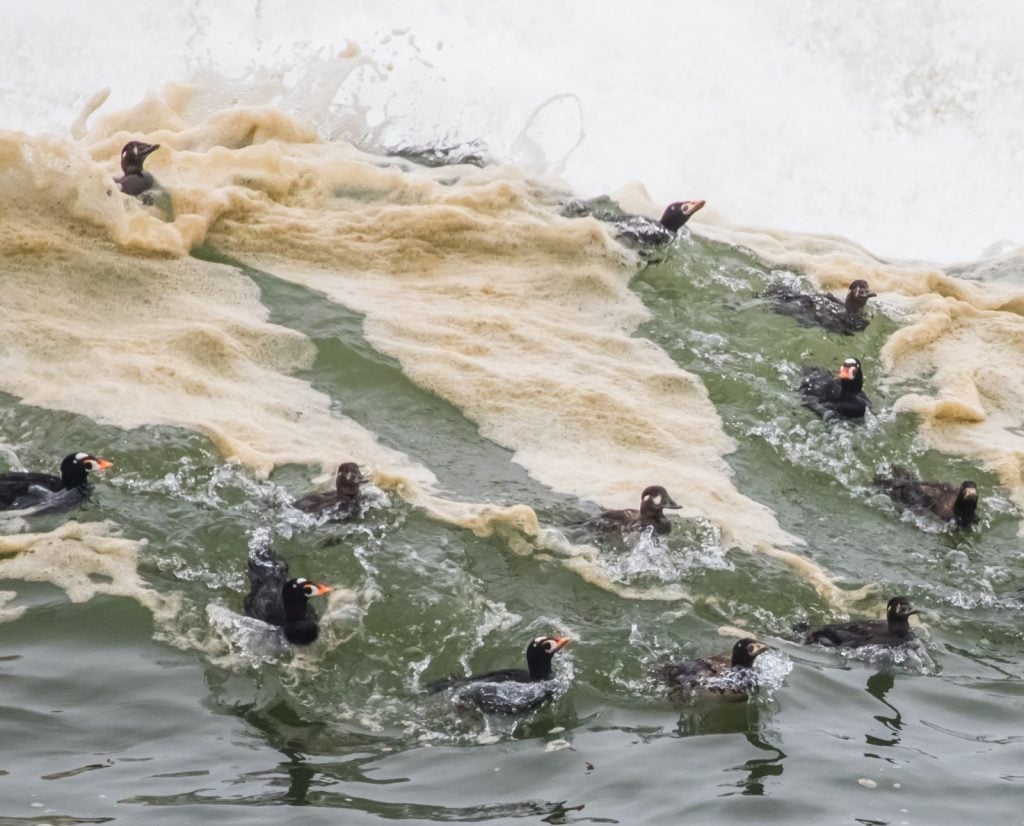
The surf scoter is a sea duck which means, among many other things, it dives down to the ocean floor to feed. According to the Cornell Lab of Ornithology, common food items that surf scoters forage on include creatures like small mollusks, especially mussels and clams, as well as marine snails, small crabs, sea squirts, hydrozoans (related to jellyfish), various marine worms, and (particularly in the Pacific) herring spawn. Rarely will the surf scoter dive in water that exceeds 30 feet deep. They forage in the zone of breaking waves and easily dive through wave crests (Ducks Unlimited).
The North American breeding population was estimated at 275,000-765,000 birds between 1955 and 1973. In 1994, 536,000 breeding birds were estimated for northwestern North America. Although accurate population information is currently unavailable for surf scoters, they are believed to be declining along with other species of scoters (Ducks Unlimited).
Range, Migration, and Seasonal Distribution
Surf scoters’ seasonal movements are vast and cover the northeast coast of Florida to the Arctic Ocean. The Cornell Lab considers this species to be a medium-distance migrant. During the summer months, surf scoters spend the rearing season in the boreal forests of Canada. As autumn freezes those northern lakes, they migrate south. Some birds will spend the winter around the Great Lakes region, if the winter is warmer there. Others will continue to the eastern seaboard and hold from the Chesapeake Bay area or further south.
Surf scoters on the western side of North America follow a similar migratory route and are known to overwinter from the waters around the Aleutian Islands all the way down to northern California (All About Birds).
Spring migrations begin in earnest as daylight hours increase and northern waters begin to thaw (Audubon Society).
Their migration pattern tends to make surf scoters a well-received and sought-after species for many waterfowl hunters all along the east coast. The same is true about their cousins, the white-winged scoter and the black scoter.
Population Status and Conservation Concerns
The surf scoter falls into the same category as many other species of waterfowl, in that the biggest threat to current populations is the significant loss of habitat, mainly in the boreal forest breeding grounds (Ducks Unlimited). Though the species is listed as a species of “least concern,” it still goes without saying that due to climate change, many threats to this habitat are still very real. Wildfires can destroy ideal nesting habitat for female scoters, and water pollution is another key factor that can impact oceangoing sea ducks. It’s possible that the overharvest of mussels, which are the preferred food source of the duck, can also negatively impact overwintering populations.
Currently, harvest limits of surf scoters are highest on the eastern seaboard within the confines of the Atlantic flyway (Ducks Unlimited).
Surf Scoter Hunting Tactics and Gear
If you understand the feeding habits of scoters, it begins to make sense that like many other sea duck species, surf scoters don’t want to work harder than they have to in order to feed. Shore hunting for surf scoters can be productive if the hunter is able to locate underwater structure where food items like mussels and clams can be found. Scouting with binoculars will be beneficial in locating places where scoters can be regularly found.
Ultimately, these birds will avoid close contact with shore when possible. Having a boat that can be anchored over a shallow shoal or bar is a great asset for hunters. These ducks enjoy the company of their own species and therefore decoy very well to a spread that has surf scoter decoys segregated at one end of the spread, though there are always exceptions to every rule in the world of waterfowl hunting.
Read: History of the Sinkbox: A Historic Waterfowling Tool
With that being said, most species of scoters will change their patterns very quickly once they have experienced hunting pressure on any level. Resting a productive area for a couple of days is highly recommended.
Generally speaking, surf scoters are typically hunted with a twelve gauge with a full choke. These birds don’t tend to fly over a spread of decoys as much as they will skirt around the outer edges, scoping out the situation before circling back around (sometimes more than once) before finally committing to landing. Many shots at scoters are passing shots, and because the surf scoter has such dense skin and fat beneath those feathers, follow up shots are common. Given the mood of the birds on any particular day, having an extended full choke that can be swapped in may give you an added edge if scoters are giving your decoy spread a careful eyeball from further distances.
A spread for surf scoters doesn’t have to be a monstrosity. A prospecting shore hunter can successfully hunt these ducks with twelve to eighteen decoys, and not all of them are required to be scoter decoys. In fact, many coastal hunters use mixed spreads of goldeneye, bufflehead, long-tailed duck and scoter decoys, which often results in more variety of waterfowl that engage the spread.
Surf Scoter Hunting Regulations and Bag Limits
Bag limits for surf scoters vary across North America. For example, the surf scoter bag limit in California is seven ducks. In Maine, the daily bag limit is three, and in British Columbia, the limit is eight. Maintaining a strong familiarity with the regulations of where you hunt should be common sense, as should be purchasing hunting licenses and stamps and adhering to all waterfowl hunting regulations in your area. Be sure to read your local hunting laws before embarking on a sea duck hunt.
The Final Word on Surf Scoters
With their striking looks and interesting offshore habits, surf scoters occupy a unique corner of North American waterfowling. They are a bird equally at home diving through breaking waves or rafting by the hundreds along a winter shoreline. For hunters willing to pursue them, surf scoters offer challenging hunts in some of the continent’s most dramatic coastal landscapes. And as pressures on breeding grounds and marine ecosystems continue to mount, understanding these sea ducks and their habitat becomes just as important as pursuing them.