

Pine Squirrel Hunting, Habitat, and Life History
Life history, habitat, and hunting information for the pine squirrel, one of North America’s most abundant tree squirrels
The American red squirrel (Tamiasciurus hudsonicus), more commonly known as a red or pine squirrel, are charismatic critters who call conifer forests home. According to the State University of New York College of Environmental Science and Forestry, historical naturalists described this species as “pugnacious, fearless, timid, saucy, curious, and loquacious.” These squirrely traits are readily apparent when traipsing around in the woods for any reason, whether it be grouse hunting, scouting for white-tailed deer, foraging for mushrooms, or just hiking with your dog.
But how is it that pine squirrels are so prolific, yet so tricky to hunt?
Despite their tiny brains, pine squirrels are not dumb animals. They have the ability to be everywhere and nowhere simultaneously. They’re aware of their surroundings, quick to key in on movement, and even quicker to seek cover when they feel threatened. Pine squirrels’ small bodies make for challenging targets whether you’re shooting a shotgun or a .22, and their swiftness demands good marksmanship.
For these reasons, pine squirrel hunting makes for an excellent introduction to the hunting world. For seasoned hunters, bringing a few pine squirrels home is a fun way to achieve a mixed game bag.
Pine Squirrel Habitat and Life History
| Characteristic | Details |
| Scientific Name | Tamiasciurus hudsonicus |
| Common Names | American red squirrel, red squirrel, pine squirrel |
| Taxonomic Order and Family | Order: Rodentia Family: Sciuridae |
| Body Size | About 7 ounces and 12 inches long |
| Litter Size | 3-5 young on average |
| Diet | Seeds, nuts, buds, invertebrates, small mammals and nestling birds, eggs, fungi, and fleshy fruits |
| Habitat | Conifer forests, mixed forests, and deciduous hardwood forests in northern latitudes |
| Range | Northeastern US, Appalachian Mountains, upper Midwest, Rocky Mountains, Canada, and Alaska |
| Population | Estimated to be in the millions. Though squirrel populations are not well monitored, the IUCN deems their conservation status as “least concern / population stable.” |
| Similar Species | Tamiasciurus fremonti, the southwestern red squirrel or Fremont’s squirrel Tamiasciurus douglasii, the Douglas squirrel |
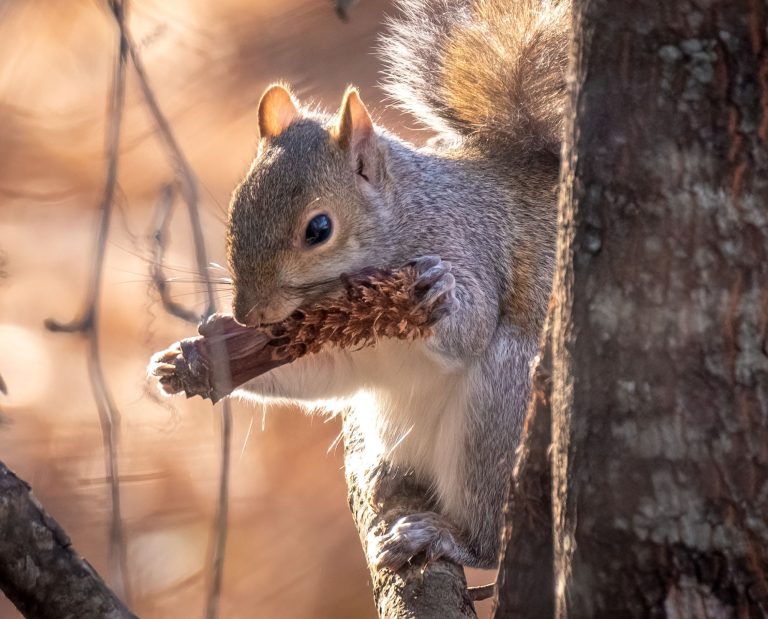
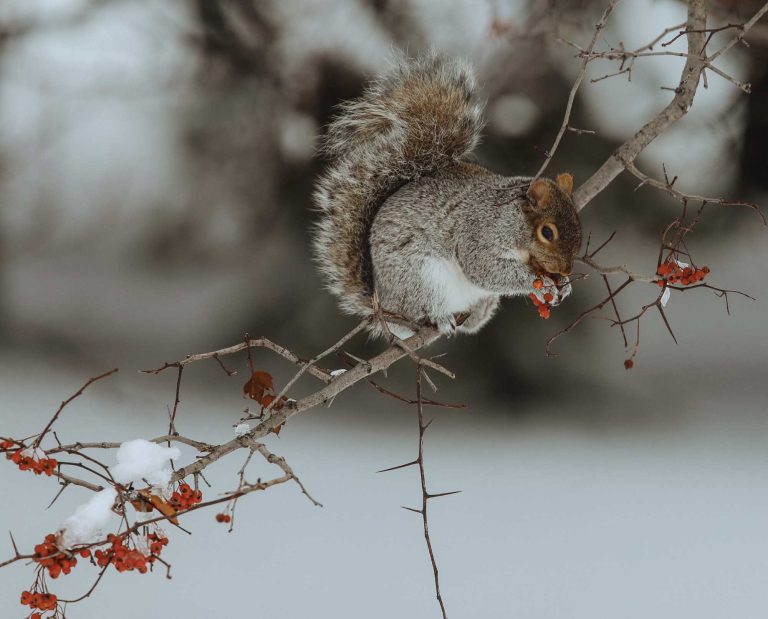
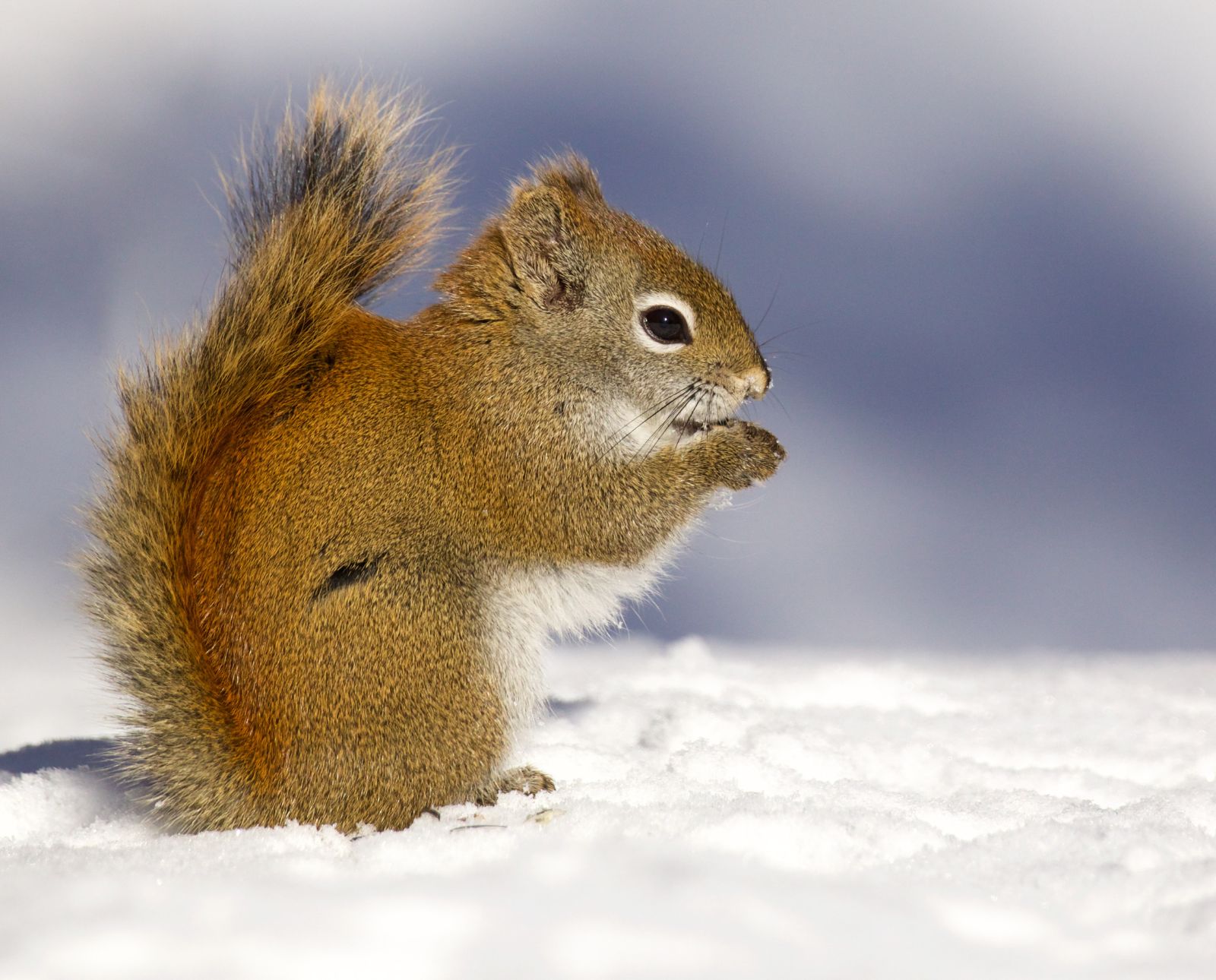
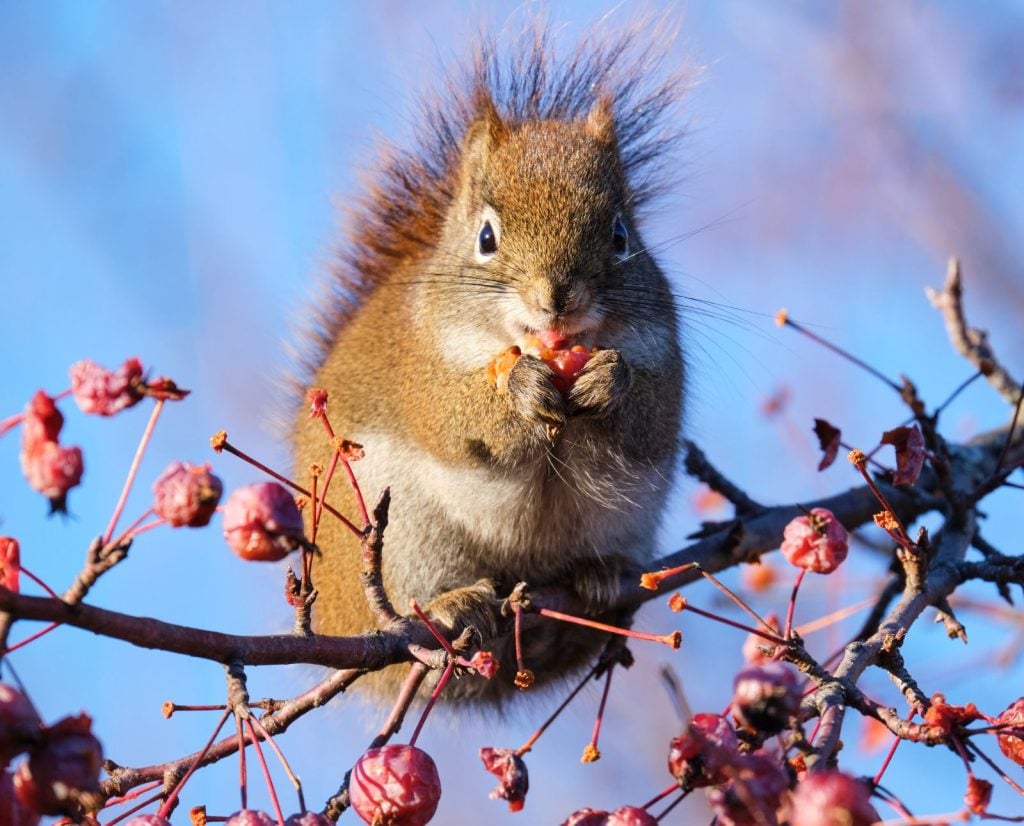
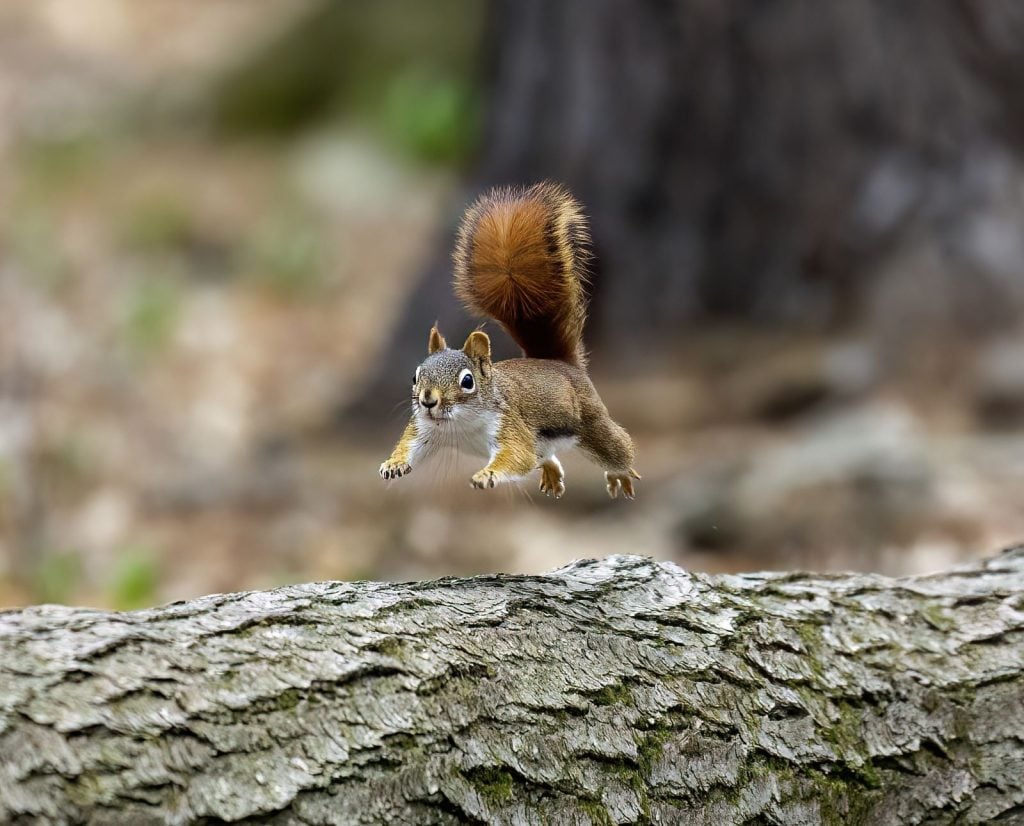
American red squirrels (or pine or red squirrels, whatever you like to call them) have reddish-grayish fur everywhere except for their bellies, which are a creamy white color. They also have white “eyeliner” around their eyes.
The smallest of the tree squirrels, pine squirrels aren’t as bushy-tailed or large-bodied as their gray, fox, or Abert’s squirrel counterparts. However, their small body size doesn’t mean they’re less athletic than their larger cousins. Curved claws and powerful leg muscles allow pine squirrels to launch from tree branch to tree branch and scurry dozens of feet off the ground in seconds.
Pine squirrels span across the entire North American continent. This species’ range includes the Northeast, Appalachian Mountains, northerly Midwestern states, Rocky Mountains, most of Canada, and even Alaska. Regardless of what state or country they’re in, pine squirrels prefer to reside in conifer forests and mixed forests. However, they can be found in northern hardwood forests as well.
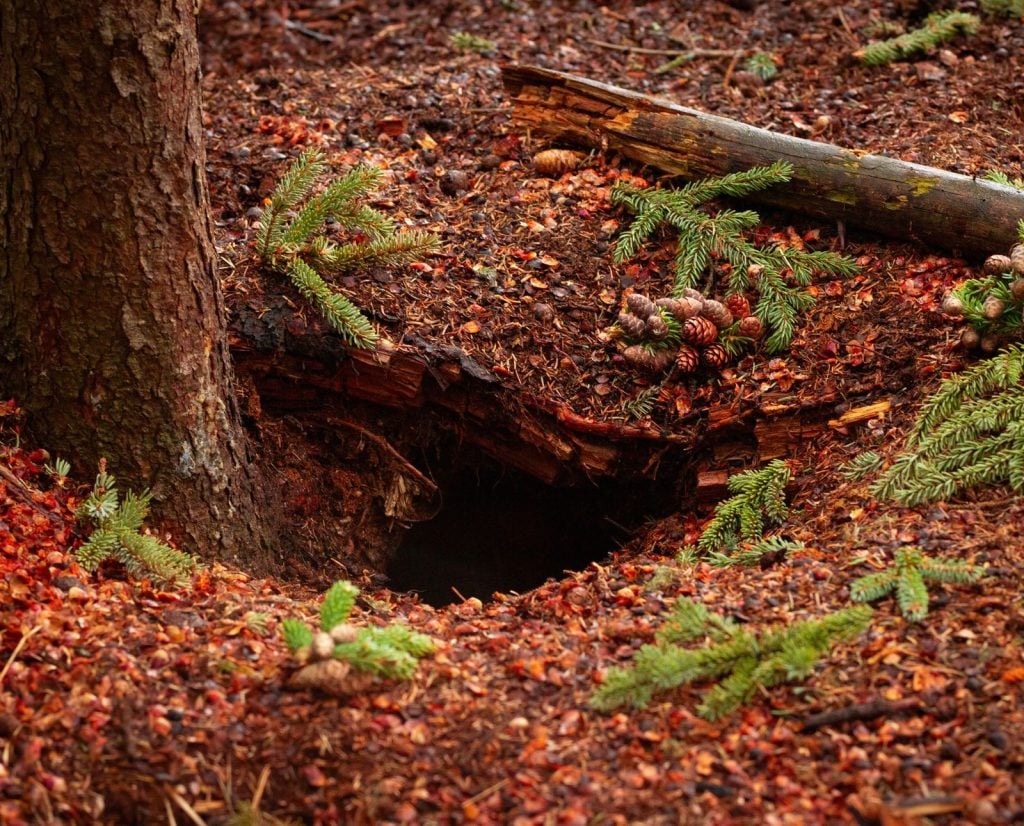
Areas of suitable habitat include places where mature trees produce seed-bearing cones, fruit, or mast. Mature trees also offer pine squirrels a variety of escape routes including trunk cavities, thick clumps of branches, and 50- to 80-foot high crowns.
Large, food-bearing trees also provide excellent cover for mother squirrels with young. The pine squirrel breeding season takes place during the winter. Female pine squirrels gestate for approximately 38 days. On average, red squirrel litter sizes range between three to five kits, but they can be as small as one kit or as large as eight. Young squirrels are raised in nests, which may be located underneath or within a midden or up in a tree’s branches.
Young squirrels mature quickly. Their eyes open 27 days after they’re born, and they’re fully furred by day 30. By the time pine squirrels are nine to 11 weeks old, they’re establishing their own territories. Red squirrels typically live for three to five years, but individuals as old as 10 years have been recorded.
Pine Squirrel Behavior
While pine squirrels are technically diurnal, they are typically active throughout the day. Peak activities occur during the morning and late afternoon. When they’re active, they’re typically eating, cutting and storing pine cones, forming middens (places where food is stored for later), or traveling to food sources. Squirrels who are out and about are also quite vocal and frequently chatter, growl, squeak, and produce alarm calls. Squirrels tend to be less active in poor weather conditions, like high winds, rainstorms, and blizzards.
According to the U.S. Forest Service, when it comes to establishing territories, home range sizes depend on whether the pine squirrel is male or female, mature or juvenile, and the general quality of the overall habitat. Older squirrels, especially mature females, tend to have the largest home ranges. On average, pine squirrel home ranges tend to be between one and 11 acres.
That said, pine squirrels are very territorial. Researchers have found that they tend to be the most defensive of winter food caches, middens, and the places with the highest food densities within their home ranges.
What Do Pine Squirrels Eat?
As their common name suggests, pine squirrels love to eat pine cones. Some studies have estimated that a single pine squirrel can “42,000 to 131,000 pine cones per year,” and “on New Brunswick jack pine sites, red squirrels consumed at least 47 cones per day.”
That said, similar to cottontail rabbits, they are also very opportunistic eaters. In addition to conifer seeds, they’re known to eat deciduous tree seeds, nuts, plant buds, sap, new leaves, fruits, mushrooms, eggs, small vertebrates, insects, and nestling birds.
Pine Squirrel Hunting Techniques
There are three main ways to hunt pine squirrels: still hunting, stand hunting, and hunting with dogs.
Still hunting squirrels involves slowly walking through good squirrel habitat with a .22 rifle or a shotgun loaded with 2 ¾ inch shells with No. 6, 7, 7.5, or 8 shot. When still hunting, it’s important to step quietly and deliberately, being careful not to snap twigs, crunch through snow or dry leaves, or make other loud noises that alert squirrels to an intruder. Oftentimes, you’ll hear pine squirrels chattering before you see them, and you can make your way towards the direction you heard them from.
Stand hunting squirrels is much like hunting whitetails from a treestand; select a good position in high-quality squirrel habitat with multiple shooting lanes and wait for squirrels to show up. There is an argument to be made that rifles chambered in .22 or even .17 are more effective for stand hunting than shotguns due to their ability to shoot farther distances. Stand hunters will often catch squirrels traveling to and from food sources or chasing other squirrels out of their territory. Sit in your stand during sunny mornings and late afternoons with little to no wind, and you’ll set yourself up for success.
Read: How to Hunt Squirrels with a Dog
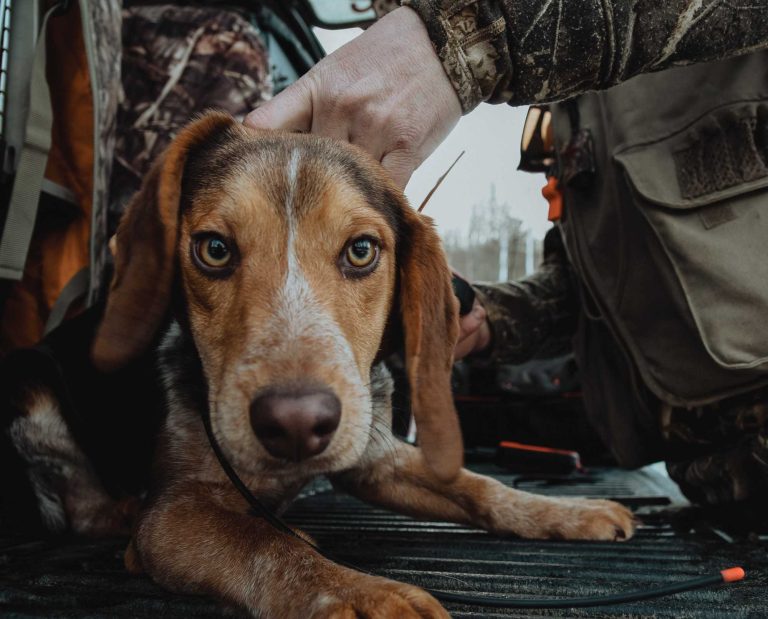
While I’ve never formally hunted squirrels with dogs, the gist of it is that dogs will locate and tree squirrels. Then the hunter walks in and shoots the squirrels. I’ve personally watched my German Shepherd mix, Border Collies, and Small Munsterlander all tree pine squirrels. However, the pros typically use a small dog called a Feist, a bold and courageous breed.
Whether you’re still hunting, stand hunting, or hunting with dogs, once you see the squirrel, wait for a good shot opportunity with your firearm of choice. If you wound the squirrel rather than kill it, they tend to retreat into nests, middens, root balls, and other places that will make retrieving them difficult or impossible.
Early vs. Late Season Pine Squirrel Hunting
Depending on where you live, you might be able to hunt pine squirrels year-round or only in the fall and winter. As someone living in Colorado, I consider the early season to be October through Christmas and the late season January through February.
The main advantage of hunting pine squirrels during the early season is accessibility. Seasonal roads are open and driveable. Walking and hiking is easy since the snow hasn’t fallen yet. The weather can still be very mild and borderline summer-like. However, identifying high-traffic areas will be more difficult; snow helps give these places away.
Unlike tree squirrel species who call deciduous forests home, pine squirrels live in conifers. Conifers don’t lose their needles in the winter, so there isn’t a benefit of increased visibility for hunters during the late season. However, once the snow has fallen, it becomes much easier to locate squirrel highways, feeding areas, and popular stands of trees. Squirrel tracks, shredded pine cones, and midden access points pop against snowy backgrounds.
Regardless of what season you’re hunting in, squirrels do not like high winds or extreme weather. If you don’t want to be exposed to the elements, squirrels typically don’t, either.
Firearms and Shot Placement for Pine Squirrel Hunting
As previously mentioned, it’s recommended to hunt pine squirrels with a small caliber rifle or a shotgun. In some states, like North Dakota, it is legal to hunt them with an air gun. When shooting a .22 or .17, try your best to aim for the head or the heart and lungs. Pine squirrels are very small and don’t have a lot of meat on their bones already; obliterating the front shoulders or hindquarters will lead to significant meat loss.
Read: What’s Better for Squirrel Hunting, a Rifle or a Shotgun?
When shooting a shotgun, use a choke and shot size that is appropriate for your shooting conditions and environment. You’ll probably be using your setup for ruffed grouse or blue grouse hunting, which is fine. What you don’t want to be doing is shooting No. 6 shot at a pine squirrel with a full choke from 10 yards away. There will not be any meat left to recover.
Like with any type of hunting, take ethical shots and don’t waste the meat.
Pine Squirrel Hunting Regulations and Bag Limits
State wildlife agencies generally offer long pine squirrel hunting seasons and generous bag limits. For example, in Colorado, the pine squirrel season runs from October 1 through the end of February. The bag limit is five squirrels and the possession limit is 10 squirrels. Hunters can legally hunt squirrels with dogs except during big game hunting seasons.
Comparatively, in North Dakota, the tree squirrel season opens September 13 and closes February 28, and the bag limit is four squirrels and the possession limit is 12 squirrels. According to the state’s regulations, tree squirrels may be “taken with shotguns, rimfire, pre-charged pneumatic air guns and muzzleloading firearms, or with bow and arrows legal for the taking of upland game.”
Regardless of where you’re hunting, always read the local regulations before you head out into the field. In some states, red or pine squirrels may be a protected species, and in others, they are a “nongame” species that can be hunted year-round with no bag limits. If you do happen to be hunting in an area with no bag limit, be respectful of the resource and only take as many as you need.
Project Upland always recommends that small game hunters wear blaze orange, especially during big game hunting seasons.
Cooking and Eating Pine Squirrels
Unlike their gray and fox squirrel relatives, pine squirrel meat isn’t all that white or plain-tasting. Instead, they have a darker, more flavorful meat that tastes fantastic in braises, stews, soups, pot pies, casseroles, and any hearty potato-based dish.
Depending on the age of the squirrel, the meat may be more or less tough. I’ve found that the older the squirrel, the tougher the meat. To account for the variations in toughness, I just braise the meat until it falls off the bone, typically an hour to an hour and a half. Then, you can pull the meat and add it to just about any dish.
Pine squirrels are a playful, wily, and entertaining critter. They are a wonderful gateway into the woods for new hunters and offer low-pressure hunting opportunities, typically with plenty of chances to shoulder the gun. If you enjoy small game hunting or mixed game bags, don’t turn your nose up at pine squirrels. You just might be surprised by how much you enjoy chasing these critters around the forest.