

Bring on the Bassets: Rabbit Hunting with the Barony Bassets in Scotland
How Daphne Thorne’s pack of bassets keeps traditional hunting alive in modern Scotland
This article originally appeared in the spring 2021 volume of Hunting Dog Confidential.
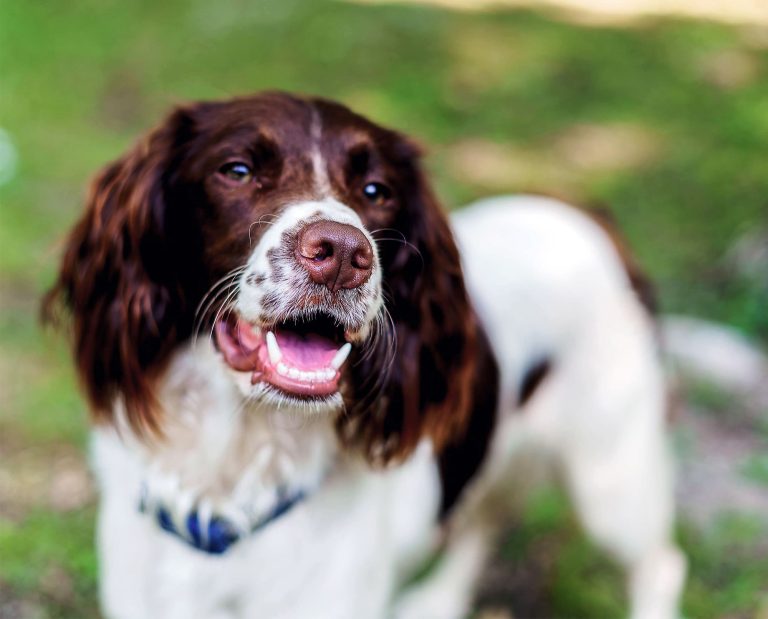
The Basset Hound—a big, heavy, cumbersome brute with ears longer than its legs? A lumbering leviathan fit only as a pet or for waddling round a show ring? I once thought so, but that was before I met the Barony Bassets and their Master, Daphne Thorne.
Daphne has spent a life steeped in hunting. Her aunt was Master of the Courtney Tracy Otterhounds and her mother was a Joint Master. Daphne herself whipped-in to the Test Valley Bassets in Hampshire as a teenager while her husband Robert spent 26 years in hunt service starting as second whipper-in to the Brecon Foxhounds, then becoming kennel-huntsman to the Golden Valley foxhounds before moving to Sir Watkin Williams Wynn’s. Both Robert and Daphne were deeply involved with greyhound coursing before it fell victim to political shenanigans.
Hunting Terms (U.K.): If you’re unfamiliar with hunting rabbits with bassets, here are a few British terms you’ll see in this story.
- Whip-in and Whipper-in: to keep hounds from wandering by “whipping them in” to the chase. A whipper-in is a professional or honorary member of a hunt staff who assists the huntsman with the hounds.
- Master: the person in charge of the hunt organization and leader of the huntsmen.
- Kennel-Huntsman: the member of the hunt who is responsible for the care, training, and breeding of the hounds.
Introduction to Basset Hound History
The Basset hound originated in France, where the breed diverged into several different types, the most common variants of which were the Basset Artesien Normand, the Basset Bleu de Gascogne, the Basset Griffon Vendeen, the Basset Fauve de Bretagne and the Basset d’Artois. The first recorded import of Bassets to the U.K. took place around 1866 when Lord Galway of Serlby brought over a dog and a bitch from the kennels of the Marquis de Tornon. These were probably of the Artesien Normand type and were named Belle and Basset. A litter from them was sold to Lord Onslow of Clandon Park, Guildford, who decided to use them to hunt hare.
Listen: An Overview of Hounds – HDC Episode #13
In France, Bassets were generally used to flush game to guns, but in the U.K. they are worked as a pack in much the same way as Foxhounds and Harriers. The modern English Basset is mainly descended from the French Artesien Normand Basset but has been bred over the years for its ability to hunt hare rather than as a flushing dog for shooting.
New Legislation Changes the Scottish Hunting Scene
The niche for Bassets in U.K. hunting came about somewhat recently. The Protection of Wild Mammals (Scotland) Act of 2002 effectively prohibited the use of dogs to catch and kill foxes and hares, instead allowing dogs only to flush foxes or hares from cover for hunters to shoot. As a result of the Act, the traditional British fox hunt was replaced with the flush-and-shoot method of hunting. Since shooting is more lethal than pursuing the fox with a pack of hounds, there are now more foxes killed than before the Protection Act was enacted, which unfortunately was not the original intent of the Act.
Prior to the hunting ban, there were ten packs of foxhounds in Scotland; one of them was disbanded due to the new law but the others continue to hunt legally by adapting their methods to keep within the new rules. The one pack that closed was the Dumfriesshire Hunt, whose history goes back to the formation of the Dumfries and Galloway Hunt in 1788, leaving Dumfriesshire without a local hunt for the first time in over two hundred years.
Enter Daphne Thorne. Daphne was so outraged by the ban that she decided to form a new pack of hounds that could hunt legally within the confines of the new legislation. How so? While it is now a criminal offense for a hound to kill a hare, it is perfectly legal for a hound to chase a rabbit. The law clearly delineates between hefty fines or jail time for hunting a hare or fox while rabbits remain fair game. Even better, Basset Hounds are particularly well-suited for the pursuit of rabbits, making them an excellent choice for such a traditional pastime.
Daphne Thorne and the Barony Bassets
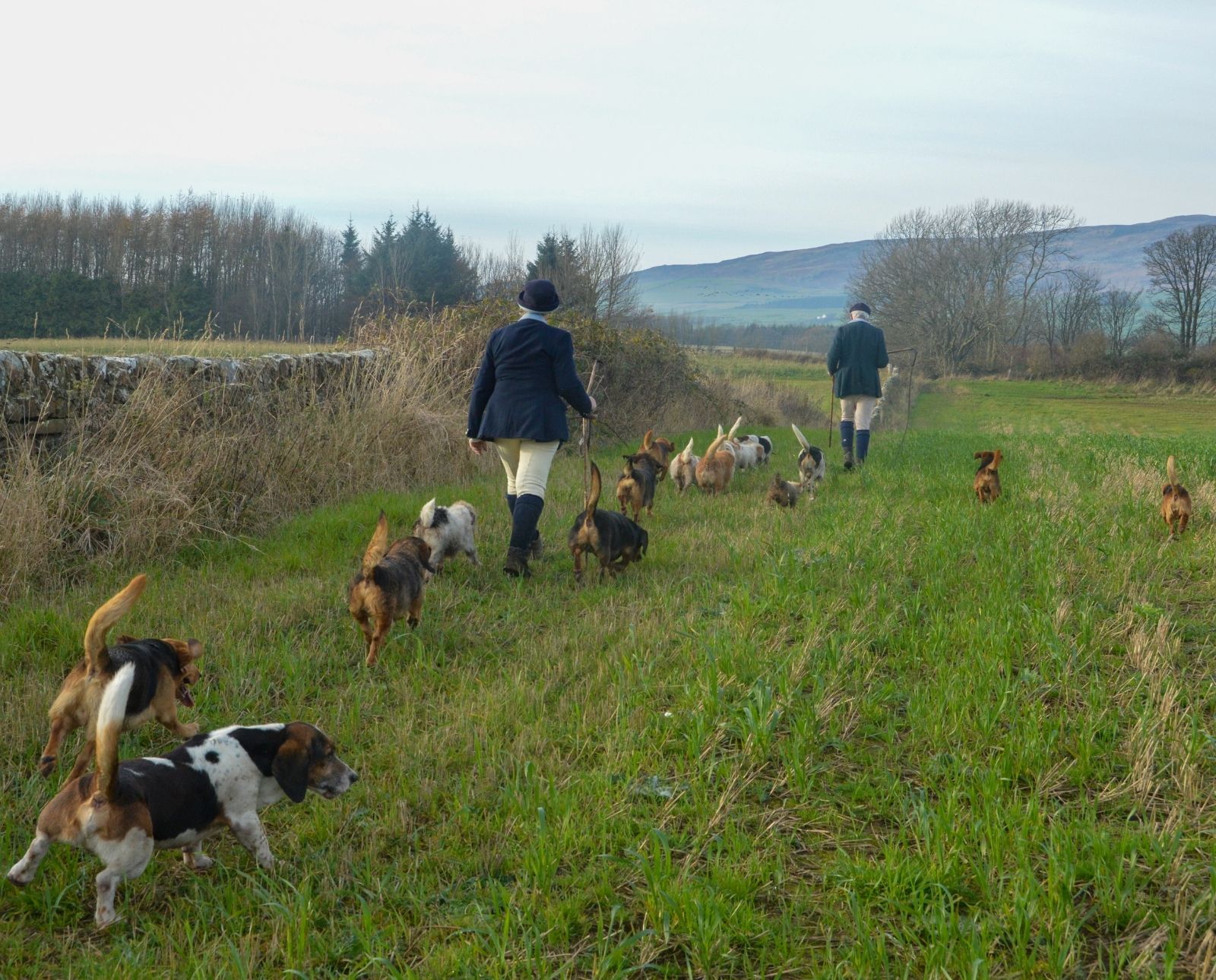
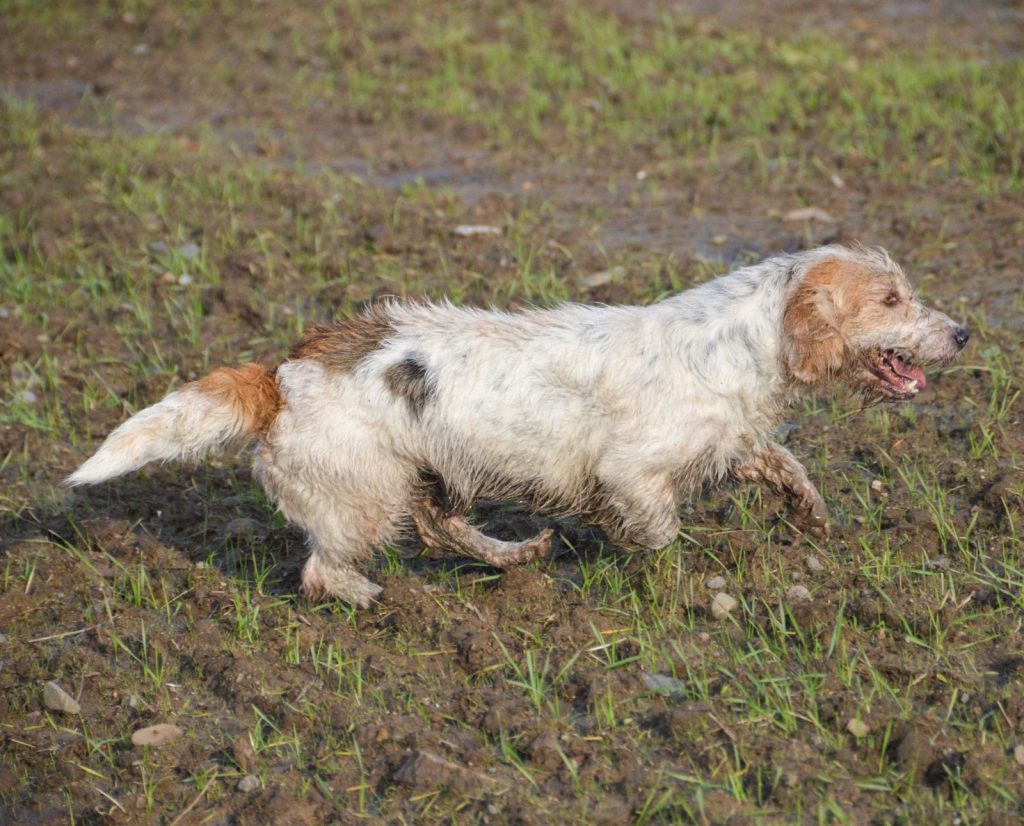
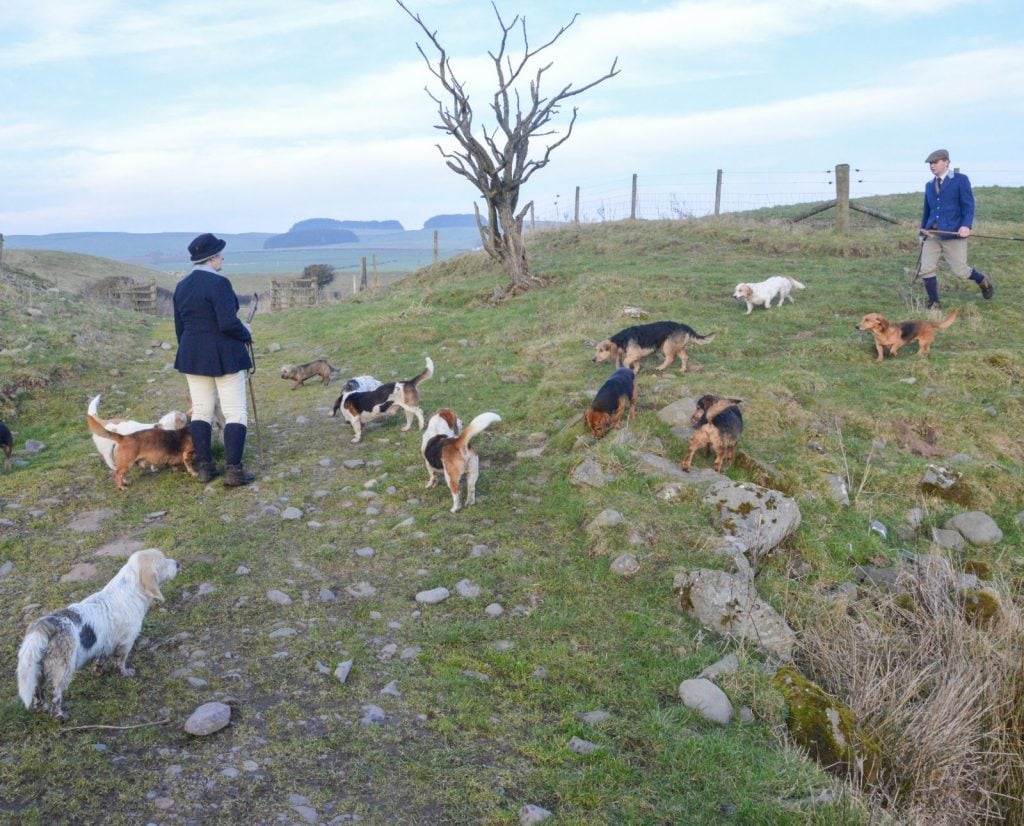
Thus, we can still employ a pack of hounds to hunt rabbits here in Scotland and that is what Daphne Thorne and the Barony Bassets do every Sunday afternoon from September to March. The pack is a mixture of English working Bassets and French Petit Basset Griffon Vendeens—a shorter-coupled hound that stands a little higher than the familiar Basset with its long body and short legs. The pack has both rough- and smooth-coated hounds at present, but Daphne’s long-term intention is to have a pack consisting entirely of rough-coated Bassets, perhaps reflecting her early association with Otterhounds.
They are the only registered pack of Bassets in Scotland, though their lines go back to another local pack: Sir Rupert Cunningham-Jardine’s Castlemilk Bassets. Sir Rupert imported his first Petit Basset Griffon Vendeen hounds to Scotland in 1938, bringing two and a half couple of hounds from France to form the nucleus of a pack. They hunted around the Annandale area until the Cunningham-Jardine family decided to disperse them around 1962 in order to concentrate on the Dumfriesshire Foxhounds—the famous black and tan coated pack of which Sir Rupert had become Joint Master in 1949 and which were disbanded as a result of the 2002 hunting ban.
Afield With the Bassets
Rough or smooth, French or English, there is no doubting the sheer enthusiasm of the pack as they tumble out of the hound van ready for a Sunday afternoon rabbit hunt. We were at an estate on the shores of the Solway Firth—a wide stretch of water that separates Scotland from England—on a beautiful, sunny winter afternoon as Daphne led off 10½ couple of hounds to the first draw with whippers-in Robert Thorne and Callum Rae covering the flanks.
There was not much cover on the winter fields and the pack concentrated on the hedgerows and odd little rough corners where a rabbit might be lurking in the wintry sunshine. There are no mounted followers when the Barony Bassets are hunting; everyone is on foot. This isn’t as arduous as it might seem, since progress from field to field and hedge to hedge is generally steady rather than frantic. That is, until one of the hounds hits a scent. The transformation in the pack is instant. The first hound gives tongue with a deep, bellowing roar, bringing the rest of the pack racing over to join in. From milling around as twenty-one individuals, the bassets suddenly become a team united in their determination to hunt their quarry.
Read: What is it like to Hunt Rabbits with Beagles?
With luck, the quarry will be a rabbit. I once asked whipper-in Callum Rea whether the hounds would hunt a fox if one was found. He nodded sagely. “Rabbit, hare, fox, deer, wolf, bear…” he said. “They’ll hunt the lot, given half a chance.”
If a hare or a deer does attract their attention, then it is up to Callum and fellow whipper-in Robert to get them off the line as quickly as possible, snapping their whips and shouting commands that the pack is generally quick to obey, backed up by Daphne’s blowing of her hunting horn to bring them back to where she wants them.
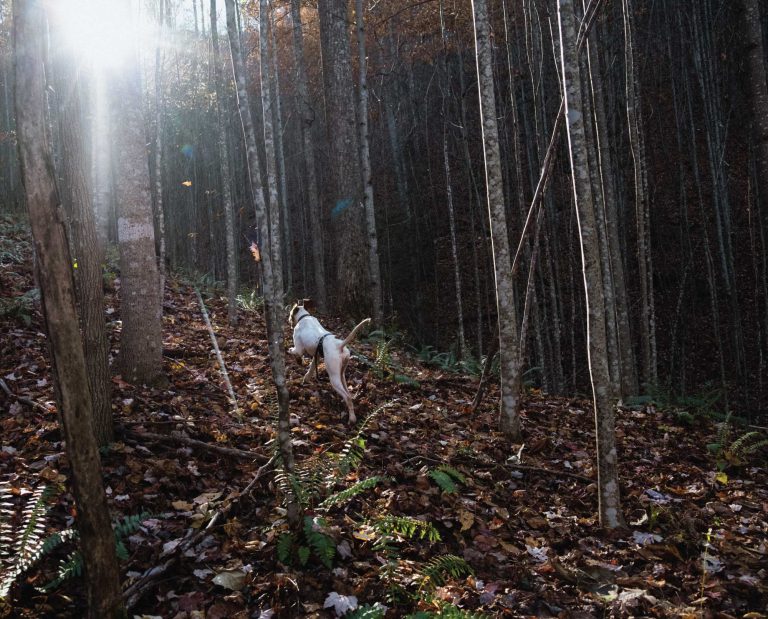
For all their short legs, the bassets are extremely mobile, tumbling and wriggling over fallen logs, through the brambles and around the thorn bushes and rocks where the rabbits have taken cover. The cry as the whole pack gives tongue when a rabbit is pushed off its form and set running is enough to raise the hairs on the back of my neck. It is an almost primeval sound harking back to the very beginnings of the domestic dog’s ancestry in the wolf. On a sunny winter afternoon, it is an exciting sound that stirs the blood of the hunter, but had you heard similar sounds deep in the forest at night when the pack could consist of wolves and the quarry might just be you, then the prickling of the scalp and the rush of adrenaline may elicit a different emotion.
Back in 1896, a writer with the pen name of Brooksby described the sound of a pack of Bassets: “Their music—as compared to foxhounds—was as a peal of bells to a tune upon glasses. The roar of nine couple would have drowned the combined dog packs of Pytchley, Grafton and Warwickshire.” Having heard the Barony Bassets in full cry, I know exactly what he meant.
As the pack hunted along a hedge separating the fields from the shore, a flock of geese rose from the winter wheat. I spotted a movement out on the rocks about halfway to the edge of the tide. Three otters were gambolling along the shore, seemingly undisturbed by the sound of the bassets until half a dozen of the pack found their way down onto the beach, sending the otters scurrying off into the water. Perhaps fortunately, none of the hounds picked up their scent and a blast on Daphne’s horn brought them back into the fields to continue their search along the hedgerow and tumbled-down stones of an old sea wall.
We crossed into a belt of young trees where the ground cover was much thicker; rabbits were present in reasonable numbers, to judge by the hound music as the pack hit scent. With the Bassets being somewhat under-endowed in the leg department, it was difficult to see much of the action but the cry of the pack and the whoops of Daphne’s hunting horn kept us abreast of events as a couple of brace of rabbits were bowled over.
The winter days in Scotland are short. As the light began to fade, Daphne blew for home and, with whippers-in Robert and Callum assisting, the little hounds were gathered up and led back to the hound van.
Following the Barony Bassets as they hunt rabbit is a great way to spend a Sunday afternoon: good company, great sport, and a modest dose of healthy exercise. There will be no ten-mile points as might occur with a pack of Foxhounds, but for those of us who are a little long in the tooth that is no bad thing. Far better to amble along gently and see the whole hunt without ever breaking into a run or having to leap a barbed wire fence as the pack vanishes into the distance. This is hunting on a small scale but it is no less exciting for that.
Why Rabbits?
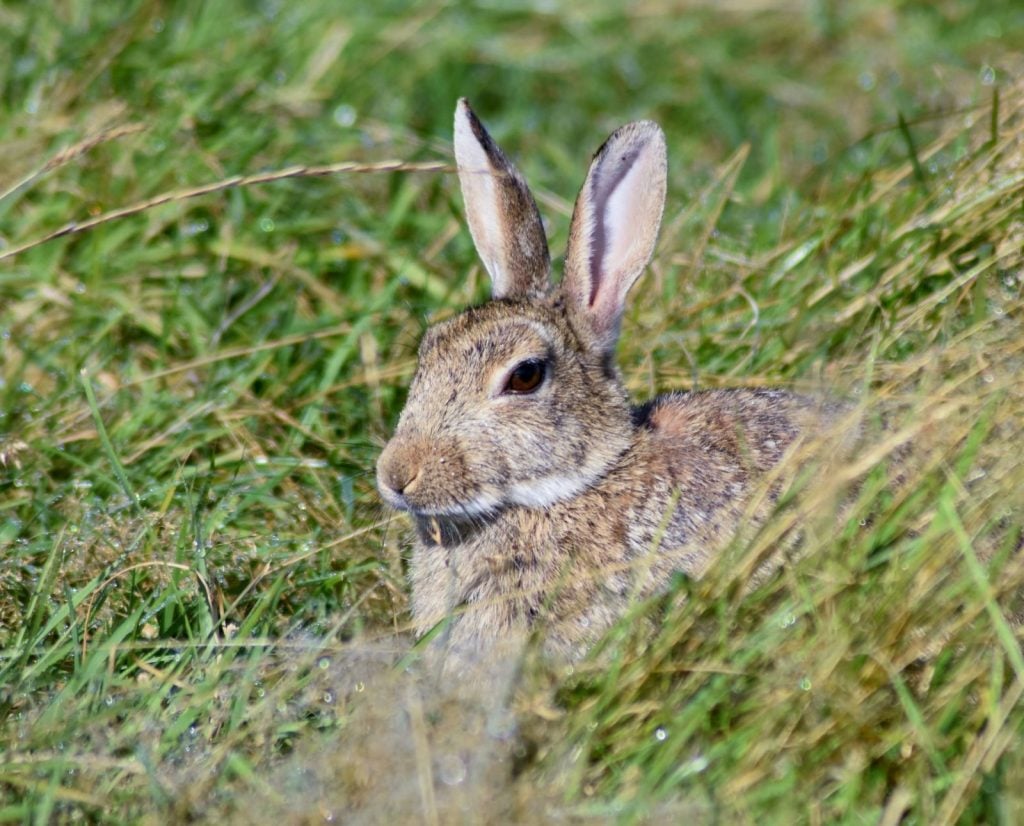
While you might think the objective of the hunt is to watch dogs catching rabbits, it’s just as impressive to watch them hunting. The Basset hound at work is a study in determination. Since I’m accustomed to working pointers and setters that hunt at a flat-out gallop and slam on to point at the first hint of scent, it was a revelation to watch these little hounds carefully working away at foot scent, puzzling out the line, checking and rechecking as the scent fluctuated until finally hitting a solid scent and racing along as a pack in full, glorious cry. There were no guns positioned to kill the rabbits as the law now requires with Foxhounds. A rabbit either escapes or it is killed, quickly and very comprehensively, if the pack is able to catch it.
While the rabbit in Britain is no longer the agricultural pest that it once was before myxomatosis almost wiped the species out in the 1950s, today it provides fair game to continue the traditional hunt in a new way. Indeed, were it ever to recover to the point where it represented a threat to farming, there are far more efficient ways to control rabbits than hunting them with a pack of hounds. Shooting, ferreting, snaring, trapping, and gassing were all common at one time and the first three methods are still used. Shooting rabbits bolted by a ferret calls for very quick reactions and a keen mastery of the shotgun. Hunting with Bassets, by contrast, requires few rabbits for an afternoon’s sport. If some or even all of them escape, then they will always be there another day.
Thanks to Daphne Thorne’s dedication and persistence on behalf of the hounds, within two years of the Protection of Wild Mammals (Scotland) Act there were once again ten packs of hounds in Scotland. Even better, a few years later the Dumfries and Galloway Foxhounds rose from the ashes of the old Dumfriesshire Hunt, so now there are eleven packs in Scotland to carry on this illustrious tradition within the requirements of modern-day rules and legislation.