


Arctic Hare (Lepus arcticus): Habitat, Diet, Life History, and Hunting
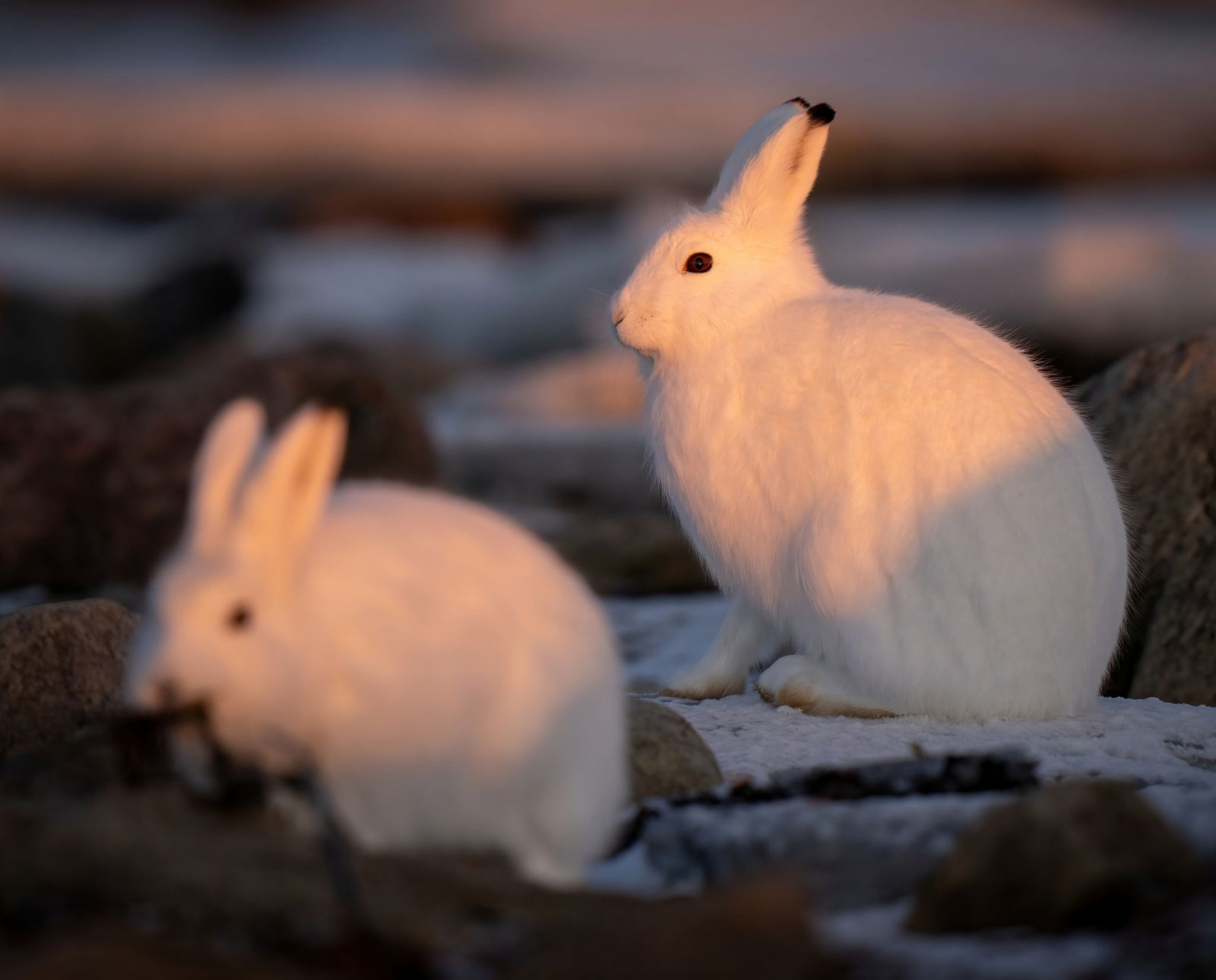
From its tundra habitat to its specialized adaptations for cold climates, the arctic hare is a remarkable yet poorly understood small game species
Perhaps the least hunted by small game aficionados, the arctic hare (Lepus arcticus) is a fascinating denizen of the frozen tundra it calls home. This large northern hare survives in one of the harshest environments in North America. By using their speed, natural camouflage, and keen eyesight to evade predators, arctic hares survive across the harsh, shelterless Arctic landscape.
The arctic hare is the largest lagomorph in the family Leporidae, and it is closely related to species such as the snowshoe hare and mountain hare. However, unlike many other hare species, the arctic hare has evolved specialized traits that allow it to thrive in extreme cold. A closer look at the arctic hare’s biology, range, and behavior reveals just how well this species is adapted to life in the far North.
Arctic Hare Quick Facts
| Characteristic | Details |
| Scientific Name | Lepus arcticus |
| Taxonomic Order and Family | Order: Lagomorpha Family: Leporidae |
| Lifespan | 3 to 5 years |
| Body Size | 17 to 28 inches long |
| Average Weight | 6 to 15 pounds |
| Top Speed | 37 miles per hour (60 kilometers per hour) |
| Diet | 95% dwarf willow |
| Habitat | Arctic tundra |
| Range | The Arctic Islands, Greenland, Ellesmere Island, and the very northernmost reaches of Quebec and Labrador |
| Population | Never been scientifically established |
| Predators | Arctic foxes, red foxes, arctic wolves, grey wolves, polar bears, Canadian lynxes, snowy owls, gyrfalcons, ermines |
| Conservation Status | Least Concern |
| Similar Species | Alaskan hare, snowshoe hare, mountain hare |

Arctic Hare Range and Habitat
The arctic hare’s name suggests the places that they live, but to be more specific, this lagomorph is found throughout the Arctic Islands, Greenland, Ellesmere Island, and the very northern most reaches of the Canadian provinces like Quebec and Labrador. They sometimes cluster in small groups on rocky outcrops as well as coastal tundra areas, though groups of several dozens of arctic hares have been observed. For the most part, though, these creatures enjoy a solitary life up until breeding season begins.
This North American native is estimated to live three to five years on average, but the longevity of the species is actually not well known. What is known is that they do not thrive in captivity, with an average lifespan of under two years in most cases. According to the Northwest Wildlife Preservation Society (NWPS), it is unknown just how many animals make up the overall arctic hare population.
Arctic Hare Description, Physiology, and Adaptations
When compared to other hares across North America, the arctic hare is a true giant. It is the largest of all lagomorphs, and the average weight of an arctic hare ranges from six to fifteen pounds. These mostly nocturnal hares can reach a top speed of 60 kilometers per hour (37 mph) according to the Royal Canadian Geographical Society.
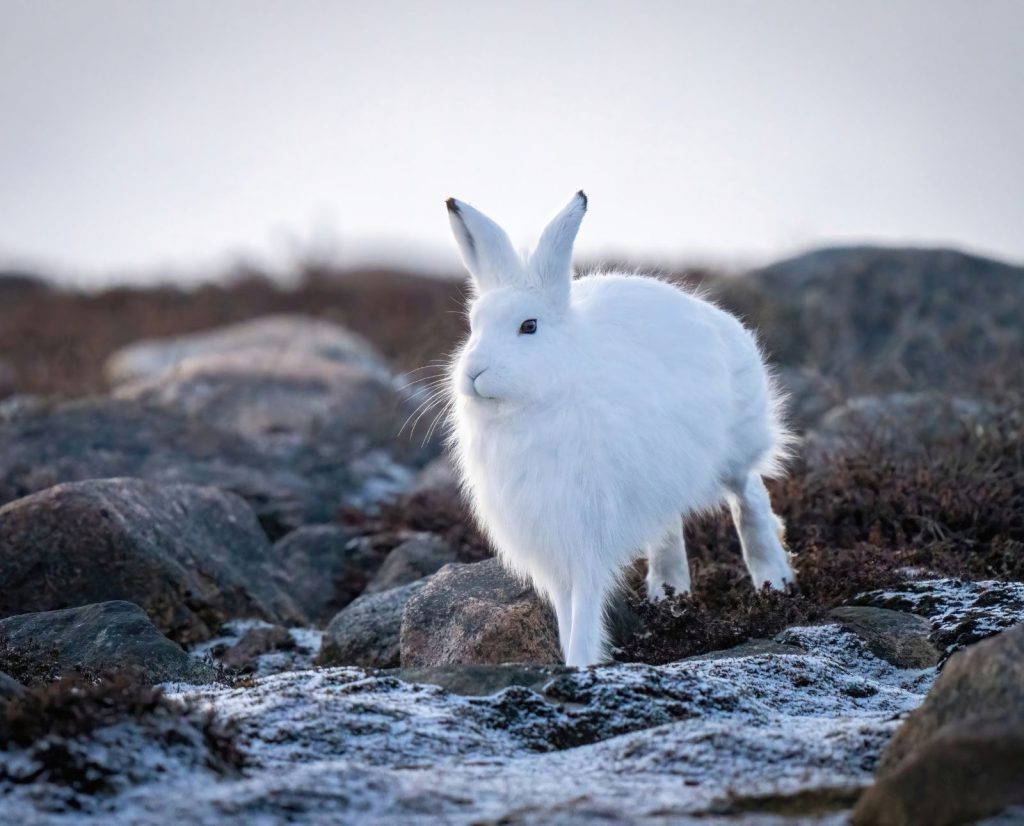
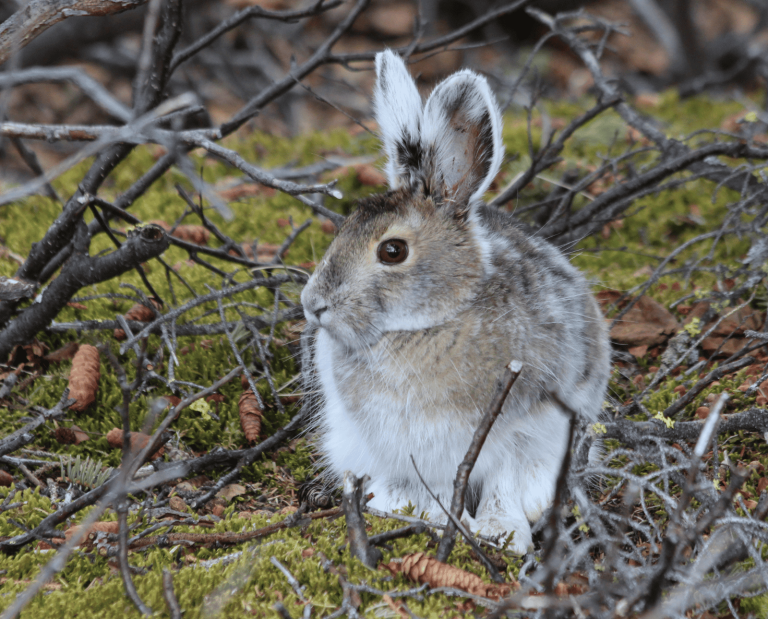
In addition to speed, the arctic hare possesses several adaptations that allow it to survive in extreme Arctic environments. Arctic hares measure 17 to 28 inches in length, with round, fat heads and smaller ears adapted to the cold, harsh conditions of which they live. According to iNaturalist, 20 percent of their body weight is fat. Their coats turn from a mottled brown and white during the summer into a snow-white protective camouflage in the winter. In regions where the summer is very short, the arctic hare will remain white all year round (iNaturalist).
Arctic hares are known to use posturing during the day in windy conditions, maintaining a near spherical shape in order to stay warm. With the placement of their eyes relative to the shape of their head, they have a near 360 degree view to help them detect predators like foxes and birds of prey. According to Canadian Geographic, their eyes have natural “sunglasses” around them—dense black eyelashes that shield their eyes from the sun’s glare off the reflective snow.
Arctic Hare Diet and Feeding Habits
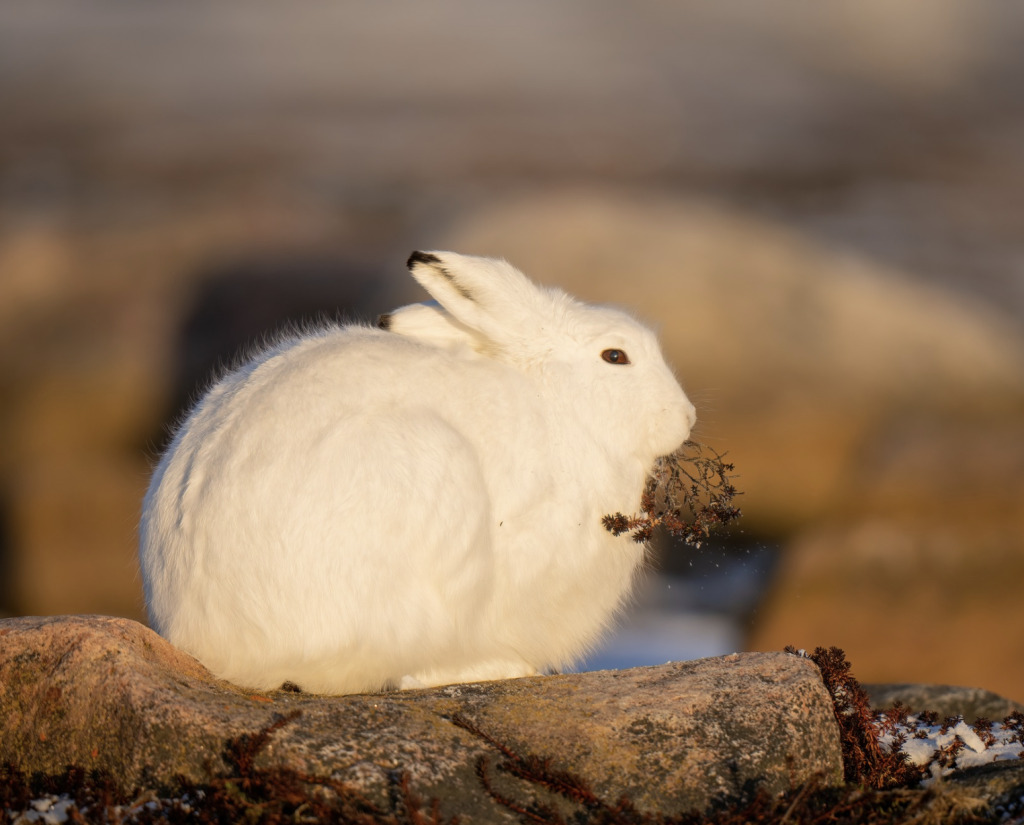
The arctic hare’s diet is very limited based on the ecology of the tundra, but if there is one thing that these hares absolutely love, it is dwarf willow. According to the University of Michigan’s Animal Diversity Web, This plant makes up 95 percent of the arctic hare’s diet and is a good indicator of where to find these giant hares. Various mosses, lichens, shrubs and plants make up the rest of their diet when available. While rare, there are rumored accounts of arctic hare eating the skeletal remains of fish such as arctic char, too.
For added calcium in their diet, it’s likely that arctic hare will also chew and consume bones as well as antlers dropped by tundra caribou. According to New Hampshire PBS (NHPBS), because of the kind of food items that arctic hares eat, they are born with incisors that are much straighter than most other species of rabbits and hares.
Arctic hares are genetically predisposed with a lower than average metabolic rate which helps them to conserve energy in the harsh arctic climate (iNaturalist).
Arctic Hare Breeding and Reproduction
In most of the arctic hare’s range, breeding occurs in April and May. Males are known to fight one another in a mannerism that appears as though they are boxing. It’s interesting to note that at the very beginning of their breeding season, males will try to mate with any other hare that they find. At this time, they are unaware of the difference between male and female. Once bred, a female will undergo a gestation period of 53 days at which point the female will have dug a depression in the ground, of which will be lined with grasses and her own belly fur (Canadian Geographic, NHPBS).
Most batches of young, called “leverets,” consist of three to six young or as many as eight. The mother will stay nearby and nurse the leverets, and by the time they are three weeks old, the leverets will begin to leave the nest, only returning when it’s time to nurse. Often mothers will build nests near one another and sometimes will nurse the leverets from other nests as well as their own. Female hares have been observed nursing up to twenty leverets (Canadian Geographic, NHPBS).
Little is known about how long a young arctic hare will stay nearby to its mother’s’ home range before venturing off, but it is known that by eight to nine weeks of age, most leverets are weaned off of their mother’s milk and it is suggested that they leave shortly thereafter (NHPBS).
Arctic Hare Conservation
So little is known about the arctic hare, but as of this writing, it is considered a species of least concern. Due to ongoing changes with the climate, some areas of the tundra have warmed and melted, creating semi-wetlands. Both iNaturalist and the NWPS assume that the arctic hare will adapt to the changes occurring and may perhaps even benefit from them.
Arctic Hare Hunting and Edibility
Because of their heightened abilities to detect danger, it has to be assumed that hunting for arctic hares could be done a couple of different ways. Seeing as how I’ve never made the trip to the Arctic to take part in this, consider what you read to be nothing but speculation.
One potential method would be to utilize a snowmobile to cover ground, getting up high near rocky structure and outcroppings while using a quality pair of binoculars to glass the surrounding landscape and trying to avoid becoming a polar bear’s lunch. Local knowledge ahead of time would be integral, as would playing the weather. If it were me, I’d want to get out there on an ideal day when the weather wouldn’t have the hares hunkered down.
Read: The Perfect Backcountry Ski Setup for Upland Hunting
Rather than trying to conduct a hare drive, having a sharpshooting .17 HMR or .17 WSM might be more practical due to the overall weight and body mass of the average Arctic Hare. As with any firearm, dialing it in prior to the hunt and understanding how it shoots in cold temperatures would be an asset.
Arctic hares, like all species of lagomorphs, are a very dark and lean meat. As with most other kinds of hares, braising or stewing would be the most beneficial means to cooking one of these animals. As the saying goes, “Cook them low and cook them slow.”
At this time, I was unable to find any information regarding whether there are any parasites that Arctic hares can carry which may be harmful to humans via means of contact and consumption.
The arctic hare is a remarkable survivor of one of the harshest environments on Earth. From its dense white winter coat and powerful hind legs to its ability to subsist on sparse tundra vegetation, every aspect of its biology reflects the demands of life in the far North. Though rarely encountered by hunters and still not fully understood by science, the arctic hare remains an enduring symbol of the resilience required to thrive in the Arctic.


Great article about a really interesting animal! Much appreciated!