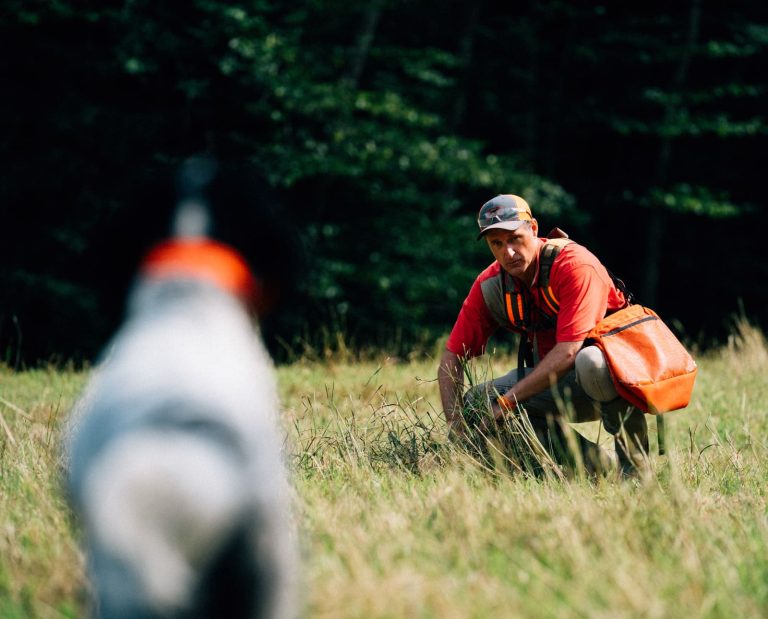


AKC Master Hunter Test: Requirements, Expectations, and Etiquette
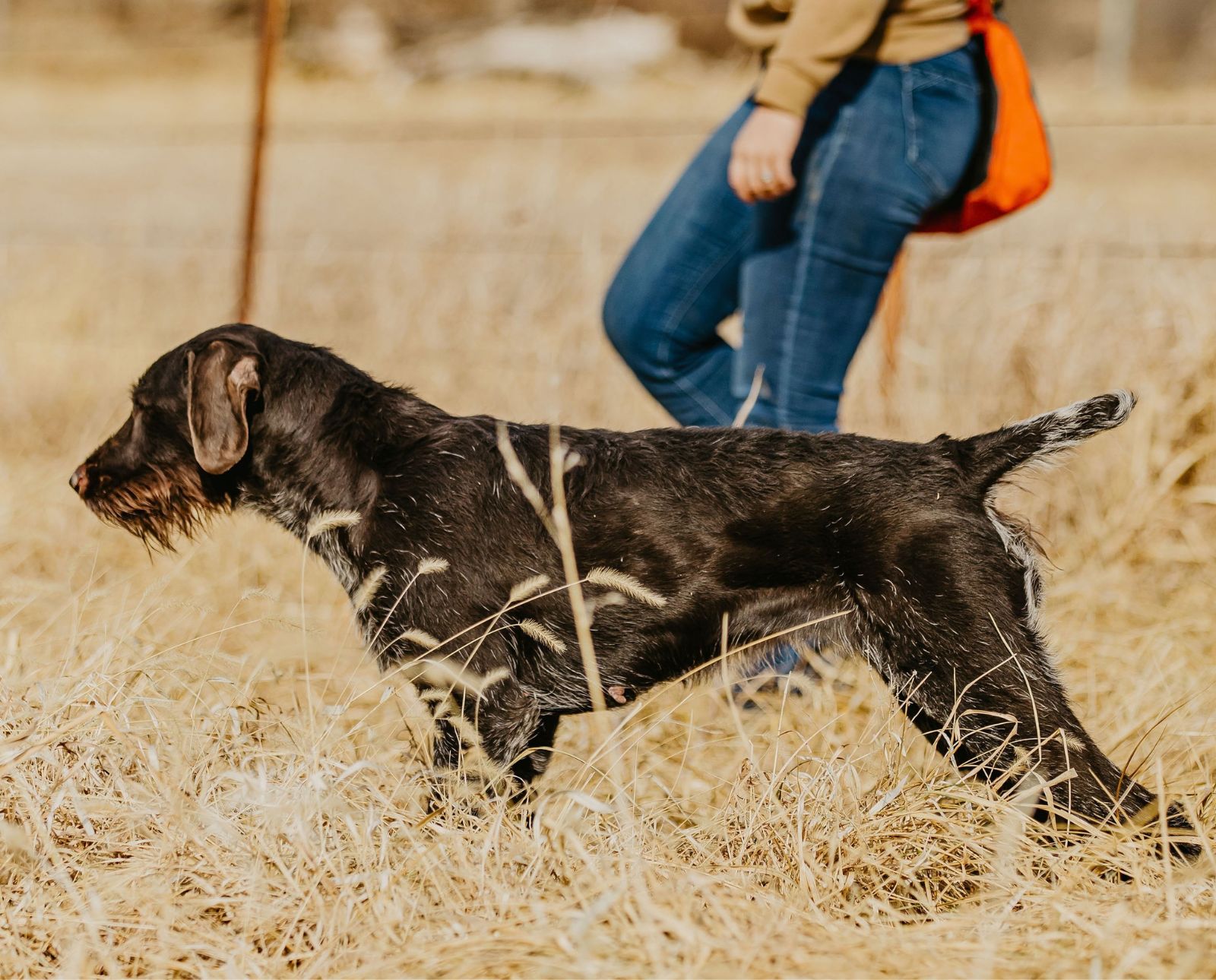
What happens during an AKC Master Hunter test? Here’s what handlers and dogs are expected to demonstrate
This article originally appeared in the summer 2022 issue of Project Upland Magazine.
For most upland hunters, the end of the season can bring a little relief to tired dogs and worn-out boots, but it doesn’t take long for the yearning to return to the hunt to start to creep back into our hearts. After months of hard-earned, birdless miles and countless hours trying to outsmart Mother Nature, it seems the next hunting season just can’t come soon enough. So, what do you do to pass the time? How do you keep that flame from driving you insane?
Have you considered hunt testing? It might be just what the doctor ordered. For pointing dog handlers, one of the most respected levels is the AKC Master Hunter test, which evaluates advanced field work, steadiness, honoring, and retrieving ability. Before you get ahead of me, hear me out. I’ve heard it all, from “I don’t need to prove my dog” to “Who cares about pen-raised birds and titles?” I think we can all agree that there’s nothing quite like wild bird hunting. However, there’s no need to dread the off-season!
Hunt testing is a great way to keep you and your dog tuned up and in shape, and maybe even make new lifelong hunting buddies. Most people I talk to about hunt testing don’t know where to begin and feel intimidated to enter a test. Let me clear up a couple of things.
Hunt Test Levels for Bird Dogs (AKC, NAVHDA, and Others)
Every test you attend, whether for spaniels, retrievers, or pointers, has levels from beginner to expert. In general, the lowest level usually consists of the dog simply searching for and indicating birds. Since these tests do not allow the use of electronics, it gives the handler an idea of how good a hold they have on their dog and helps them understand what things they might need to work on before the next season opens so the dog is sharpened up and ready to go.
Read: Comparing NAVHDA, JGHV, and AKC Hunting Dog Tests
A few popular hunt testing venues include American Kennel Club (AKC), North American Versatile Hunting Dog Association (NAVHDA), Hunting Retriever Club (HRC), and North American Hunting Retriever Association (NAHRA). All official rules, including a breakdown of each level, can be found with an easy Google search.
The next obstacle that seems to hinder people is where to find a test. Again, a quick event search online can help you find a test happening near you soon and the clubs all over the country that are eager to help you get started.
What is the AKC Master Hunter Test?
The AKC Master Hunter test is the highest level of hunt testing for pointing breeds in the American Kennel Club hunt test program. Dogs are evaluated on advanced hunting ability, including bird finding, honoring another dog on point, retrieving to hand, and remaining steady through wing, shot, and fall.
AKC Master Hunter Pointing Test Requirements
While all hunt tests and venues are important in their own right, let’s dive into AKC Master Hunter pointing test requirements. These tests are where I have the most experience and all of my pointing dogs are finished AKC Master Hunters.
According to the “Regulations for AKC Hunting Tests for Pointing Breeds,” participants in AKC Master Hunter tests must demonstrate:
- “Desire, boldness, independence, speed, and a useful pattern of running” while hunting
- “The ability to find game”
- “Intensity and staunchness” while pointing
- A “willingness to be handled, its obedience to commands, and its gun response”
- A good retrieve defined as “a directness to the bird, quick location, prompt pick up, brisk, direct return to the handler, with tender delivery”
- A “willingness to honor and its style”
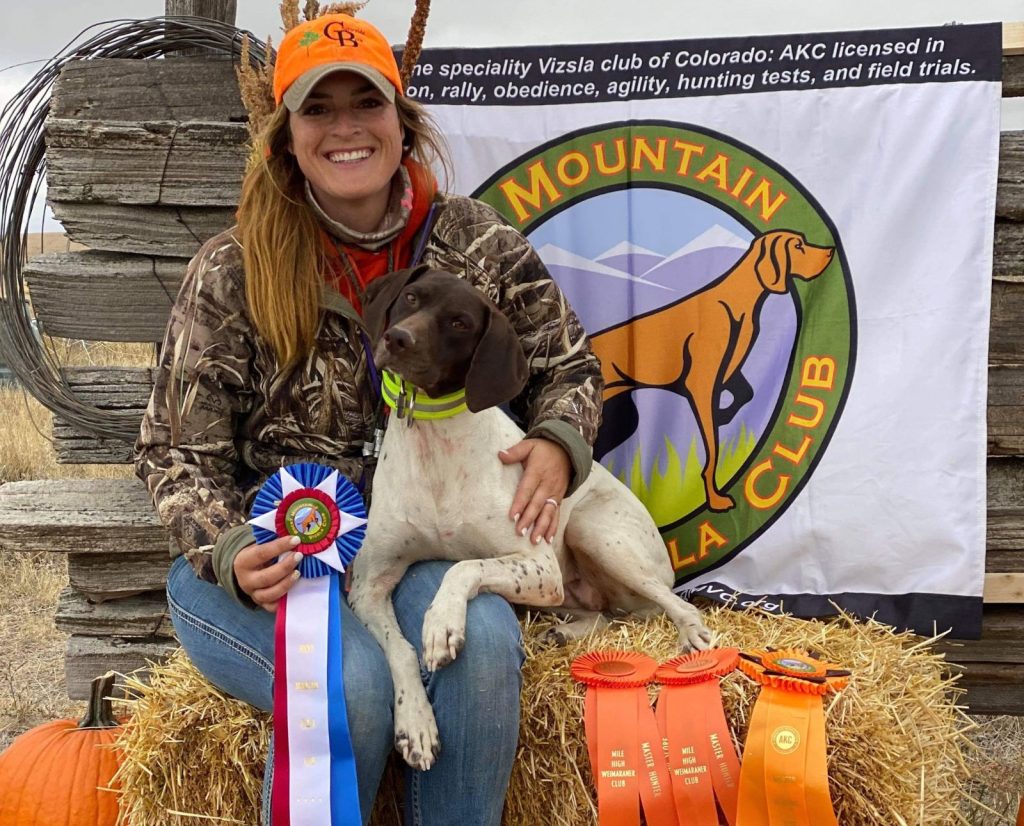
At a test, there will be six people and two dogs in the field—two judges, two gunners, and two handlers with one dog each—for 30 minutes. Each of these tasks is scored and, at the end of their performance, is given a passing or failing score. Once you accumulate six passing scores, your dog will earn the title of Master Hunter.
Although your dog may have a flawless run, many factors can throw a wrench in things, including live birds that always have a mind of their own, gunners who are human and sometimes don’t make the best shots, and a bracemate or handler that might have another agenda that day. Sometimes we all encounter a little bit of bad luck, but regardless of scores, you’ll learn something every time you run.
I’m often asked why these tasks are important. We’ve all been there—a wily rooster gets up and cackles loud enough to wake the neighbors, but you were caught off guard and only managed to clip a wing as you watched it sail and hit the ground 100 yards away. Most would argue that a “broke dog” would be less than helpful in this situation, and I might be tempted to agree.
When hunting wild roosters, I want my dogs to get on that wounded bird as quickly as possible. The wonderful thing about dogs, though, is that they are adaptable. When trained at these high levels, you will see just how versatile they can be. Though my dogs are Master Hunters, when we are hunting wild roosters, they know they can break and don’t have to stand and wait to be sent for the retrieve. On the other hand, I can take those same dogs out the next day and guide youth hunts, where having a broke, steady dog is vital for everyone’s safety.
That said, let’s dig a little deeper into the other tasks expected at the AKC Master Hunter level and what you might expect to see.
Honoring (Backing) in an AKC Master Hunter Test
Earlier I mentioned honoring, or backing, as many call it. When hunting with a friend, will your dog respect theirs, or will your dog run in and steal a point? You don’t know how another dog is going to react, which could leave a missed opportunity at a bird or even worse—a dog fight. This is why honoring becomes an extremely vital task.
In an AKC Master Hunter test, when your bracemate goes on point, your dog must acknowledge the action and swiftly stop to honor. While both dogs are standing, the two gunners will walk up to work the bird in front of the dog who initially went on point. Not only does that dog have to stay broke through wing, shot, and fall, but the honoring dog must also stand broke, unrestrained, and politely watch the show. So, whether that’s a staunch pointing dog slamming to a halt at the sight of another’s silhouette or a retriever that swiftly sits at the cue of your whistle, all dogs should be able to handle a situation where the bird is simply not theirs to take.
I could go on a tangent about safety here, but, also, no one wants to hunt with a friend that has a greedy dog. It’s never fun to see your dog working its tail off to perfectly quarter an open field, stick its nose into the wind, and stop so hard they nearly somersault, just to have a buddy’s dog blast in front of them and steal the bird. We’ve all been there, and it’s not a good feeling.
Handler Etiquette During an AKC Master Hunter Test
This brings me to another topic of etiquette that is rarely ever spoken of, but fully understood by most that are testing at high levels: noise. Nobody wants to hunt with the guy that is screaming at his dog, blowing his whistle, and busting every chance at sneaking up on those insanely smart wild birds.
Have you ever had a buddy slam the car door when you pull up to a public hunting spot during late season, just to look off into the horizon to see all the birds getting up and saying goodbye? In an AKC Master Hunter test, you are able to “quietly caution” your dog, but any obnoxious or over-the-top handling and vocalization will be penalized or even fail you.
By putting yourself in situations with a high level of expectation, you learn how to handle your dog quietly and effectively. Learning to handle your dog this way will guarantee you will be asked to come back time and time again.
Retrieving Requirements in an AKC Master Hunter Test
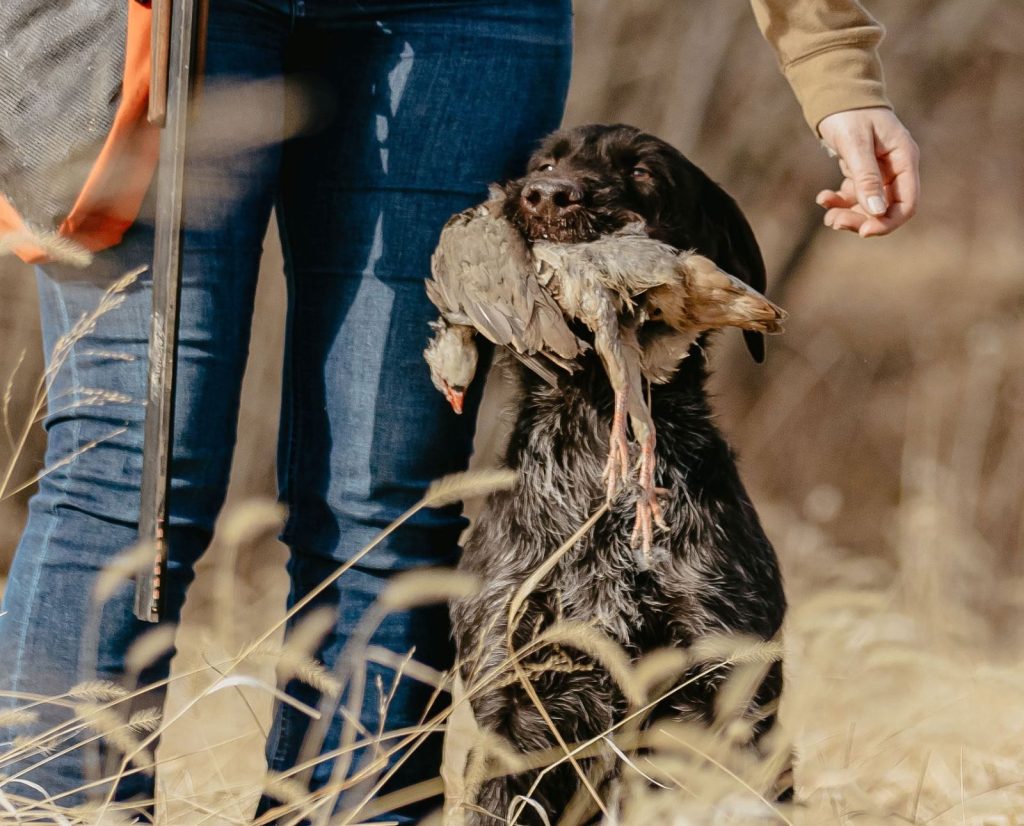
Lastly, let’s cover the retrieve. Standing through the fall of the bird allows the dog to mark the location of the dead bird. In a perfect scenario, the dog will run straight out to the bird and back, but sometimes the situation can get a little tricky with thick cover, terrain, or an unfavorable shot.
It’s fine for your dog to take some time to navigate their surroundings and use the wind to locate the bird, but your dog should return as quickly as possible with the bird tenderly in its mouth. Dropping the bird or chewing on the bird will be penalized. Without too much coaxing, your dog should willingly deliver it to your hand. This action not only ensures a meal that’s fit for the table, but also guarantees we are putting in our best efforts as responsible hunters to recover any and all shot game.
Hunt Testing Strengthens the Bond Between You and Your Bird Dog
As you can see, hunt testing, especially at an AKC Master Hunter level, truly gives you and your dog the tools to become a better team and become efficient and ethical hunters. Sure, some of the tasks might not be an exact replica of what you encounter in the field, but they are designed to build a well-rounded, versatile hunting companion that any of us would be proud to hunt behind. Training a dog to this level is no easy feat and definitely takes a lot of time and dedication. Most dogs that I see at this level are well over two years old with a hunting season or two under their belts.
The AKC Master Hunter test represents the highest level of hunt testing for pointing dogs in the AKC system. While the standards are demanding, they are designed to showcase the qualities upland hunters value most: a steady, responsive dog that can work cooperatively in the field. While many might not see the usefulness of testing, what it all comes down to is that you are able to spend more time with your dog. Isn’t that what we all strive for?