

Raising Domestic Turkeys: A Practical Guide for Homesteaders
From poults to full-grown birds, here’s what it takes to raise turkeys on a working homestead
Domestic turkeys bring a lot to the table in terms of additions to the homestead flock. For upland hunters, raising domestic turkeys offers a deeper connection to birds. It’s an opportunity to better understand avian behavior, anatomy, and the realities of putting meat on the table. Anyone who has raised turkeys on a small, more intimate scale will attest that turkeys have personalities, too. Just like raising geese, the raising of domestic turkeys for your homestead will revolve around some basic needs for a bird that will grow significantly larger than your average barnyard chicken.
It’s theorized that it was the Mayans who originally domesticated turkeys in Mesoamerica. Ever since, the domestic turkey has been a staple on North American tables at nearly every spiritual festivity.
I personally love domestic turkeys for their loyal behavior to one person and a somewhat fearsome disposition toward nearly everything else, especially other people or dogs. Turkeys love what they love, and no one can tell them otherwise. If you think you’re up for the challenge, then here’s the lowdown on raising these wonderful and charismatic birds.
Incubating and Hatching Domestic Turkey Eggs
If you are using an incubator, domestic turkeys hatch after roughly 28 days. However, if brooded by an actual hen, it can sometimes take a couple days longer than expected. Most folks don’t let their hens hatch eggs, so more often you’ll be using an incubator set to the proper heat and humidity settings.
According to the Indiana State Poultry Association, the incubator should be set to 99.5 to 100 degrees F for 28 days. The eggs should be turned three times a day until after day 25. The eggs should be completely clean of debris before being set in the incubator.
Raising Turkey Poults: Needs and Common Mistakes
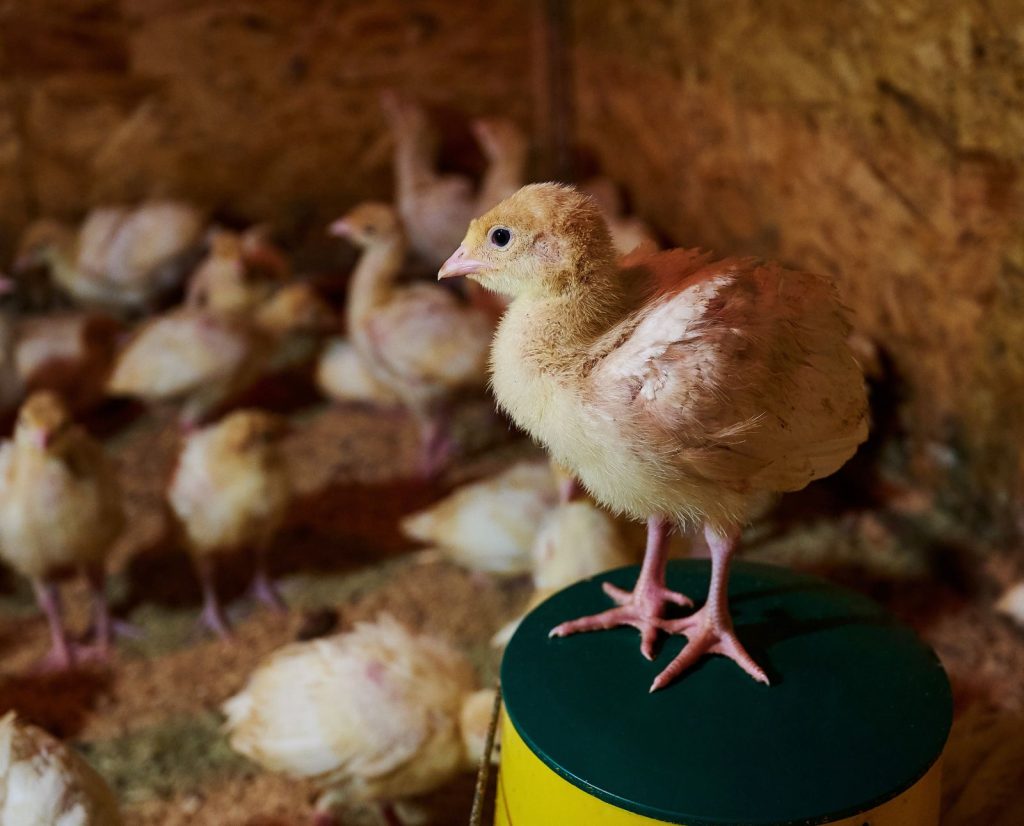
Turkeys have slightly different requirements than other domestic birds pretty much as soon as they hatch. Ask anyone who’s ever raised a few batches of turkey poults. They’ll probably tell you cautionary tales about the vigilant care turkey poults need to survive, even in a brooder that seemingly has no risk to life or limb inside of it. These stories should be taken as such because the vast majority of them are probably true. Turkey poults seem like they are born with a death wish. They are easily susceptible to risks you might not even consider, such as drowning. It’s important to make sure that whatever brooder setup you intend to let the poults live in for the first couple of months of life is as safe and hazard-free as possible.
Read: Quail or Chickens: Which Domestic Bird is Right For You?
Drowning is something I’ve also witnessed with coturnix quail chicks, but with every problem comes a suitable solution. Placing a few pebbles, marbles, or anything else that stops a poult from falling beak-first into their water container and dying a sailors’ death has helped me greatly reduce the number of birds I lose.
How to Successfully Feed Domestic Turkey Poults
When it comes to feeding turkey poults, they need a starter feed that has 26 percent to 30 percent raw protein for the first two months of their lives.
Poults often forget where their food or water are—in short, they need to be shown and then shown again. Nobody has the time to be on call 24/7 like that. A very easy, permanent fix is to mix in a couple of chicken chicks with the group of poults. Chicks only need to be shown where their food and water is once, and the turkey poults will follow their lead instead of relying on you. Everybody wins in this situation.
Brooder Setups for Raising Turkey Poults
It’s best to keep your poults in a brooder that has the option of adding extra room as the poults continue through their growth spurts. This is fairly easy to accomplish by searching different designs for brooder builds online. Trust me when I say there are plenty to choose from. The design you choose should be based not only on your current needs, but also any future needs and constructed accordingly.
Raising Juvenile and Adult Turkeys: Natural Behaviors and Needs
Turkeys reach maturity after various lengths of time depending on the breed, but for most heritage breeds, it takes about six months. Fast-growing commercial breeds of turkeys, such as Broad-Breasted Bronze or Whites, will mature much quicker, at about four to five months of age.
As turkeys age into adulthood, it’s important to remember that having too many males, called toms, can create physical health issues toward both sexes. Toms have large spurs on the backs of their legs that are used to fight other males. They will slash each other if the opportunity presents itself. Therefore, it’s always a good idea to sell excess males as soon as you are able to tell the difference between sexes.
Turkeys, like most other poultry, will need a place to dust bathe. While they will naturally create a space for themselves if their enclosure is big enough, you can also make one for them by adding ash, topsoil, and diatomaceous earth into a kiddie pool. This will reduce the likelihood that your turkeys will be subjected to pests like mites.
If you keep a flock of chickens or ducks, turkeys will often co-mingle with them. However, always keep an observant eye open for any signs of bullying, which can happen all of a sudden. Just like wild turkeys, domestic turkeys don’t sleep on the ground; they roost. Your turkeys will need a roosting bar in whatever coop style setup you have. You will learn the hard way if your coop makes your domestic turkeys uncomfortable because they will try to roost elsewhere, like on the roof of your house, nearby trees, fence posts, railings, etc. If this is the case, you need to consider a better setup for housing your turkeys.
Free-Ranging Domestic Turkeys on a Homestead
Turkeys, if allowed, will wander and forage during the warmer months of the year just the same as chickens will. If you have the space to have free range turkeys, it’s a great way to cut back on their overall consumption of turkey ration and save you a bit of money. Otherwise, feeding your turkeys an adult ration containing 18 to 20 percent protein is recommended once they reach about 14 weeks of age. If you still have leftover turkey starter when it comes time to switch their food and you don’t plan on having poults again, simply mix the starter into their adult layer ration by a mixture of roughly three parts layer to one part starter.
Cook: Project Upland’s Turkey Recipes
If your birds are strictly fast growing meat turkeys bound to be harvested in the autumn, some folks advocate for turkey tractors that can be moved across lawns each day to provide new forage for the birds inside. Several designs exist on the internet. In order to find the right one, should you choose to go down this route, be sure to do your research regarding how big the turkeys will get, and determine dimensions from there.
Feeding Adult Domestic Turkeys: Meat Birds vs. Layers
The dietary requirement for adult turkeys is based entirely on what the purpose of the bird is. Meat birds will need a different food ration than layers kept for over a longer period of time. Birds kept specially for laying eggs will need a higher level of calcium in their diets, but once turkeys are adults, they tend to become remarkably resilient foragers. Omnivores in every sense of the word, they will eat all mannerisms of insects, seeds, grasses, berries, and so on. This also means that if you are a fervent gardener, make sure that your plants are well protected from hungry turkeys.
Benefits of Raising Heritage Turkey Breeds
When investing in domestic turkeys that you plan to keep around as a long term addition to your homestead, consider the benefits of heritage breeds. They excel at reproducing naturally, which is a major asset if you plan to grow your flock, and they are the most excellent foragers that money can buy. Breeds like Standard Bronze, Royal Palm, and Bourbon Reds are great places to start for beginners as these turkeys can put on spectacular weight, are generally docile toward humans, and are well-versed in the ways of hatching and raising poults if your goal is to grow your flock without having to do too much work.
Heritage breeds grow much slower, achieving table-readiness around 28 weeks of age. This is something to consider if a homesteader has plans to cull birds earlier or raise multiple batches of turkeys for meat in one growing season.
Raising domestic turkeys is both challenging and rewarding, especially for homesteaders and bird hunters seeking a deeper connection to their food and the birds themselves. Domestic turkeys offer a unique combination of personality, utility, and high-quality food production. With proper care—especially during their first few weeks of life—turkeys can become a valuable and sustainable addition to any working homestead.