

Chukar Hunting Can Be Difficult—But Rewarding
If you’re new to chukar hunting, don’t let its reputation deter you and see what it’s like for yourself
I remember the first chukar hunt I went on with my Wirehaired Pointing Griffon, Gunney. It was the last hunt of our first season upland hunting together, and we chased the birds on public land in central Idaho. To put it simply: we got our butts kicked.
The birds, which are often dubbed “red legged devil birds,” had been pushed by winter weather onto only the steepest south facing slopes. Gunney had some good points, but because of the treacherous terrain filled with scree fields, I was only able to get a couple of safe shot opportunities. And when I did so, I missed.
That’s how chukar hunting can be. Of all the types of upland hunting, it is known to be one of the most challenging. But that’s not always the case, and you shouldn’t let its reputation deter you. Chukar can make for some of the most fun wing shooting around, and in many western states, the species can be plentiful on public lands and hunted with generous bag limits over long seasons.
If you’re considering hunting chukar for the first time, here’s a bit about what it’s like and how to get started.
Understanding Chukar: Behavior, Identification, and Habitat Basics
Chukar, like pheasants, are a nonnative species that has nonetheless become one of the more popular wild game birds in the U.S. These birds, which are also called chukar partridge, are native to the Middle East and southern Asia, according to the Audubon Field Guide.
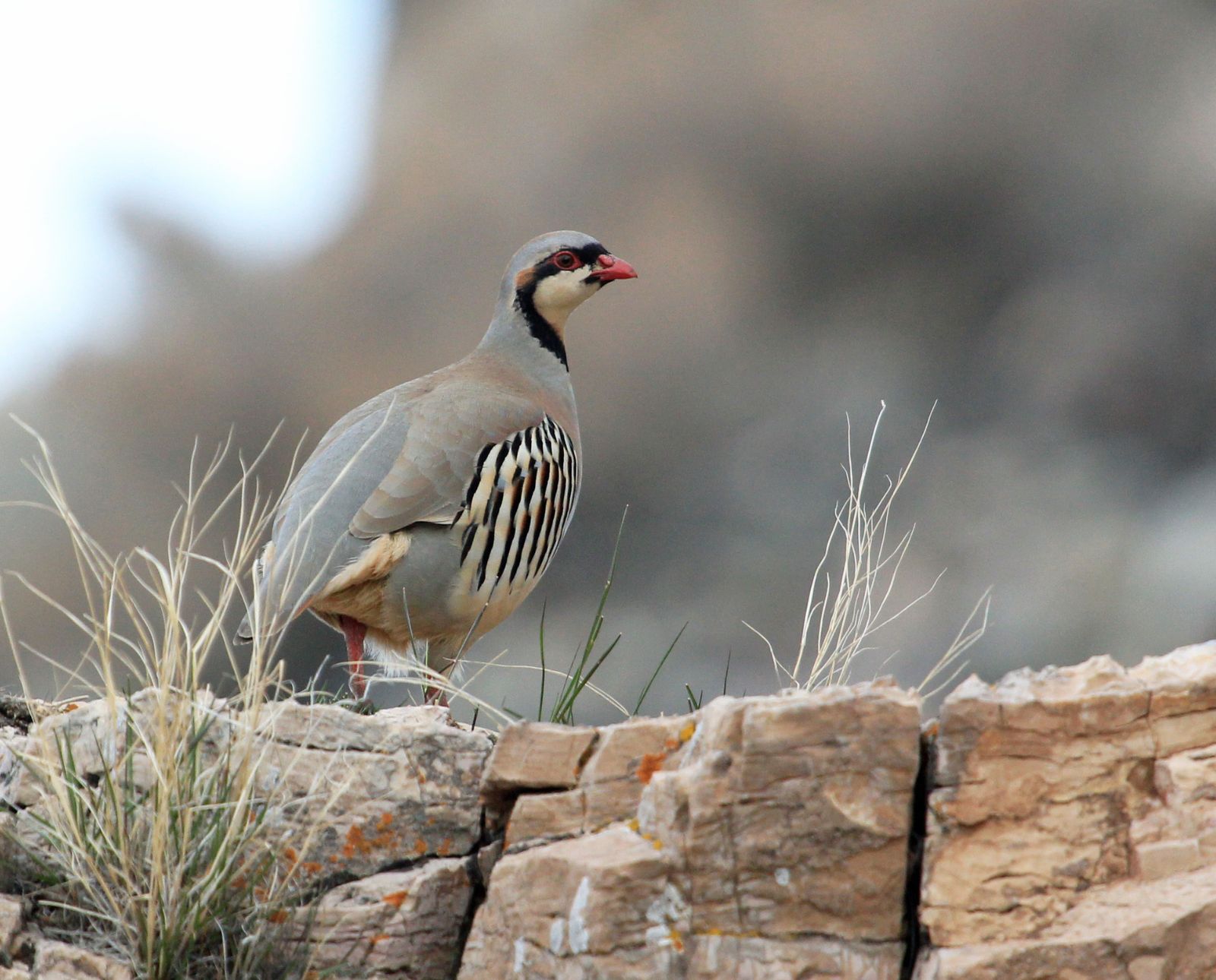
Chukar are smaller than pheasants but larger than most quail species. They have distinctive black bars on their sides, as well as a black strip that juts across their faces. Chukar legs are a pinkish red. As with Hungarian partridge, chukar tend to live in coveys except for when they pair up in the spring to breed. The species makes a distinctive chuck-chuck-chuck call, which can be used to locate them when hunting.
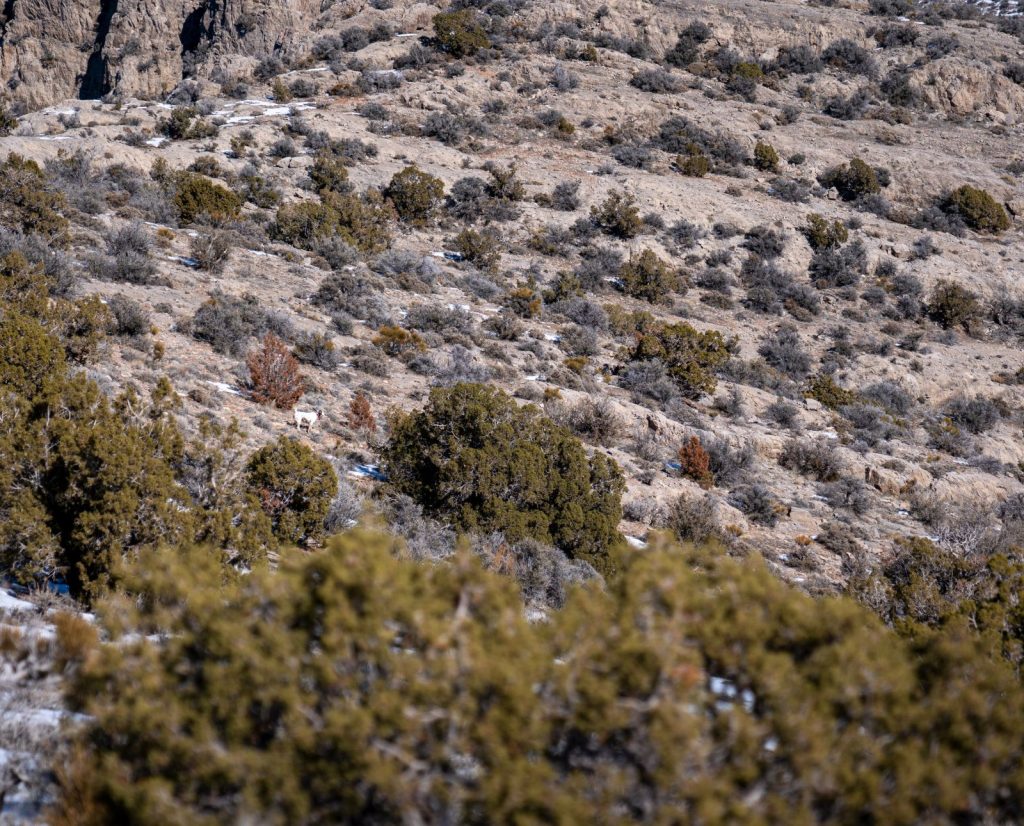
Chukar are considered to be desert-dwelling birds, and their habitat consists of rocky slopes, particularly where grasslands with nonnative cheatgrass is mixed with sage brush. They are often found in steep canyons or valleys near large rivers where they can access water easily.
Why Chukar Hunting Has a Reputation for Being Hard
First-time chukar hunters should know that chasing these birds requires exerting yourself physically at altitude. According to the Cornell Lab of Ornithology, the species is typically found between 4,000 and 13,000 feet. This means that oxygen can be scarce in chukar habitat, and this can be especially hard on hunters coming from sea level. But don’t let it discourage you; it’s not a race, and you can go as slow or as fast as you need when hunting chukar.
READ: Complete Guide to Chukar Hunting
Beyond simply the exertion required for hiking at altitude, finding birds can be challenging. Birds can require traversing steep hillsides, but it doesn’t have to be done this way. Chukar habitat always requires cover of some kind: typically some combination of rocky outcroppings, big tufts of bunchgrass, mixed sagebrush, bitterbrush, or shrubby crevices.
Simple Strategies for Your First Chukar Hunt
There’s no set and stone strategy for hunting chukar, but one of the simplest is to traverse up a hillside with chukar habitat with your dog. Sometimes you will only find them at certain elevations; other times, they’ll be dispersed across elevations. Pointing dogs will definitely help you find coveys, but sometimes the birds give themselves away by calling to each other. It’s also possible to spot birds hanging out on scree fields from a distance, and while the birds do run at first, they eventually tend to hold in cover near the rocky areas long enough for you to get into range.
Chukar move around throughout the hunting season. Where you find them one day, you might not the next. In the early season when it’s warm, birds will be near some source of water, whether it’s a spring, a reservoir, or a tiny creek. As the moisture increases throughout the season and fresh vegetation starts coming up, coveys tend to expand across the terrain.
READ: Avoiding Common Chukar Hunting Mistakes
In stormy weather, they’re more likely to be on the leeward side of ridges. When it’s warm, they’ll move from sun in the morning to shade in the afternoon. After snowfall, the south-facing slopes where snow melts off first is where you’re most likely to encounter chukar.
One thing to keep in mind—and perhaps one reason chukar hunting isn’t quite as difficult as some folks make it seem to be—is that it’s possible to “recycle coveys,” or relocate birds from busted coveys. Birds often just fly one ridge away and you see them land. They will most likely stay there at least long enough for you to get over there for another shot at them. Practice this technique thoughtfully, though, as it can be hard on the birds.
Gear for Chasing Chukar Ethically and Safely
Chukar hunting is traditionally done over a pointing dog (though don’t let this stop you if you have a retriever or are dogless) because the species is often spread over large distances and is known to hold well. Dogs are especially important for locating downed birds, which often fall into thickets of sage, bunchgrass, and bitterbrush. Hunting chukar can be hard on a dog, so make sure that you are giving your ample water in the field and protein in their diet for recovery. Also, keep an eye on their foot pads, which can get cut on sharp rocks.
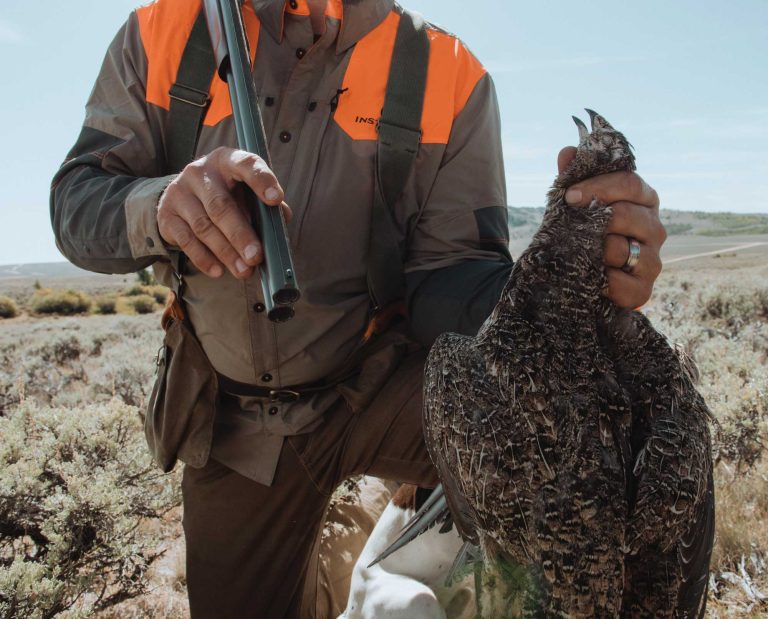
Chukar hunters typically use folding shotguns. Guns that can be carried broken open provide an extra layer of safety when going over obstacles and across especially steep terrain.
READ: Etiquette in Public Land Chukar Hunting
Other than your dog and your shotgun, the next most important thing you need for chukar hunting are good boots. They must be stiff, fit well, and not move at all on your foot. Some folks even use lightweight mountaineering boots which do not flex in the sole. This is important for rocky hillsides, where your boot should act like a shelf for your foot. Uninsulated boots tend to work well as your feet will heat up from extended exertion regardless of the temperature outside. Wool socks help with cushioning and wicking moisture from your feet.
The next piece of gear to consider is a good vest. It’s paramount to carry enough water for both you and your dog, as well as safety gear in case one of you gets injured in the field. Most chukar hunting is done out of cell phone range in remote areas, so bringing a satellite communicator such as a Garmin Inreach can be a good idea, particularly if you like to hunt solo. Other than that, you’ll want your GPS transmitter and collar, if you use one for your dog, snacks, and anything else you typically bring upland hunting with you.
Why You Should Give Chukar Hunting a Try
Chukar hunting requires significant physical exertion, figuring out where birds are depending on the time of year and weather conditions, and experimentation with strategy. This can make it a challenge, but it shouldn’t stop you from giving it a shot. Long seasons and large populations on public land actually make it one of the more accessible and fun upland species to hunt in the West.