

Upland Bird Hunting in Utah: Regulations, Fees, Bag Limits, and More
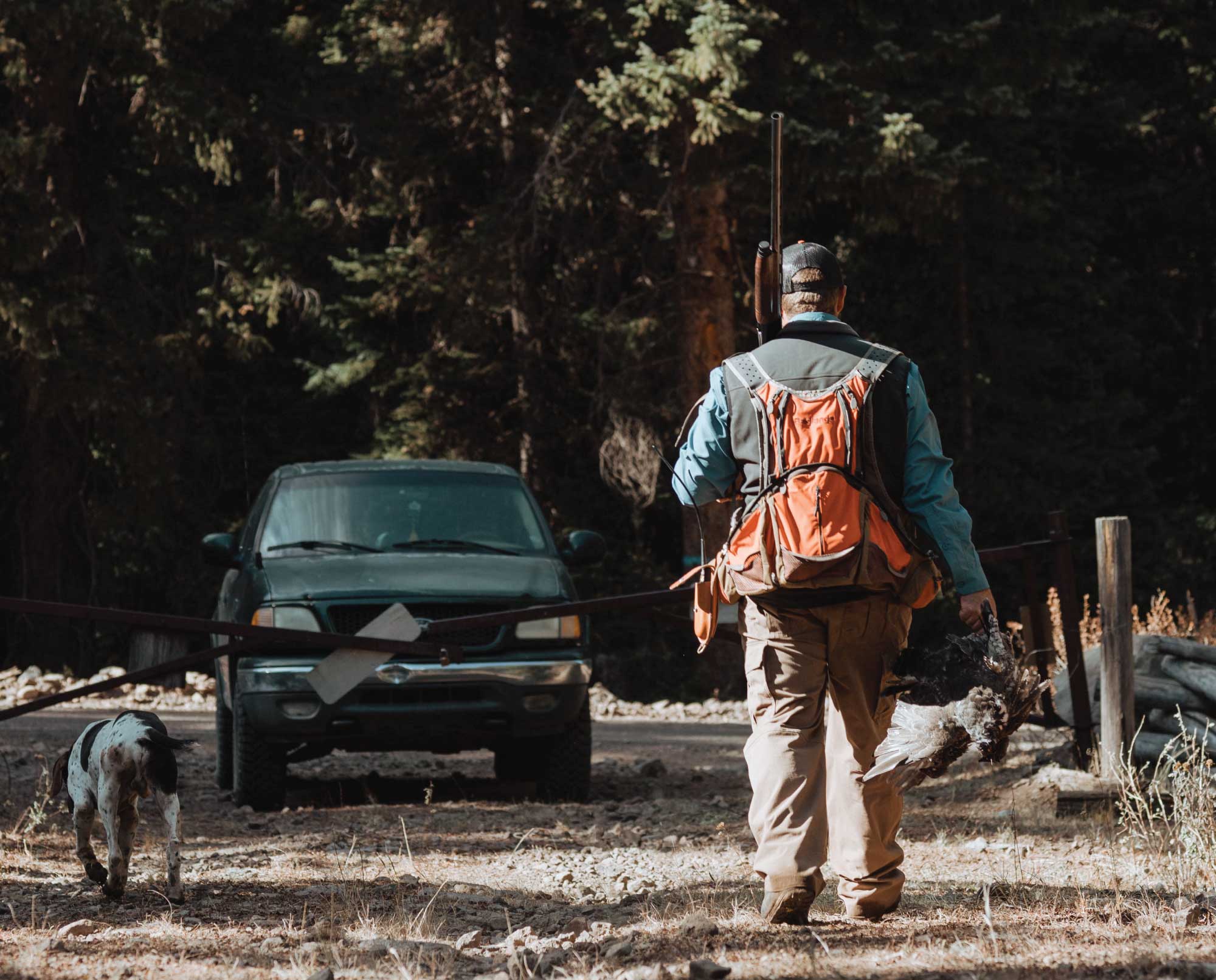
Upland hunters can find grouse, chukar, Huns, pheasants, ptarmigan, and more in the Beehive State.
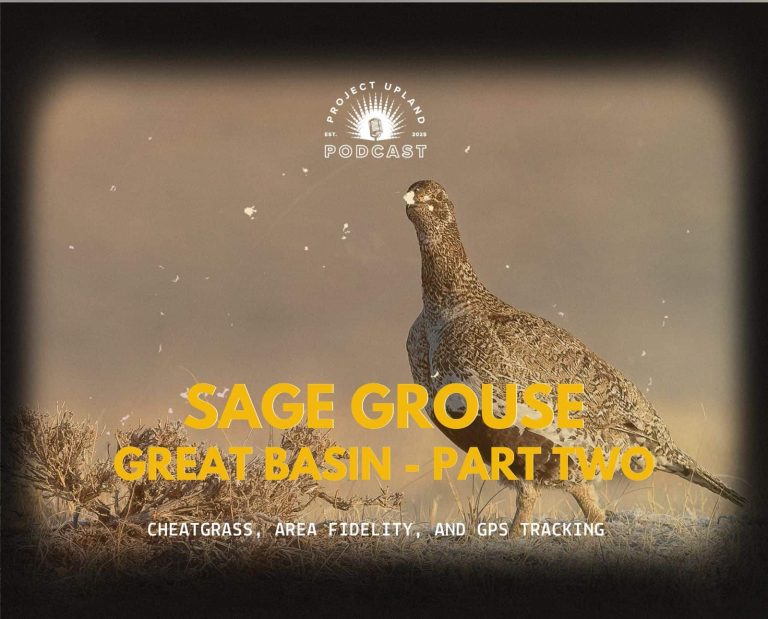
In addition to off-roading, rock climbing, and winter sports, Utah is known for its incredible upland bird hunting opportunities. Thanks to the state’s wide variety of habitats, more than a dozen upland bird species call it home, including ruffed grouse, dusky grouse, sage grouse, chukar, and Hungarian partridge. Grouse researcher Dr. Dave Dahlgren from Utah State University recently appeared on the Project Upland Podcast to discuss Great Basin sage grouse ecology and conservation in the following episodes:
In addition to sage grouse, Utah is home to the Columbian sharp-tailed grouse. While this species still has a hunting season, its population has declined or vanished from parts of its historic range. “Currently, Columbian sharp-tailed grouse occur in only 5% of their historic range-wide distribution and 4% of their distribution in Utah,” states the Conservation Plan for Columbian Sharp-tailed Grouse in Utah. To bolster Utah’s population, researchers once translocated birds trapped in Colorado. However, the program ended when it was discovered that the Colorado birds might be a different subspecies, not Columbian sharp-tailed grouse.
If you plan to hunt grouse or other small game in Utah this season, read on for details about season dates, bag limits, and other important regulations.
Utah Upland Bird And Small Game Season Dates And Limits
For more information about upland hunting rules, read the Utah Department of Wildlife Resources (DWR) 2025-2026 upland bird and wild turkey hunting regulations booklet here. Information about the youth hunting days is on page 15. For migratory bird information, see the DWR’s booklet on waterfowl and migratory birds here.
Important items to note include:
- Unless otherwise noted, upland bird hunting is available statewide except for closed areas and Native American trust lands
- Antelope Island is closed to all upland bird hunting
- Goshen Warm Springs WMA in Utah County is closed to all hunting
- Huntington Game Farm is closed until 3 p.m. on October 25, 2025
- Annabella, Pahvant, and a portion of the Ogden Bay and Santaquin WMAs are closed on November 8, 2025
Utah Upland Bird And Small Game Season Dates And Limits
| Species | Locations | Dates | Daily/Possession Limits | Notes |
| Dusky Grouse | Sept. 1 – Dec. 31, 2025 | 4/12 (including ruffed grouse) | ||
| Ruffed Grouse | Sept. 1 – Dec. 31, 2025 | 4/12 (including dusky grouse) | ||
| Sharp-tailed Grouse | Northeast Box Elder County (ST1000) and Cache County (ST1001). View boundary maps here. | Sept. 27 – Oct. 19, 2025 | 2 birds per season | Permit required |
| Sage Grouse | Diamond, Blue Mountain (SG1000); Parker Mountain (SG1001); Rich County (SG1002) and West Box Elder County (SG1003). View boundary maps here. | Sept. 27 – Oct. 19, 2025 | 2 birds per season | Permit required |
| White-tailed Ptarmigan | Sept. 1 – Oct. 31, 2025 | 4/12 | Free permit is required | |
| Gambel’s Quail | Nov. 1 – Dec. 31, 2025 | 5/15 (including California quail) | ||
| California (Valley) Quail | Nov. 1 – Dec. 31, 2025 | 5/15 (including Gambel’s quail) | ||
| Scaled (Blue) Quail | Closed statewide | Closed | 0/0 | |
| Youth Quail Days | Oct. 25–27, 2025. | 5/15 | For more information, see page 15 of Utah’s upland hunting regulations. | |
| Chukar | Sept. 27, 2025 – Feb. 15, 2026 | 5/15 | ||
| Youth Chukar Hunt | Sept. 20 – Sept. 22, 2025 | 5/15 | For more information, see page 15 of Utah’s upland hunting regulations. | |
| Hungarian Partridge | Sept. 27, 2025 – Feb. 15, 2026 | 5/15 | ||
| Youth Hungarian Partridge Days | Sept. 20 –Sept. 22, 2025 | 5/15 | For more information, see page 15 of Utah’s upland hunting regulations. | |
| Ring-necked Pheasant | Nov. 1 – Dec. 7, 2025 | 2/6 | Roosters only | |
| Youth Pheasant Days | Oct. 25 – Oct. 30, 2025 | 2/6 | Roosters only. For more information, see page 15 of Utah’s upland hunting regulations. | |
| Mourning Dove | Sept. 1 – Oct. 30, 2025 | 15/45 (including white-winged doves) | ||
| White-winged Dove | Sept. 1 – Oct. 30, 2025 | 15/45 (including mourning doves) | ||
| Collared Dove (African and Eurasian) | Year round | No Limit | Collared doves must remain fully feathered so they can be identified | |
| Band-tailed Pigeons | Sept. 1–14, 2025 | 2/6 | Free permit required | |
| Cottontail Rabbit (desert and mountain) | Sept. 1, 2025 – Feb. 28, 2026 | 10/30 | ||
| Snowshoe Hare | Sept. 1, 2025 – March 15, 2026 | 5/15 |
These dates were last updated on August 15, 2025 and may not reflect any changes since that date. For the most up-to-date information visit the Utah DWR website.
Dusky and Ruffed Grouse Hunting in Utah
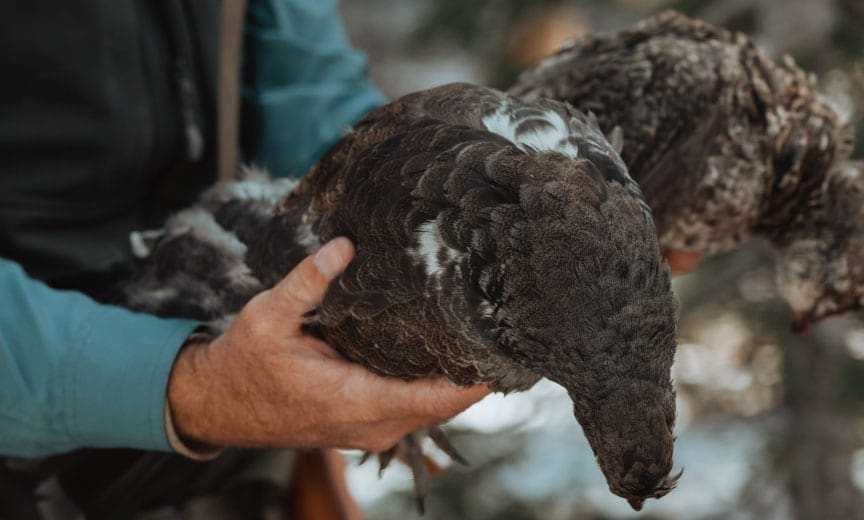
Dusky grouse are a rewarding option for upland hunters in Utah. By November, when most deciduous trees have lost their leaves, these birds can often be found concealed in or around pine trees. While their range is broader than that of the ruffed grouse, some of the best hunting opportunities for dusky grouse are in Cache County and along the Wasatch Plateau.
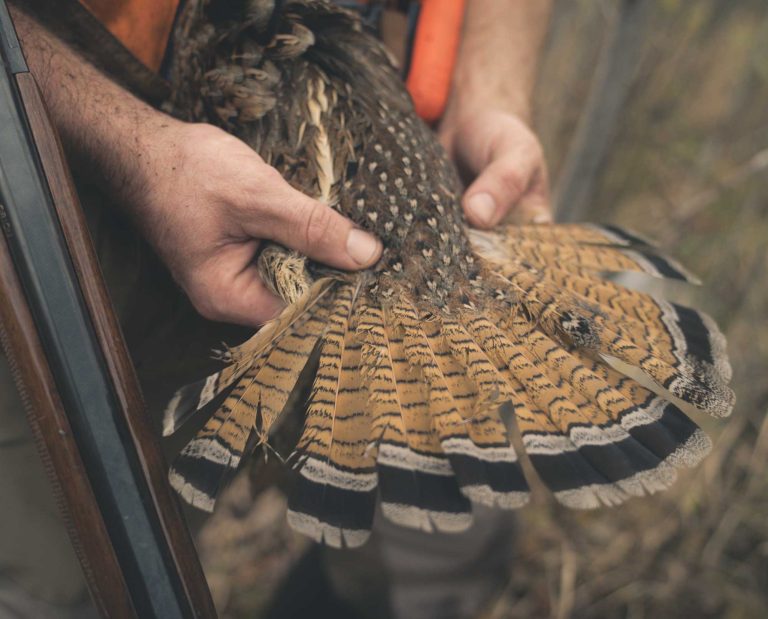
The ruffed grouse, often called the king of game birds and strongly associated with the Northwoods, also inhabits Utah. Ruffed grouse habitat runs along the Wasatch Plateau—a mountain range stretching from Cache to Sevier County and extending into the Wasatch National Forest. While they may be found in pine woods, ruffed grouse are more often encountered in stands of oak, maple, and other forests near water.
Utah’s generous forest grouse season runs from September 1 to December 31, with a daily bag limit of four birds (combined dusky and ruffed grouse).
Sharp-tailed Grouse
Sharp-tailed grouse occupy a much smaller range in Utah compared to forest grouse. Hunting is limited to Box Elder and Cache counties in the northern part of the state, and most suitable habitat lies on private property. Hunters are encouraged to secure landowner permission before applying for the required $10 permit.
Permit applications are accepted in July, with the drawing taking place in August. For folks fortunate enough to draw a sharptail permit, the limit is two birds per season.
Greater Sage Grouse
Utah has four designated hunting areas for greater sage grouse: Diamond/Blue Mountain in the southeast, Parker Mountain in the central region, Rich County in the northeast, and West Box Elder in the northwest.
The season limit is two birds of either sex. In addition to a regular hunting license, hunters must apply for a $10 permit. Application deadlines are the same as for sharp-tailed grouse, and preference points can be accrued. Like sharptails, the limit is two birds per season.
White-tailed Ptarmigan Hunting in Utah
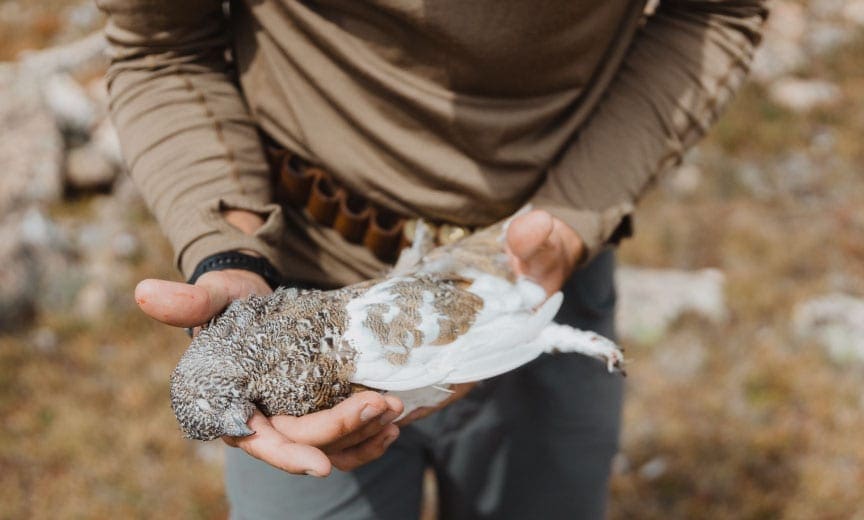
White-tailed ptarmigan were introduced to Utah to expand upland hunting opportunities, and the program has been successful. These birds rely heavily on camouflage and are unaccustomed to being pursued by hunters and dogs, often holding very tight before flushing. Because a covey can only withstand so much pressure, hunters are encouraged to set ethical, self-imposed limits.
The daily bag limit is four birds, with a possession limit of twelve. In addition to a regular hunting license, a free permit is required to hunt white-tailed ptarmigan in Utah.
Quail Hunting in Utah
Utah is home to three quail species: Gambel’s quail, California (valley) quail, and scaled (blue) quail. Gambel’s quail are found in the southwest corner of the state in Washington County, while California quail thrive in areas with dense brush and reliable water sources. Scaled quail occur in isolated populations, but their hunting season is closed. Hunters should be able to identify scaled quail before pursuing quail in Utah.
The daily bag limit is five quail (combined or single species) with a possession limit of fifteen. Youth hunts are offered by the Utah DWR prior to the general season. See the upland hunting booklet for more details.
Chukar Hunting in Utah
Utah has a strong chukar hunting tradition. Populations exist in huntable numbers across many of the state’s mountain ranges, offering ample public land opportunities for pursuing the “red-legged devil.”
The daily bag limit is five birds, with a possession limit of fifteen. A youth season takes place before the general season opens.
Hungarian Partridge Hunting in Utah
Hungarian (gray) partridge regulations largely mirror those for chukar. Populations are most abundant in the northwest part of the state, primarily in Box Elder and Cache counties. Most quality habitat is on private land, so hunters should be prepared to request landowner access.
The daily bag limit is five birds, with a possession limit of fifteen.
Ring-necked Pheasant Hunting in Utah
Ring-necked pheasants were introduced to Utah in 1890 and remain popular due to both wild and released populations. For example, the state released 10,000 pheasants for the 2017 season. North of the Great Salt Lake is one notable area to find them, and they are also present on many hunting preserves statewide.
The daily bag limit is two roosters, with a possession limit of six.
Dove and Pigeon Hunting in Utah
Utah offers dove hunting opportunities for four species, including year-round hunting with no limit for African and Eurasian collared-doves. Mourning doves and white-winged doves have a season from September 1 through October 30, with a daily bag limit of fifteen birds (combined), and a possession limit of forty-five. Collared doves must remain fully feathered for identification purposes.
For a more unique opportunity, Utah has a small population of band-tailed pigeons, which is the closest living relative to the extinct passenger pigeon. The season runs from September 1 to September 14, with a daily bag limit of two and a possession limit of six. In addition to a hunting license, a permit is required to pursue band-tailed pigeons.
Utah Hunting Licenses and Fees
For a complete list of license and permit fees, click here. A 2.2% fee applies to all online and in-person credit/debit card transactions.
| License* | Resident | Non-Resident |
| Regular 365-day License (ages 18-64) | $40 | $144 |
| Teen 365-day License (ages 14-17) | $16 | $44 |
| Youth 365-day License (ages 13 and under) | $11 | $44 |
| 65 or Older 365-day License | $31 | $144 |
| Multi-year hunting license (up to five years) for ages 18-64 | $39/year | $143/year |
| Nonresident 3-day Small Game Hunting License (any age) | — | $89 |
| Sage Grouse Permit Application | $10 | $16 before 9/1, $21 starting 9/1 |
| Sharp-tailed Grouse Permit Application | $10 | $16 before 9/1, $21 starting 9/1 |
| White-tailed Ptarmigan Permit | $0 | $16 before 9/1, $21 starting 9/1 |
| Band-tailed Pigeon Permit | $0 | $16 before 9/1, $21 starting 9/1 |
| Upland Game Slam | $20 | $20 |
These fees were last updated on August 15, 2025 and may not reflect any changes since that date. For the most up-to-date information visit the Utah DWR website.
Blaze Orange Clothing Requirements in Utah
Utah does not require upland game hunters to wear blaze orange. However, the Utah Division of Wildlife Resources recommends wearing blaze orange to increase visibility and safety, especially during overlapping big game seasons.
Project Upland also encourages all upland and small game hunters to wear blaze orange for safety in the field.
Utah Hunting Dog Training Regulations
Hunting dogs may be trained year-round in Utah, with some exceptions. Certain wildlife management areas (WMAs) only allow dog training during open hunting seasons. From April 1 through August 15, the DWR encourages trainers to closely monitor their dogs to avoid disturbing nesting wildlife.
Legally acquired pen-raised game birds may be used for training, but they must be banded. As of May 7, 2025, anyone accessing state wildlife areas (SWAs) in Davis, Salt Lake, Utah, and Weber counties must possess a hunting, fishing, or combination license. This requirement applies to dog trainers as well.
It is illegal to train dogs within a half-mile of a sage grouse or sharp-tailed grouse lek from March 1 to May 31 each year.
In 2025, Utah updated rules for the possession and release of pen-raised game birds. For details, refer to the “Possession and Release of Pen-reared Gamebirds Rule” on the DWR website.