

Braque du Bourbonnais: Characteristics, History, and Abilities
A unique hunting dog breed, the short-tailed Braque du Bourbonnais is bred by and for hunters to be calm, lively, and fun
Most hunters are familiar with breeds like the German Shorthaired Pointer, Labrador, or Brittany. Fewer have crossed paths with the Braque du Bourbonnais, which is a small, versatile French pointing dog whose history reaches back to the Renaissance. Its name is pronounced brock du boor-bon-nay, and drawings of it first appear in documents from the 1500s. By the mid-20th century the breed had nearly vanished. It was only through the efforts of French hunter Michel Comte and his breeding program in the 1970s that the Bourbonnais was revived.
Today, about 2,000 of these dogs can be found worldwide. The largest populations existing in France, the United States, Finland, the Netherlands, and Italy. While their numbers don’t compare to GSPs, Bourbonnais are often described as sweet, calm, and friendly at home, yet lively and intense in the field.
Hunting dog historian Craig Koshyk’s Pointing Dogs Volume One: The Continentals features an entire chapter on the Braque du Bourbonnais. While much of the following information is found in his book, Koshyk’s chapter includes much more information than you will find here. This is just a brief look at this breed’s character, form, versatility, and history. If you want to learn more, Pointing Dogs Volume One (and Two!) cannot be recommended enough.
In this Article
- Braque du Bourbonnais Characteristics and Form
- Braque du Bourbonnais Tail
- Braque du Bourbonnais Temperament
- Braque du Bourbonnais Hunting Abilities and Training
- Braque du Bourbonnais History
- The Modern Braque du Bourbonnais
- Finding a Braque du Bourbonnais Breeder
- Braque du Bourbonnais Breed Clubs

Braque du Bourbonnais Characteristics and Form
| Characteristics | Details |
| Name | Braque du Bourbonnais (pronounced brock du boor-bon-nay), Bourbonnais Pointer, Bourbonnais Pointing Dog |
| Size | Males: 51-57 cm, 20 to 22.5 inches Females: 48-55 cm, 19 to 21.5 inches |
| Tail | Born with a very short tail or no tail at all; breed standard is 15 cm or less |
| Coat | Short |
| Coat Color | Liver or chestnut-brown and fawn. Moderately to strongly ticked. |
| Health Issues | Pulmonic stenosis |
| Character | Affectionate and cooperative. Calm and well-suited to living in a house |
| Population | Less than 2,000 dogs worldwide |
| Range | Close to medium |
| Pace | Medium gallop |
| Good For | Upland birds, except for in very cold climates |
“I have had the opportunity to see a number of Braques du Bourbonnais in action in France as well as Quebec and Ontario,” writes Koshyk. “They definitely have a unique look. They are relatively small, not much bigger than a Brittany, but some of them can be built like fireplugs.”
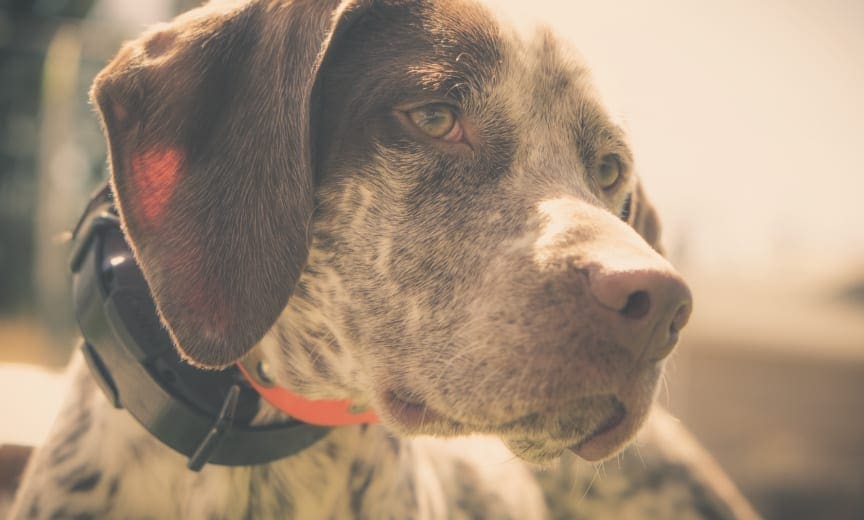
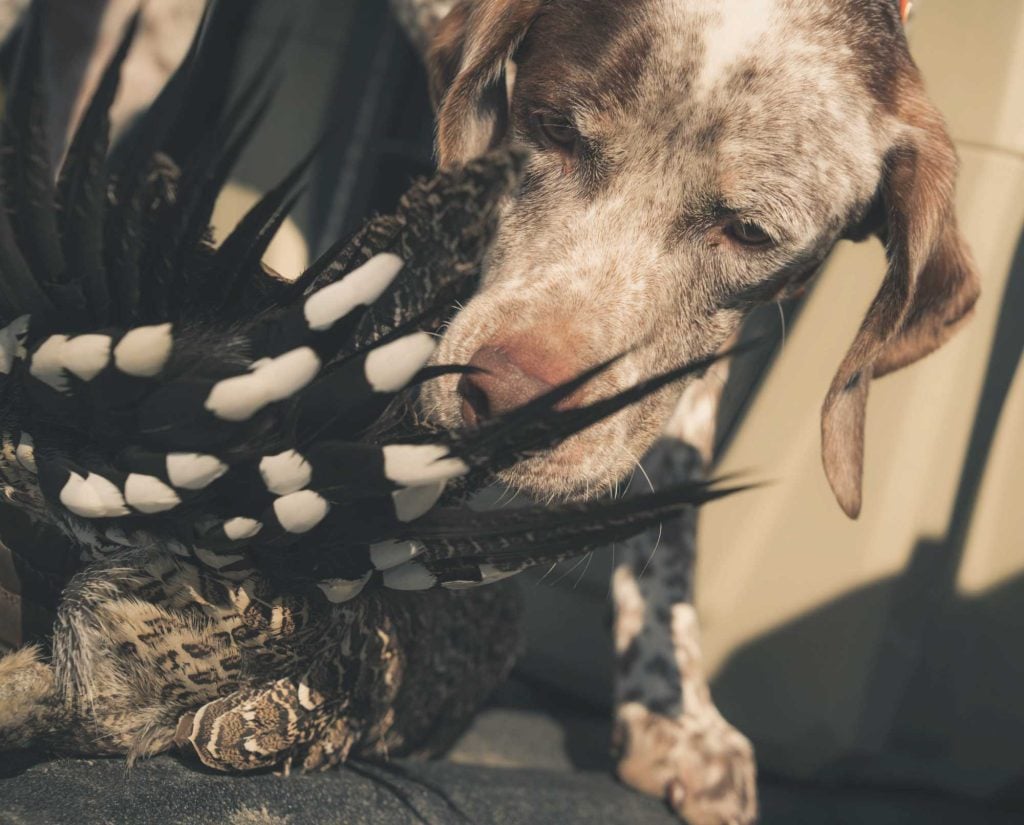
The Braque du Bourbonnais can be described as a lot of dog in a compact frame. Males stand around 20–22.5 inches (51–57 cm), females slightly smaller at 19–21.5 inches (48–55 cm). Despite their modest size, they are muscular, agile dogs built to cover ground efficiently and turn sharply. According to the working breed standard, the Bourbonnais should have the agility to shift pace and direction suddenly, “recalling the maneuverability and stability of the polo pony.”
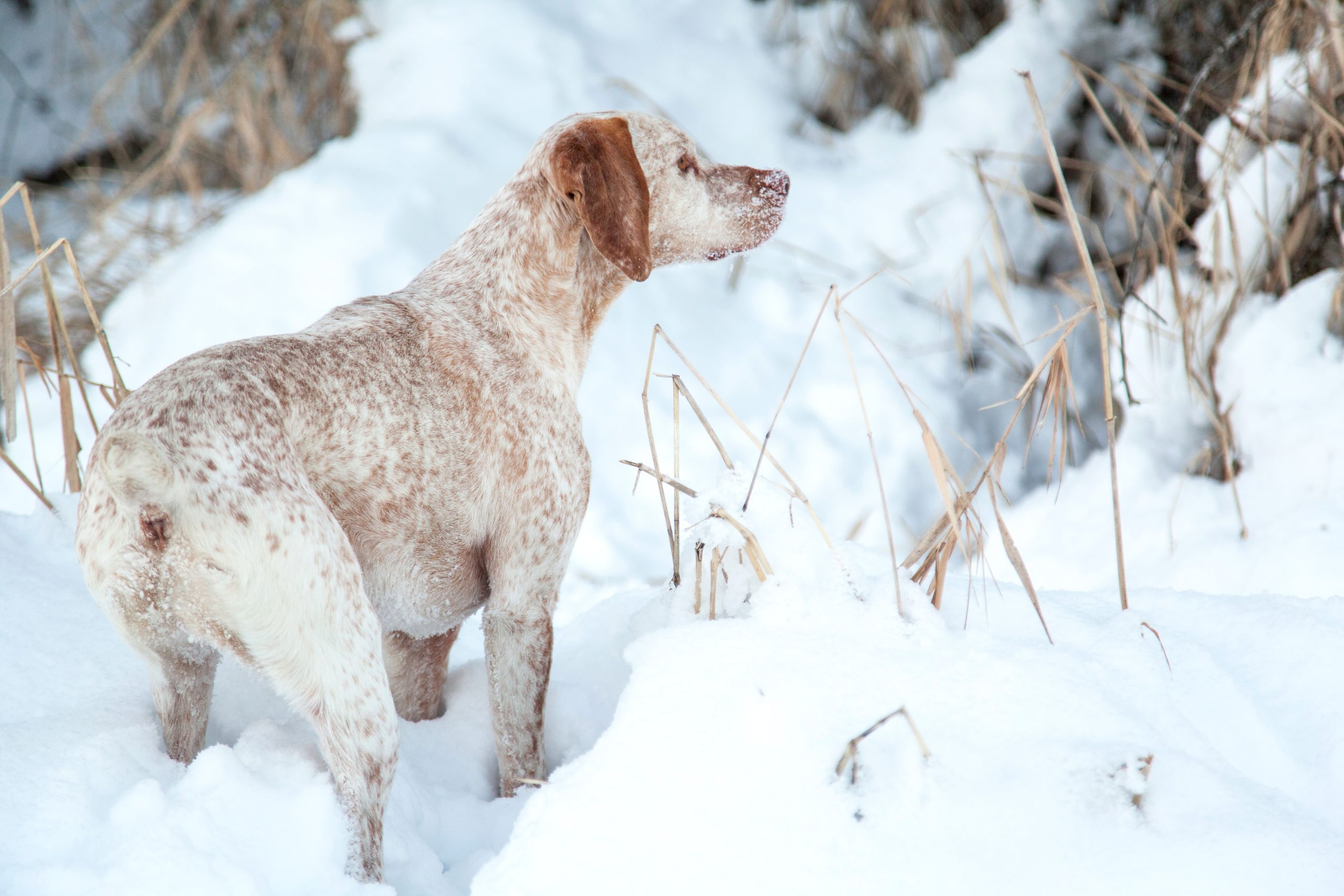
Historically, French hunters used evocative terms like “wine dregs” and “peach blossom” to describe their coats. Today, registries list them more simply as liver or fawn, with moderate to heavy ticking. Their short, fine coats emphasize the breed’s outline and are easy to maintain in the field. However, these dogs can be sensitive to extreme cold as a result.
The Tail
The single most recognizable feature of the Braque du Bourbonnais is its tail—or, more precisely, its lack of one. When compared to the tails of English Setters or Munsterlanders, this absence of a tail is a defining feature indeed.
Many Bourbonnais are born naturally tailless or with a stub of less than six inches (15 cm). This trait was once so common in the Bourbonnais region that it became inseparable from the breed’s identity. Some early writers speculated that repeated docking had caused tails to shorten over time, but genetic research has since confirmed that the Bourbonnais’ short tail is the result of a natural mutation.
As of 2006, cropping the tail became permitted. Dogs born with tails longer than 15 cm could now be cropped to fit within the breed standard. “Some breeders dock the tails to a short nub,” said Nancy Anisfield, a member of the Pheasants Forever and Quail Forever National Board of Directors.
“Fortunately, in 2009 a test to identify the gene for the short tail was developed. It is hoped that by using the test, breeders can put the words ‘naturally short-tailed’ on a dog’s pedigree so that they can be shown in countries where docking is not allowed,” Michel Comte, the father of the modern Braque du Bourbonnais, told Koshyk.
We will dive deeper into Michel Comte’s story and the history of the Braque du Bourbonnais (or BdB) in a little bit. First, let’s discuss the hunting style and temperament of this incredible breed.
Braque du Bourbonnais Temperament
Bourbonnais are known for their easygoing personalities and close bonds with family. At home, they are affectionate and cooperative, often happiest when lounging close to their people. In the field, however, they shift gears entirely, hunting with energy and persistence.
“As a family dog, the Braque du Bourbonnais has a gentle disposition and ardent desire to please. But they are also described as insatiable in their desire to train and hunt,” said Anisfield. American Braque du Bourbonnais breeder Shari Stueck echoes Anisfield’s remarks. She told Craig Koshyk, “They are calmer than many of the other hunting breeds. My Bourbonnais just love to lounge around the house. But they really move when they are hunting!”
Braque du Bourbonnais Hunting Abilities and Training
“They take to water and tracking training well,” said Anisfield, “but they can be considered fairly soft dogs that respond best to training methods that support their desire to please.” Craig Koshyk and Shari Stueck agree that BdBs are softer dogs that learn best when taught with a gentle hand. Additionally, their ability to learn quickly makes them great for first-time handlers.
“A lot of my pups go to first-time handlers, and they have all done really well with a little coaching from me,” said Stueck. “We’ve always selected for dogs that are easy to train; in fact, we have some dogs that almost train themselves.” Stueck also mentioned that BdBs start pointing at an early age.
“On point, they are strong and solid but lack the elegance of English Setters or the athletic ‘wow’ power of German Shorthairs,” said Anisfield. Although their points may lack the flash of other breeds, Bourbonnais remain reliable and versatile gundogs.
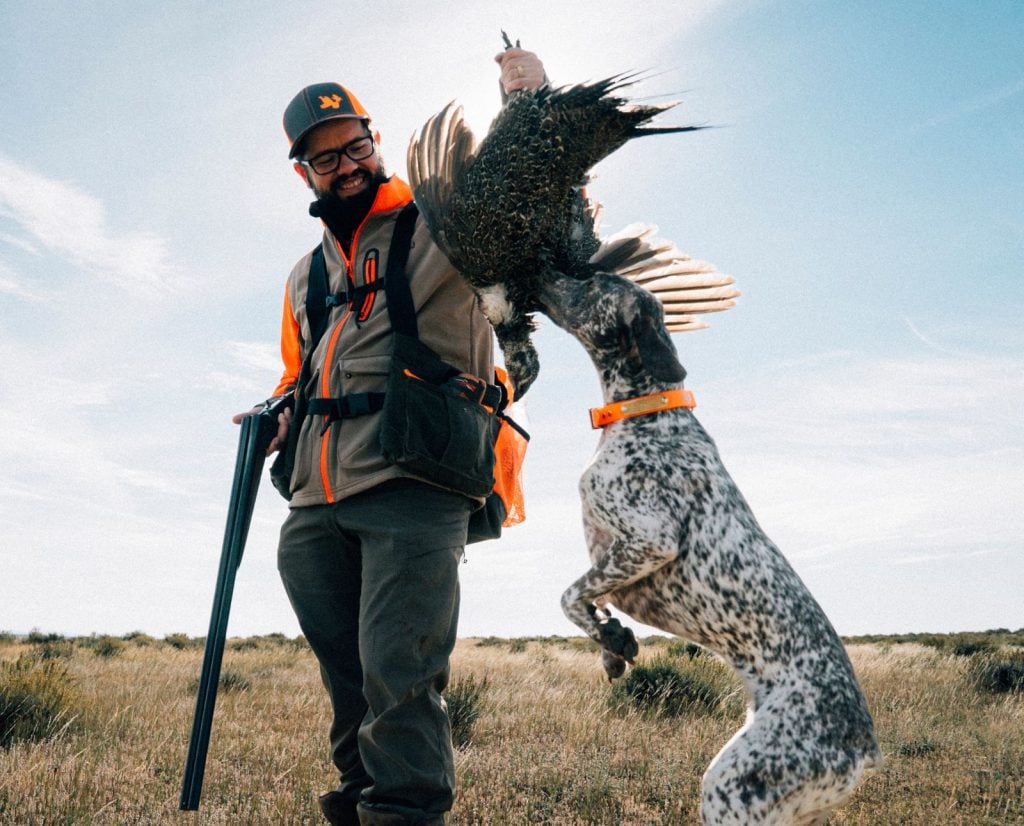
“They are medium-distance, medium-paced gun dogs that can stretch out to 200 yards but will check in frequently, averaging the distance to a workable range. They are truly versatile in their ability to scent, point, retrieve, track and swim,” continued Anisfield. BdBs aren’t necessarily bred for water work, but Koshyk reports that they “take to water easily” and are often excellent in the water. Like pointing, pups tend to show their retrieving instincts at young ages.
Braque du Bourbonnais History
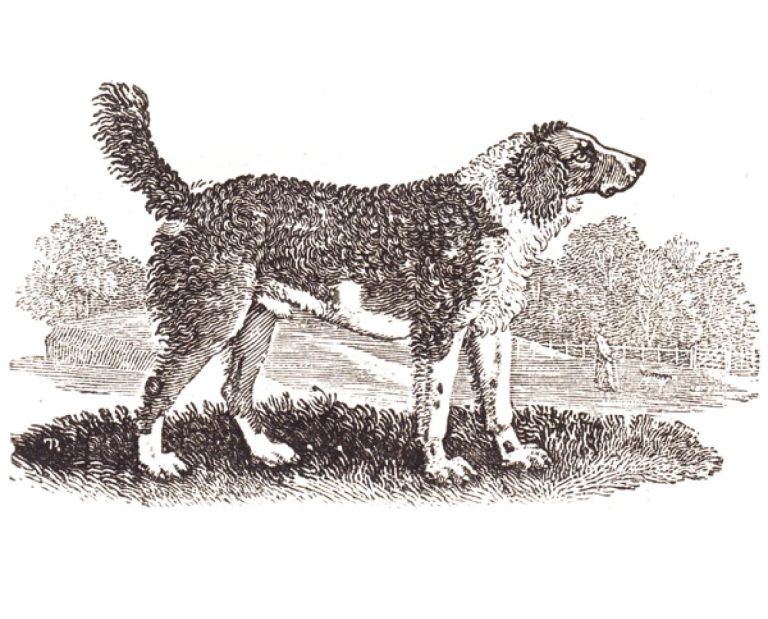
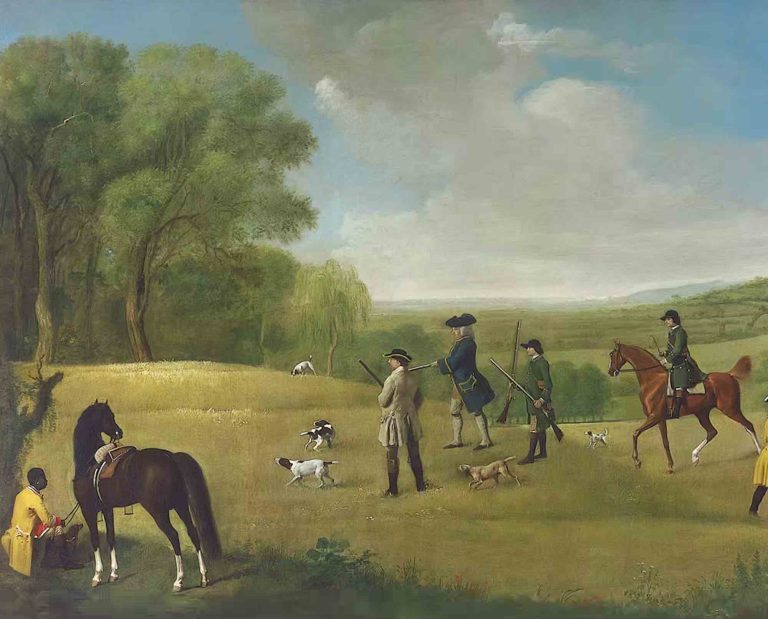
The Braque du Bourbonnais is a very old hunting dog breed. An illustration of a “keen scented panther-like dog for catching quail” by Ulisse Aldrovandi from the late 1500s depicts a canine that looks extremely similar to modern BdBs. Craig Koshyk includes an excerpt from Adolphe de La Rue’s Les Chien d’Arrêt Français et Anglais that explores the breed’s origins a bit more:
As for the origins of the Bourbonnais dog, which is a short-tailed breed, there is no need to look anywhere else than at the large brown Braque; the first, most ancient of our breeds. Once this is admitted, it is no longer doubtful that families where individuals are always born with a short tail have in their veins the pure and precious blood of the primitive breed from which they descend.
By the early 1900s, the breed was suffering. A narrow gene pool and close breeding produced serious issues, including deafness, infertility, and weakened vitality. Some breeders introduced outside blood, particularly English Pointers, in an effort to restore vigor. Despite these attempts, two World Wars pushed the breed to the edge of extinction. By the 1960s, many assumed the Bourbonnais had disappeared entirely. However, in the 1970s, a man named Michel Comte came into the picture.
Michel Comte and Modern Braque du Bourbonnais
Comte would come to be referred to as the father of the modern Bourbonnais because he led the effort to restore, or rather, recreate, the breed. The turning point came in the 1970s when Comte joined forces with his brother, Gabriel, and veterinarian Dr. Louis Monavon, and began searching rural areas for “country braques” that still showed the Bourbonnais type—short tails, distinctive coats, and the right build. Through selective breeding, they built a new population that preserved the look and function of the old Bourbonnais.
By the 1980s, organized breed clubs and events were active again. Today, the Braque du Bourbonnais is still relatively rare, with an estimated 2,000 dogs worldwide, but it is firmly established in both France and the United States. Many American breeders prove their stock through North American Versatile Hunting Dog Association (NAVHDA) hunt tests, ensuring that hunting ability remains central to the standard.
Comte himself described the revived Bourbonnais as a “recreated breed.” While not genetically identical to its ancestors, the modern dog retains its hallmark traits. Comte even believes the modern breed outperforms the older version in speed, stamina, and trainability. In short, the Braque du Bourbonnais has become a reliable and beautiful companion for upland hunters who appreciate both tradition and performance.
Finding a Good Bourbonnais Breeder
According to Nancy Anisfield:
There are only about two thousand Braque du Bourbonnais in the world. Most breeders are breeding for hunting, not show, so despite the small population in the U.S., the chances are excellent for getting strong hunting skills from a Braque du Bourbonnais. In the U.S., the most notable Braque du Bourbonnais breeders prove their dogs through hunt tests such as those in the North American Versatile Hunting Dog Association. Many also import dogs as needed to maintain the quality of the gene pool.