

Dusky Grouse Hunting: Behavior, Habitat, and Strategies for Success
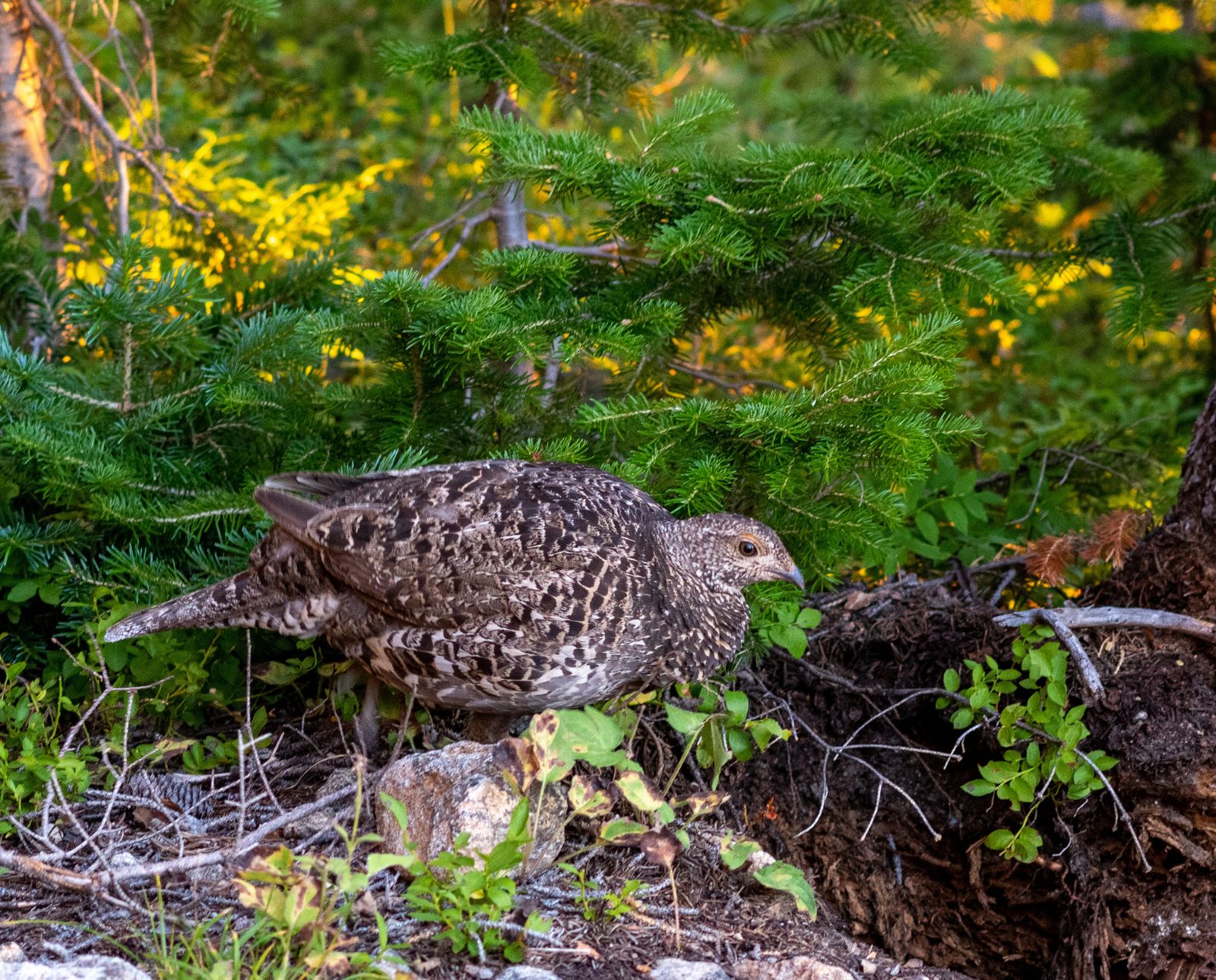
Learn about dusky grouse behavior, habitat, and hunting strategies to optimize your chances for a successful dusky hunt
Most know the dusky grouse as a naïve resident of the trailside, accompanying backpacking trips and supplementing camp meals during big game pursuits. Others, like myself, seek a more thorough understanding of these “foolbirds.”
To me, this blue grouse is the mountain’s quintessential feathered game—a catalyst for adventure. While they can simply be taken along any given backcountry trail or logging road, a true dusky grouse hunt possesses all the qualities of the most rigorous upland pursuits.
In This Article:
- Dusky Grouse Habitat and Behavior
- Hunting Strategies
- Hunting Duskies With Dogs
- Licenses, Seasons, And Bag Limits
- Shotgun Chokes and Shot Size Selection
Dusky Grouse Habitat and Behavior
As hunters, our best avenue to understanding a bird is to understand its habitat. I cut my teeth in the uplands chasing ruffed grouse and American woodcock. These two birds have relatively narrow preferences for cover and comparatively small home ranges. I grew accustomed to this, able to focus only on the coverts being utilized for the day, or even the season.
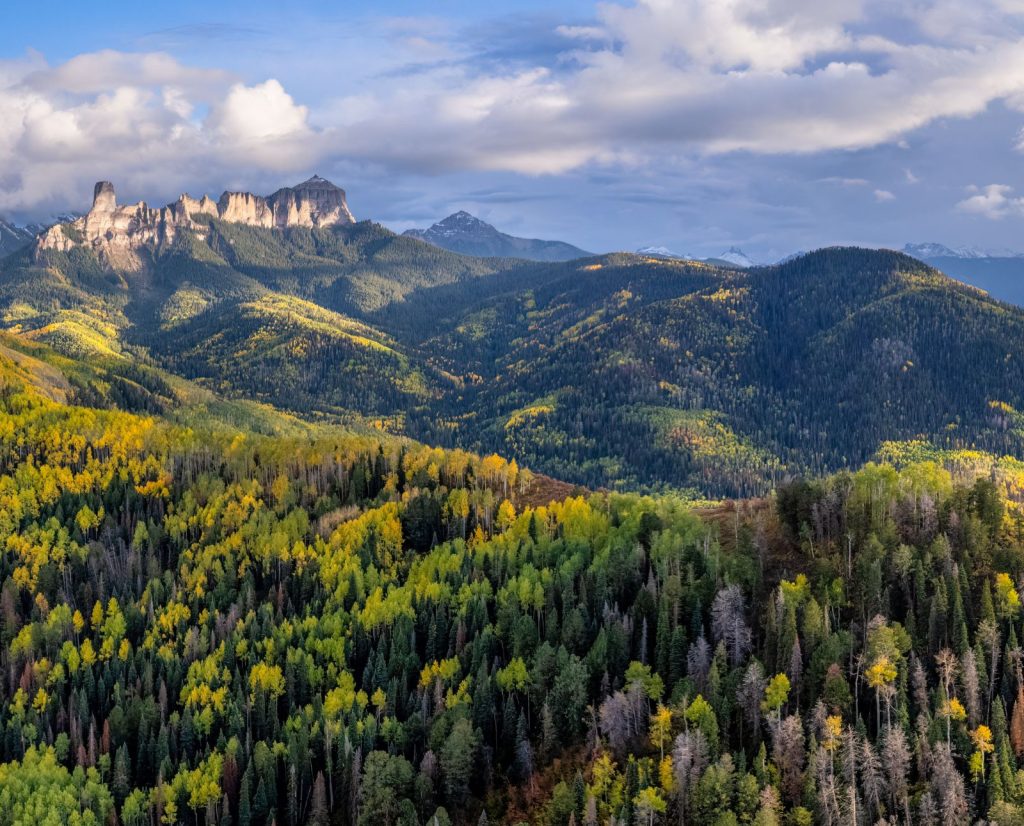
Dusky grouse are different. You cannot put a neat bow on the cover they inhabit. Out west, ruffed and spruce grouse habitat can be found somewhere on the mountain. Dusky grouse habitat is the mountain. But there are ways to narrow down the search for duskies and consistently find action. It may just require some boot leather.
Early in the season, duskies can be found anywhere from the foothills to the alpine meadows. Those who have spent time in the mountains know that this encompasses a vast area. Finding a place to start can be daunting.
Begin by searching for open areas. These may be recent burns, fields of bunchgrass, or alpine meadows. Satellite imagery can be a great tool for locating places to hunt. When I find meadows dappled with green timber, I make sure to drop a waypoint to mark the spot for when it comes time to hit the field.
At dawn, duskies will be primarily feeding in open areas and will often linger there throughout the day, moving to shady edges to escape the noon heat. However, there are exceptions, and I have seen coveys make long flights between foraging and loafing areas.
When dusky grouse are not feeding, they are loafing. Ingredients for loafing cover include trees, woody cover near the ground, and relatively open surroundings. During the heat of the day, birds concentrate where they can find refuge from the sun. Anything from a couple decadent ponderosas to a scrubby island of firs can harbor a bird. Stands that have been thinned by logging or fire will also attract birds at this time of day.
However, distinct patches of subalpine fir or Douglas fir with branches down to their bases have become my favorite coverts to hunt. These often form around a rotten log, which provides a suitable microhabitat for fir seedlings to establish. Birds seem to select these areas for their combination of protection, visibility, and readily available needles to feed on.
Ground-level visibility is crucial, and is a constant wherever duskies are found. As the season progresses, they will begin to retreat from the foothills and occupy higher elevations where clumps of firs can be found. Eventually, they will be spending most of their time in these patches and feeding almost exclusively on needles.
Dusky Grouse Hunting Strategies
I devote most of my hunts to locating those fir clumps, for they will hold birds throughout the season. However, ideal habitat is not always easy to recognize.
Hiking ridges is an excellent way to find occupied cover. Ridges create transitions between opposing aspects, resulting in edges along varying cover types. Follow ridges long enough, and you will invariably stumble into some grouse. Do this enough, and you will begin to key-in on patterns and consistencies.
I have found that dusky grouse avoid north-facing aspects with dense or unbroken timber, especially late in the season. Rather, they prefer southerly aspects where woody plants form clumps in a matrix of meadows. They also avoid dense, uniform stands of shrubs and instead utilize smaller clumps.
Like other grouse, duskies will rely heavily on their cryptic plumage. This is especially true if a hunter is downhill from a bird, blocking their escape route. In which case the bird is more likely to hold tight. But if a hunter is positioned uphill of a dusky, it is more apt to flush. This is another advantage to hiking ridges, where one is usually positioned above any cover.
Hunting Dusky Grouse With Dogs
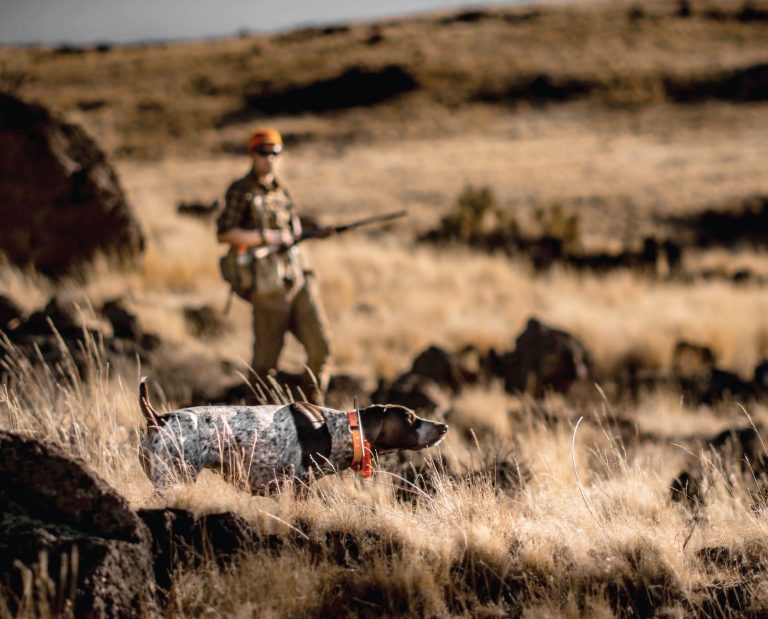
The habits of dusky grouse make them relatively accessible to dogless hunters. However, a good bird dog can make a successful hunt all the more satisfying.
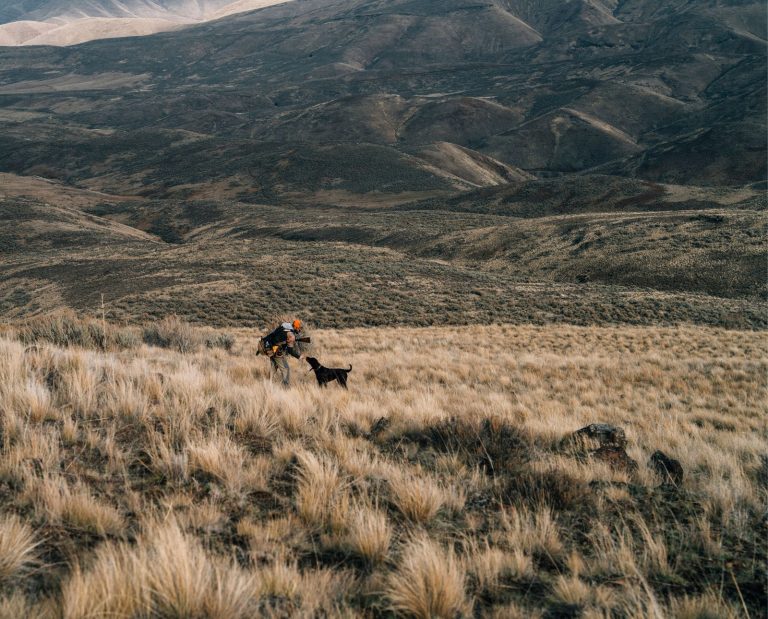
Dogs can help refine your search by locating tight-holding birds or pinning down hot coverts. Bear in mind, however, that a dusky grouse hunt covers big country, so I recommend leashing your companion during the climb to ensure they do not wear out before reaching adequate cover. Once you reach cover resembling what I described above, turn your dog loose and start hunting.
Duskies are also apt to take refuge in a tree, especially upon seeing a canine. Working birds up may be a bit of a learning curve for both the dog and the hunter. A seasoned dusky grouse dog will know to work uphill of the hunter, sending birds down the mountain towards the shooter.
Licenses, Seasons, And Bag Limits
Dusky grouse can be found and hunted in ten western states, from Arizona and New Mexico up to Washington and Montana. They inhabit drier, interior mountain ranges while their close relative, the sooty grouse, occupies the coastal ranges.
Most states only require a small game license to pursue these birds, and typically allow a daily bag limit of 3 or 4. Possession limits are often twice or three times the daily limit. Be sure to carefully review the regulations for the state you plan to hunt. Many states allow an aggregate limit of grouse. For example, in Montana a hunter may shoot three “mountain grouse” daily. This includes spruce grouse, ruffed grouse, and dusky grouse, of which a hunter may shoot a combination not exceeding a total of three.
Most grouse seasons in the west run from September to December, providing ample opportunity for hunters to pursue them.
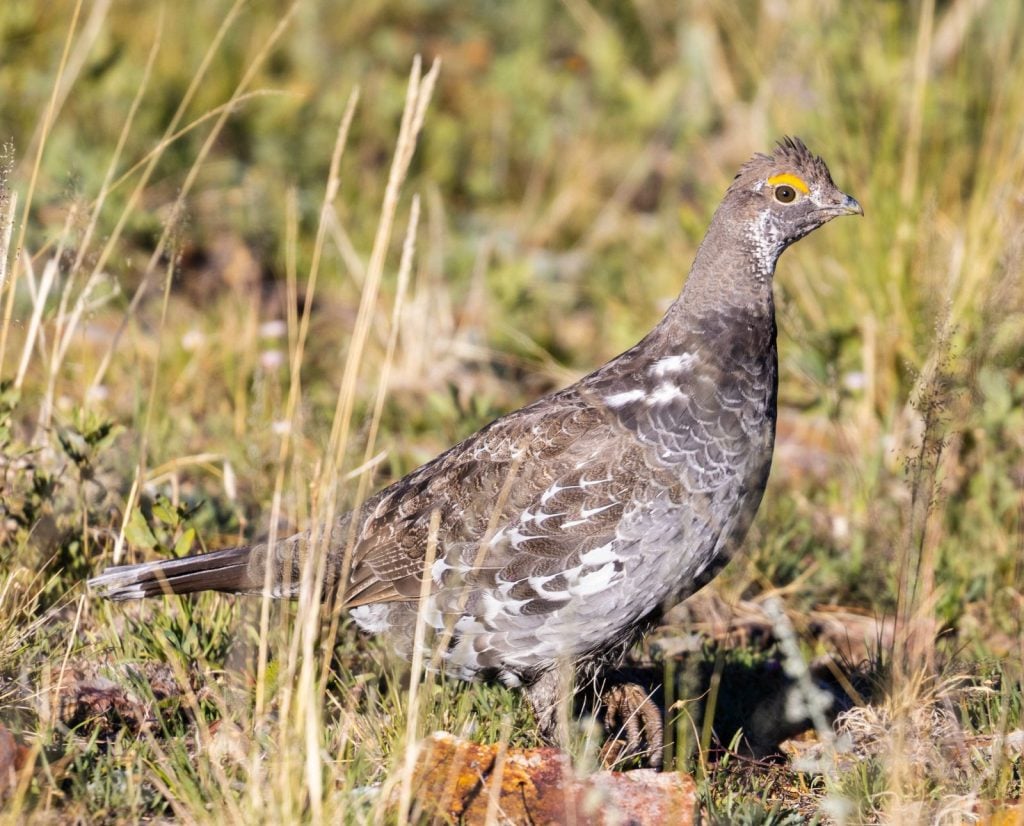
Shotgun Chokes and Shot Size Selection for Dusky Grouse Hunting
Dusky grouse, especially young ones, have a habit of flushing to the nearest large tree and stubbornly refusing to abandon their perch. Shooting a sitting bird is not very sporting, so be quick on the shot and don’t let them land to begin with.
Unlike other forest grouse, these are big and tough birds, much like a pheasant. One time, I sent an arrow tipped with a Judo point through a dusky grouse and watched, dumbfounded, as it flew 300 yards before falling dead. Now, I use larger shot sizes. Steel No. 4 shot has become my go-to. Also, lugging a heavy gun up and down the mountains is no fun, so I tote a 20 gauge to save on weight.
Dusky Grouse Hunting is an Adventure
Like many of our feather-minded pursuits, much of the experience resides in the adventure, not in the harvest. Dusky grouse offer every opportunity to hunt rugged terrain over many arduous miles. One can easily find their limits in dusky grouse country—and not necessarily bag limits.
At the same time, hunters who hike along trails or in areas accessible by vehicles may find simpler shooting opportunities. However, this is what has led to a somewhat diminished perception of dusky grouse. However, exceptionally motivated individuals may start their hunt at the base of the mountain, working their way to ideal cover on foot. Those folks will quickly earn a deeper appreciation for dusky grouse.