


How Dog Shows Don’t Help Hunting Dog Breeders Obtain “Perfection of Form”
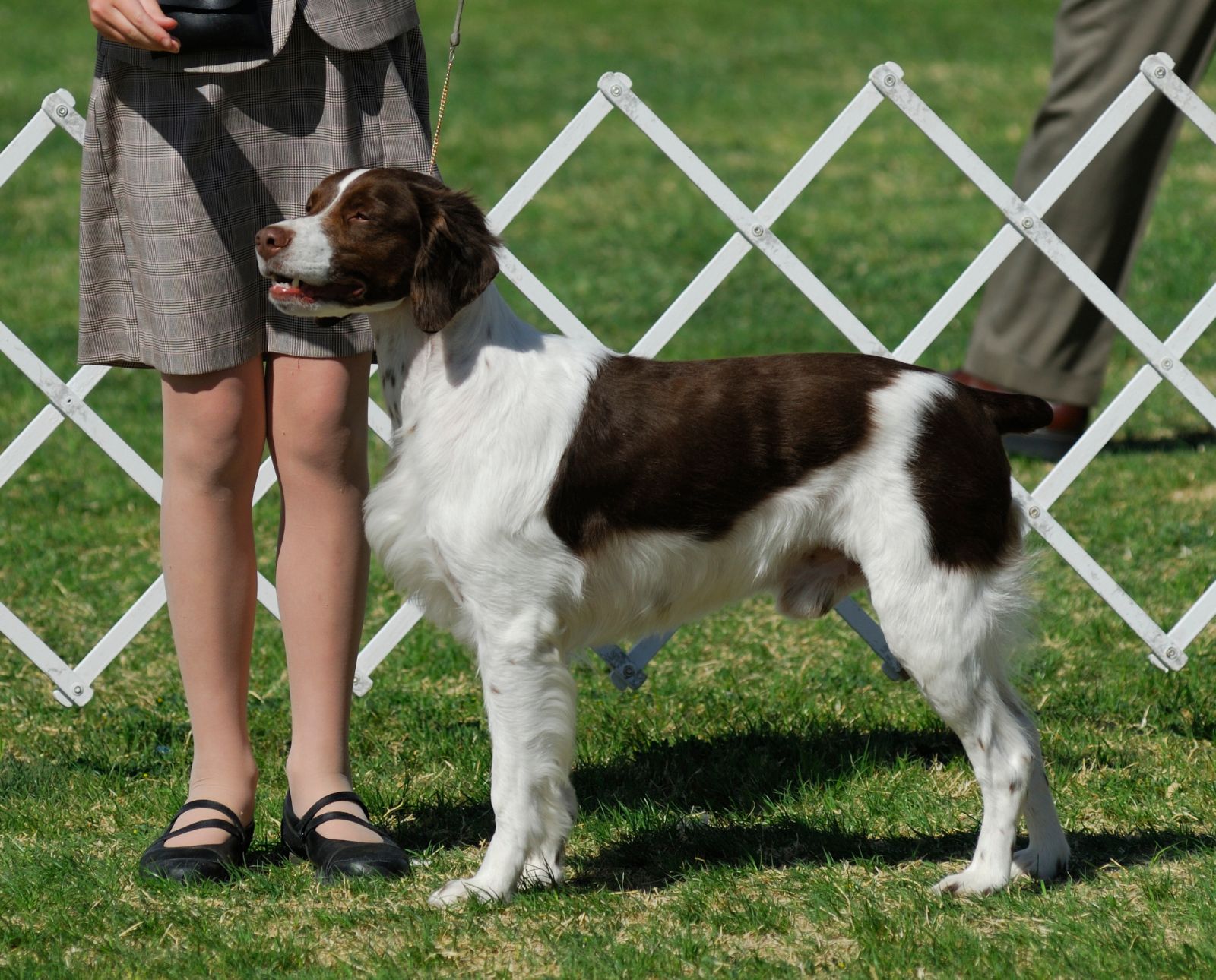
What if dog shows didn’t reward beauty and instead objectively evaluated the functional abilities of dogs using modern instruments and scientific methods?
“In all other forms of livestock, the breeder, having attained an ideal, an animal which perfectly fits its purpose, is content. He knows the best when he sees it, and is then content if he can breed to it…So the Derby winner of to-day looks pretty much the same as the Derby winner of forty years ago. The dog-breeder has not stopped because … he has not attained an ideal and never will. He cannot do so because dogs are fashionable and are subject to the dictates of fashion.” – Brian Vesey-Fitzgerald, The Sphere. August 2, 1958.
For millions of people around the world, dog shows are a fun, challenging, and educational activity. Wherever they are held, they stimulate the local economy and offer an excellent opportunity for a fun family outing. I’ve attended many dog shows as a spectator (I have a soft spot for Italian Greyhounds and Irish Water Spaniels), and I enjoyed them. I even owned a show champion, thanks to my friend Shelly, who showed him. So, I don’t have a bone to pick with dog shows—per se. However, as a hunter, owner of hunting dogs, and someone who has spent over 30 years studying hunting dogs, I have concluded that dog shows cannot help breeders “obtain…perfection of form” when it comes to hunting dogs.
The reason is simple. Dog shows are not designed to help breeders breed good hunting dogs. They are designed to help breeders obtain beautiful animals. Some canine organizations openly admit it. In France, dog shows are called Concours de beauté (beauty contests), and in Italy, they are called Esposizioni di bellezza (beauty shows). A dog can earn a champion de beauté or campione di belleza title. Both terms mean “Beauty Champion.”
Instead of measuring beauty, wouldn’t it be more useful for breeders if a show system measuring the physical capabilities of dogs existed?
Defining “Perfection of Form”
In a sense, dog shows can help breeders “obtain near perfection of form” if their goal is to produce perfectly beautiful animals. And they can help people breed dogs that are “fit for purpose” if that purpose is beauty. So go to a dog show if you want to see some real canine eye-candy. You will see a lot of drop-dead gorgeous dogs. That’s why I go to shows. I like looking at good-looking dogs. And I’m okay with an experienced judge declaring one particular dog the best-looking of them all. After all, beauty is in the eye of the beholder, right?
But here’s the thing: when Edward Laverack, the father of the English Setter, wrote about “perfection of form,” he was not referring to a dog’s subjective beauty—although I am sure he appreciated a good-looking dog. For Laverack and every other breeder of hunting dogs at the time, the expression “perfection of form” referred to the physical characteristics of a dog’s anatomy that influenced its ability to perform in the field.
Eyeballing Versus Measuring
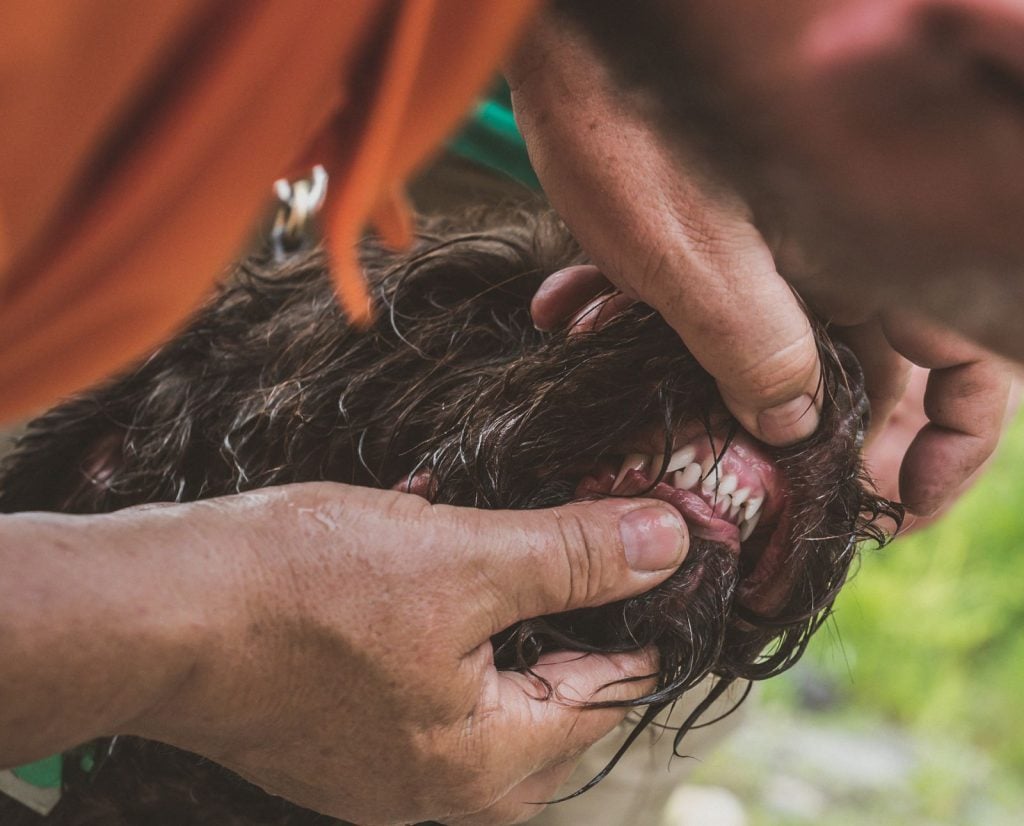
Many show folks reading this are surely saying, “But that is what we do in the show ring! We evaluate a dog’s anatomy to ensure it is built correctly.” And sure, you can evaluate certain aspects of a dog’s anatomy in a show ring. Count the legs; there should be four. Count the eyes and ears. You want to see two of each. Check the nose and tail. There should be one of each at opposite ends of the dog. One can eyeball things like height, weight, agulation, reach, and other aspects. But why not measure them with modern tools? We now have instruments that can measure almost anything instantly, even at a distance.
Yet we still judge some of a dog’s most important physical characteristics with our eyes. If you ask any magician or professional show handler, human eyes are notoriously easy to fool.
If dog shows were truly about ensuring that a dog has “perfection of form” as it applies to the field, then breed standards would include highly detailed descriptions of all the essential factors that play a role in the dog’s performance. Then, judges could use the most pertinent data collected by various instruments aimed at the dog as it stood still and moved around the ring to see how well it measured up.
Instead, we have a single set of eyeballs looking at a dog for a minute or two, and a single set of hands going over the dog for just a few seconds. And that may be why many standards for gundogs contain phrases like “conformation indicating power, endurance and agility” or “with appearance of strength, endurance, and speed.” They are tacit admissions that show-ring results are based on feelings, not facts. After all, how can we measure things like an “aristocratic” or “noble” appearance? What tool can we use to measure “soft expression of a bird dog” or the “look of intelligence and animation?” Imagine if breed standards included precise measurement ranges instead of subjective descriptors.
Flaws and Loopholes in Existing Breed Standards
Some standards also attempt to justify the usefulness of a particular feature. The American Kennel Club (AKC) standard for the Brittany contains some real gems, such as “lips dry, so that feathers will not stick.” Ignoring the fact that the word “dry” in dog standards usually refers to skin without wrinkles or looseness and has nothing to do with moisture content, as any hunter knows, feathers tend to stick to the tongue and inside the mouth far more than on the lips. So should we breed gundogs with “dry” tongues and mouths?
Another classic is “Nose-Nostrils well open to permit deep breathing of air and adequate scenting.” Who needs to be reminded that a gun dog needs to breathe?
And don’t get me started on how “Male animals should have two apparently normal testicles fully descended into the scrotum.” I am sure it is there because a judge can’t just juggle the boys for a second or two and declare them normal. All he or she can say is that they are apparently normal.
Language like this leaves a giant loophole for dishonest folks to jump through. For example, problems in the testicular region can be solved by Neuticles, or testicular implants for dogs. Writing for The Guardian, Julia Stuart reported that:
One Airedale breeder was famously caught out for having a false testicle inserted into his dog’s scrotum. One of the requirements for a male dog being shown is that both its testicles have descended. Unfortunately for the owner, when the dog was being shown the other testicle made an appearance, resulting in one too many. The man was banned from showing and judging for 10 years.
If the boys have to have boys, apparently normal or not, what about females? Don’t they need to have two apparently normal ovaries? Oh, right. We can’t eyeball those. But we can certainly prove it with an ultrasound reading.
While amusing, these loopholes highlight how dog shows reward appearance, not the field-worthy soundness hunters and breeders require.
The Need For A System That Objectively Evaluates Hunting Dogs
If purebred dog breeding were truly about improving dog breeds, the Westminster Dog Show would be a gathering of veterinarians, statisticians, and biologists dressed in whatever work wear is appropriate for their profession, putting each dog through a series of physical, medical, genetic, and performance-based tests.
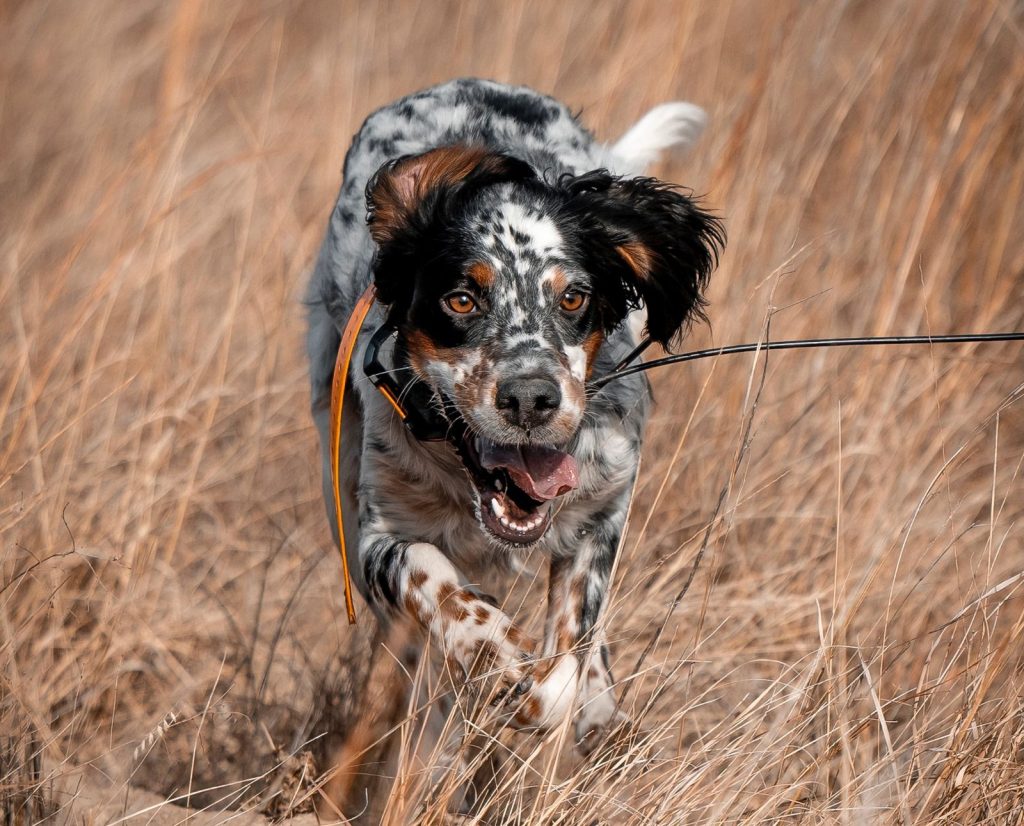
Since pointing dogs are generally expected to search at a gallop, they would be judged while running at a gallop, not at a trot. And since they are expected to run at a gallop for long periods, they would undergo a VO2 max test to measure the maximum amount of oxygen their body can absorb and use during exercise. The higher the score, the better.
The results of such evaluations would be fascinating, but they may tell people what they don’t want to hear about their breed or line. Take the famous shoulder angle idea, for example. It had long been held as gospel that a dog’s ideal layback angle for a dog’s shoulder was 45 degrees. McDowell Lyon supported the idea in his 1950 book The Dog in Action. Max von Stephanitz, a famous breeder, judge, and author, also promoted the idea.
However, when Rachael Page Elliott took the time to study the idea and take detailed measurements of dogs standing still and in motion, she found that 45 degrees was way off. After conducting a study at the Harvard University Museum of Comparative Zoology using specialized x-ray and fluoroscopic equipment designed by Dr. Farish Jenkins, she concluded that “the blade sets about 30 degrees off a vertical plane—measured up the scapular ridge—is within normal limits for the average well-built dog.”
Since then, other studies have been done on canine anatomy and locomotion aspects, often revealing that what we feel is right about dog conformation conflicts with the facts. But those studies are usually ignored and forgotten. And sure, I understand we will never come up with an objective test for beauty, but we can certainly design a system that can evaluate gundogs as athletes.
What If We Measured Hunting Dogs Like Athletes?
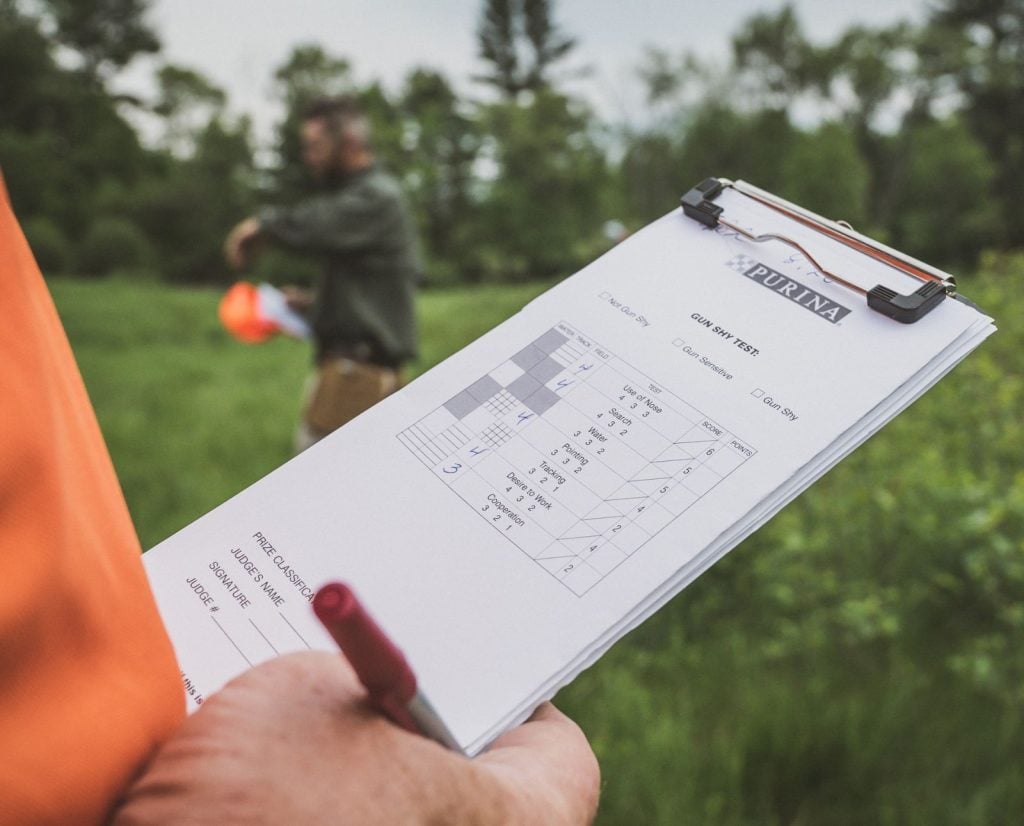
Why not establish a “show” system that mirrors North American Versatile Hunting Dog Association or AKC hunt tests? Instead of a competitive event to select a winner, all dogs would be judged against a standard and receive a score. The evaluations would be conducted by trained judges using instruments to measure various performance aspects of each dog. When the test is over, the owner would receive a score sheet showing their dog’s results in all the categories that matter in the field. Instead of telling everyone your dog got a four in the duck search and a four in pointing, you’d say, “My dog got a four out of four for VO2 max and perfect scores in locomotion, strength, and endurance.”
If you are a breeder, you could then use those results to select dogs with good scores in hunt tests and in “fitness” tests conducted by judges using facts, not feelings. Need more speed in your line? Look for dogs with high scores in speed, locomotion, and gait. Need tougher feet or a harsher coat? Look for dogs with high scores in those categories. Whatever information you seek as a breeder would be available in the form of objective data, not just the gut feelings of a judge looking for the “appearance of strength and endurance.”
Even if full-scale implementation is ambitious, incorporating a few measurable performance traits into evaluations would already be a step forward. That, and wouldn’t it be fascinating?

This is spot on w what I’ve seen in show the ring. Dogs picked to look pretty, not becauae they met an objective breed standard of function and purpose.
Fabulous article, absolutely on point!
Craig is the best! Beautiful setter in the photo, looks like a Llewellin! ❤️
I don’t disagree with the basic premise- dog shows are not the measure of great hunting dogs. However, all breeds have parent clubs who control what the standard says and should own both aspects. AWPGA has a working field standard along with a breed standard. Breed standards are just a template for what the breed should look like, be built like. To ignore it you end up with field dogs who look nothing like the breed should look. Both aspects are important! I don’t like to hunt with ugly dogs.
Well said!
I could lie awake at night thinking what the show ring has done to some of the retrievers, chunky head and body with piano-legs. One responsible Griff breeder I know includes AKC as well as NAVHDA tests in a purchase contract. The show ring may be a driver for some standards, but breeders that focus on hunting will also breed for soundness, and that includes confrormation.
Maybe I see bird dogs differently than most readers, to me what makes a bird dog beautiful isn’t the physical appearance it is the ability to point, back and retrieve. The burning desire to hunt and to please his/her master. docile and biddable both at home and in the field. I don’t care if it is a pure bred or a drop beauty is in the eye of the beholder and to me it is substance over form.
Craig I my self am not the biggest fan of beauty shows. But some judges take it very serious. And hold the breed standards. As far as the Westminster breed show. It originated in a bar from four guys. Funny how something that started in a bar over drinks became so prestigious. But I also find in hilarious! That what you would like to see is already being preformed and has been for decades in the German breeding testing system. They have a confirmation that each dog must attend in order to receive breeding rights. But yes in any club you will find corruption and cheaters in. I have heard of people having dental repairs and complete reconstruction of a missing tooth to pass among other things. In some breeds. There are many who will pride themselves on champion of the ring. Without evening competing with another dog of the same breed in the ring. But that is nothing more than buying ribbons. Without competition in the ring. These dogs do not make it in the books. So as one could test in NAVHDA and UKC. This would show a much more rounded picture of the dog.
I would like very much to establish a type of testing show/field like I have heard the Gsp clubs do in Germany. But for now the AKC Dual champion is our gold standard for myself and a small group of others in the English setter community
We have made great advances in the past few years going from a mere 12 dual champions in the history of the breed to 22 dual champions.our biggest challenge is encouraging new people to go for it .
Well I don’t disagree with the show ring only picking pretty dogs ..that is the hole point .the problem with your logic is if each breed doesn’t follow a standard for there look and breed type n style in hunting then all hunting dogs will become the American field pointer ! I have nothing against them but I enjoy the beauty of my laverak English setters .
And as a breeder I only breed for the true dual dog .dual champion/national field champion dogs that have the ability to win in both venues of akc competitions. If you are not aware there is a growing number of us breeding for these types of setters . And we welcome all to attend and compete in our national field championships but on by the ENGLISH SETTER ASSOCIATION OF AMERICA each fall .
As a breeder, handler , hunter and member/past-president of a breed club. I’ve been behind the scenes of many dog shows and have seen my share of ” dirty laundry”. I’m not going to besmirch any club or organization for their judging standards or methods of “testing”. However, I have seen too many times where the two- legged end of the leash was being judged rather than the dog. Excellent article, interesting perspective.
Vesey-Fitzgerald was right then and he is right now. As is E. L. Zimmerman, humans being what we are, our network and connections oftentimes are determinants for high scores, sadly as much in field testing as in the show ring. Craig, you have more eloquently catalogued the goal – beauty – of dog shows than my sentiment about the AKC: rewarding obedience and fluffiness, not necessarily in that order. If I ran everything, there would be a mandate that judges of the sporting breeds must themselves be hunters. The same applies to breeders: I suspect that we all have seen firsthand evidence of lovely looking dogs who lack the temperament and drive to succeed on birds coming from kennels where no one has ever swung a gun over a four legged pal. Cavear emptor, buy such dogs and encourage such breeding at your own peril.