


Navigating Hunting-Related Dog Injuries in the Field
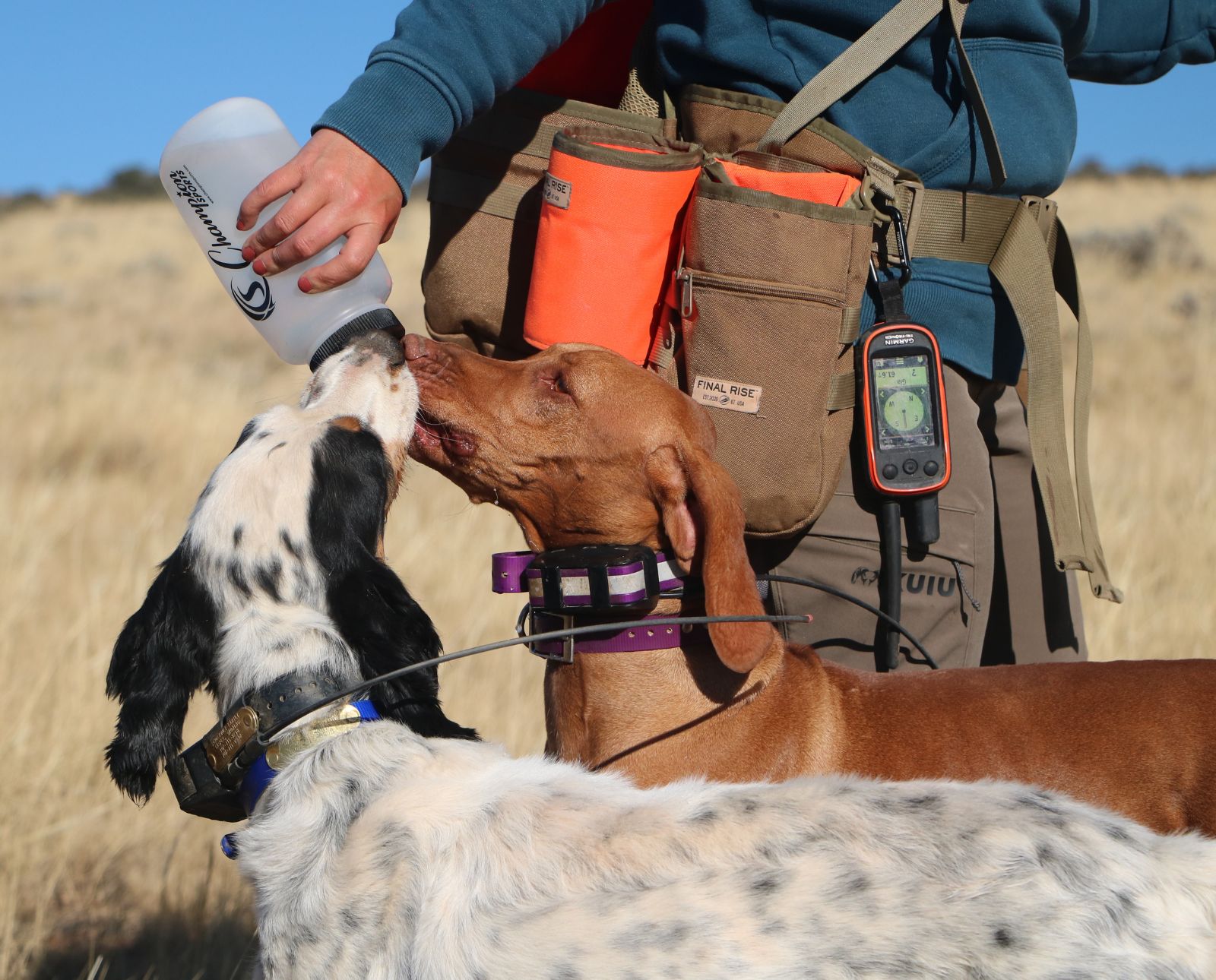
How to assess the severity of hunting dog injuries in the field and decide whether to keep hunting or head for the vet
No, we weren’t on a multi-day hunting excursion out of state. No, we weren’t trying to stretch out an opening day hunt after being cooped up all summer. And again, no, we weren’t trying to take an ancient dog on a glory lap for his potential last day in the field. We had simply said that we were going to hunt, and to me, that was enough of a reason not to cut our central Idaho post-work excursion short after experiencing a hunting dog injury.
My hunting partner, Erik, had the day off. Though I was at the clinic, I planned to leave work early to join him at a chukar spot we knew well. The excitement of beating the setting sun was enticing me to test the speed limit as I cruised out of town. Erik had started hunting without me, so when he called me during my drive out, I was disappointed to hear, “Bad news. Josey got dinged up by some barbed wire. I’m not sure, but I think I may have to stop and get her taken care of.”
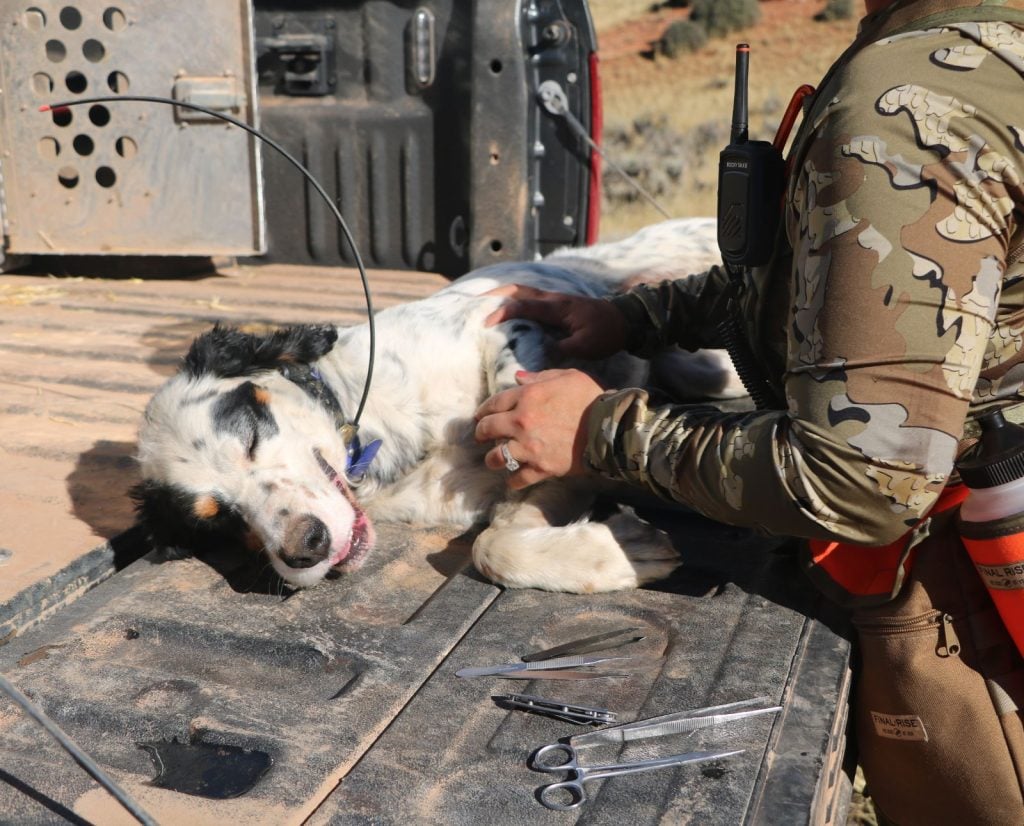
I was Erik’s veterinarian, and I also was on call that evening. If Josey needed stitches and had to stop hunting, so did I. However, it turned out to be a small laceration, and we weren’t about to let it derail our plans. A glob of Neosporin and a few skin staples later, we were back in action, giving it a solid effort until shooting light ended. Call it being stubborn or maximizing precious time in the field, but we stuck it out and put a couple of late afternoon devil birds in our vest.
Many of us have been in a similar situation. It’s a classic dilemma: should I stay, or should I go? This article isn’t meant to make you complacent about care for your dog or to enable you to justify neglecting serious issues. It may, however, help to instill some confidence in your ability to designate what constitutes a hunt-ending incident versus a minor bump in the road.
Please note that this article is not a comprehensive first aid article. Instead, it focuses more on the decision-making associated with deciding to stay in the field or seek immediate veterinary care when experiencing a hunting-related dog injury.
Canine Eye Injuries and Irritations
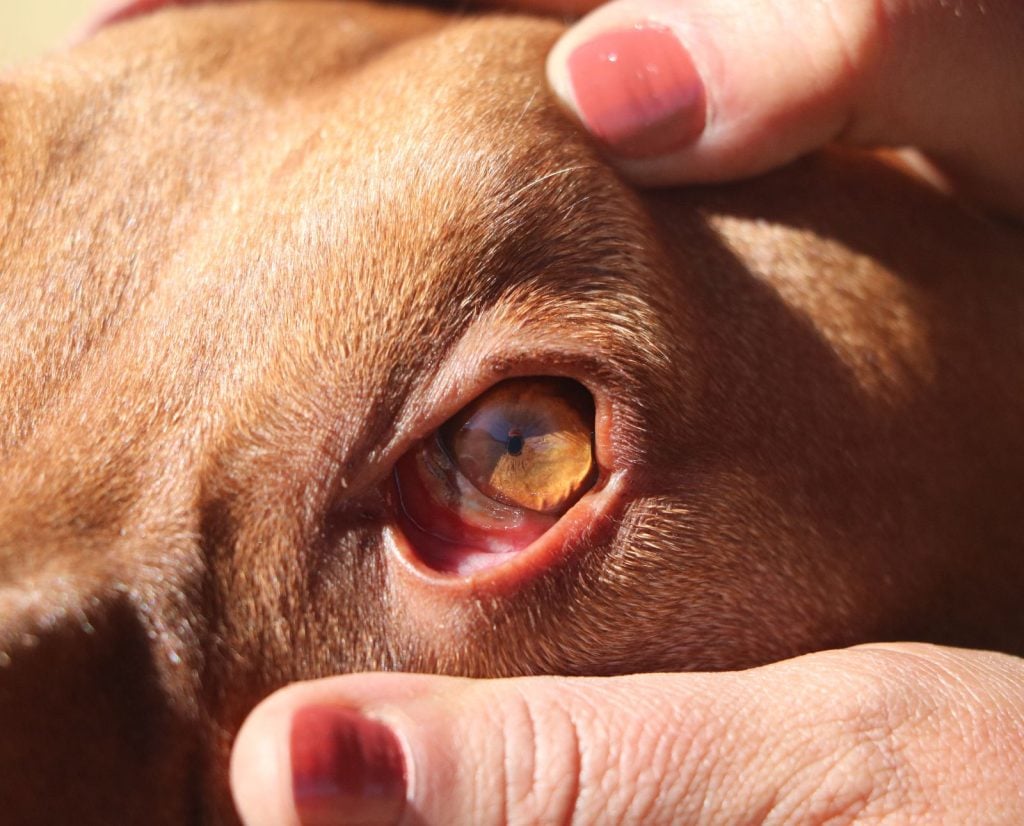
I never ignore eye issues. Here in the Intermountain West, we have cheatgrass galore. They have small, pernicious seeds that get wedged in all sorts of orifices. I’ve promptly left the field knowing that there is a grass seed tucked deep under my dog’s eyelid and driven straight to the clinic to address the problem. In a short 45 minute timeframe, my dog had already developed a fairly widespread ulcer on the cornea. In my clinical experience, eyes can get bad quickly, but when allowed to, they can heal quickly as well.
Stay: Dogs in heavy cover get dirt and gunk in their eyes often, and the areas around their eyes tend to take a beating. Mild clear or grey ocular discharge is very normal. Scrapes or abrasions on the haired portion of the skin around the eyes also isn’t a cause for alarm. If the dog still appears comfortable, the signs point to “stay.” No need to race back to the truck just yet.
Go: If you see your dog pawing constantly at an eye, or holding an eye shut for an extended period of time, you likely have a problem. Visible plant material touching the cornea that can’t be removed in the field with a firm swipe or a quick squirt of eye flush should also warrant attention. Special observation should also be directed to the white of the eye. Extreme redness may indicate a more serious problem, as can copious amounts of yellow or green ocular discharge. You are likely in “go” mode.
Lacerations and Bleeding
As the not-so-consoling age-old saying goes, “All bleeding stops eventually.” In the case of our pal Josey in the opening scene, the cut was small, clean, and only slightly bleeding. For me, making the decision to stay was easy.
Juxtapose Josey’s situation with the case of my Small Munsterlander. On a non-hunting trip, he bit his tongue while eating his morning meal. Even though our ski gear was on and the truck was warming, he punctured a fairly large blood vessel and arterial blood spurted out with each heartbeat. I wanted to ski pretty badly, but after ten minutes of zero hemostatic progress, making the correct decision was easy: we needed to go. We got him to a local clinic where he was sedated and ligated. We were still able to enjoy the snow while he slept it off at the clinic.
Stay: Small cuts or tears in the skin that aren’t bleeding may allow you to play on. This is especially true in cases of partial skin thickness wounds that would qualify a scratch more than a cut. The critical aspect is to ensure these wounds don’t worsen as the hunt goes on and that you’re able to keep them reasonably clean. In order to stay, you may need to leverage your medical kit.
Go: Arterial spray and spurting blood should cause appropriate amounts of terror. Large lacerations that are full skin thickness and greater than two inches in length may do likewise. Punctures that appear to extend deeper toward the chest cavity, abdomen, armpits, or groin are equally threatening. These are “go” scenarios where you need to evaluate how far you are from the truck.
Limping Dogs and Mobility Issues
Limping dogs may be the most common reason my phone rings when my friends are in the field. These mountainside consultations have ranged from a cactus spine stuck in the paw to the early stages of an auto-immune meningitis illness. The trajectory of these two particular conversations was completely different, but the basic guidelines of “stay” or “go” remained.
Stay: A mild intermittent limp that appears to be soreness related or one that is consistent with a preexisting arthritis flare-up may allow you to hunt on. Likewise, things like cactus, goat heads, or other foreign material in the foot should be manageable. Other common ailments include broken toe nails and partially blistered paw pads. My opinion? You can stay.
READ: Caring for the Aging Bird Dog: Vet Advice on Hunting, Health, and Joint Support
Go: Severe limps, non-weight bearing injuries, or episodes consistent with seizures, dehydration, heart-related issues, hyperthermia, or low blood sugar events will be hunt enders. These conditions most certainly aren’t worth pushing the envelope. I would go, and go now.
The Bottom Line in Canine Field First Aid Decision-Making
It would be impossible to think of all the health and injury situations that your canine companion might encounter in the field, but maybe I can distill this overarching idea into simple terms. If your dog is done, then unfortunately, you’re also done. It’s as simple as that. Something that makes you squeamish, significantly affects the way your dog is hunting, or an issue that may lead to more significant problems if not addressed promptly all necessitate a “go” decision. In contrast, if you have a manageable issue that you can, for lack of a better term, stick a Band-Aid on, then by all means, stay. Address the issue with your field kit, give your dog a pep talk, and keep hiking. Allow yourself to maximize your time in the field, and take the appropriate medical steps when you get back to town.
I’ll close with this important point: if you call your veterinarian friend from the field with a dog-related question, you most certainly owe them a beer.

Thanks for writing this important article. Many of us have faced one or more of these issues in the field. I had a new one this year. I was hunting pheasants and woodcock with my 14 year old son in central PA this October. We took a mid day break and I kenneled our two Gordon’s for a well deserved nap. An hour or two later, I let my female out I noticed her face was severely swallen. Her eye lids/brows and cheeks were 4 or 5 times their normal size. I didn’t known what she had tangled with, but recognized it as an alergic reaction to something and she needed an anti-histomine quickly. On a Saturday afternoon with no emergency vet clinic within and hour of our location, we turned to the internet to look up the apprpriate dosage of Benedryl to give to a dog. We learned they should receive 1 mg per pound of dog. I rushed to the local market for bendryl and gave her 2 – 25 mg tablets (she’s 50 pounds). When I looked closer at her, I found many tiny ticks on her head, nose, and areas around her eyes. They were very small, but I was able to locate and remove in excess of 50 ticks from her. Strangely, my male Gordon had no ticks on him. My female remained spunky and after two more doses, 50 mg each – 8 hours apart, the swelling had gone down significantly and she was back out hunting the next day.
Because she was up to date with Nexgard, most of the ticks I pulled off were dead. I called our vet on Monday and she said we took the right action and unless we saw a change in her behavior or energy level, there was no need to bring her in. Next trip to our camp in PA, I sprayed both dogs well with an anti-tick and flee spray before taking them out to the field. No issues this time!