


A Full Guide to Ruffed Grouse Hunting
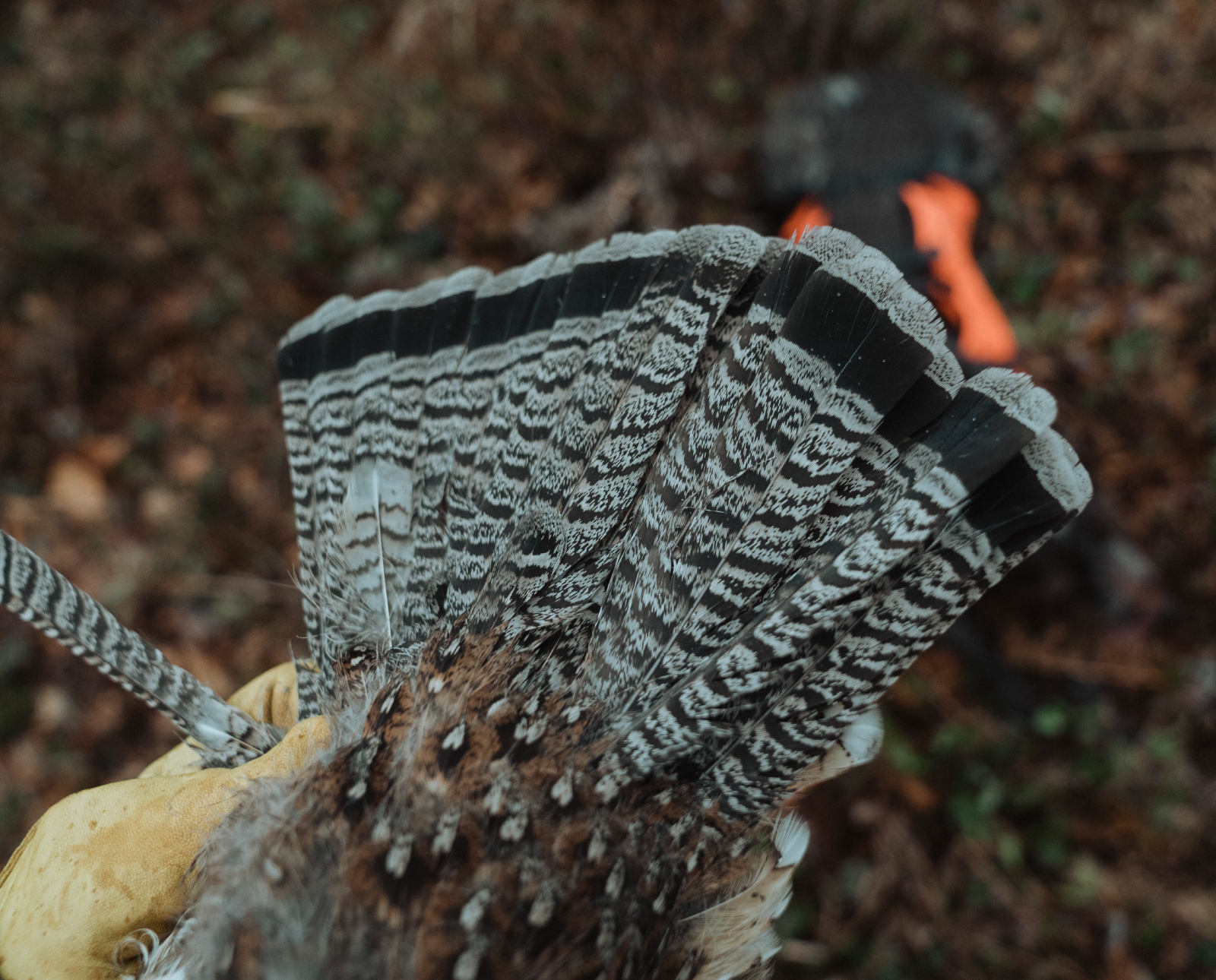
Learn about habitat identification, bird behavior, hunting tactics, and dog work for more effective ruffed grouse hunting
Ruffed grouse hunting has a reputation as one of the hardest bird hunts in the country, alongside pursuits like chukar, pheasant, or whatever local opportunity fuels the lore of hunters. While it certainly has its challenges, with a grounding in science, some understanding of behavior, and a good deal of hard work, hunting ruffed grouse is achievable for those who set their minds to it. A base level of knowledge can provide consistent action in the grouse woods and serve as a strong starting point before exploring the deeper and more nuanced aspects of tougher days. Like many game animals, ruffed grouse will do exactly what they are supposed to—right up until the moment they do not.
The knowledge required to hunt ruffed grouse will vary depending on where you are in the country, especially when considering the unique challenge of grouse food sources, which can shift from mountain to mountain, week to week, and season to season. While it takes decades to truly master the many dimensions of ruffed grouse hunting, the core tenets of the pursuit remain constant.
Here are those fundamentals to help you get started and stay in the right mindset as you work to unlock the mysteries of ruffed grouse hunting.
Ruffed Grouse Hunting Gear
The gear used for ruffed grouse hunting is not rocket science. Personal preferences matter more than the subtle nuances that often warrant long social media debates.
Shotguns
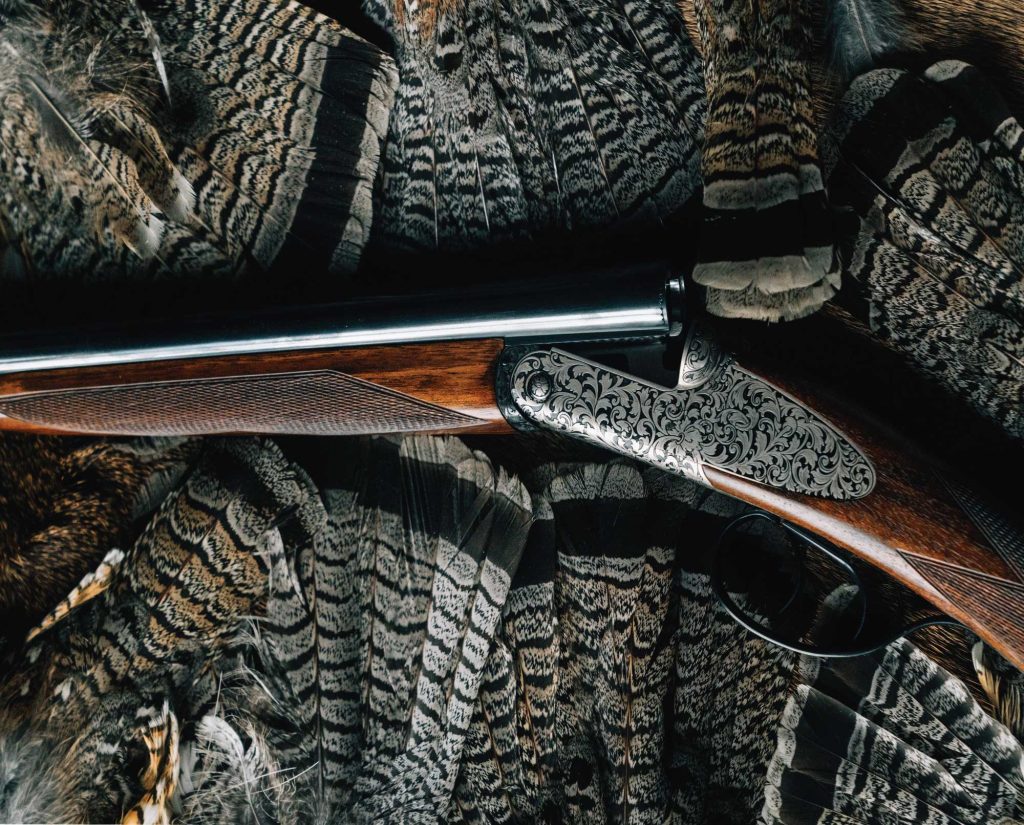
While I am guilty as charged when it comes to discussing the specifics of a grouse gun, I’ll simply say: bring a shotgun you can shoot straight. There will be plenty of time later in your grouse hunting journey to obsess over side-by-sides and ounces.
One myth I want to put to rest is that of barrel length. This is a fact-versus-fiction situation. The fact is, longer barrels on a shotgun mean better swing and follow-through on a shot. Shorter barrels mean the opposite. Blaming four inches of barrel length for missing a grouse is more about ego than good wingshooting. I’m well aware of how thick grouse cover can be—I grew up in it—but when things get unmanageable, everything gets hung up, not just that extra barrel length.
Defining a Grouse Gun – A Shotgun of Specialist Function
Hunting Boots
Boots are another hot topic online, and I’m a rubber boot heathen. Being a New Englander, I hunt much steeper terrain compared to most ruffed grouse hunting areas in the country. Modern rubber boots, like Muck boots, have enough ankle support for most situations. More importantly, ruffed grouse, especially the most popular areas, often live in places with a lot of water. Your boots will end up submerged. While there are quality boots that can handle wet conditions, when it comes to knee-deep water, I’m skeptical. Still, as with shotguns, wear what works for your feet and try something else if your current pair doesn’t work out.
Brush Pants
Depending on where you are in the country, brush pants can be important. Greenbrier is not fun, even with most “brush pants,” and trial and error will be your guide as you experience grouse habitat. There are, in fact, many places where ruffed grouse cover surprisingly lacks thorns. While I don’t live in one of those areas and prefer heavy-duty brush pants, that might not be necessary for where you hunt.
Vests, Jackets, Hats, and Everything Else
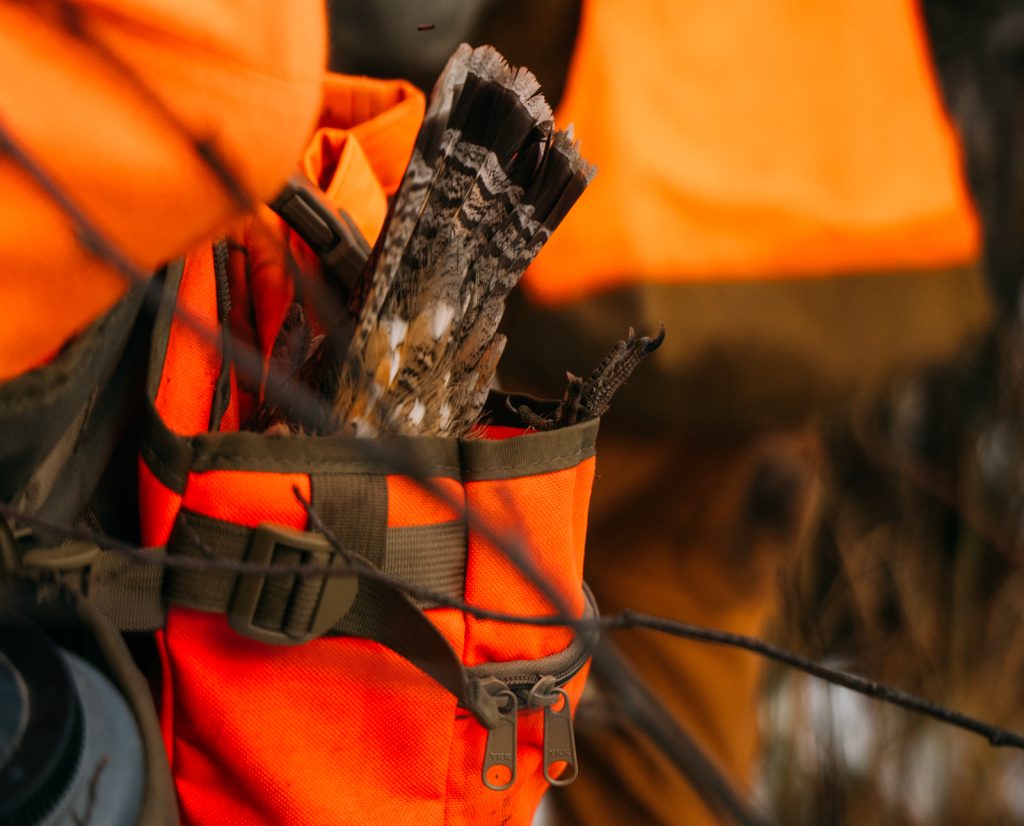
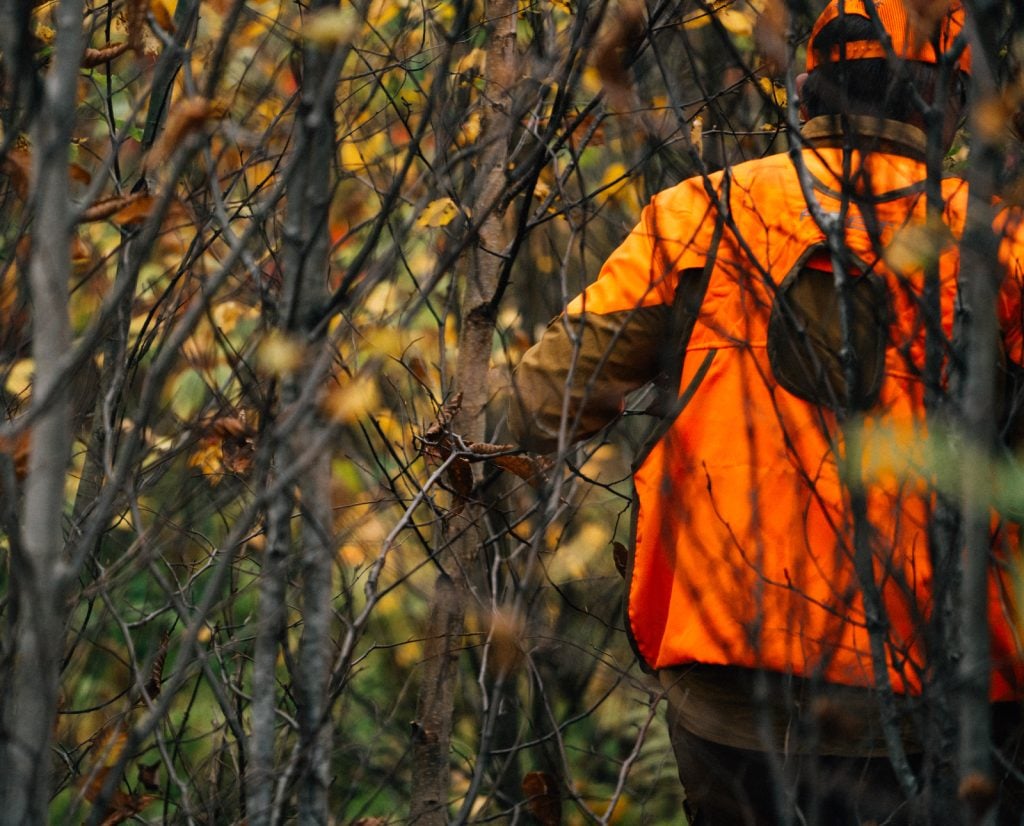
When it comes to everything else—strap vests versus jackets, shirts, hats, you name it—I strongly advocate for two things related to safety. First, always wear a significant amount of blaze orange when hunting ruffed grouse, as the thick cover they live in increases the risk of dangerous shooting situations without it. Second, ensure you have enough space to carry your gear, especially first-aid supplies for your dog.
The farther you go down the path of ruffed grouse hunting, the more knowledge you’ll gain to fine-tune the gear that makes sense for you.
Finding Ruffed Grouse Habitat
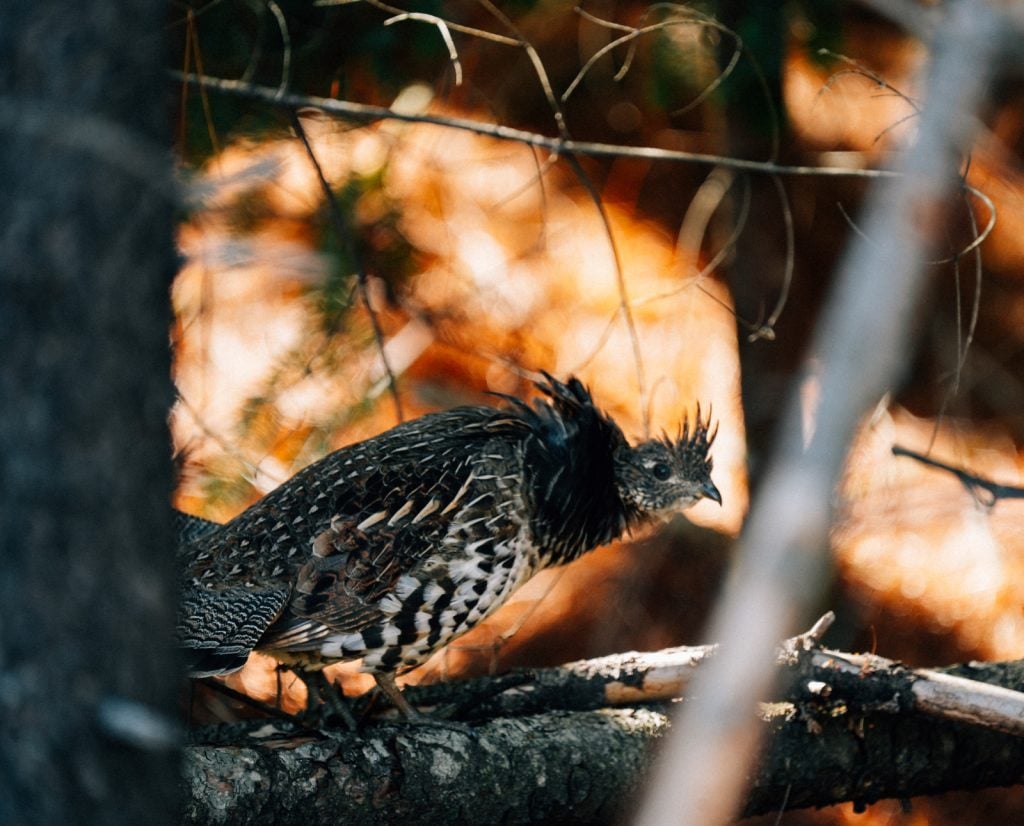
If you cannot find ruffed grouse habitat, then all you’ll be doing is a lot of walking. Contrary to popular belief, ruffed grouse don’t rely solely on early successional growth to survive. While this type of growth is a focal point in finding grouse, they are also highly dependent on mature forests and open areas like log landings, tote roads, and even the grit of driveable dirt roads.
This topic is one of the most misunderstood aspects of ruffed grouse hunting. Habitat will ebb and flow as the years progress, based on the stages that a forest is in. I can’t express how many times I’ve heard people say “the grouse are all gone,” only to find out that those “veteran” hunters never actually learned how to identify ruffed grouse habitat in the first place. There are parts of the country, like the Southern Appalachians and the Southern Northeast, that are indeed struggling, and the numbers don’t match up to what they were 20 to 30 years ago. That’s why it’s crucial to learn this piece of the puzzle; all other grouse hunting topics, like tactics and dog work, can only be deeply explored once you find birds.
There are some important pieces to understand here. Ruffed grouse move a lot and can therefore be found in many places. The goal of targeting good grouse habitat is not simply to find grouse but to find them at greater densities. This is an incredibly simple yet often overlooked idea. You will see grouse in unusual places, but the real objective is to find more of them, more often—not just a handful.
A word of caution to save your sanity: ruffed grouse will be exactly where they’re supposed to be, except when they’re not. Yes, that’s a contradiction, but get comfortable with it. Otherwise, you’ll go insane trying to crack this nut.
Here is the most basic breakdown of how to look for ruffed grouse habitat.
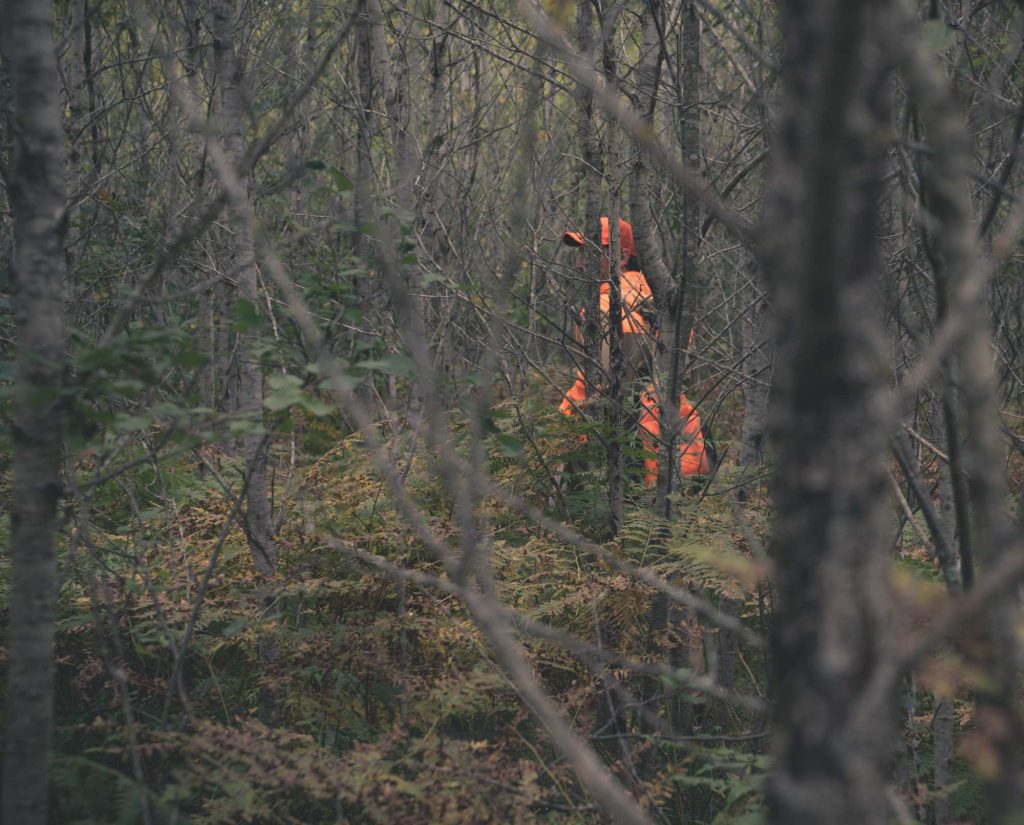
How to Identify Ruffed Grouse Habitat
Stem Density/Early Successional Growth
When assessing stem density, many people refer to it in terms of forest “age,” but that terminology can be misleading. How a forest regrows depends on soil quality, how it was cut, and other variables that make “age” an inconsistent measure. Instead, look at the structure of the trees and ask yourself: could a bird of prey fly easily through here, or could a predator like a bobcat run through at top speed? If it’s difficult to see 10–20 yards ahead, you’ve likely found part of the grouse puzzle. When you find yourself struggling to squeeze between trees and brush, chances are you’re standing in good grouse habitat.
Structural Transitions
Ruffed grouse require various stages of forest growth, including mature forests, and they love edges. More importantly, they love flying when they reach edges. When I’m searching for new grouse cover, I look for a healthy amount of edges that mix overgrown logging roads and log landings (waist high) with more mature forest ages. Grouse need variety to survive and feel comfortable. Hunting straight through the middle of a young forest will produce birds, but not as many as hunting inside the young growth closer to the edges.
Diversity of Hardwood, Conifer, and Shrubs
Ruffed grouse are complex because they thrive on variety. Now, you won’t typically find ruffed grouse sitting in the middle of a cedar stand (most days), but having a blend of cover is essential when finding good grouse habitat. You want to look for that high stem density plus lots of variety. Think of the classic Aldo Leopold quote: “The autumn landscape in the north woods is the land, plus a red maple, plus a ruffed grouse. In terms of conventional physics, the grouse represents only a millionth of either the mass or the energy of an acre yet subtract the grouse and the whole thing is dead.” This quote is really a commentary on biodiversity, and ruffed grouse need biodiversity.
Different Types of Cover
Ruffed grouse cover is not created equal. There are areas where grouse will live in lowland shrub mixes and others in highland tree cuts. They still need all the same elements, but these habitats will look and feel very different from each other. In some parts of the country, like the West, lack of water becomes a much more significant part of the equation. Time and experience will both shape your preferences for the types of cover you target and help you understand how these areas are different, yet follow the same fundamental rules.
Food Sources
Ruffed grouse have been recorded in studies in the Northeast alone eating over 400 foods, mostly plant-based. They are incredibly adaptive in this regard, and because of that, I have a whole section coming up next to dive deeper into this topic.
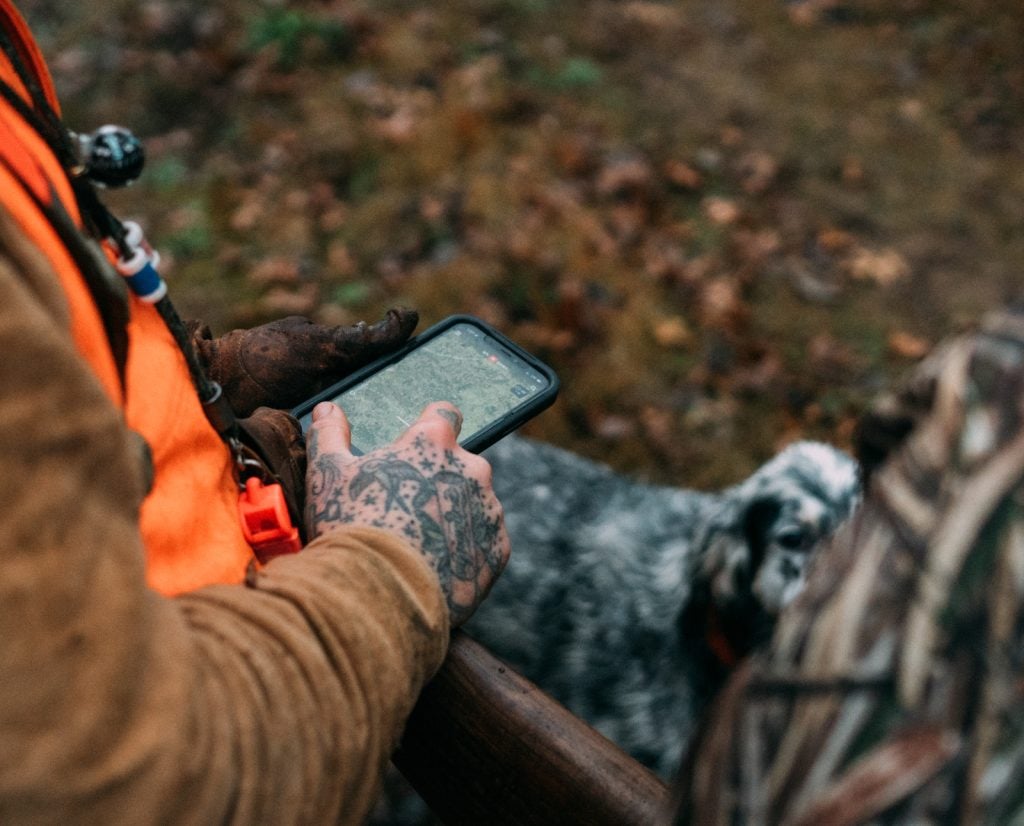
Scouting for Ruffed Grouse
Scouting ruffed grouse habitat can involve both aerial maps and boots on the ground. Digital sources such as onX Hunt or Google Maps are helpful, but image quality and accuracy vary depending on when the photos were taken. Because of this, it’s best to focus on the transitions I’ve mentioned. Look for obvious cut lines, then follow up in person. I color-code my onX pins and include notes on when to revisit a cut based on field observations of how much more time it may need to mature.
Ruffed Grouse Food Sources
The single most daunting and frustrating factor in grouse hunting is the variety and variability of ruffed grouse foods. It is a challenge unique to this species and it often makes birds seem to vanish from known covers and elude even the most seasoned hunters.
Key Points:
- Different regions have different food sources.
- Food sources shift every year.
- Preferred foods may change from day to day.
- Weather eliminates certain food types, forcing birds to adapt.
- Food availability can spread birds thin or concentrate them in remarkable densities.
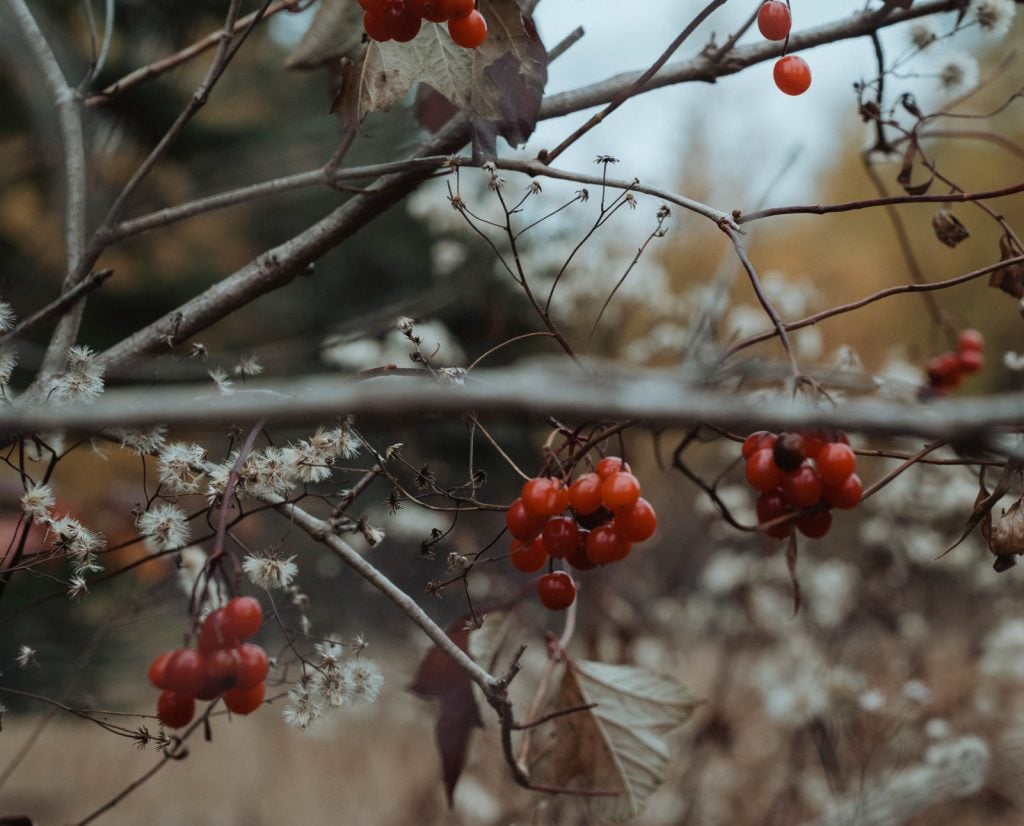
“Decided Gourmet”
William Harnden Foster, the father of modern grouse hunting and author of New England Grouse Shooting, coined the phrase “decided gourmet.” In plain terms, a ruffed grouse will pass by a familiar food source and head to another with almost no reason a human can make sense of. As Foster wrote, “It is this search for food that keeps the grouse on the move, and the novice gunner, while he cannot be blamed for looking for the grouse population of his hunting area in the cool bottoms or in the shady pines during the early part of the season, might be astonished to find the birds concentrated on a dry beech ridge, for instance, several miles away, or some other seemingly unlikely spot.”
To understand why this behavior is so unique to ruffed grouse, we must turn to the single most influential book on the bird’s biology: Bump, Darrow, Edminster, and Crissey (1947), The Ruffed Grouse: Life History, Propagation, and Management. Their research documented more than 414 plant items consumed by grouse throughout the seasons, including single fall crops that contained over 24 different species. That doesn’t even account for early-season food sources such as grasshoppers, which are often more abundant in recent years due to later and later frosts. Add to this the fact that grouse are not opportunists but “decided gourmets,” and you begin to see the most unique challenge in ruffed grouse hunting—figuring out what the birds are eating on the very day you are in the woods.
Geography only deepens the complexity. From state to state, mountain to mountain, and year to year, food abundance and crop failures shift dramatically. The picture is endlessly variable. As the authors wrote: “It is proper to call these birds budders, browsers, berry-pickers, seed eaters, leaf-clippers and even grain-gleaners, and they may be all six on many a feeding day. Nor do they find a smaller array of food items among the animals, for eggs, larvae, cocoons, pupae, nymphs and adult insects, as well as insect allies, such as spiders, all are fair game to the hungry grouse.”
In fall, grouse may feed on an astonishing range: grasshoppers, mushrooms, witch hazel, alder catkins, the more preferred yellow birch catkins, obvious fruits, and less obvious or inconsistent foods like hobblebush or mountain ash. Add in tree buds, maple “helicopters,” and countless others, and the list becomes overwhelming. As the weather cools and certain foods disappear, grouse make sudden, dramatic shifts to new locations. Year-to-year crop variability cannot be overstated; it rewrites the puzzle every season and every region.
For newcomers, there’s no shortcut to mastering this. Asking local hunters, “What do grouse eat?” is one starting point. Another is brute force: shoot birds, open their crops, and see what they’ve been feeding on. It’s a remarkably effective hack if you can identify what’s inside and know where to find more of it. But above all, the forest itself is the best teacher. Time spent observing plants, especially when you’re moving birds, will tell you more than any words here.
Shooting Ruffed Grouse on the Wing
This is not “pah’tridge” hunting. The birds will be in the air, not on the road. Good ruffed grouse shooting comes down to a few key factors: a good choice of chokes and shot size, a solid gun mount, shooting with poor footing, positioning yourself for the best shooting opportunities, and ignoring the trees. Some of these skills can be practiced on the range, but most will have to be honed through real-life scenarios.
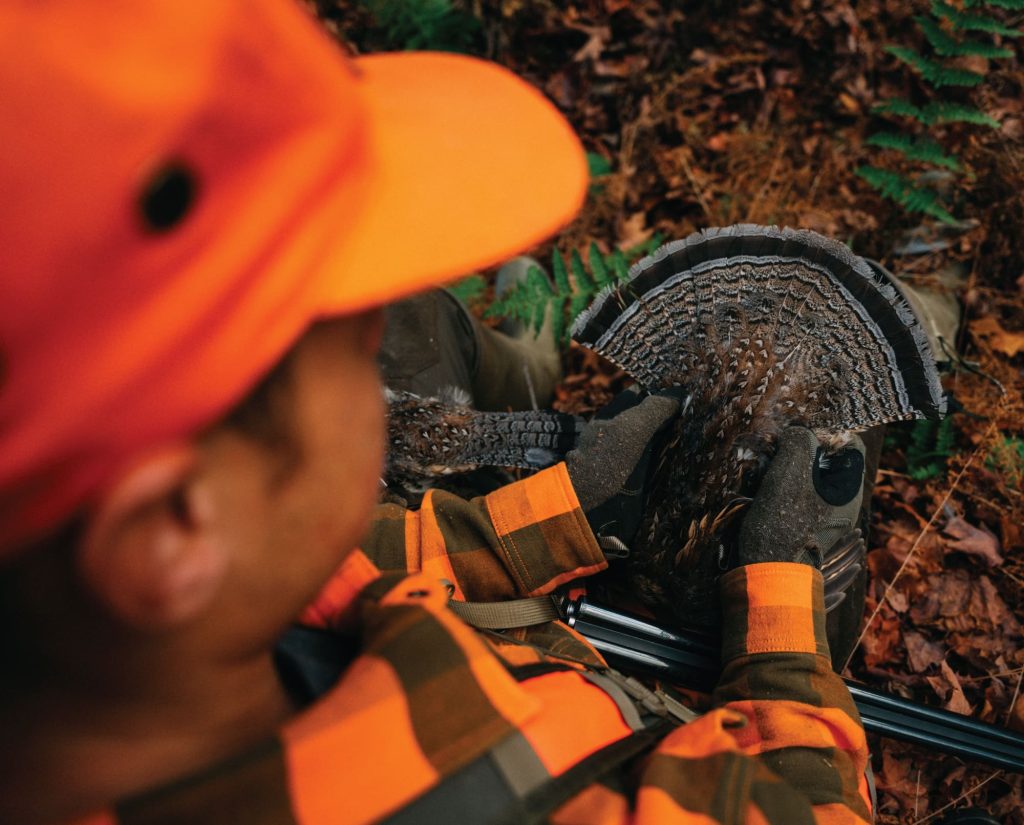
Tips on Better Ruffed Grouse Shooting Skills
Move Where You Think the Bird Is
Pay attention to the dog’s body language and the direction of the wind. These pieces of information can help you locate the bird. A good grouse dog will reposition when the bird moves far enough away, ensuring it doesn’t bump the bird. Be careful not to pass too close to the dog’s nose or disrupt its scent cone, if possible. The dog needs to stay in that cone to work effectively.
Position Yourself Where the Shot Opportunity Will Be
When a dog points at a ruffed grouse, more often than not, the bird is already moving away from the dog and any noises, including your footsteps. You need to keep moving, but more importantly, think strategically—like a game of chess—positioning yourself for the next shot opportunity. Even in thick cover, there are openings where you can swing your gun. Keep advancing toward those spots, ideally ones with stable footing.
Good Shotgun Mount
If you shoulder your shotgun and the sights aren’t aligned, you need to work on your gun mount. I first learned this concept while working with the Gang Intelligence Unit in Boston, of all places. The instructors emphasized the importance of sight alignment when drawing a handgun, and the same principle applies to shotguns. If you haven’t built up the muscle memory to achieve perfect sight alignment as the shotgun butt hits your shoulder, you won’t shoot effectively.
Ignore the Trees
This advice is as old as grouse hunting itself. If you focus on which opening to shoot through, you’ll miss a lot of birds. You shouldn’t be thinking about the trees at all. Instead, swing and mount your shotgun as if you were on a skeet field, firing naturally. Yes, you’ll hit trees and miss shots, but you’ll also kill birds if you keep your focus on the target.
Choke and Shot Size
Wide-open chokes like Cylinder, Skeet 1, Skeet 2, or Improved Cylinder are the way to go. I wouldn’t go tighter than that. The amount of foliage affects shot distance, too. The earlier in the season, the closer the shots will be. For shot size, I often use No. 6 bismuth when the leaves are thick and drop down to as low as No. 8 when the leaves are off. Ruffed grouse aren’t particularly tough birds; a single pellet can bring one down.
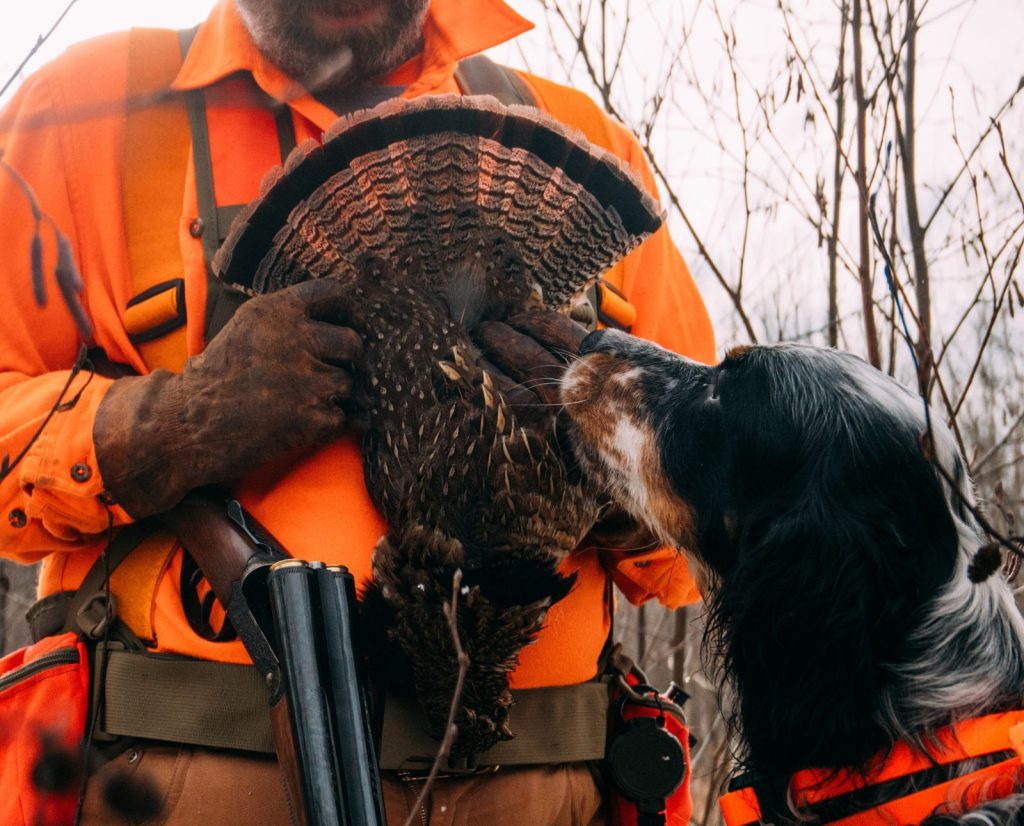
Choosing Shot Shells and Choke Size for Ruffed Grouse Hunting
A Few Points on Safety
- If you don’t know where the dog is, don’t shoot.
- If a bird is flying at dog level (including jumping level), don’t shoot.
- If you don’t know where other hunters are, don’t shoot.
- Be cautious about shooting uphill—elevation matters, and ground level could be above you.
- Never shoot a bird on the ground.
Good grouse shooting often involves missing a lot of shots. Be patient with yourself, accept the misses, and trust that with time, it will come together. These tips may even help speed up the process.
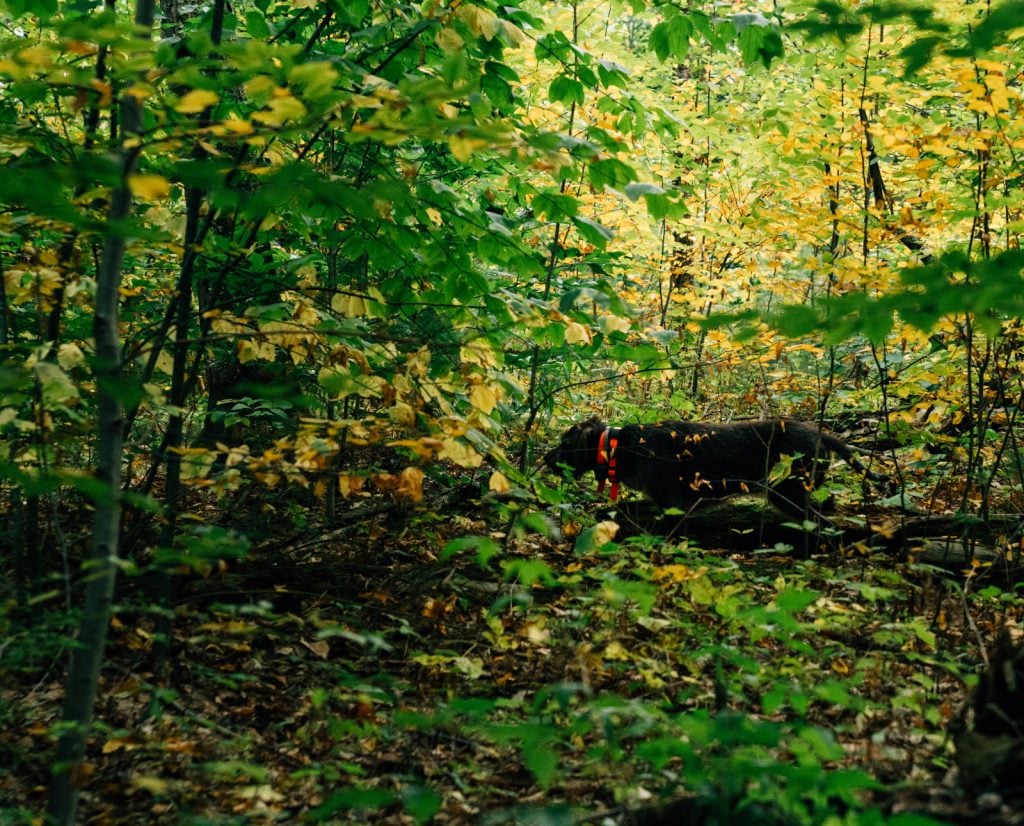
Understanding Grouse Dogs
Ruffed grouse hunting with pointing dogs runs deep into the tradition of when humans first picked up a shotgun to shoot grouse on the wing. While it is possible to hunt ruffed grouse without a dog, there is truly no substitute for a four-legged partner. A bird dog not only increases the efficiency of finding grouse but, more importantly, dramatically improves the recovery of downed birds—an essential consideration in the ethics of hunting.
In 2024, 92 percent of grouse hunters reported owning a pointing dog breed, 15 percent identified as owning a retriever, and eight percent a spaniel. Some hunters owned more than one type, so there is overlap in the data. Still, the tradition of hunting ruffed grouse with pointing dogs remains alive and well.
The question of what makes a good grouse dog could fill chapters, but here is a simple definition: a good grouse dog conducts a thorough search, understands grouse cover and how pressure affects birds, adapts to conditions, and works cooperatively with the handler to create shooting opportunities.
An added bonus is a dog with a strong desire to track wounded game. True retrieval is more than just bringing a bird to hand. It begins with the track itself, the most crucial and challenging step.
I am a firm believer in using the adjacent American woodcock to steady-train dogs in the off-season. Yet no amount of training on non-grouse encounters can truly teach a dog to hunt grouse. It is, at the end of the day, a game of numbers.
There is a saying in the grouse dog world that reads like a word problem: a good woodcock dog is a dime a dozen, and a good grouse dog is one in a hundred. On the surface, it’s clear enough that good grouse dogs are rare. I agree with that, but the assumption behind the saying often goes unexamined. Most people equate this rarity to the dogs themselves—their personalities, their training, or perhaps the breed and breeding. While those factors matter, this is a conversation about a scientific truth I love: correlation is not always causation.
The real reason good grouse dogs are rare comes down to access and opportunity. Solid breeding and sound foundational training are important constants. But the most critical factor is exposure. A dog needs hundreds of encounters with ruffed grouse each year as it matures to truly develop into a capable grouse dog. Very few people are in a position to give their dogs that kind of experience. Living in grouse country, having the free time, and knowing how to find birds are the human factors that make a good grouse dog. Hard stop.
That said, there is nothing wrong with having a “meat dog” or a half-decent bird dog. It is still far better than having no dog at all and provides one of the most rewarding relationships in the field. Taking the extra step toward developing a truly exceptional grouse dog is a personal choice, and often limited by factors beyond our control.
My basic advice is this: choose a breed that fits your hunting style, find a good breeder, and seek a professional trainer’s help for the foundational work—both for your dog and for yourself.
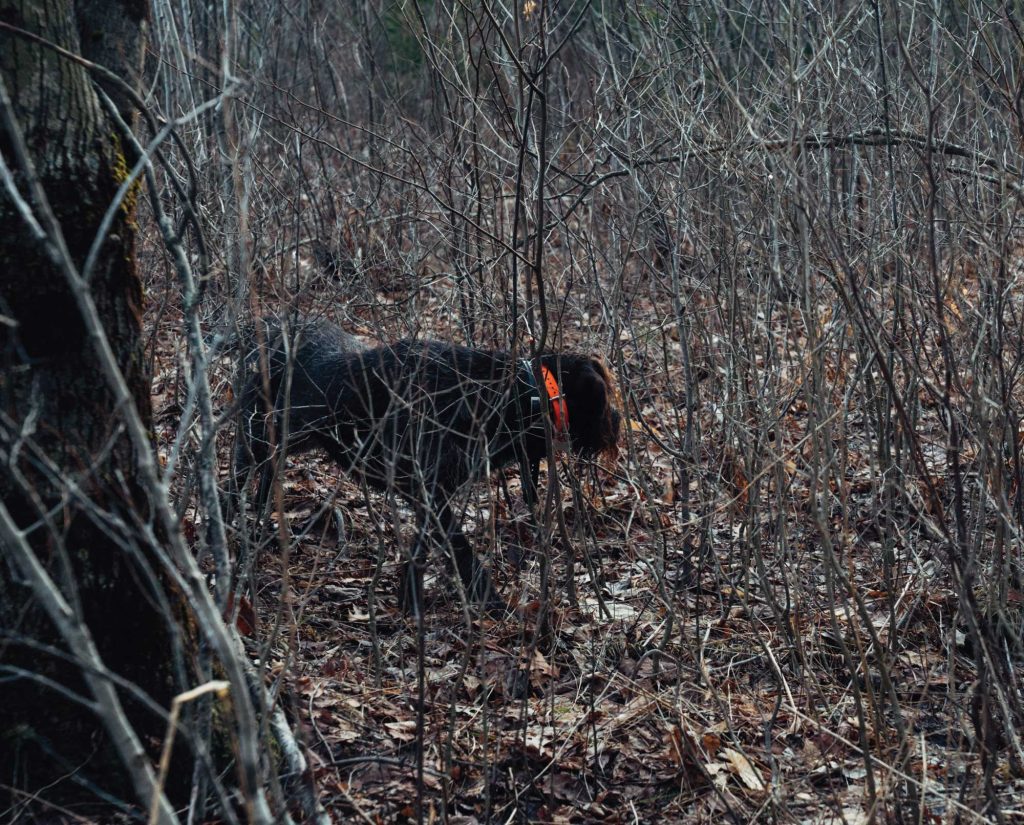
How Dogs Develop on Ruffed Grouse – A Guide to Preparing a Dog for Grouse Hunting
Ruffed Grouse Hunting Tactics and Tips
Good grouse hunting tactics revolve around two main factors: the behavior of the birds and the behavior of you and your dog.
Know Where Grouse Fly
Grouse prefer to stay on the ground (aside from roosting in trees), and flying is a last resort when no other options are available. By understanding this threat response, you can begin to anticipate where ruffed grouse will flush under pressure. When threatened, grouse are more likely to run first before taking flight. Ask yourself what the birds are doing and position yourself to get a clear shot when they finally take flight.
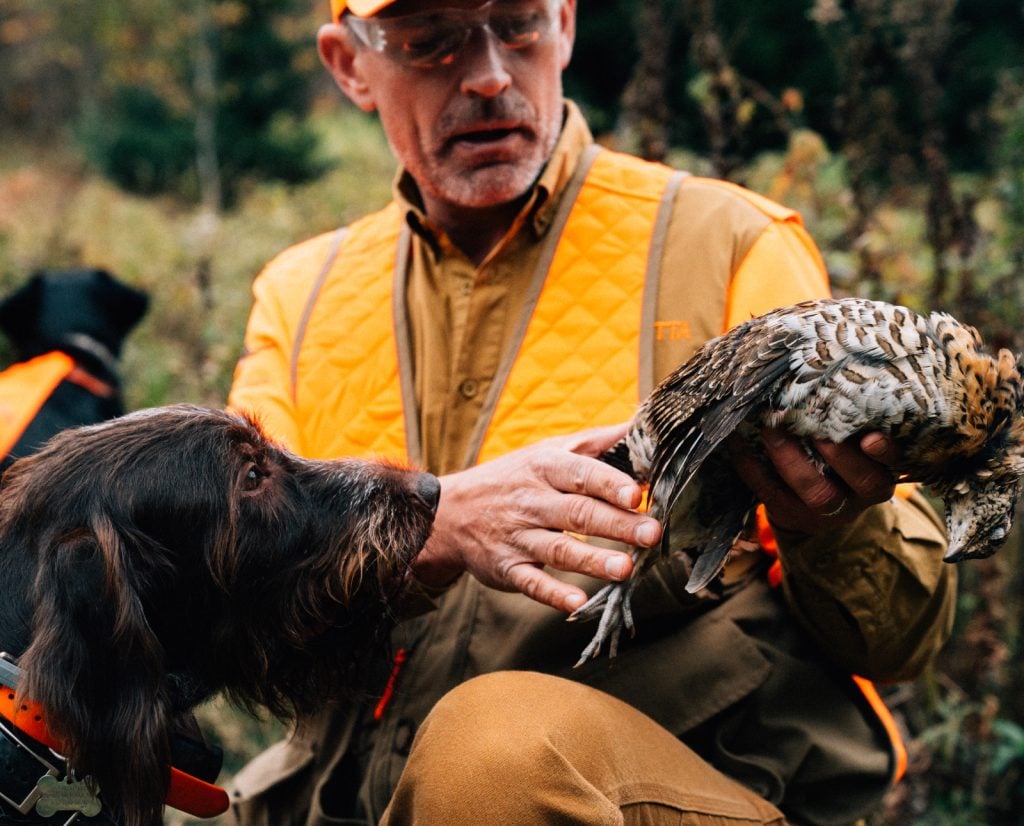
Grouse Hunting is Easier with Two or More People
Ruffed grouse have many escape routes in the forest, but hunting with more than one person creates new opportunities. You can position shooters where they have a better chance of getting a shot. However, not everyone should rush toward the point—this should be the responsibility of one person. Others can flank the sides at a distance, but flushing the bird should remain one person’s task. Use open shooting lanes like logging roads, mature edges, or other clear areas to your advantage, giving shooters better opportunities than the one entering the thick cover.
Know What “Birdy” Looks Like
Recognizing when a dog is “birdy,” especially with average dogs, is essential. When you see it, start looking for areas that seem “grousey”—places with clear transitions, thick green low growth, or other signs that say, “This is where a grouse wants to be.” The more you pay attention, the more the birds will teach you what good grouse cover looks like. By mentally registering these situations, you’ll learn better than by trying to figure things out amid the post-shot excitement.
Open Up Grouse Crops
As mentioned earlier, when you get a bird in hand, open the crop and identify what’s inside. Find where that food source is and target those areas for the rest of the day. Food sources can change quickly, and grouse can be quite selective about what they eat, but it’s a solid starting point for finding more birds.
How Sound Plays a Factor in Ruffed Grouse Behavior
I will confidently say that a ruffed grouse’s number one defensive sense is sound, given the nature of where they live and their inherently wary disposition. As soon as a grouse hears talking, crunching leaves, or a dog’s bell, it immediately begins evasive movements. Early grouse hunters recognized this again and again. Even a bell on a seasoned grouse dog reduces productive opportunities. You will still see and shoot grouse despite these sounds—I’m not arguing otherwise—but the goal is to increase opportunities in meaningful ways.
Light rain and damp forest floors create silence, leaving grouse with little warning that you and your dog are approaching. These are some of the best conditions to hunt in, and the days when limits are most attainable. Removing the dog’s bell under these conditions can also lead to more successful points.
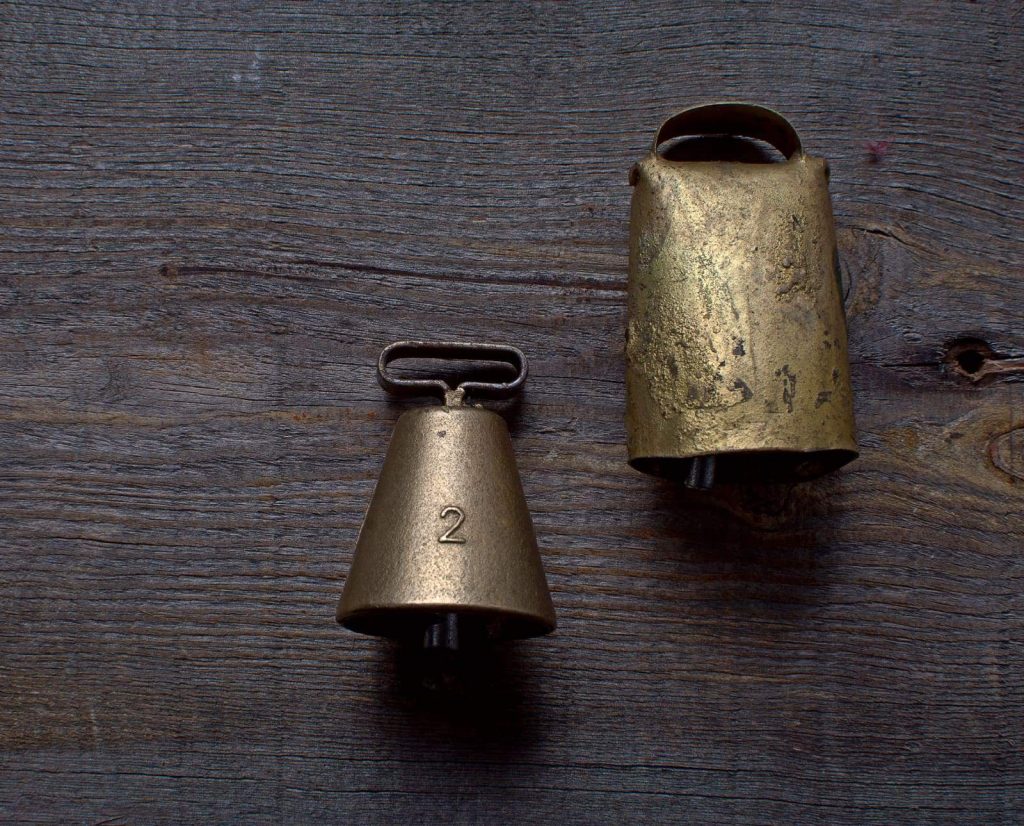
Are Dog Bells a Hindrance in Ruffed Grouse Hunting?
Do Not Give Up on a Spot After One Try
Ruffed grouse can move farther than most people realize. You might hunt a perfect-looking cover and leave scratching your head. It’s possible the habitat hasn’t been fully understood, but there are other common reasons. First, the birds may be feeding somewhere else that day. Second, your dog—especially if it’s inexperienced—might not know what it’s doing, particularly in areas with lower bird numbers. Personally, I always revisit spots at different times of day and throughout the season before writing them off.
Sleep In and Wrap Up Early
Ruffed grouse aren’t early risers. They avoid activity when other critters are moving in the early morning. It also helps to give them time to leave scent on the ground for the dogs. Take your time. Enjoy breakfast, read a book on the porch at grouse camp, and then head out. Grouse also tend to return to the trees before shooting light ends, which can confuse the dog. It’s a good idea to give the birds a break during low-light hours and use that time to relax on the tailgate and watch the woodcock fly.
Woodsmanship Above All
There’s enough to say about grouse hunting tactics to fill a book, far more than can fit into this article. However, the ideas shared here will help you start building contacts, and with contacts comes experience, and with experience comes new ideas. A lot of success comes down to woodsmanship, which is not one skill, but rather the combination of many. The foundation of woodsmanship lies in understanding how the land shapes everything, like where the right plants and trees grow, where grouse escape, and how terrain presents unique challenges. Let the land guide you, and always keep in mind that a dog’s brain and a wild bird’s instincts are already working with the land in ways we are still learning to understand.
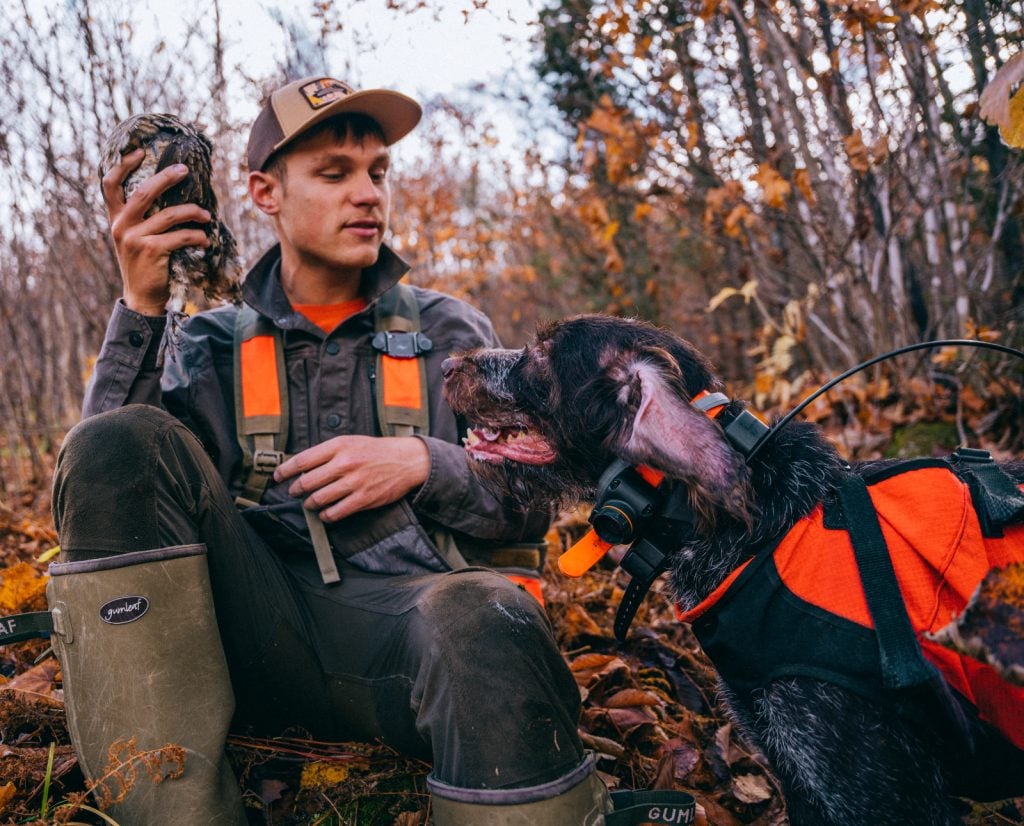
Ethics in Ruffed Grouse Hunting
Treat ruffed grouse as your neighbors. Reciprocity means giving back because you have taken. There are many ways to do this that require strong ethics rather than merely following the law. Learn to identify the difference between male and female ruffed grouse so you can limit the harvest of females from a single cover. Avoid overhunting a cover, as doing so will jeopardize both the future of the birds and your own hunting opportunities.
Give the birds a fair chance to escape (and to fly) while still honoring your dog’s work. Learn to recognize the difference between juvenile and mature birds. If you’re shooting a lot of mature birds, that might signal a poor hatch or a downward population cycle. In such years, it’s wise to be more conservative. This kind of understanding comes with time and experience.
Be mindful of other hunters. If you see a truck at the spot you planned to hunt, find somewhere else. If someone takes you to their cover, don’t return unless they’ve given you permission to do so. Never take shots that could endanger people or dogs—no bird is worth it, and doing so dishonors the whole tradition.
We are, after all, taking a life, and in return, we should act with reverence for the birds and the experience.
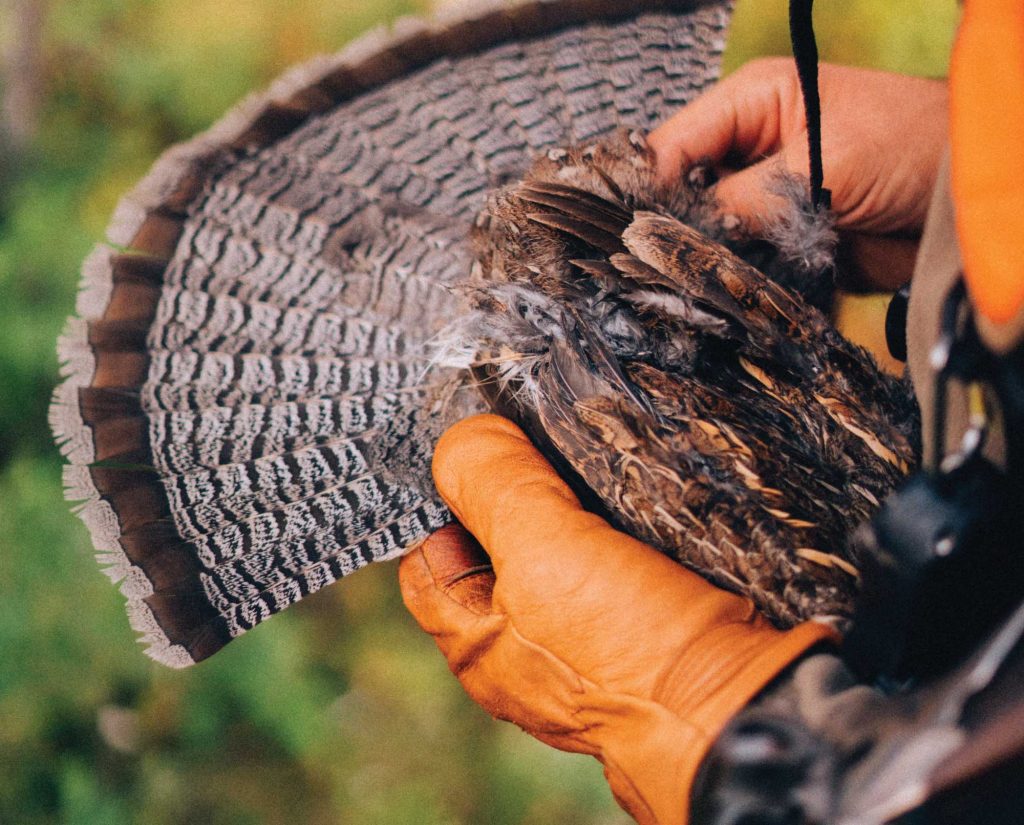
Ethics of Bag Limits and Self-Imposed Limits
Be a Student of Ruffed Grouse Hunting
I shot my first grouse over 35 years ago. I grew up in the grouse woods of New England, hunting both with and without dogs. I was fortunate in both my location and my father’s passion for hunting. However, I feel like I didn’t truly begin to understand grouse hunting until I became a full student of the craft.
Being a student meant reading every book I could find on the topic—classics like New England Grouse Shooting, The Upland Shooting Life, and My Friend the Partridge, just to name a few. I went even deeper by studying research on ruffed grouse through scientific papers, many available in the public domain, and reading works by great biologists of the past, such as Gordon Gullion. This built an obsession not just with the tactics of grouse hunting but also with understanding the life stages of the ruffed grouse, which provide a deeper appreciation for this incredible game bird.
Mentorship is also invaluable, both finding mentors and mentoring others. I believe my education was most accelerated by the act of mentoring, as it forced me to articulate what I was doing in detail. Explaining tactics, working with dogs, and teaching shooting techniques added a new layer to my understanding. Never stop seeking knowledge, both through study and real-world experience.
There is no cheat code, but there are many opportunities to fine-tune your skills. Best of luck this season, and remember, it’s okay if the birds get away.
This is an outstanding article A.J.
We tend to get caught up in the romance of grouse hunting and hunt traditional covers annually . Knowing and understanding grouse habits and habitat most assuredly contributes to success but as you stated, it’s a lifelong educational journey and one I thoroughly enjoy. I love all upland bird hunting but grouse have touched my heart since I was a little boy. They’re special and deserve our utmost care.