


Choosing Shot Shells and Choke Size for Ruffed Grouse Hunting
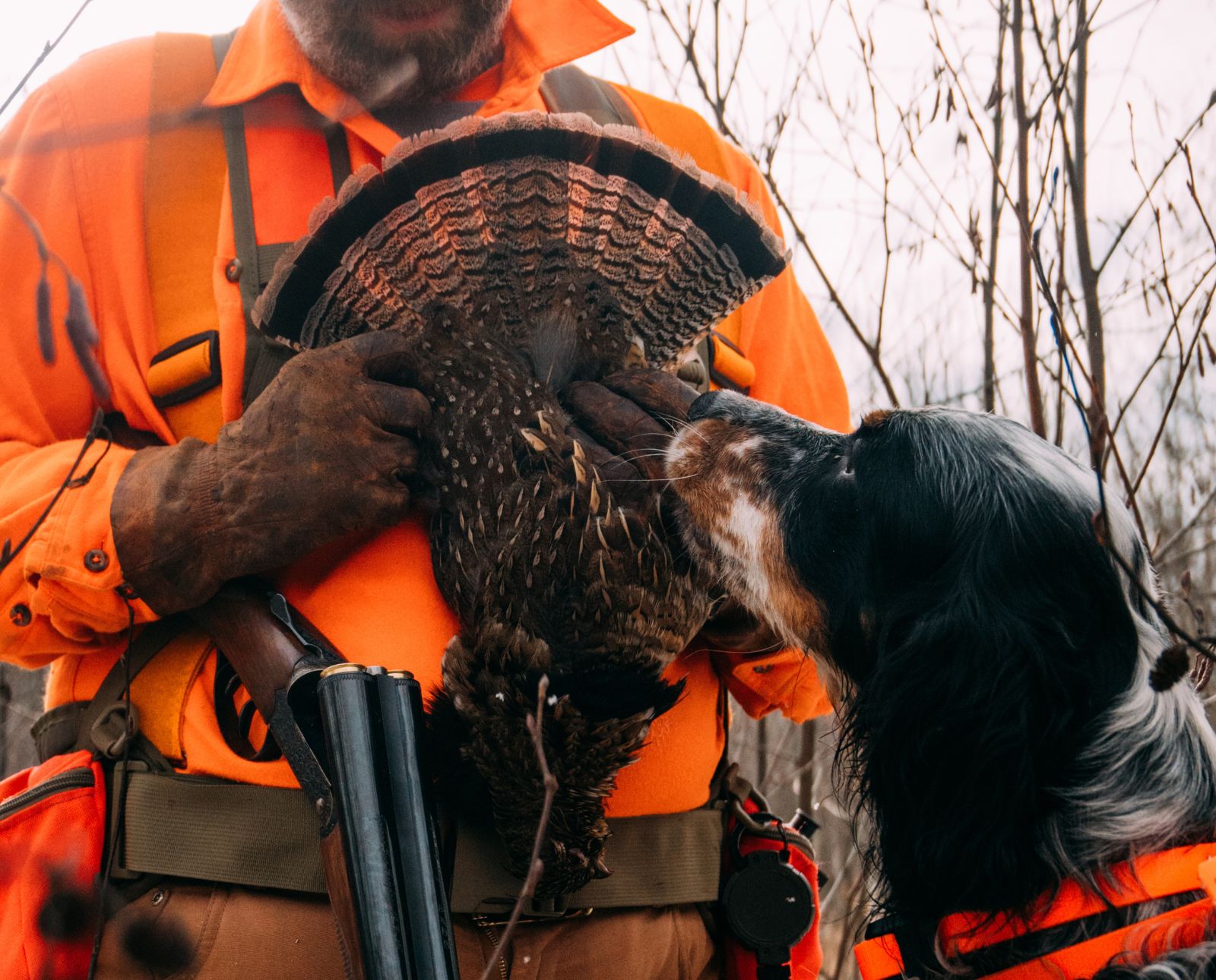
A guide to choosing the right ruffed grouse shot size and choke for early and late season hunting
Ruffed grouse, without question, earn their difficult reputation from a combination of their wary nature and the environments they inhabit. When these two elements meet, you get a game bird that flies at what seems like lightning speed through impossible cover. This often results in close-range shots, as the visibility of ruffed grouse—especially early in the season—can be less than 25 yards. When choosing shot shells and choke sizes for ruffed grouse, hunters are presented with a unique problem compared to many other game birds. How can you maximize a fast spread while maintaining a good pattern between the distance of 10 to 25 yards? William Harnden Foster, the father of ruffed grouse hunting, stated, “A satisfactory grouse pattern has been found to be one that averages a pellet to the square inch regardless of distance.”
There are ways to improve our chances of successfully shooting ruffed grouse, from learning proper shooting techniques to selecting a reliable grouse gun. This article focuses on another key variable, one often shaped by shot distance and the physical characteristics of the bird itself: shot shells and choke selection for ruffed grouse.
In this Article:
- Choosing Shot Size for Ruffed Grouse
- Lead Shot Size for Ruffed Grouse
- Bismuth Shot Size for Ruffed Grouse
- Steel Shot Size for Ruffed Grouse
- Muzzle Velocity for Ruffed Grouse Shotgun Shells
- Shot Weight for Ruffed Grouse Hunting
- Choke Sizes for Ruffed Grouse Hunting
- Shot Size and Choke for Late-Season Ruffed Grouse Hunting
Choosing Shot Size for Ruffed Grouse
| Shot Type | Shot Size | Best For |
| Lead | No. 7.5 | Ruffed grouse |
| Lead | No. 8 | Mixed-bag hunters chasing ruffed grouse and woodcock |
| Lead | No. 6 | Mixed-bag hunters chasing ruffed grouse, snowshoe hare, and cottontails |
| Bismuth | No. 7 (difficult to find) | Mixed-bag hunters chasing ruffed grouse and woodcock |
| Bismuth | No. 6 (more readily available) | Ruffed grouse |
| Steel | No. 7 (difficult to find) | Mixed-bag hunters chasing ruffed grouse and woodcock |
| Steel | No. 6 (more readily available) | Ruffed grouse |
Ruffed grouse, despite their reputation, are not a particularly tough bird in terms of physical resilience. A single No. 8 pellet is often enough to bring one down, especially when hunting with a dog with a strong tracking ability. Another factor to consider when selecting shot size, however, is the cover itself. This comes down to the mass and energy of the shot and how it interacts with leaves and branches. Put plainly, larger shot sizes have a better chance of penetrating cover and still effectively killing a grouse.
LISTEN: New England Grouse Shooting by William Harnden Foster
That said, the influence of cover is often more in our heads than in real-world situations. Just as one should ignore the trees when swinging on a grouse, the same mindset should extend to the shot itself. When a grouse is successfully killed, it is rarely so deep in the trees that a larger shot size would have made the difference. Trees will stop shot. Leaves, on the other hand, are seldom the culprit we imagine, especially at the short distances between the bird and the foliage.
In a 2023 study titled “The Relationship Between Pellet Size and Shotgun Dispersion Patterns,” there was measurable spread change based on shot size: the smaller the shot, the larger the spread. “Pattern sizes were approximately 1.7 times larger with #9 than with #0 lead shot and 1.4 times larger with #9 than with #1 steel shot,” the authors wrote.
With that in mind, let’s explore the best shot size options for ruffed grouse by material.
Choosing Lead Shot Size for Ruffed Grouse
Lead is a very effective shot material for ruffed grouse hunting, but it comes with an important caution. Lead is poisonous, not only to us as consumers of game meat, but also to wildlife and the environment. It is particularly problematic in areas with water, a common feature of much of the ruffed grouse habitat in the United States and Canada. That said, it remains the most commonly available shot material.
The most widely agreed-upon lead shot size for ruffed grouse is No. 7.5, which has lined the shelves of sporting goods shops in grouse country for generations. This size works effectively from early to late season as the cover changes. If we want to get specific, No. 6 is also a solid choice, particularly in the early season or for hunters who pursue adjacent game like snowshoe hare. No. 8 lead is no stranger to ruffed grouse hunters either, especially for those who prefer a slightly smaller shot while also targeting their common neighbor, the American woodcock. Anything smaller raises questions of ethics, while anything larger risks damaging more meat than necessary.
Choosing Bismuth Shot Size for Ruffed Grouse
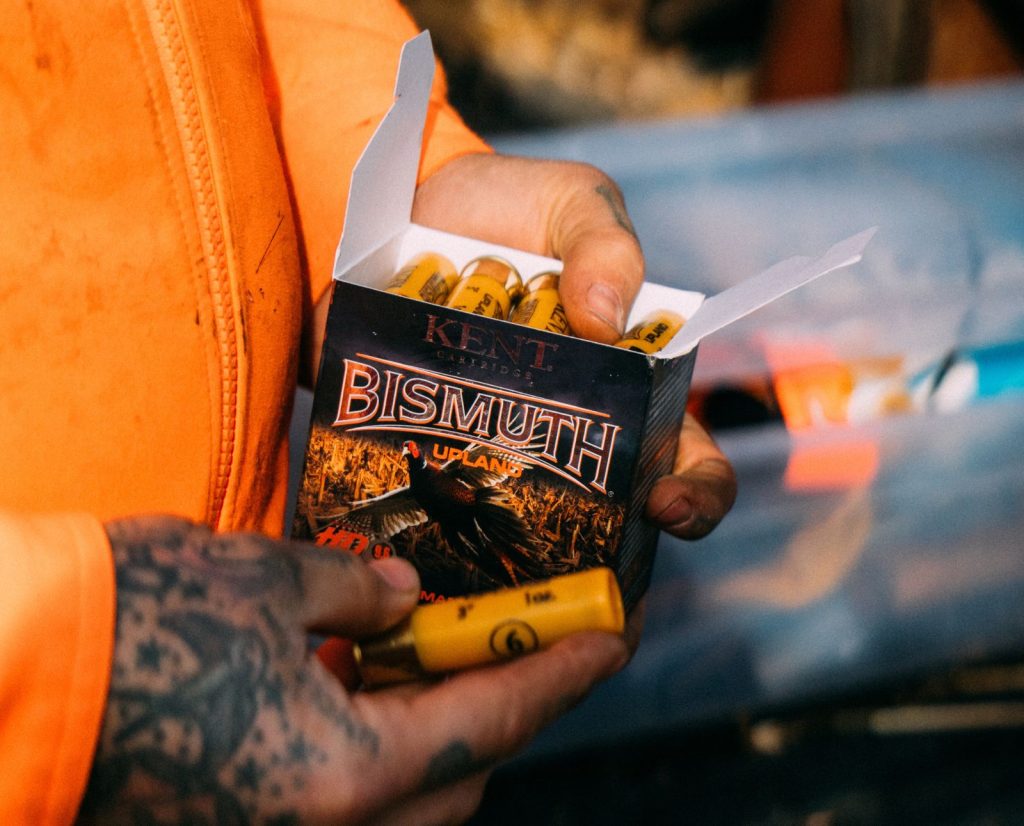
Bismuth is an excellent non-toxic shot material for hunting ruffed grouse. The biggest limiting factor, however, is availability. Most manufacturers do not produce bismuth in smaller sizes, which makes No. 6 the most common option for ruffed grouse hunters. Some manufactures do offer No. 7 bismuth, which is often the preferred choice, especially when American woodcock may also be on the day’s target list. No. 5 shot should not be dismissed entirely, but it is best reserved for situations where no other size options are available.
Choosing Steel Shot Size for Ruffed Grouse
Steel is often the last choice of non-toxic material for upland bird hunters. While the data shows it to be highly effective, it still gets a bad rap despite being both ballistically sound for hunting ruffed grouse and a cost-effective option. The limiting factors with steel usually come down to two key components: selecting a choke that delivers a consistent pattern and using a modern shotgun designed to handle steel. For ruffed grouse hunting, however, wide-open chokes are already the norm. This eliminates many of the issues associated with tighter chokes and steel’s behavior—problems often addressed with extended choke designs.
Although less common than other sizes, No. 7 steel has been my go-to choice for the better part of a decade. The most widely available option, however, remains No. 6 steel shot for ruffed grouse.
Choosing Muzzle Velocity for Ruffed Grouse Shotgun Shells
When it comes to hunting shotshells, muzzle velocity is often seen through the lens of “bigger is better.” While that may hold true in some cases, I would argue the opposite when it comes to ruffed grouse hunting. Here, we face a very specific challenge: making effective shots at extremely short distances. Lower velocity can promote more consistent patterns, because higher velocity increases the chance of pellet deformation. Higher velocity also alters wad behavior and the shot-column exit dynamics, which may either tighten or open a pattern depending on the load and the barrel. Lower velocity usually reduces recoil, and reduced recoil tends to improve shooter consistency and therefore accuracy.
Ruffed grouse are not pheasants or ducks; it doesn’t take 1,400 fps to bring one down. Growing up, I was a fan of Winchester AA low-recoil rounds in 20-gauge, running at just 980 fps, and they never left me wanting. For that reason, I discourage high-velocity loads for grouse, even in steel. A muzzle velocity of 1,200 fps or less is more than sufficient when selecting shotshells for ruffed grouse.
Choosing Shot Weight for Ruffed Grouse Hunting
This part of the conversation comes down to simple ballistics: the taller the shot column, the poorer the pattern. Controlled scientific studies have proved this time and again, regardless of gauge. This highlights a straightforward issue. The smaller the gauge, the worse the shot column ratio becomes, and therefore the more the pattern degrades.
That makes this choice fairly simple: 2 ¾-inch shotshells are the ideal option for 12, 16, 20, and 28 gauge. Using lead as the baseline, that equates to 1 ⅛ oz in 12-gauge, 1 oz in 16-gauge, ⅞ oz in 20-gauge, and ¾ oz in 28-gauge. Personally, I do not find the .410 to be the most ethical choice for the everyday hunter.
Selecting Choke Sizes for Ruffed Grouse Hunting
| Shotgun Type | Choke Type | Best For |
| Double-barrel | Cylinder, skeet I, improved cylinder, light modified/skeet II | Early to mid season |
| Double-barrel | Light modified/skeet II, modified | Late season |
| Single-barrel | Improved cylinder | Early to mid season |
| Single-barrel | Modified | Late season |
The theme has been fairly straightforward so far. We want the shot to spread quickly, and choke selection is part of that equation. In the end, choke choice really comes down to distance. Over the course of 10 seasons, William Harnden Foster cited data collected by himself and friends that put the average distance for killed ruffed grouse at 23 yards.
Given the short ranges typical of grouse hunting, the best choices are cylinder, skeet I, improved cylinder (IC), and light modified (LM or skeet II). For a single-barrel shotgun such as a pump-action or semiautomatic, IC is a versatile and reliable choice. A side-by-side or over/under, however, allows for more flexibility. My own shotguns have ranged from cylinder and IC to my current go-to setup: skeet I and skeet II.
Shot Size and Choke Selection for Late-Season Ruffed Grouse Hunting
After the leaves have fallen, the late part of the ruffed grouse season arrive. During this time, the opportunity for longer shot distances opens up. This is especially true when the last green in the forest is raspberry leaves, and grouse concentrate along slash roads that provide wide-open shooting opportunities. In these situations, shot distances that were once 10 to 25 yards can stretch out to 35 yards or more.
Given the established physical resilience of ruffed grouse, I don’t see much reason to change shot size. But I wouldn’t rule out tightening up to a modified choke in these conditions. Personally, Skeet II has proven effective for me over the years in these late-season scenarios.
And while I often move farther south as the snow arrives to avoid those conditions, the same principles of leafless days apply to winter shooting as well. During this time, grouse begin shifting to winter food sources such as mature tree buds, which often creates much more open shooting conditions—therefore increasing the possibility of selecting a tighter choke.



Nice information, so often hunters over choke their barrels. I shoot a 28ga Rizzini Artemis with double LtSK in September and by mid October I move to SK l and SK ll. I start with 7 1/2’s then I reload 6’s and 7 1/2’s mixed together. After significant patterning I have 1150fps WinAA hull and AA wad in 3/4 oz. Works great and patterns amazing. Can’t ask for a better combination over my Griff and Brittany’s I raise.
Couldn’t agree more. I find most grouse and wana be grouse hunters over choke. I will add there is something to be said for skipping a couple of chokes between barrels on doubles. I have a British 2.5in 20 choked cylinder and modified. Love it for early season. Of course to take full advantage you need double triggers. I have yet to meet the person who can hit the barrel selector on a single trigger gun when a grouse flushes a little further out.
Enjoyed the article but I believe you got something wrong. In the section on muzzle velocity, you state “Lower velocity promotes faster shot spread .”
The reverse is true, especially with softer shot like lead.