

How to Raise Rabbits for Meat on a Homestead
A beginner’s guide to learning how to raise meat rabbits on your homestead
Raising rabbits for meat is one of the easiest ways to add a sustainable protein source to a homestead. My journey with keeping domestic meat rabbits came about because I wanted to add another source of white meat into our homesteading model without investing in fast-growing meat chickens. Domestic rabbits were a good fit for us because they are a renewable resource that, much like the other animals homesteaders keep, are completely capable of breeding and taking care of their young so that, for the most part, homesteaders don’t have to.
Choosing to raise rabbits for meat is, if nothing else, a very enjoyable way to bring animals onto a new homestead if you’ve just begun to dip your toes into this lifestyle. They are a wonderful way to discover things about your homesteading model that you would like to expand or tweak a bit. Plus, they offer more than just a stable source of food for the homesteader who seeks to put white meat on the table, but we’ll get into that a little later.
Why Homesteaders Raise Rabbits
When you decide to raise rabbits, it’s a good idea to have a plan as to the “why” of it. Are you intending on having a breeding pair? Are your rabbits being kept purely as pets to enjoy? Are you going to cull all of them at the end of the season? For beginner rabbit farmers, it’s best to have the answers to these questions ahead of time rather than figuring it all out on the fly.
There are several reasons why someone would want to raise meat rabbits in the modern age. Though it’s not as highly sought after as it once was, rabbit fur used to be tanned and made into several fashionable garments including trim, hats, mitts, as well as many other things. Rabbit fur, once tanned and dyed, is still used largely in the fly fishing and fly tying community around the world. Folks raise domestic rabbits to show at fairs and conventions, and there is always the meat aspect of rabbit farming as well.
Homesteaders raising rabbits for meat generally opt to raise the following breeds due to their larger sizes and ease of care:
- New Zealand Whites
- Champagne d’Argent
- Californian
Rabbit Behavior and Territoriality
Rabbits can be exceptionally curious and docile livestock, but like many other species, you sometimes end up with one that has an aggressive disposition toward either you, other rabbits, or both. There are plenty of folks out there in the world who have learned the hard way that not all rabbits will get along if left to their own devices, especially if they were not born in the same batch of kits. This isn’t something that you want to take chances on. When you bring new rabbits home, keep them separated in their own hutch. Even if you bought those same rabbits together, a change in scenery can sometimes cause territoriality.
My rabbits are separated based on gender and demeanor, which means that the male (called a buck) is kept away from the females at all times unless we intend to breed one of them. Because we have plenty of backyard space, the females are given room to roam in a fenced in run where we also keep our poultry and fowl.
During the winter months, the rabbits use both the hutches as well as the protection and warmth from under the coop. In the spring when they have been bred, we return them into their individual hutches until the babies (called kits) are born.
In the most ideal conditions, a female domestic rabbit can have six to seven litters of kits because they have a relatively short gestation period of roughly 28 days, though sometimes it can be 30. This means that, in theory, one female (called a doe) can have a set of kits once a month. However, I don’t recommend that breeding program.
Meat Rabbit Housing and Hutch Design
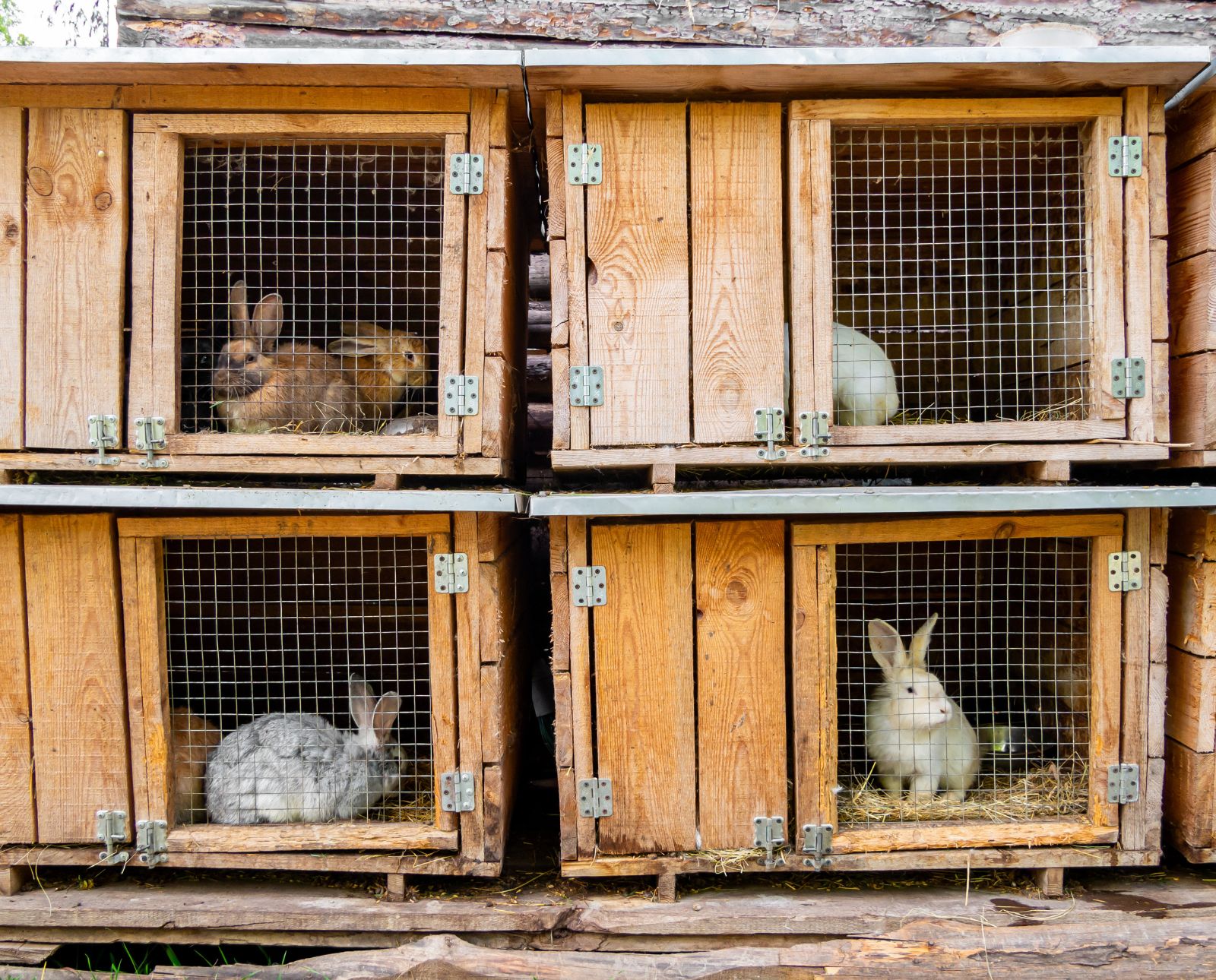
Domestic rabbits have few needs, but the ones that they do have are extremely important. To begin with, you need to have a solid plan on how you are going to house these animals. A homemade hutch will need plenty of ventilation, protection from the elements and security from predators. If you live in a hot and arid place, it’s important to know that most domestic rabbits cannot handle extreme heat, so making sure that they have shade and water will go a long way to maintaining their comfort.
Quite the opposite, if you live in a cold climate that experiences winter, you’ll find that your domestic rabbits may very well thrive in such conditions. However, they will need protection from the wind.
We use a light layer of straw for their bedding material inside the hutches. Wood shavings might seem like the better choice, but the dust that often comes with them can cause respiratory issues and so for the most part we choose not to use them.
Rabbits will choose a location within their hutch and use it as a designated bathroom area, so staying on top of where this is and making sure that the bedding in that particular place is changed daily is advisable for both you as well as your rabbits’ health.
Another option that has become popular with homesteaders is rabbit tractors. These mobile hutches have chicken wire floors and are moved from one location to the next after the rabbits inside have trimmed down the grass and plants that are growing underneath.
Safe Foods for Meat Rabbits
Domestic rabbits have a varied diet. So long as you’re not raising them specifically for meat and immediate dispatch, a general feed pellet ration which is usually called a “complete diet” pellet will more than suffice.
Make sure that your meat rabbits have access to timothy hay which can be bought at most pet stores and feed mills. Rabbits love snacks, but beware sugary fruits. Rabbits, just like us, can become diabetic, especially older, heavier rabbits. Kale, dill, dandelion leaves, rosemary, and sage are all wonderful snack options that domestic rabbits love, but remember, everything in moderation.
Foods Meat Rabbits Should Never Eat
It is very important to remember that while domestic rabbits may look and act very similar to wild rabbits, there are some things that domestic rabbits should never eat.
Foods that rabbits should not eat include:
- Iceberg lettuce
- Grapes
- Apple seeds (they contain cyanide)
- Avocado
- Leeks
- Garlic
- Corn
- Onions
These foods can be fatal to domestic rabbits for a wide range of reasons. If you’re unsure whether your rabbits can eat something, please do your due diligence and research whether or not they can eat it before giving it to them.
Using Rabbit Manure in the Garden
If you are keeping more than one rabbit, chances are that you’re going to find yourself with a surplus of rabbit droppings and spent bedding, especially in the wintertime. The good news is chances are that you’ve got plenty of options for turning this supposed “waste” into useful things that can be used on your homestead.
One option is to collect all the droppings and bedding where the rabbits haven’t been urinating and toss it all into the composter. It will break down into perfectly dense, dark compost that can be used in your garden beds the following year, and if you have chickens, can be mixed in with their manure. This will take a little longer to break down, but it’s worth the wait, especially for fertilizing plants that might get burnt from a massive nitrogen fix from fresh manure.
Read: Quail or Chickens: Which Domestic Bird is Right For You?
You can use rabbit manure right away in a garden that needs it. Sweet corn usually needs a nitrogen fix halfway through the growing season, and there is no better way to accomplish this than by spreading some fresh manure around the base of the plants. You can also soak rabbit droppings in water and use the end product as a sort of liquid fertilizer, but the clean up isn’t all that particularly fun. Trust me.
Another option is to burn it all and use the ashes for fixing pH levels when needed, and this option is great for getting rid of the bedding that has a lot of urine in it. Using a metal screen made from hardware cloth, let the bedding dry out for a day and then burn it with a bit of hardwood, removing the ashes once the fire has died and letting them cool.
Breeding Rabbits for Meat Production
This is perhaps the most crucial decision that anyone who keeps rabbits will have to make, and there’s a lot to take into consideration when it comes to leaning into letting your rabbits breed. Something that you should understand is the mothering process. Kits are totally independent of their mother around six weeks of age, and even prior to that, the mother will want to escape her kits for the majority of the day until she returns to nurse them.
The likelihood of the kits outgrowing the doe’s hutch becomes a certainty at around ten weeks of age, but sometimes sooner. Before you even let your rabbits breed, remember that you are going to need extra space for them, especially because those kits will become sexually active much sooner than you realize. This can cause real problems that can get out of hand quickly.
Cook: Project Upland’s Rabbit Recipes
Once you’ve got the entire situation figured out, letting your doe get acquainted with your buck will usually result in mating behavior, but not always. One sign that breeding has been successful that I rely on is when the doe begins to push the buck away or gets somewhat aggressive toward him. When I see this, I know it’s time to put her back in her hutch. This isn’t the only signal that breeding has been accomplished, but it’s the method that I use. It is often accomplished after the buck has mounted the doe three to four times.
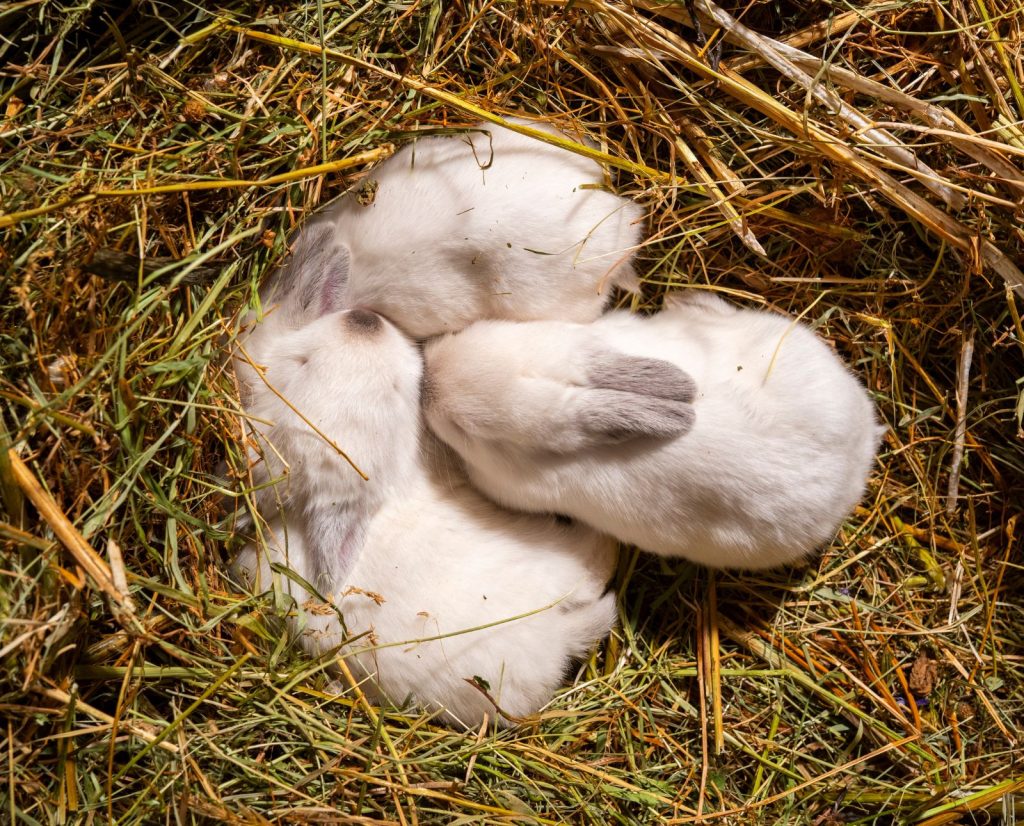
At this point, it will be just a little under a month for gestation to take place, and as it gets closer, the doe will begin to form a nest of sorts. I make sure that any pregnant doe has some sort of nesting box where she can build a comfy nest for her kits, which usually involve her removing fur from her belly and forming it into rounded shape. During the first couple of days after the kits are born, it’s not entirely uncommon for a doe to be slightly aggressive toward the homesteader, but fret not—this behaviour won’t last.
Your meat rabbit kits will be ready to butcher around 8-12 weeks of age. Butchering rabbits involves removing the skin, breaking down each one into quarters and backstraps, and properly storing the meat in the freezer.
Remember that if you find yourself with a surplus of kits, they can be sold as soon as they are weaned.
Is Raising Rabbits Right for Your Homestead?
Raising and keeping rabbits is, like most other things, not going to be for everyone. However, what I can personally attest to is that now that I’ve jumped into this aspect of homesteading, I truly wish that I’d tried it years ago. Over the last few years, I have raised our meat rabbits as a food source. I make sure that they have fulfilling, relaxing lives right up until the morning of departure, and I respect every aspect of them both in the yard as well and on the dinner plate.