

Prescribed Burn Equipment for Upland Bird Habitat Management
Learn about essential tools and equipment needed for conducting prescribed burns
This is Part 2 of a three-part series on prescribed burning for upland birds.
In “Prescribed Burning for Upland Birds: Fire Timing, Intervals, and Habitat Benefits,” Part 1 of this three-part series, we discussed the benefits of prescribed fire on upland bird habitat, fire return intervals, burn timing, and fire effects. After identifying your burn objectives, it is important to consider how you will execute the prescribed fire. It takes a variety of tools and planning to safely and successfully pull off a burn. Part two of this series will cover the tools and equipment required to conduct a prescribed burn.
Prescribed Burn Personal Protective Equipment (PPE)
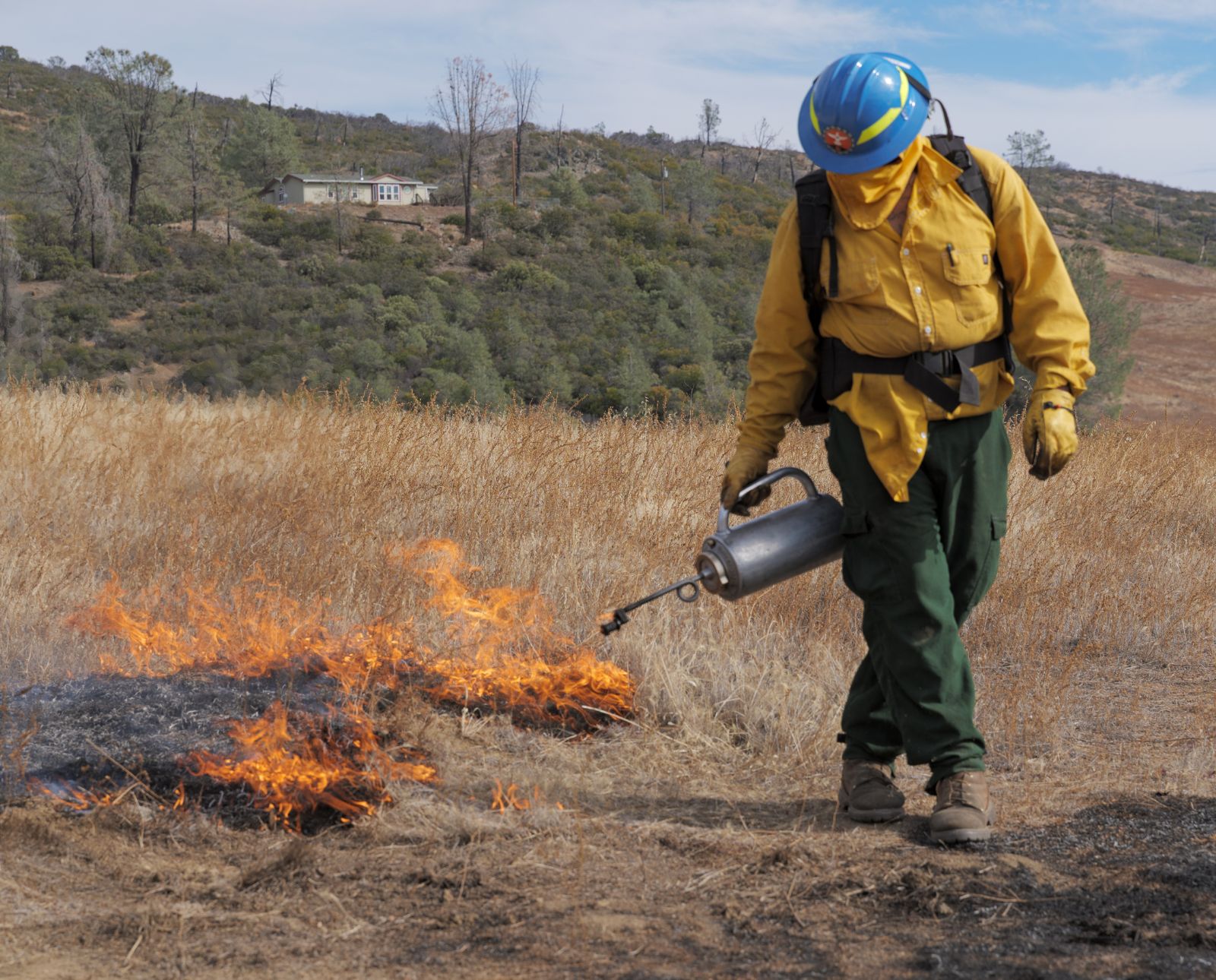
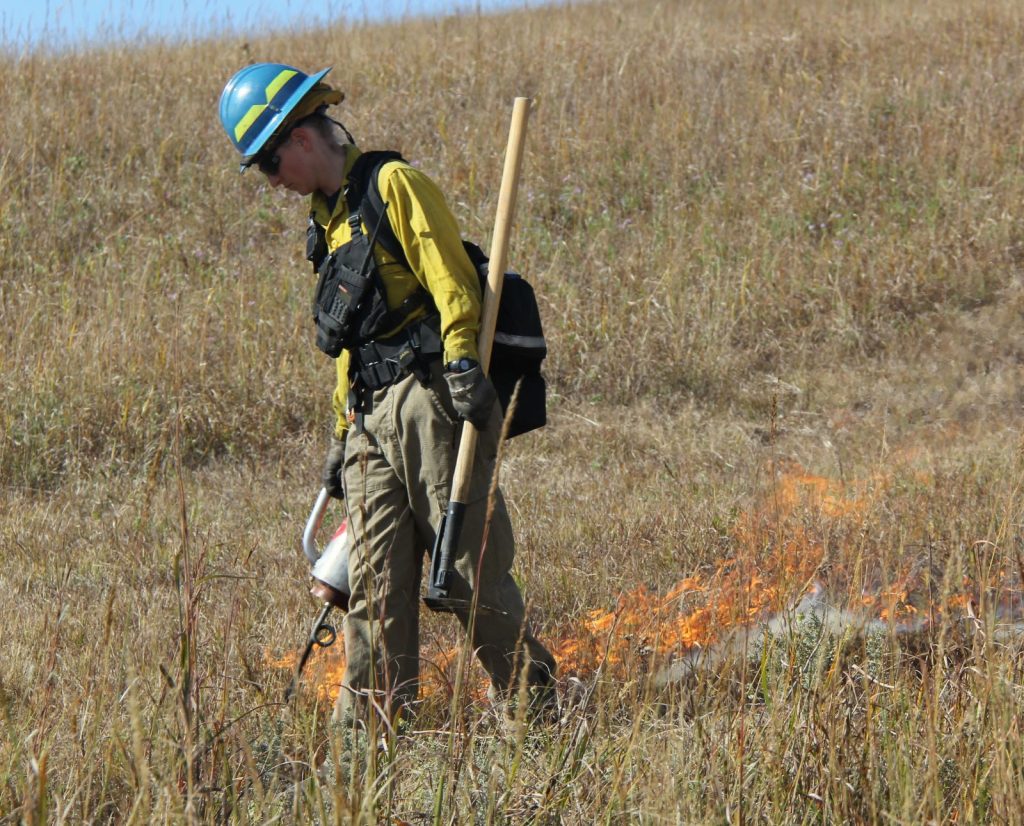
Safety should always be the top priority when completing any habitat work, but particularly when utilizing fire. This begins with wearing personal protective equipment (PPE), which includes the following items:
- Nomex shirt (or a long-sleeved cotton shirt)
- Nomex pants (or cotton pants like jeans)
- Leather gloves
- Leather boots
- Eye protection
Proper protective clothing for any personnel assisting with the burn is required. Ideally each crew member wears Nomex pants and a Nomex shirt. However, we recognize that these clothing items can be cost prohibitive. If Nomex isn’t an option, cotton clothing should be worn and should include a long sleeve shirt and jeans. Make sure no one is wearing anything made of nylon or polyester as these materials will melt to the skin if direct flame contact occurs.
Participants will also need leather gloves, leather boots, and eye protection.
Types of Firebreaks for Prescribed Burns
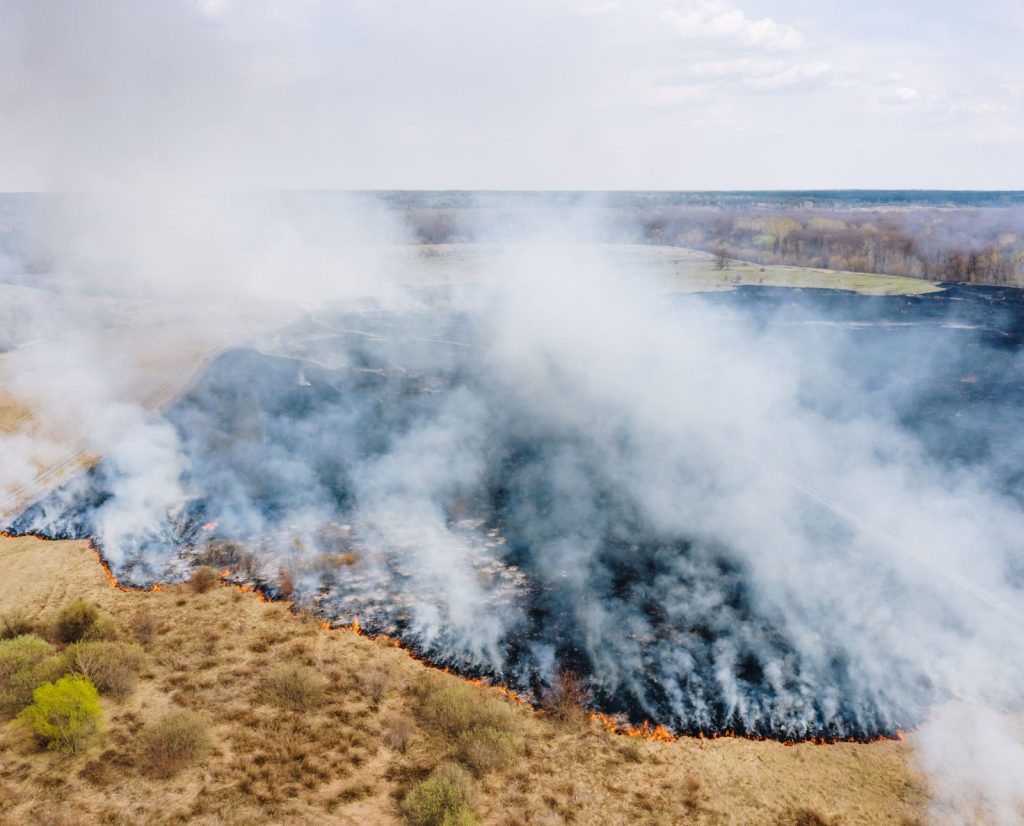
Good fire breaks are essential for safe and efficient burning operations. Fire breaks can be a natural feature, man-made features, or lines constructed specifically for executing the prescribed burn. Natural fire breaks like creeks, bluffs, and wetlands are excellent options and should be utilized when possible. This reduces the input effort and they are not flammable.
Man-made fire breaks include roads, trails, agricultural fields, ponds, lakes, or any other non-flammable feature. These also reduce input time and costs, and should be used when available. Use caution not to put smoke on public roadways for obvious safety concerns.
Constructed fire breaks primarily include disced lines, mowed lines, hand lines, and blown lines. Any fire break should be a minimum of twice the height of the vegetation that is being burned. The best fire breaks are those that are down to bare rock or bare mineral soil. These have no chance of fire crawling across them. Mowed lines are often used and can be effective, but fire practitioners must recognize that mowed lines are the most difficult to hold as they often contain the same flammable material as the burn unit, just at a shorter height.
Tools Needed to Install Firebreaks for Prescribed Burns
The tools required to install fire breaks will depend on the type of breaks being used. Maximizing natural or manmade fire breaks that can be utilized will reduce the need for additional equipment. However, constructed breaks are necessary for some units. Tools used to install firebreaks prior to conducting a controlled burn include:
- Tractors with brush hogs or discs
- Lawn mowers or garden tillers
- Leaf blowers
- Hand tools like leaf rakes, hoes, and Pulaskis
A tractor with a brush hog or disc can install quality lines around the perimeter of a field in a short amount of time when burning open fields. Don’t overlook opportunities to borrow or rent a tractor and implement from a neighbor if necessary. Another option is simply paying a contractor or neighbor to install the fire breaks.
A lawn mower or garden tiller can be used if larger equipment isn’t available and the fire break isn’t too long. Tilled or disced fire breaks will often grow up into annual weeds during the summer after the burn has been completed. This weedy fire break can offer additional brood habitat for upland birds using the area.
Another option is planting a disced fire break to something that will be green during the planned burn time. Planting wheat in the fall in a fire break of a unit that will be burned during the winter or spring is a great practice. Additionally, as the wheat matures during the summer, weeds will invade, again providing brood-rearing habitat. Later in the fall, adult game birds can feed on the wheat seed heads. We have flushed a lot of quail from mature wheat food plots on public land in the Midwest over the years.
Read: Managing Gamebirds in Crop-Dominated Landscapes
When burning timbered units, a leaf blower can be used to blow a line down to bare mineral soil. It’s important to blow the leaves to the outside of the unit so there isn’t a large windrow of leaves right on the fire break edge within the burn unit. Even a leaf rake can be used to install a fire break through a forest or woodland, although it’s much more labor intensive than using a leaf blower.
When installing fire breaks in woodlands, hand tools like hoes or Pulaskis are additional options. These tools can be used to dig a line through vegetation or leaves. This is the most labor-intensive method. Keep in mind that the desired fire break width is double the fuel’s height. In other words, hand tools are typically only useful in very short vegetation or leaf/pine needle litter.
Prescribed Burn Day Equipment Checklist
Several items are necessary to actually perform the burn. Tools you will need the day of the burn include:
- A phone
- Walkie talkies
- Matches or a lighter
- Actual firefighting tools like ATV/UTVs with water units, leaf blowers, leaf rakes, drip torches, chainsaws, and chainsaw personal protective equipment
The most important burn day tool is a phone. Phones are necessary to call the local authorities prior to lighting the fire so they don’t send the fire department at the first sight of smoke. In addition, a phone may be needed in the case of an emergency or an escape that cannot be contained. Additionally, a smart phone or computer should be used to check local weather conditions prior to ignition to ensure the weather conditions will allow the fire to achieve the objectives. Websites like the National Oceanic and Atmospheric Administration (NOAA) or AccuWeather provide hourly weather information which includes wind direction, wind speed, relative humidity, and many other details. I never begin a fire without checking one or both of these websites to get the latest weather information for my area.
If walkie talkies are available, they can be a huge asset to maintain communication with crew members working on opposite sides of the fire. But if walkies aren’t an option, cell phones can be used by installing an app that allows each phone to function just like a walkie talkie. There are several apps that will work, as long as each crew member has the same app.
The second most important items are matches or a lighter, as an ignition source is necessary to begin the firing operation.
Read: Managing Pheasant, Quail, and Partridge Habitat in Agricultural Landscapes
Actual firefighting tools can include all kinds of equipment. Obviously, an ATV/UTV with a water unit is ideal, but not always an option. Larger burn units may need two or more ATV/UTVs with water units.
Leaf blowers can be used to extinguish flames as well. It takes practice to effectively extinguish fire with a leaf blower. Lightly blowing the flames will actually increase oxygen and result in the fire burning more intensely. Using a leaf blower into the wind can result in embers blowing across the fire line. Take some time to practice with a leaf blower on a low intensity fire before trying to use one for controlling an intense fire, or worse yet, an escape.
Leaf rakes can also be used to rake away the fuel (leaves, duff, grass), thus stopping the fire front. Keep in mind leaf blowers and rakes will be ineffective on head fires or tall grassland fuels. Both these tools can also be effective for removing fuel from the base of telephone poles or snag trees that you don’t want to catch fire.
A drip torch is a very useful tool and is nearly a necessity on units more than a few acres in size. This tool allows for a steady ignition of the vegetation along the entire perimeter of the burn unit. Drip torches should be filled with a mixture of ⅔ diesel and ⅓ gasoline. If a drip torch isn’t an option, a leaf rake impaled into a pile of leaves, then lit on fire, can also be used to string fire.
If burning in timbered areas, a chainsaw is a necessity to deal with any snags that may ignite. Again, proper PPE should be worn when running a chainsaw. This includes chaps, hard-hat, leather gloves, as well as eye and hearing protection. Chainsaws aren’t just for snags. Oftentimes it’s necessary to cut up downed logs that are close to the fire break and move the burning portion deeper into the interior of the burn unit. This prevents embers from being blown across the line during the subsequent hours or even days.
Additional Equipment Needed for a Prescribed Burn
There are a few other supplies that are often overlooked but are important to have on hand. Commonly overlooked tools that are useful when conducting prescribed burns include:
- Water bottles
- Snacks
- Face coverings or neck wraps (Nomex or cotton)
- Water holding tanks
- Extra water unit parts, including nozzles and hose clamps
Water bottles to keep the crew hydrated are paramount. Working on the fire line is labor intensive. Even if the burn is small, it’s important to plan for the unexpected. Maybe if things go as planned, the burn will only take one hour. But what if the burn gets away and several hours are spent getting the escape contained? Crew members can quickly become dehydrated, which not only reduces their ability to help control the fire, but threatens their overall health. It never hurts to have some snacks available as well in case the burn takes longer than planned or someone gets low blood sugar from working hard on the fire line.
Read: Managing Grasslands for Sharp-tailed Grouse, Prairie Chickens, and Other Upland Birds
Some type of face covering or neck wrap can be helpful when working in heavy smoke or intense heat. Commercial Nomex versions of these are available, but even a kerchief tied across the nose and mouth like an Old West bank robber can help filter some smoke and protect the skin from radiant heat.
A holding tank filled with water can be useful if access to a spigot isn’t located close enough to quickly refill water units if they run out during the burn operation. A gravity feed tank is the easiest to use, but a transfer pump can also be used to move water from a holding tank into a water unit. It never hurts to have some spare parts for a water unit as well. An extra nozzle or wand and a couple hose clamps can save the day if something breaks down at the worst time.
Everyone Can Use Fire to Manage Upland Bird Habitat
Using fire to manage quail, pheasant, and grouse habitat isn’t restricted to wealthy landowners. Proper planning and the use of natural or manmade fire breaks can significantly reduce the need for a lot of expensive equipment. Creativity for fire break installation can also reduce the need to own expensive equipment, like borrowing, renting, or contracting. Fortunately, the majority of the tools needed to apply fire are not exclusive to fire alone; most are commonly used for other purposes at home or at the farm. It all starts with establishing objectives for each burn unit, then developing a plan to meet those objectives with whatever tools are needed.
The third and final article in this series will cover the actual execution of a burn.