


Prescribed Burning for Upland Birds: Fire Timing, Intervals, and Habitat Benefits
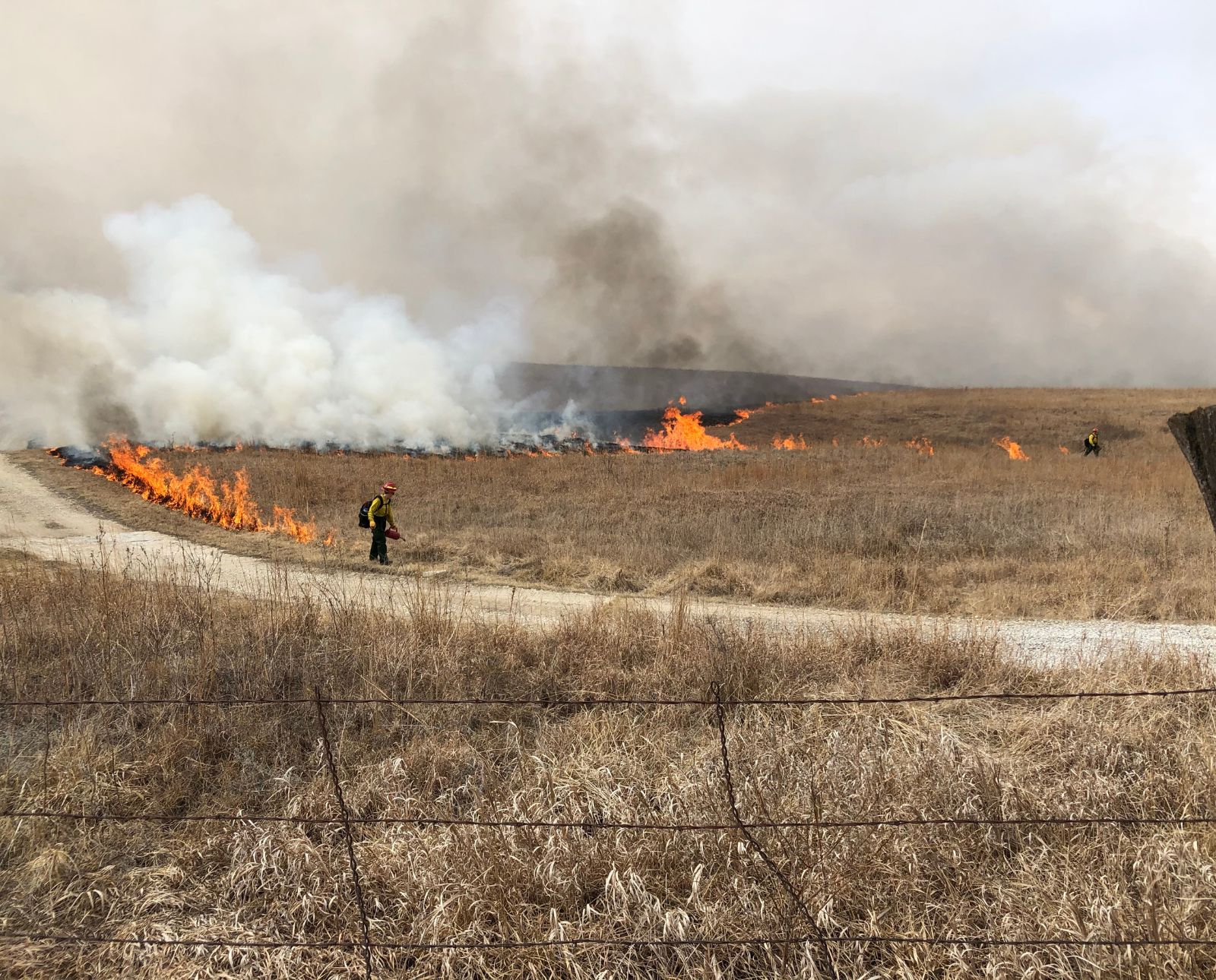
In Part 1 of this three-part series, learn how prescribed burning shapes upland bird habitat through fire timing, vegetation response, and bare ground creation
This is Part 1 of a three-part series on prescribed burning for upland birds.
Prescribed burning is the cheapest, most effective upland bird habitat management tool available. Most habitats in North America evolved with some amount of fire influence, from both Mother Nature and indigenous peoples. As such, nearly every upland gamebird in North America also evolved with fire. Grasslands, old fields, woodlands, glades, and wetlands all experienced periodic fire that influenced the herbaceous vegetation and tree species, or lack thereof. For example, bobwhite quail are known as the “firebird” based on their connection and population responses to prescribed fire.
Fire can be used to accomplish many different goals in a management unit. These goals can include changing plant type dominance, controlling unwanted invasive species or excessive woody invasion, preparing sites for planting or spraying, and removing thatch to provide open space at ground level.
The use of prescribed fire is a much more prominent fixture in gamebird management in the eastern half of the United States. This is primarily due to variances in rainfall. States like Arizona and New Mexico only need average to above-average rainfall to have a flush of vegetation, which increases nesting and brood rearing success. In dry places, rainfall typically results in a significant increase in the overall gamebird population. However, in contrast to the dry conditions of western states, eastern states often experience more than 45 inches of rainfall, resulting in very robust vegetation.
Thick vegetation can actually limit the population growth of upland birds. Additionally, higher rainfall also results in more aggressive tree and shrub growth, often to the point of reducing more desirable herbaceous vegetation, which is important for nesting and brood rearing. Fire, therefore, is more important in the East than it is in western states.
In This Article:
- Basic Principles of Using Controlled Burns for Upland Birds
- Fire Intervals and Burn Timing for Upland Bird Habitat
- Fire Effects on Herbaceous Vegetation
- Effects of Various Fire Intensities on Upland Bird Habitat
- Applications of Controlled Burns for Upland Birds
Basic Principles of Using Controlled Burns for Upland Birds
Every burn unit is different, so there is no standard recipe to follow. However, some basic principles are usually consistent enough to get landowners and managers started utilizing prescribed fire in an effort to benefit their target species.
One of those basic principles applies across all landscapes: don’t burn it all. We typically recommend fire practitioners never burn more than 50 percent of a property. This ensures there are adequate areas for nesting.
Another basic principle is smaller burn units are preferred to maximize diversity. This is relative to the property and landscape. In a perfect world, burn units would only be five or ten acres and would be checkerboarded across the entire property. This is often practiced on Southeastern plantations. But small, checkerboard burn units take more time and staff to manage, more fire lines to install, and more fire edges to monitor during the burn. On large properties, or areas where help and staff are limited, larger burn units may be a necessity. We often prescribe burn units in the range of 50 to 100 acres in these situations.
Fire Intervals and Burn Timing for Upland Bird Habitat
The most significant influence regarding prescribed fires is how frequently a unit is burned. A short fire return interval will increase herbaceous coverage and reduce woody species. Long fire return intervals will obviously have the opposite effect.
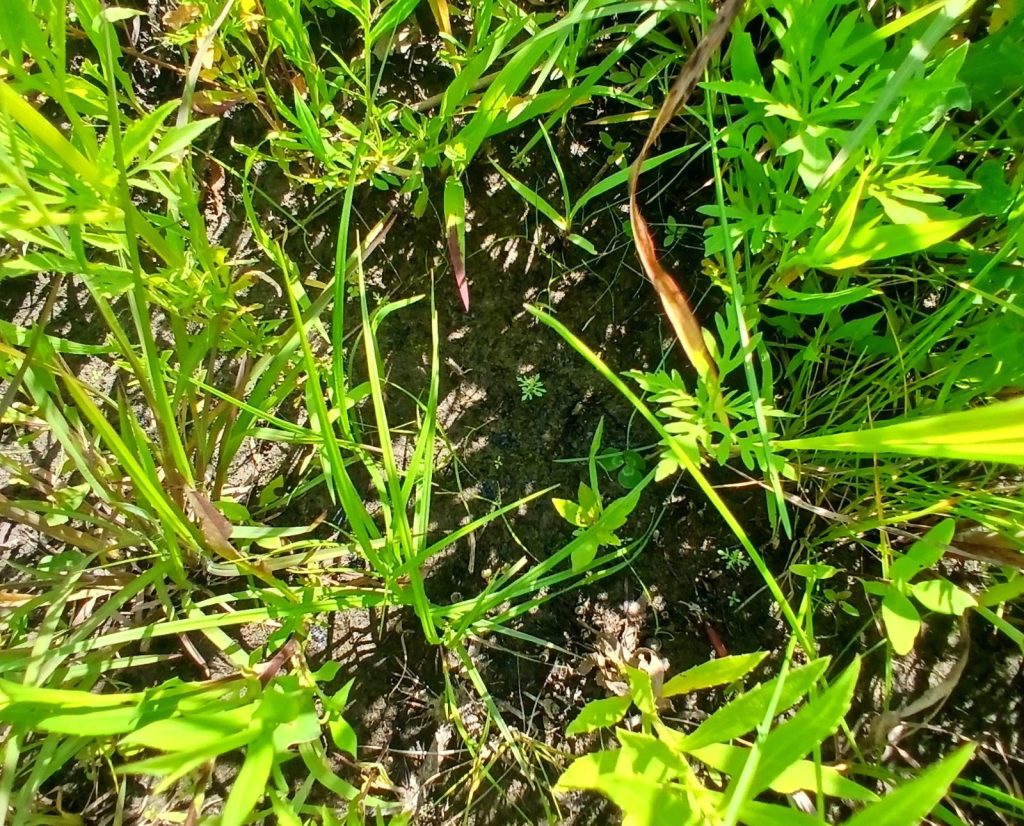
It is common in the plantations of the Southeast, where bobwhite quail management is king, to burn on very short intervals. Burning units on an 18-month rotation is regularly prescribed to ensure there is adequate bare ground to facilitate chick movement for foraging. This short fire interval also maintains high plant diversity, which in turn attracts a wide variety of insects, the primary source of nutrition for growing chicks. If units aren’t burned regularly, bare ground quickly disappears and grass dominance overtakes more desirable forbs. This habitat condition restricts brood mobility, reduces foraging opportunities and, as a result, results in poor brood survival.
Read: The Science of Bobwhite Quail Nesting Dates
Burn timing is another important factor in the use of prescribed fire. Fire practitioners must consider the current condition of the habitat being managed and the desired future when building a burn schedule for the year. Additionally, the year-round life cycle of the target species and identifying the most likely limiting factor regarding population growth is critical to identifying the best time of the year to execute any given burn. As with most wildlife management, diversity is typically the top preference. Conducting burns throughout a property at various times of the year will result in a diversity of habitat conditions.
Rainfall Impacts to Burn Intervals and Timing
More arid environments may only need fire every four to six years, as vegetation rarely gets too thick. Furthermore, changes in annual rainfall may dictate a need to adjust the fire return interval. During periods of drought, a typical two- or three-year rotation may be extended an extra year or two with the lack of precipitation. On the contrary, wet cycles may require a more frequent burn regime. The bottom line is that multiple evaluations of every unit throughout the year are necessary to make informed decisions.
The Impacts of Soil Type on Burn Intervals and Timing
Rainfall isn’t the only influence regarding the ideal fire return interval. Soil types also significantly contribute to the amount of vegetation produced annually. Sandy or rocky soils typically don’t grow nearly the biomass of vegetation compared to more fertile soils found in the farm belt. As such, habitat growing on less productive soil types can withstand a longer fire return interval, all the while remaining in good condition for gamebird production.
Fire Effects on Herbaceous Vegetation
The subject of fire effects alone could be, and has resulted in, full-length books and all-day workshops. I will cover several important effects, but further investigation will be necessary to understand every possible scenario and the effects on various vegetation types. Some burns are done to encourage a certain type of vegetation, such as forbs. Other times burns are done to suppress a type of vegetation or even a particular species. Burns can even be utilized to prepare a site for a subsequent chemical treatment to control undesirable vegetation.
Effects of Spring Prescribed Burns on Upland Birds
In general, spring burning will encourage grasses more than forbs. Burning just before green up, or when new growth of the dominant grass species is less than six inches tall, will have similar effects favoring grass.
On the surface, managers may think spring burns should be avoided since encouraging forbs is typically associated with improved bird habitat. But there are a variety of reasons spring burns are still effective to achieve bird habitat objectives. For example, if non-native cool season grasses are present, a spring burn may be desirable to create a flush of new growth which will be terminated with an herbicide treatment when the new growth reaches four to six inches in height. This can release the native vegetation that was stifled under a mat of undesirable grass.
Even if non-native cool season grasses aren’t a concern, spring burns that favor native grasses over forbs doesn’t mean there aren’t any forbs present. Furthermore, research on bobwhites in Missouri showed that summer broods in grassland landscapes utilized spring burn units just as much as burn units completed during other times of the year. In contrast, we have found extremely late spring burns, when native grasses have more than twelve inches of new growth, can severely stunt the grass growth and allow annual forbs like ragweed to thrive.
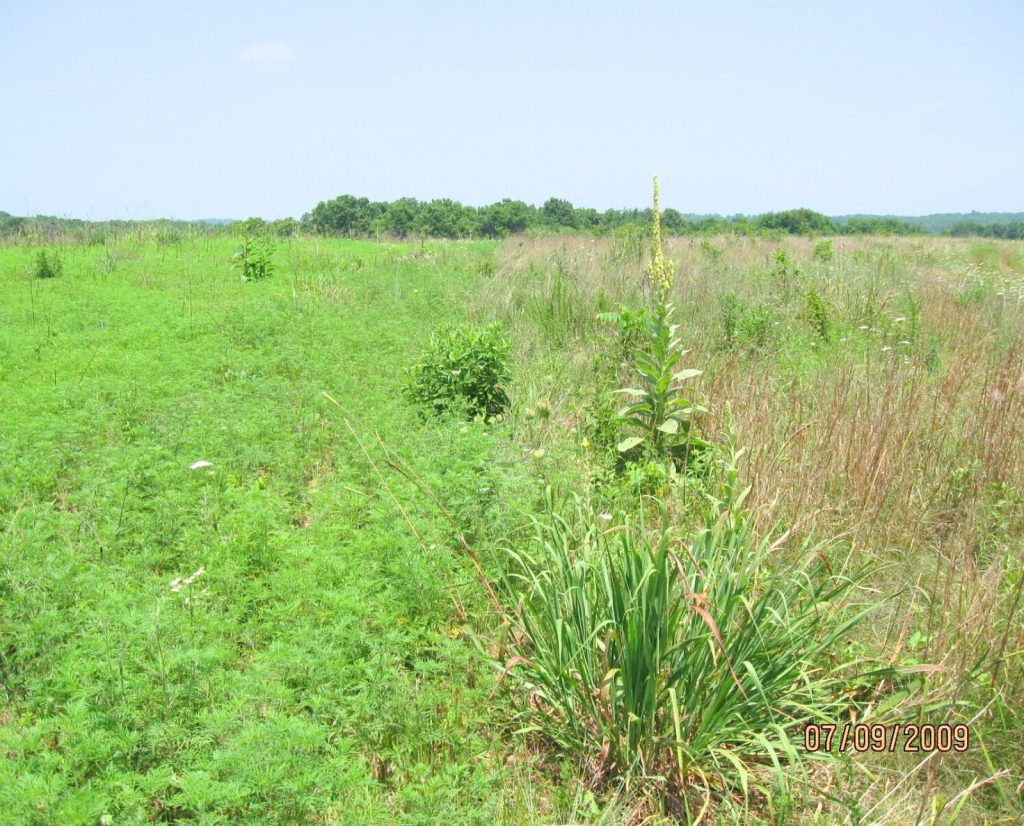
over 12 inches tall. The grasses were set back substantially when compared to the right side of the
photo, which depicts an unburnt area. The left side is filled with common ragweed and makes ideal brood habitat.
Effects of Late Summer and Fall Prescribed Burns
Burning in late summer or early fall will typically suppress warm season grasses and promote forbs the following growing season. In fertile soil, thick, rank native grasses can be the limiting factor for summer bird production. Suppressing grasses and increasing forbs and bare ground can provide ideal foraging conditions for broods the following summer. However, bobwhite research from the Southeast has shown that a longer time between the burn and green up results in lower adult survival. This makes sense considering coveys would be displaced for the entire winter, having to move out of their home range to seek refuge in unknown territory.
Additionally, predation can increase, particularly during the peak raptor migration, as quail are concentrated in fewer acres, reducing the search area for hungry predators. If non-native cool season grasses are a concern, fall burns can actually be detrimental to improving the habitat. Burning in fall will promote cool season grasses, and as the temperature cools, these grasses hit their stride and flourish. This can be used to the managers’ advantage, and the cool season can be sprayed after the first frost. By waiting until a frost to spray, you can ensure the desirable warm season grasses and most forbs have become dormant and will not suffer damage from the herbicide. But if cool season encroachment exists and a chemical treatment is not planned, fall burning is probably not a preferred option.
Effects of Winter Burns
Winter burning will also suppress warm season grasses and promote forbs, at least in states where temperatures fall low enough to put some frost into the ground. The freezing and thawing of warm season grass root crowns will cause some damage, thus stunting their growth in the spring and allowing forbs a chance to get a head start.
Effects of Various Fire Intensities on Upland Bird Habitat
Fire intensity is influenced by a variety of factors, including fuel load, wind speed, relative humidity, and wind direction, which dictates which parts of the fire are backing, flanking, or are a head fire.
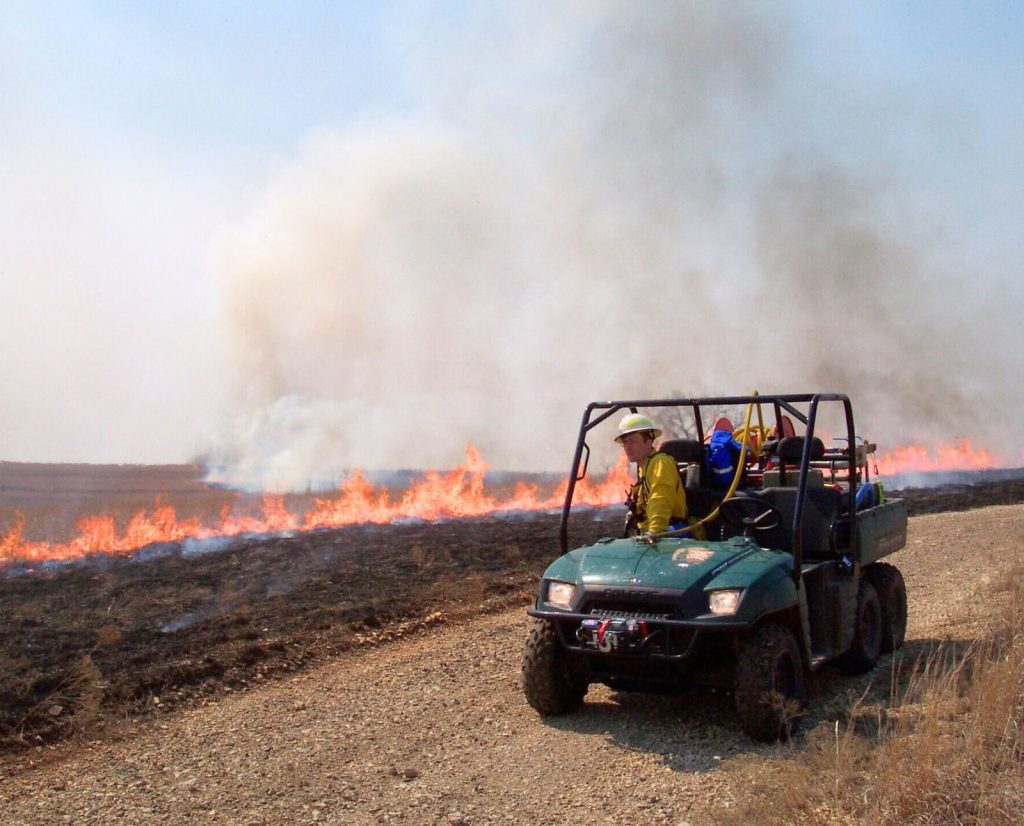
Although raging head fires can be fun to watch as they progress across the landscape, they may not always result in the desired effect on the plants. For example, if reducing woody encroachment is the primary objective for a particular burn unit, then a slow-moving fire can maintain heat at the base of the woody stems longer, thus inflicting more damage and hopefully killing a higher percentage of the sprouts. This can be accomplished by letting a fire back into the wind, creeping across the unit. Additionally, a lower relative humidity will increase fire intensity. If a hot fire is desired, then the relative humidities should typically be below 50 percent. Larger fuel loads can also increase the heat retention time as well, as deeper thatch takes longer to consume.
Conversely, in some cases, an incomplete burn may be desirable. Consider a situation where the objective is to burn the herbaceous vegetation to increase forbs and bare ground within the unit but not inflict much damage to scattered plum thickets that have recently become established. Conducting this burn with higher humidity, say 60 percent, and lower wind speeds will usually remove most of the vegetation, but the flames will die down quickly when they hit the thickets due to a lack of vegetation from shading effects of the shrubs.
Applications of Controlled Burns for Upland Birds
Prairie Chicken and Sharp-tailed Grouse Habitat
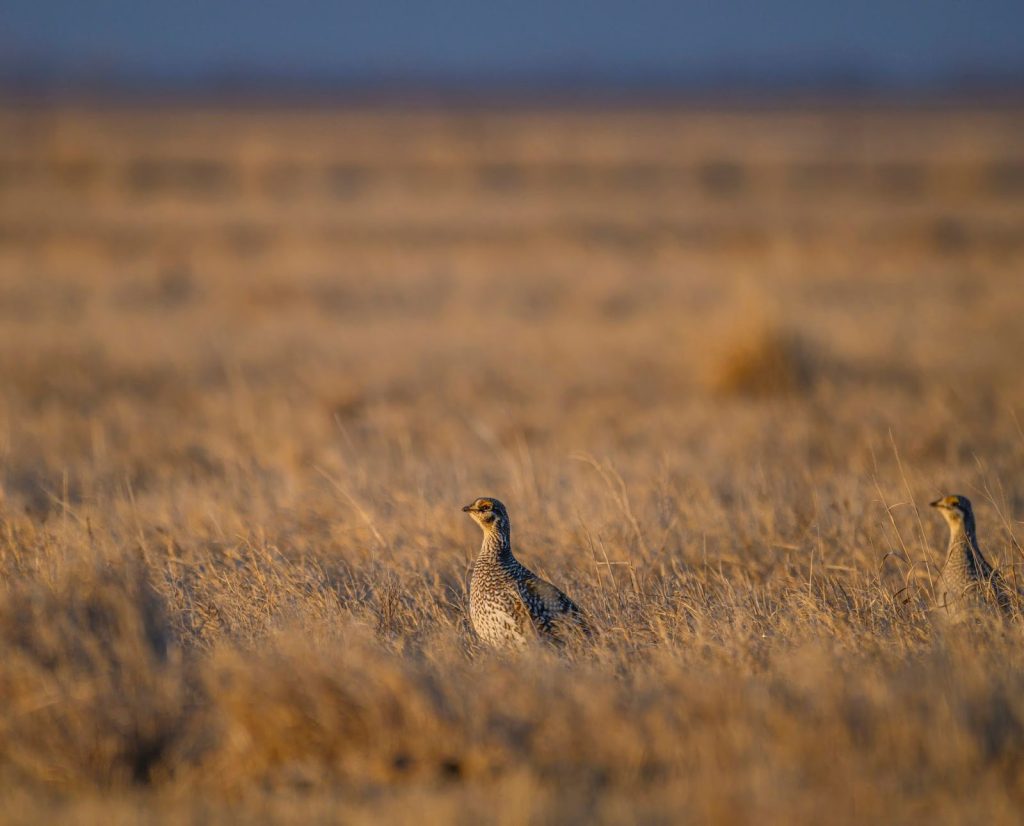
In prairie areas or large grasslands where prairie chicken or sharp-tailed grouse habitat is the primary goal, woody encroachment can be the largest threat. Burns should be timed to maximize damage to woody stems as well as completed in ways that result in longer heat retention on the woody stems. Slow moving backing fires, or fires completed in the fall will usually produce the best results when hardwood shrubs or trees are the target.
Read: Sharp-tailed Grouse of Wisconsin – Firebirds of the Northwest Sands
On the flip side, if cedar or juniper are the primary invaders, longer flame lengths and faster moving fires can consume the entire canopy, rather than relying on heat retention at the base of the stem to do the job. This fire behavior is best achieved by burning in late winter or early spring, prior to any vegetation green up. Lower humidities and some wind can help increase fire intensity, hopefully consuming the evergreen invaders.
Bobwhite Quail and Pheasant Habitat
Across much of the Midwest where bobwhites and pheasants are the benefactors of prescribed fire, brood habitat is often the limiting factor. This is particularly true in many Conservation Reserve Program (CRP) fields.
Excessive grass suppresses forbs and eliminates bare ground. Burning anytime will remove thatch and increase bare ground. Burning in the fall or winter will help reduce grass dominance and increase forbs. However, winter survival needs to be considered when burning in fall or winter. A full evaluation of the remaining habitat quality needs to be considered to determine if adequate winter cover will remain, and if that cover is in close proximity to food, and, when bobwhites are involved, close to woody escape cover. If winter survival remains a concern, then spring burning is probably the preferred option. A very late spring fire is another option for warm season grass suppression and forb production.
Watch: Something About a Bobwhite – A Project Upland Original Film
Prescribed fire can be used to manage habitats for many other species of game birds, but the principles remain the same. Classifying the current condition and envisioning the desired future condition is the first step in developing burn objectives. Having clear objectives is an absolute necessity prior to ever lighting a match. Once the objectives have been established, laying out a plan is the next step. Fire lines, burn timing, fire sequence, safety, and other considerations begin to take shape.
These steps will be discussed in the next two articles of this three-part series:


As always very well done Kyle.