


What Is a Bird Count? How Upland Bird Surveys Actually Work
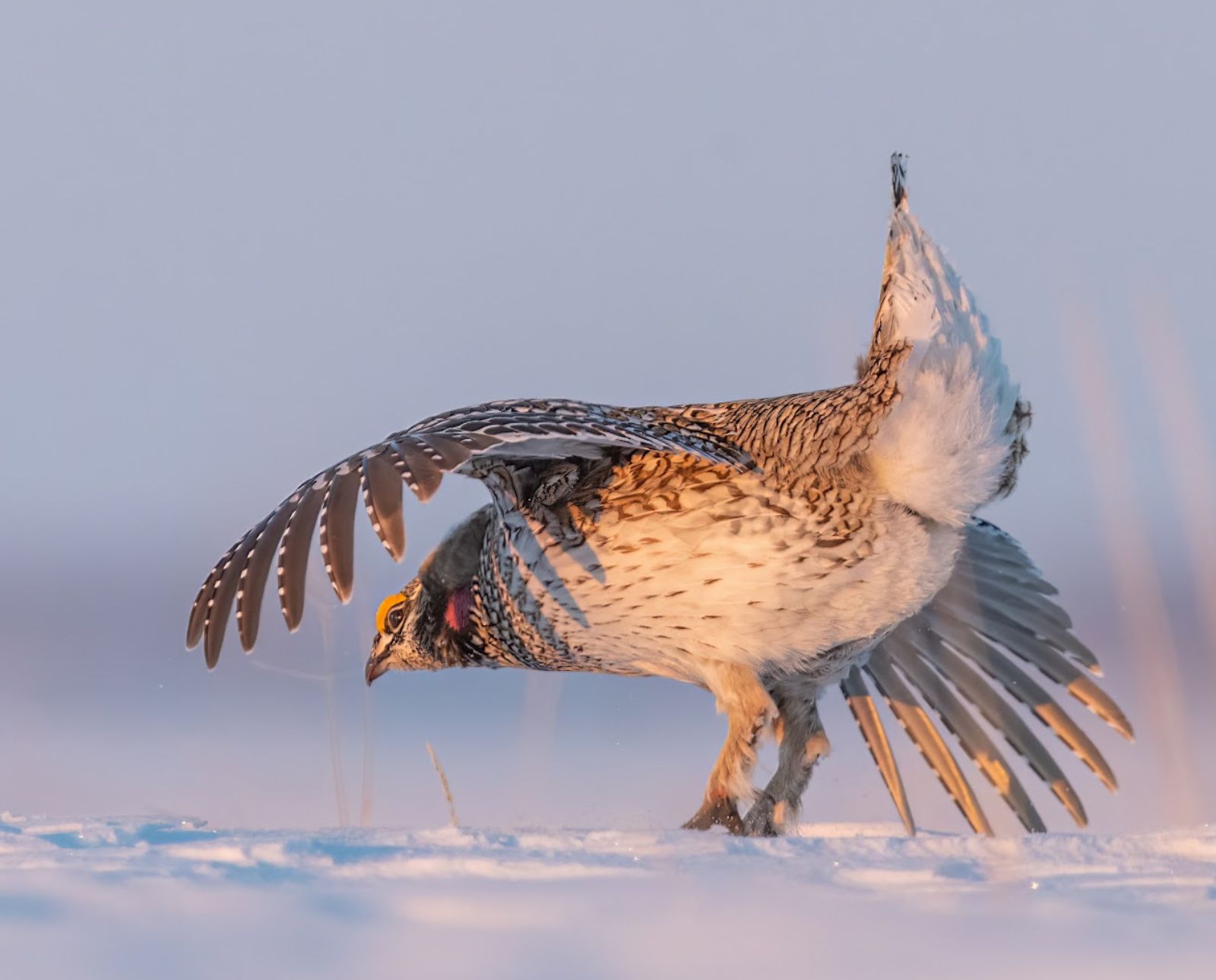
How state wildlife agencies count upland birds and how hunters should interpret the numbers
This article was originally published in 2018 and updated in 2026
Upland hunters tend to check bird counts the same way anglers check river gauges. When the numbers look good, expectations rise. When they look poor, some hunters consider changing plans. But what exactly is a bird count, how are these surveys conducted, and how much weight should hunters give them?
A bird count is a standardized wildlife survey used by state agencies to track population trends in birds. These surveys use fixed routes and repeatable seasonal methods to measure year-to-year change, not total bird numbers.
Across North America, wildlife agencies run these standardized bird surveys to measure upland game bird trends. These counts are science-based, repeatable, and valuable, but they are often misunderstood. They are not preseason guarantees, and they are not total population estimates. They are trend indicators built from consistent methods applied over time.
Understanding how these counts work and what they are designed to measure helps hunters interpret them correctly and use them more effectively.
What Is an Upland Bird Count?
A bird count is a structured wildlife survey conducted by trained staff and volunteers using fixed routes, fixed timing, and repeatable methods. When folks say “upland bird count,” they’re just specifically referring to bird counts that have to do with upland birds. And when it comes to bird counts, the purpose is not to count every bird. The purpose is to measure population trends over time.
Most survey designs focus on one advantage: certain species are easier to detect during specific seasons or behaviors. Agencies build their methods around those windows.
Most upland surveys fall into three major categories:
- Roadside production counts
- Spring breeding or calling counts
- Lek counts for prairie grouse
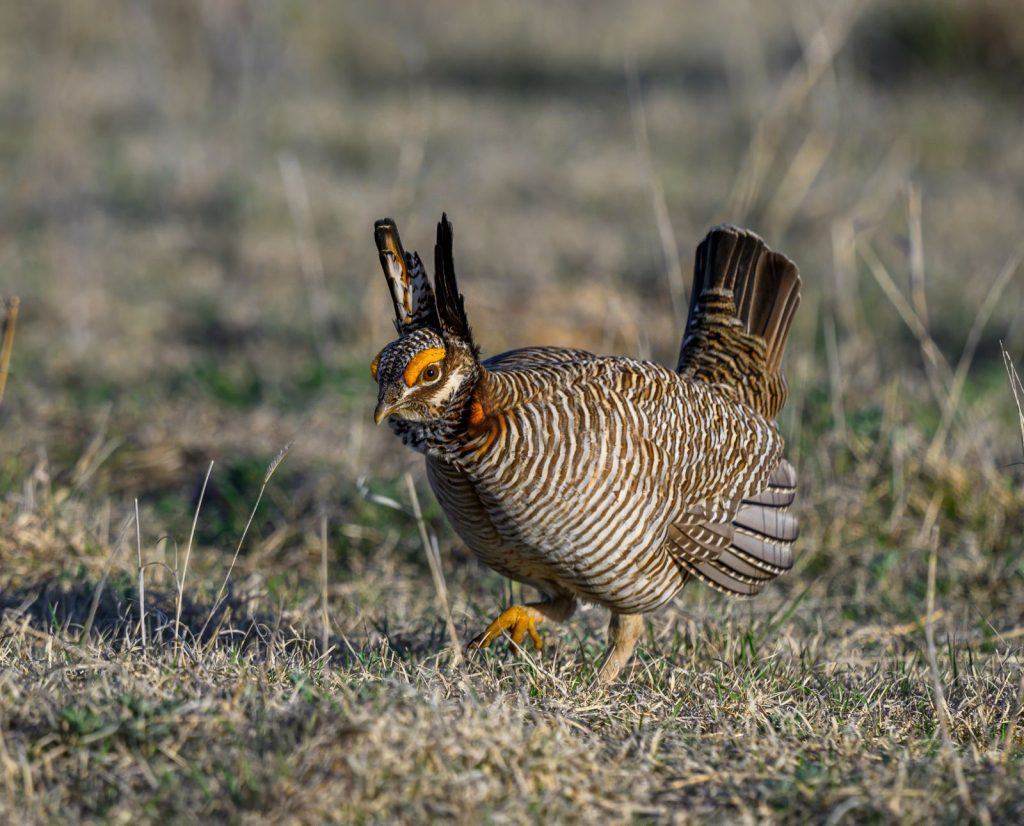
Each targets different species and behaviors. For example, prairie grouse like to gather and dance, while pheasants and Hungarian partridge are most visible when they visit road edges during late summer. The ruffed grouse drums, and drums a lot. Since each species does things a bit differently, the methods used to acquire data are a little different for each group.
Why Hunters Pay Attention to Bird Counts
Whether we like to admit it or not, every upland hunter follows the bird counts of their favorite species in their favorite hunting areas. Pheasant hunters swarm to South Dakota when the numbers look good, and Minnesota gets pounded during years when the drumming counts are high.
There are two common ways hunters gauge fall bird numbers. The first is word of mouth from friends and local reports. The second is official survey data published by state wildlife agencies. These reports influence where hunters travel, how much time they invest in a season, and how optimistic they feel heading into opening day.
Roadside Bird Counts
There are essentially two types of upland bird surveys. The first—and likely the most well-known type—is called a “bird production inventory,” or, colloquially, a roadside count. This is the method that’s typically used for pheasants and Huns, which tend to be most visible along road edges during late summer.
“These inventories are typically conducted the last half of July or the first half of August. The timing varies with wildlife districts and areas within the state. Many of the routes surveyed by the biologists are the exact same routes surveyed for many years,” explains the Oregon Department of Fish and Wildlife (ODFW). “Biologists record the species observed, the gender of birds observed (if possible), number of chicks observed, and number of chicks in complete broods.”
Not all pheasant counts are traditional road counts, however. North Dakota Game and Fish (NDGF), for instance, conducts “crowing counts,” which are a variation on the typical road count. Instead of conducting the counts in late summer, NDGF technicians do so in the spring, when birds are attempting to breed. “Observers drive specified 20-mile routes, stopping at predetermined intervals, and counting the number of roosters heard crowing over a 2-minute period,” explains an NDGF spokesperson.
Breeding Bird Surveys: Ruffed Grouse Drumming Counts
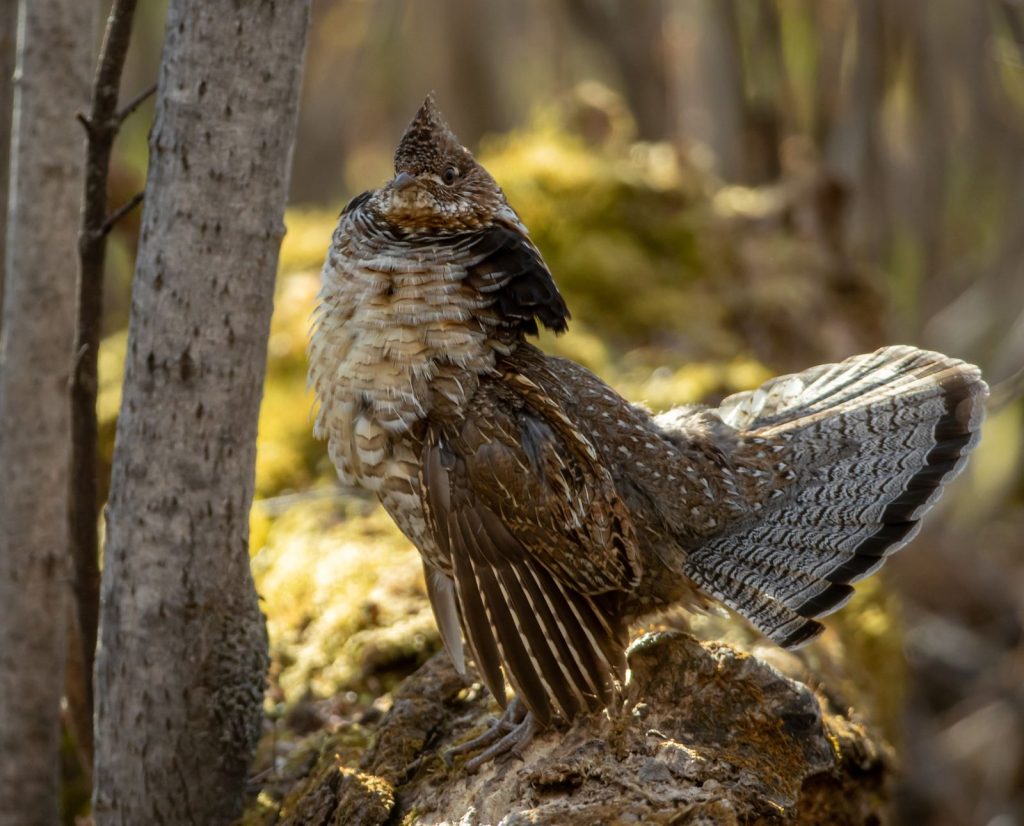
Conducting bird surveys during the spring mating season is particularly common for other game bird species such as grouse. For instance, researchers use “drumming” counts for ruffed grouse because male ruffies love to strut in the spring. After finding a good log, they pop up on it, puff out their chest and beat their wings so fast and with such vigor that their unique sound is a dead giveaway.
Listen: The Mystery of Grouse Drumming: From Thunder to Artificial Intelligence
According to the Minnesota Department of Natural Resources (DNR), the state—a popular ruffed grouse hunting destination—has been conducting ruffed grouse drumming counts since the mid 1930s. Roadside routes were established in 1949 and more have been added since then. Today, there are over 100 routes in the state. Surveyors follow these exact routes, stopping to listen for drumming at certain spots along their routes. The amount of drumming heard at each stop is recorded, and all numbers are calculated after roughly five weeks of monitoring.
Breeding Bird Surveys: Prairie Grouse Lek Counts
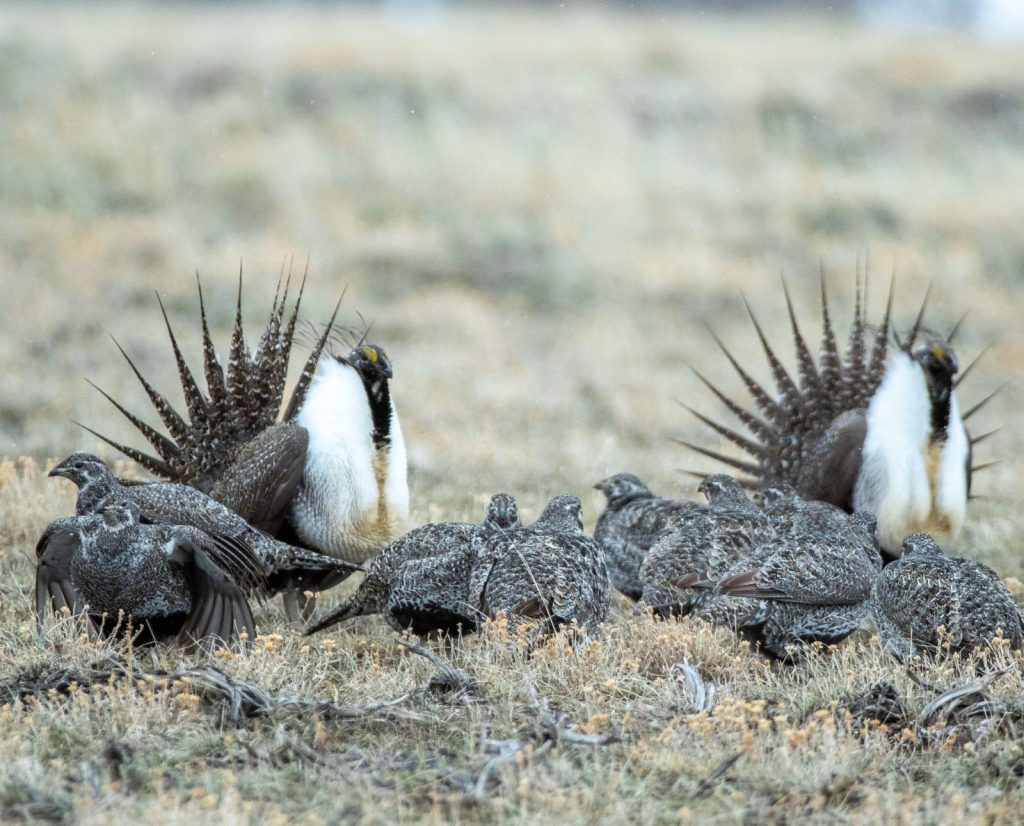
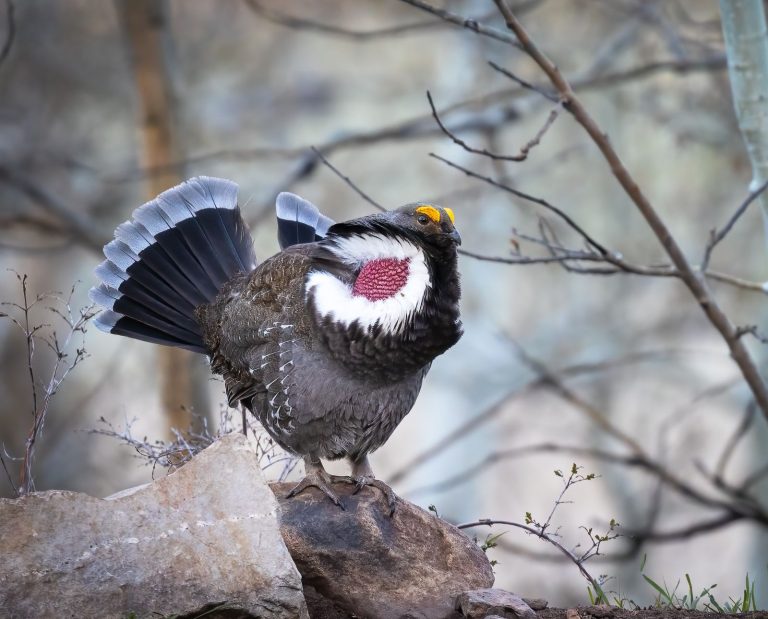
Other species that are subject to spring mating counts are prairie grouse such as sharp-tailed grouse, greater sage-grouse, and greater prairie-chickens. Each spring, these birds gather at “leks,” where males dance in the open to gain the attention of females. According to the Wyoming Game and Fish Department, “because most of the male sage-grouse in an area can be found at a lek, it gives biologists an opportunity to count males and log the count into state databases.”
Additionally, scientists can survey the same leks each year. “Grouse are extremely loyal to the leks where they display and mate,” writes Evan Barrientos, communications manager for the National Audubon Society. “Males return to the same leks year after year. Some leks are hundreds of years old.”
In 1976, lek survey methods were put into place, and data has been collected ever since. Volunteers and wildlife staff all participate in the surveys, recording how many males, females, and birds of undetermined sex are present at a lek during each visit.
Bird Surveys Gauge Population Trends, Not Overall Population
One of the most common misconceptions about upland bird counts is that they gauge overall populations of game bird species. This is inaccurate. As ODFW puts it, “These survey techniques detect an unknown proportion of the population; consequently, the numbers cannot be used to provide an estimate of the total population.”
Instead, bird counts gauge population trends and can show significant changes year over year. Understanding these trends can help biologists manage game bird populations, and it can also give hunters a general understanding of whether it will be an up or down year in a certain area. That said, if you don’t know what a baseline year is in a certain area, it may be difficult for you to understand what that really means without actually spending time in the field there. Additionally, because these surveys are, by nature, not comprehensive, it’s always possible to find pockets where the population trends are different than what you see in the official surveys. Speaking from anecdotal experience, I’ve seen bird population dynamics change over the span of half a mile despite there being no discernible habitat differences, likely because of impacts of hailstorms.
Sources of Error in Upland Bird Surveys
While the bird surveys are science-based, they are far from perfect science. When dealing with anything wild, there are far too many outside variables to set exact numbers. The slightest event can skew numbers one way or the other. Three key factors that should be considered when thinking about surveys versus sightings during hunting season are weather, time of year, and the survey locations.
If it’s cloudy, windy, or rainy during the entire survey time-frame, odds aren’t in the favor of the surveyor. They’re not going to observe or hear as many birds as they would on calm, sunny days. This goes for all species mentioned above, especially pheasants, as there’s only one day of surveying on each route.
Since the survey routes and stops are established and have changed very little since the surveys became concrete, there’s a significant chance that the habitat along the routes has changed drastically. Trees grow, crops cycle, the Conservation Reserve Program comes and goes, and human encroachment or sprawl is imminent. If the habitat along one of the routes is non-existent, it’s not skipped over as the data still needs to be collected.
It’s important to remember that the surveys are designed to capture the changes in habitat that occur through time. If the forest is cleared in one area, it is maturing in another area, and the routes are still representative of what is going on at a larger scale. The routes do get changed, however, when the habitat is not likely to come back or if conditions prevent a good survey, such as when the land is developed or traffic is so heavy that the birds can no longer be heard.
Population Trends May No Longer Be Accurate by Hunting Season
This brings us to the second key limitation of upland bird counts: their results don’t always reflect current population trends by the time hunting season rolls around. For instance, since ruffed grouse and prairie grouse numbers are counted before nesting season, the numbers don’t reflect brood survival or adjust for weather events during nesting or post-hatch. A lot can change between then and hunting season, including but not limited to bad nesting conditions, high predation, disease, severe weather events, poor food conditions, and habitat loss. Because of this, it’s not incredibly uncommon to see a year with high drumming counts but low hunting success.
Even pheasant and Hun roadside counts, which are often conducted in August, leave room for changes between the time of the survey and hunting season. Additionally, if a late hatch occurred, some birds may not be included in the count since young birds aren’t as visible and the roosters aren’t as distinguished in coloration.
There Are Nuances to Analyzing Bird Surveys
Finally, it’s important to note that some aspects of upland bird surveys require expert analysis, and the average hunter should take them with a grain of salt. “There are some nuances to the roadside indices every year that can also require some interpretation. They have to do with understanding how weather (in winter, spring, and summer) might be affecting survival (over-winter hen survival, nest success, brood survival) and thus the numbers we get each year,” said Nicole Davros, the Farmland Wildlife Research Supervisor for the DNR. “For example, if our data shows that hen and brood indices are down from a previous year but the rooster index is up, then we start to think about whether it is a true decline in some numbers or if a late hatch due to spring weather can explain it.”
On this note, changing the way bird surveys are conducted would be challenging and would make preexisting datasets difficult to use. Charlotte Roy, a grouse biologist from the DNR, explained, “If we change the way we collect data, it would be like starting from scratch. To be comparable, the methods have to be similar. Right now we have years and years of data, and we can compare years to figure out trends at a large scale over time.”
When asked if there were any considerations for different or alternative methods for collecting data being discussed, she pointed out the importance of trends. “The primary new thing that’s been discussed is the new survey to collect data for spruce grouse population trends, which has never been done in Minnesota. It took four years to figure out a good way to collect the data. But now that we have it in place, we’ll do it similarly each year so that we can look at changes through time.”
The Final Word on Upland Bird Counts
There are hundreds, if not thousands, of volunteers, conservation groups, state workers, and birding enthusiasts who pour their time and efforts into collecting this data. They aren’t doing it to figure out how many birds should be in the woods come hunting season—these numbers aren’t merely a forecast for hunters. Rather, they are building a database which reflects trends in bird numbers based on things like weather, habitat changes, and hunter participation.
The numbers shown in the surveys released every year are estimates, are in no way 100 percent accurate, and are not designed to show precise statistics. Too many hunters live and die by the bird counts, but the DNR warns that the numbers “should be interpreted cautiously.”
The bottom line is that if you enjoy bird hunting, by all means, do it. Don’t look at the drumming counts before deciding whether or not you’re going to buy a license. Look at yourself and decide if you enjoy a leisurely walk in the woods with a buddy, a family member, or a furry friend. Ask yourself if you love the smell of a wet aspen forest floor, or running your fingers through thigh-prairie grass as the sun burns the last bit of color from the sky.
You won’t find bird dogs sitting on the couch reading bird surveys. Nothing can replace getting out in the field when the season opens and finding birds for yourself.

Does a list exist that delineates the states that do upland bird surveys and which species are being surveyed?