


Why Cheatgrass Control Matters for Gunnison Sage-grouse Conservation
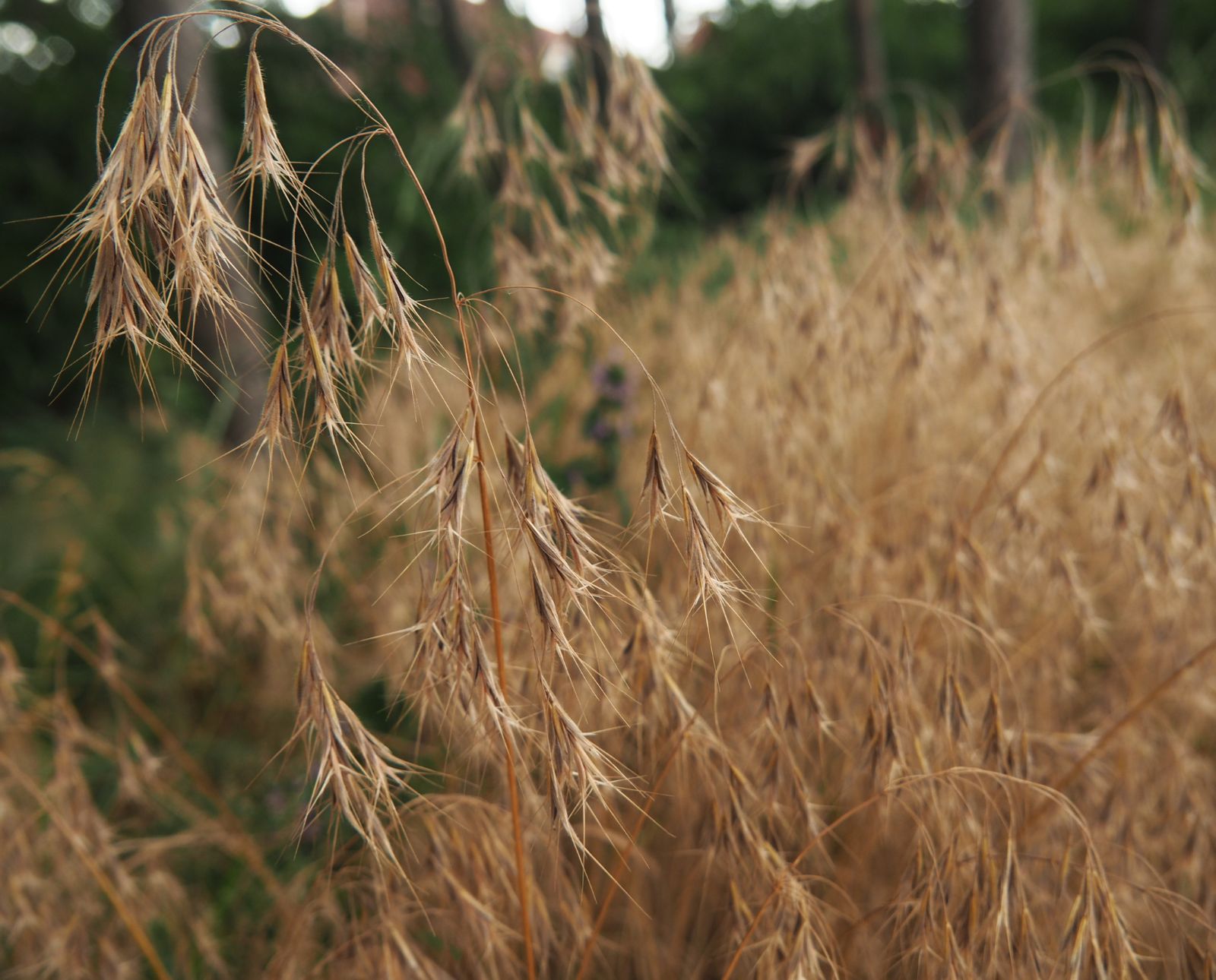
The spread of cheatgrass increases wildfire risk and threatens the native plant communities the Gunnison sage-grouse depends on
This article originally appeared in 2023’s spring issue of Project Upland Magazine.
The Gunnison sage-grouse (GUSG; Centrocercus minimus), an imperiled upland gamebird located in the southwestern United States, is an obligate species of the sagebrush steppe ecosystem in western Colorado and eastern Utah. Designated as a new species in the year 2000, the grouse is restricted to living in large tracts of undeveloped sagelands. However, invasive species threaten the continuity of these iconic Western landscapes.
Researchers estimate that there are fewer than 5,000 Gunnison sage-grouse left. Approximately 87 percent of those remaining are located in Colorado’s Gunnison Basin. For comparison, a subpopulation of lesser prairie-chickens was listed as federally endangered in 2022, and there are around 27,000 individuals of this species remaining globally. Additionally, wildlife managers estimate that there’s around 200,000 greater sage-grouse in the wild.
Native Plants in the Gunnison Basin
The Gunnison Basin’s sagebrush steppe is characterized mainly by the following plant species:
- big sagebrush (Artemisia tridentata)
- snowberry (Symphoricarpos rotundifolia)
- sticky-leaf rabbitbrush (Chrysothamnus viscidiflorus)
- antelope bitterbrush (Purshia tridentata)
- pine needlegrass (Achnatherum pinetorum)
- Indian ricegrass (Achnatherum hymenoides)
- fescues (Festuca spp.)
- poas (Poa spp.)
- milk vetches (Astragalus spp.)
- fleabanes (Erigeron spp.)
- buckwheats (Eriogonum spp.)
- silvery lupine (Lupinus argenteus)
All these species make up the sagebrush steppe and are critical to GUSG habitat, with their importance varying seasonally. Sadly, monocultures of invasive species, including cheatgrass, threaten this diverse bird habitat.
Why Gunnison Sage-grouse Need Native Plants
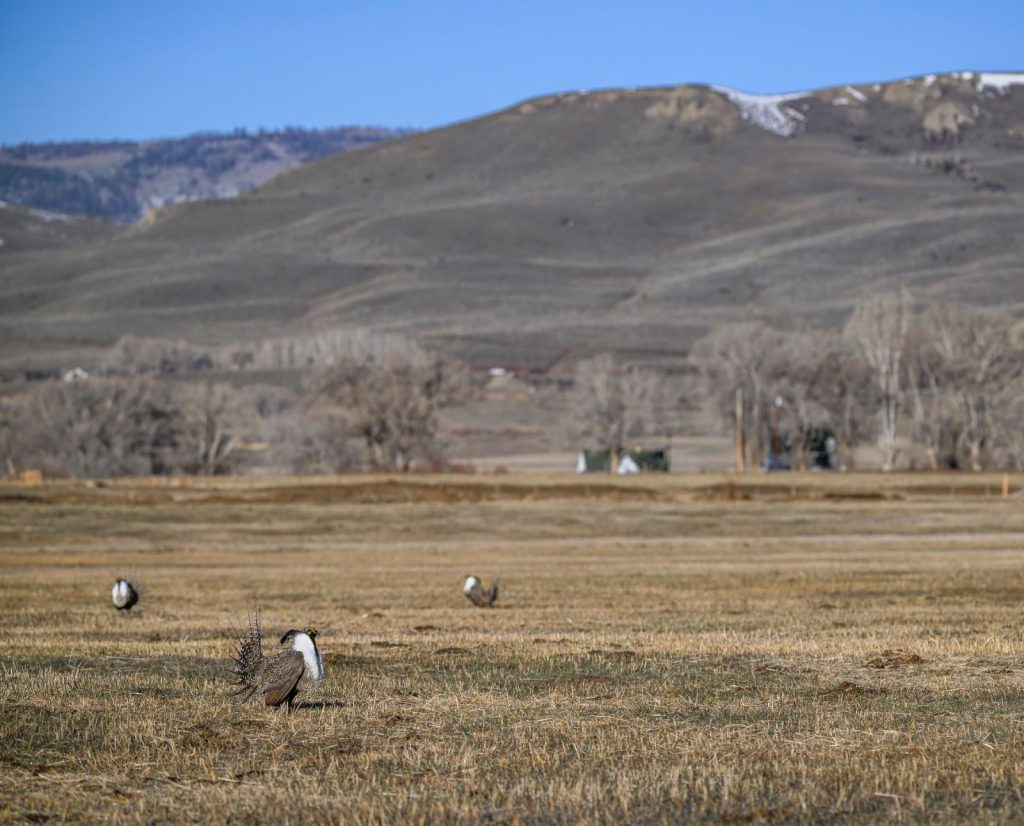
Sage-grouse prefer tall, dense sagebrush habitats for nesting, winter shelter, food, and cover from depredation throughout the year. Grouse use open patches for lekking, breeding, and brood-rearing. Forb-rich, grassy areas and sagebrush understories provide an abundant, high-protein invertebrate food source during the summer. These forb-rich habitats are particularly critical when raising chicks; the young, nutrient-rich leaves and insects residing in the forbs are a vital food source during brood-rearing.
Invasive species management and native plant restoration are required for sage-grouse conservation because native species are essential to GUSG chick survival. When invasive species come into the picture, they can be a harbinger of death for grouse chicks.
Listen: Cheatgrass May Be The End Of Utah’s Sage Grouse – The Project Upland Podcast
Invasive species such as cheatgrass (Bromus tectorum) can dominate sagebrush plant communities. According to the U.S. Forest Service’s “Field Guide for Managing Cheatgrass in the Southwest” report from 2014, cheatgrass was first identified in the northeastern U.S. in 1861, and “it is now found throughout all 50 states and is widely distributed across the western United States.”
Cheatgrass is the greatest threat to the sagebrush steppe and GUSG habitat. It outcompetes native plants, degrades sage-steppe ecosystems, and displaces the obligate plant species that the Gunnison sage-grouse depends on.
Cheatgrass Characteristics and Management Techniques
Cheatgrass is a cool-season, annual grass native to Europe and eastern Asia. Its common name refers to its ability to produce multiple generations in one growing season and exploit the available nutrients and water using its thick, shallow root system.
The annual grass focuses all its energy on rapid stem and leaf growth and seed production rather than root development. This prioritization allows the plant to drop viable seeds before native perennial plants can. A single cheatgrass plant can produce up to 5,000 seeds. In an area densely populated by cheatgrass, this can mean millions of seeds are produced each year per square foot!
Cheatgrass germinates early in the spring or in the fall before overwintering under insulating layers of snow. In Gunnison, cheatgrass will be green and thriving by April or May. Cheatgrass goes into senescence and dries up early in the growing season, causing infested areas to form a thick, continuous expanse of fine, dry fuel just in time for fire season. This is an increasing concern as catastrophic wildfires become more frequent across the West.
It is best not to physically interact with cheatgrass once the seeds are fully developed because pulling or other physical contact facilitates the dropping and movement of the seeds. Cheatgrass seeds are pokey and fall off easily once the plants approach senescence. Animal fur, the socks and shoes of unknowing outdoor recreationists, or really anything that brushes up against cheatgrass seeds will disperse them. Additionally, the Forest Service mentions that “seed carried on undercarriages of vehicles and road maintenance equipment is a major means of long-distance transport.” These seeds can stay dormant in the soil for multiple years.
The Fire-Cheatgrass Cycle
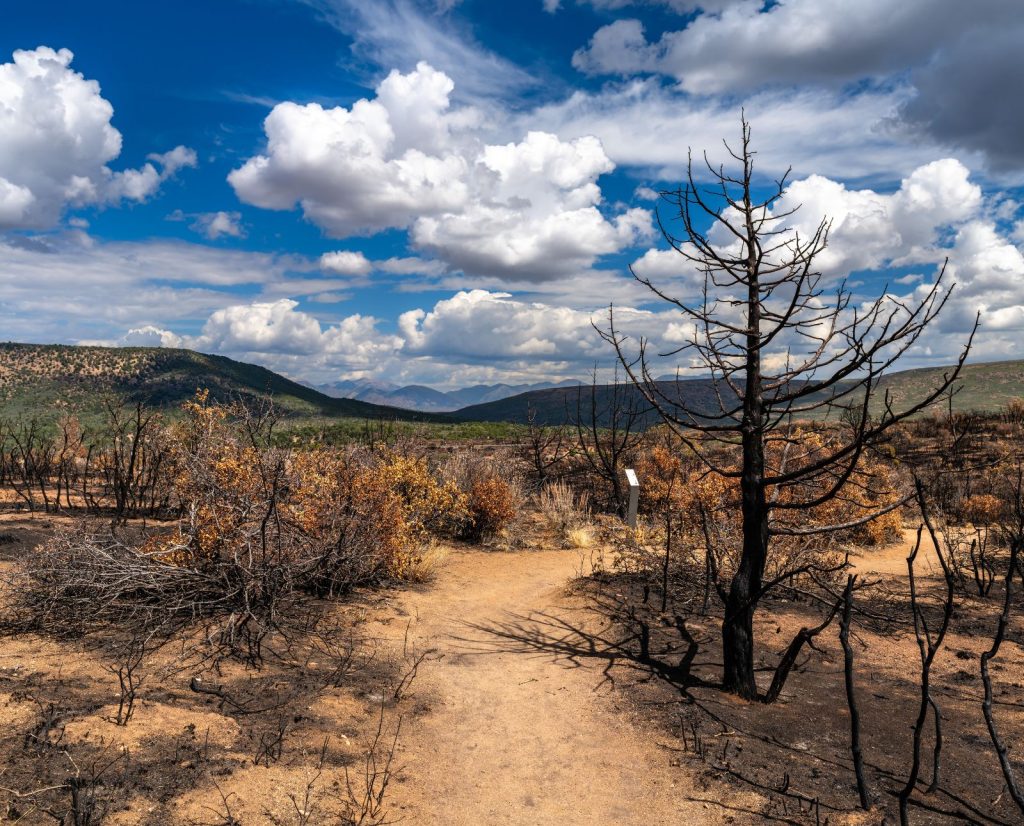
Technically, cheatgrass is a poor competitor with native plants until there is a disturbance or a gap in native vegetation. Wildfires are an impending concern in sagebrush ecosystems with cheatgrass because they create the opportunity for widespread cheatgrass establishment. When places like this burn, the prolific cheatgrass soil seedbank allows for the early re-establishment of cheatgrass, creating a fire-cheatgrass cycle.
“Cheatgrass can alter the normal fire pattern in vegetated areas when its populations become dense and dominant,” writes the U.S. Forest Service. Gunnison’s land managers are aware that we are one disturbance away from entering this fire-cheatgrass cycle, which would be devastating for the GUSG.
Cheatgrass in Gunnison, Colorado
Although cheatgrass has become nearly uncontrollable in other areas in the West, many Gunnison residents believed that the basin would never have a cheatgrass problem due to it being a cool, wet, high-elevation valley. However, cheatgrass has increased in incidence and abundance here over the last decade. As a result, land managers have reconsidered the effects of prolonged drought and climate change in expanding the range of invasive plants to higher elevations. Additionally, local managers have seen cheatgrass proliferate throughout other habitats and mountain communities; their observations motivate them to engage in valley-wide efforts to control the species locally. This has even inspired the creation of my professional position, Habitat Restoration and Cheatgrass Coordinator, and the development of groups such as the Cheatgrass Subcommittee to the GUSG Strategic Planning Committee, which includes a diverse and extensive set of stakeholders.
Today, cheatgrass is locally confined to rocky southern slopes, areas with degraded soils, and roadsides. However, cheatgrass may continue to spread and move up in elevation, along with other invasive species detrimental to sage-grouse habitat, such as Ventenata (Ventenata dubia), Russian knapweed (Rhaponticum repens), medusahead (Taeniatherum caput-medusae), and Canada thistle (Cirsium arvense). Many areas within the greater sage-grouse’s range have already experienced the wide-scale establishment of these invasive species; intact habitat for the sage-grouse is diminishing each year. The uncertainty surrounding climate change and drought increases the complexity of this conservation challenge.
Thankfully, cheatgrass is still at a manageable level in the Gunnison Basin. Managers must control cheatgrass right now before a prolific soil seedbank and a fire-cheatgrass cycle are established. This will keep the habitat of the largest global Gunnison sage-grouse population intact. However, removing cheatgrass is a community-wide effort that relies on help from all public land users, including hunters, ranchers, mountain bikers, and land managers.
Washing your bike after riding in cheatgrass-infested areas, using boot brush stations before and after hunts and hikes, ensuring that hay is free of cheatgrass, and supporting large-scale treatments are a few ways everyone can be involved in grouse conservation.
Gunnison’s Plans for Mitigating the Spread of Cheatgrass
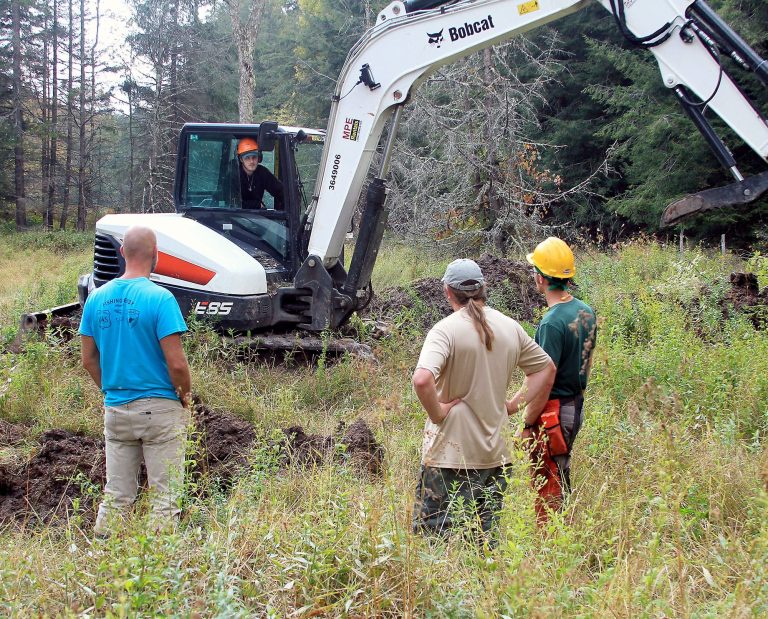
Hundreds of acres of cheatgrass across the Gunnison Basin are being treated yearly across federal and state land ownership. Future treatments will bump that acreage into the thousands to attempt to control the tens of thousands of acres of cheatgrass we currently have in the Basin.
Cheatgrass treatments can be complicated, especially when treating across ownership boundaries, because, like wildlife, cheatgrass does not respect human-made boundary lines. The plant regularly crosses from USFS land to Bureau of Land Management (BLM) land and vice versa. Additionally, different ownership or agency jurisdictions will have distinct regulations. For example, a promising new herbicide called Rejuvra (Indaziflam) has great potential to stop the germination of cheatgrass while minimizing the effect on native plants. However, the Department of the Interior manages the BLM, which has not yet approved Rejuvra. The Department of Agriculture manages the Forest Service, and it has approved the herbicide for use. Cheatgrass treatments need to be done using the best tools available while following each agency’s rules and regulations.
Moving forward, local land managers plan to increase the scale of these treatments using cheatgrass mapping from satellite imagery. Additionally, land managers want to extend treatments onto private land by incorporating educational opportunities and resources for private landowners. There is a strong conservation ethic among private landowners in the Gunnison Basin, and cheatgrass awareness just needs to get plugged into that ethic. A system is currently in development whereby private landowners can report noxious weeds like cheatgrass and have the treatment of their property paid for by a joint federal and state cost-share program.
Another hurdle to successfully managing cheatgrass treatments on private land is the need for local applicators. However, we plan to build up the capacity for local applicators to help fill the niche for weed treatment on private land while supplementing with outside contractors that have done large scale cheatgrass treatments in Gunnison.
The Gunnison sage-grouse is a symbol of our community. Its conservation success depends on our ability to collaborate and prioritize the health and beauty of the land that supports us. If anyone can work together to protect this mystical and mysterious bird species from cheatgrass encroachment, it’s Gunnison residents.

I remember a friend in Boise in the 90s who was a range ecologist for the BLM talked about use of cattle to control cheatgrass with intense grazing early in the year after green up to give natives a chance to thrive later in the spring. Has this proven to be effective?