


A Guide to Hunting Wilson’s Snipe: From Prank to Practical Pursuit
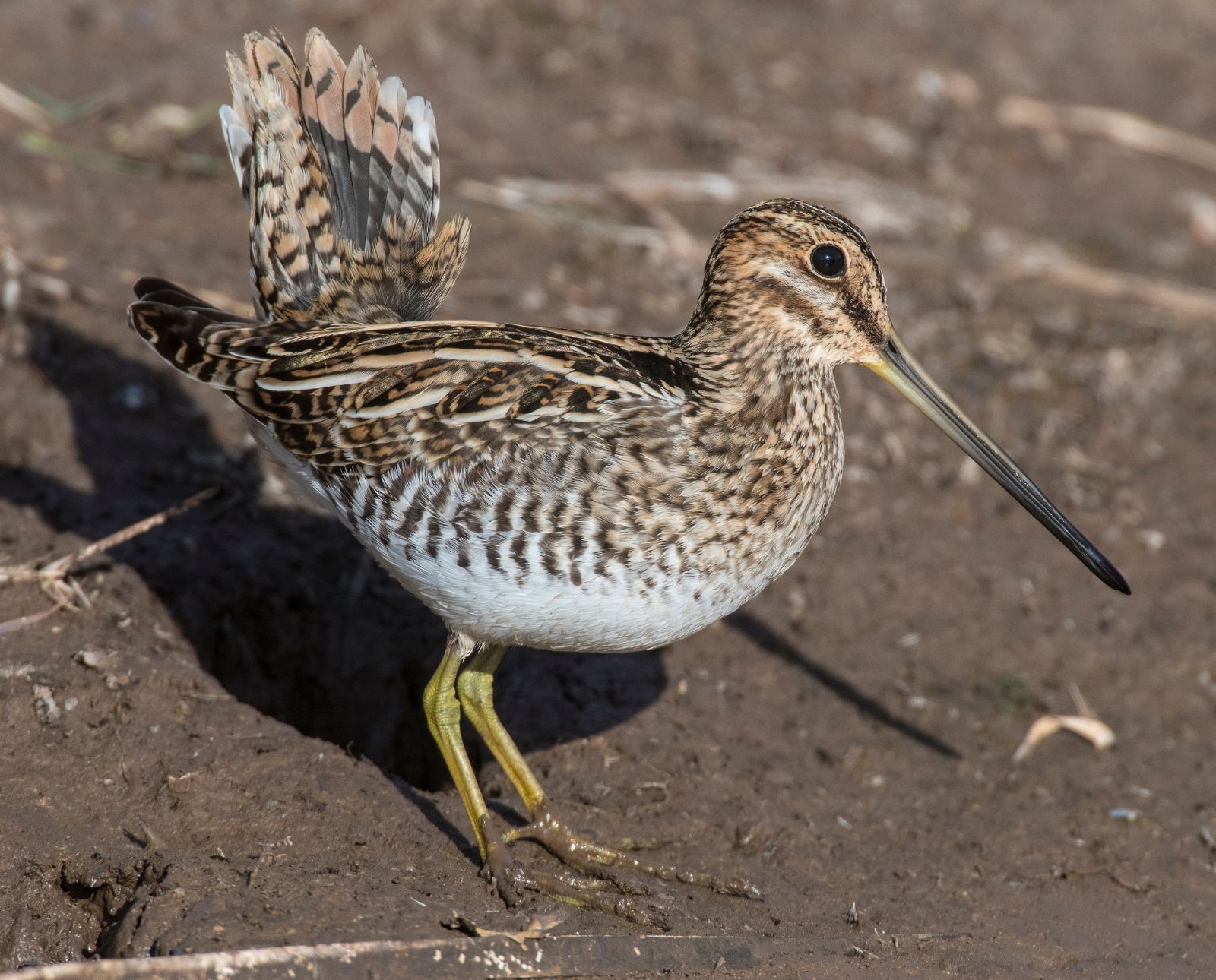
Exploring the history, habits, and hunting of Wilson’s snipe, one of the uplands’ most overlooked game birds
Most kids grow up hearing about a “snipe hunt.” The story usually ends with a gullible friend wandering around in the dark while everyone else giggles at camp. The joke has lasted for generations, but the bird itself is no punch line. Real snipe hunting has a long and surprising history, from the campfire prank to unusual mid-century methods of catching the birds.
Today, chasing Wilson’s snipe is a legitimate pursuit that blends waterfowl and upland hunting, offering fast-flying birds, wet boots, and some of the most underrated table fare in the uplands.
History of Snipe Hunting
You may have heard the old “snipe hunt” camp prank. You send some unsuspecting newbie out into the dark woods with a bag to catch a snipe. The prankster says, “Just beat the trees in the right rhythm and the snipe run into the bag.” Then off the prankster goes, abandoning the greenhorn. Everyone else hangs out around the campfire, laughing at the naïve victim.
Apparently, the joke has some basis in tradition. Back in the 1950s, people would actually catch snipe by spotlighting them from a truck at night. A catcher standing nearby would then capture the disoriented snipe in a net. The technique went on to influence a method that some biologists later used to capture American woodcock in winter areas for research.
Well before that, in the nineteenth and early twentieth centuries, snipe were one of the most sought after game birds in North America. In fact, in the 1927 book Life Histories of North American Shorebirds, author Arthur Cleveland Bent wrote that at the time “more snipe have been killed by sportsmen than any other game birds.” While that statement may no longer be true today, these days, hunting for Wilson’s snipe is a legitimate but often underappreciated pursuit.
What is a Wilson’s Snipe?
If you were the gullible friend “snipe hunting” as a child, you might not believe that snipe are even real. However, they are, in fact, a real bird.
Upon first glance, a Wilson’s snipe (Gallinago delicata) might remind you of an American woodcock. The species is a portly bird with a long bill and short legs. According to the Audubon Field Guide, Wilson’s snipe are characterized by lengthwise stripes on their heads and bars on their sides. The small game birds are approximately the same size as a robin and have rounded, wedge-shaped tail feathers.
Wilson’s snipe are technically shorebirds and are in the same taxonomic order as woodcock, plovers, sandpipers, and gulls. They are typically found in the moist ground of marshes, bogs, and wet meadows. Snipe are considered solitary birds and are not usually found in flocks.
Snipe primarily forage in soft mud, which is why looking for them on the edges of lakes, rivers, and marshes can pay off when hunting for them. Their sleek, flexible bills help them scoop up earthworms and other aquatic insects.
Snipe Migration Patterns
Like other water birds, most Wilson’s snipe are migratory. The species breeds primarily in the marshes and bogs of the northern continental U.S. through the tundra of northern Canada and Alaska. Meanwhile, snipe winter in much of the southern U.S. and in parts of Mexico.
A 2025 study published in the journal Ornithological Applications analyzed the feather composition of hunter-harvested snipe in Florida in order to assess their migratory patterns and breeding patterns. The researchers found evidence of many individual birds that traveled from breeding grounds in western Canada or Alaska to nonbreeding habitat in Florida, with one bird migrating at least 2,650 miles. They also found a “high degree of migratory mixing,” meaning that birds that breed throughout different parts of the continent often migrate to the same winter habitat.
Another relatively recent study published in The Auk looked at the migratory patterns of Wilson’s snipe that frequent the Willamette Valley in Oregon. The results showed snipe are capable of “exploratory movements” as they seek out ideal habitat during migrations.
How to Identify Wilson’s Snipe While Hunting
There are several ways to hunt Wilson’s snipe, which we’ll get into shortly. But one of the most important and challenging aspects of hunting snipe is knowing how to identify them, especially because they can be easily confused for other sandpipers or plovers.
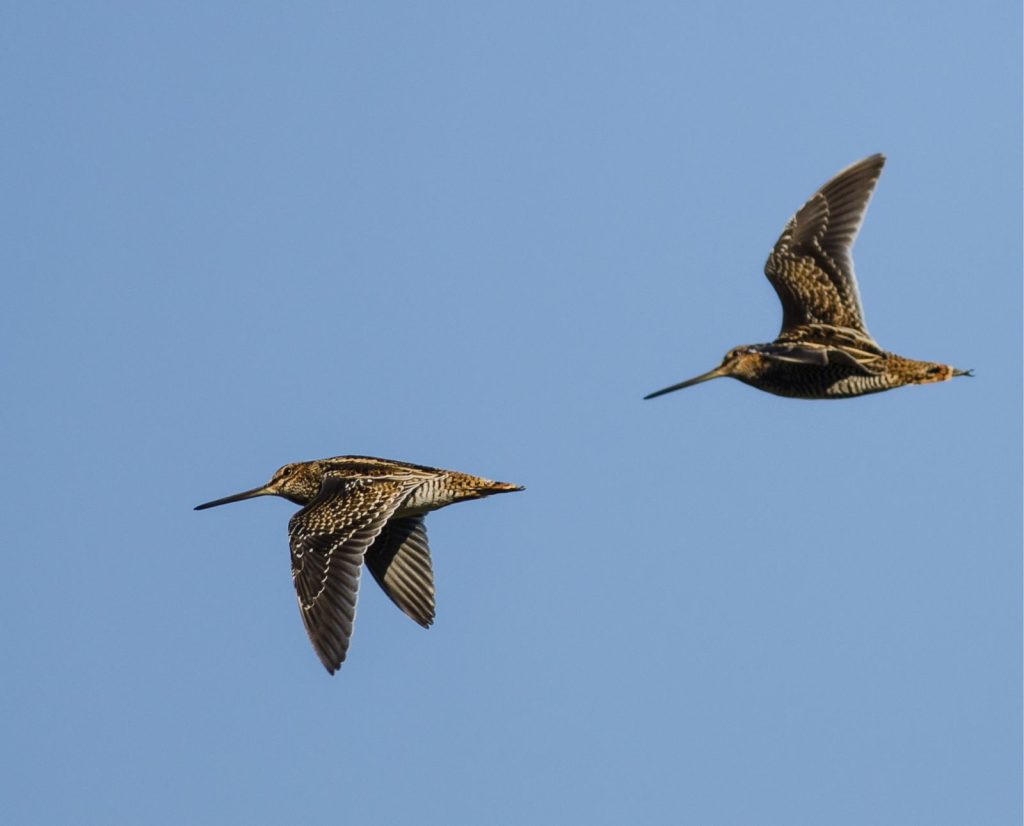
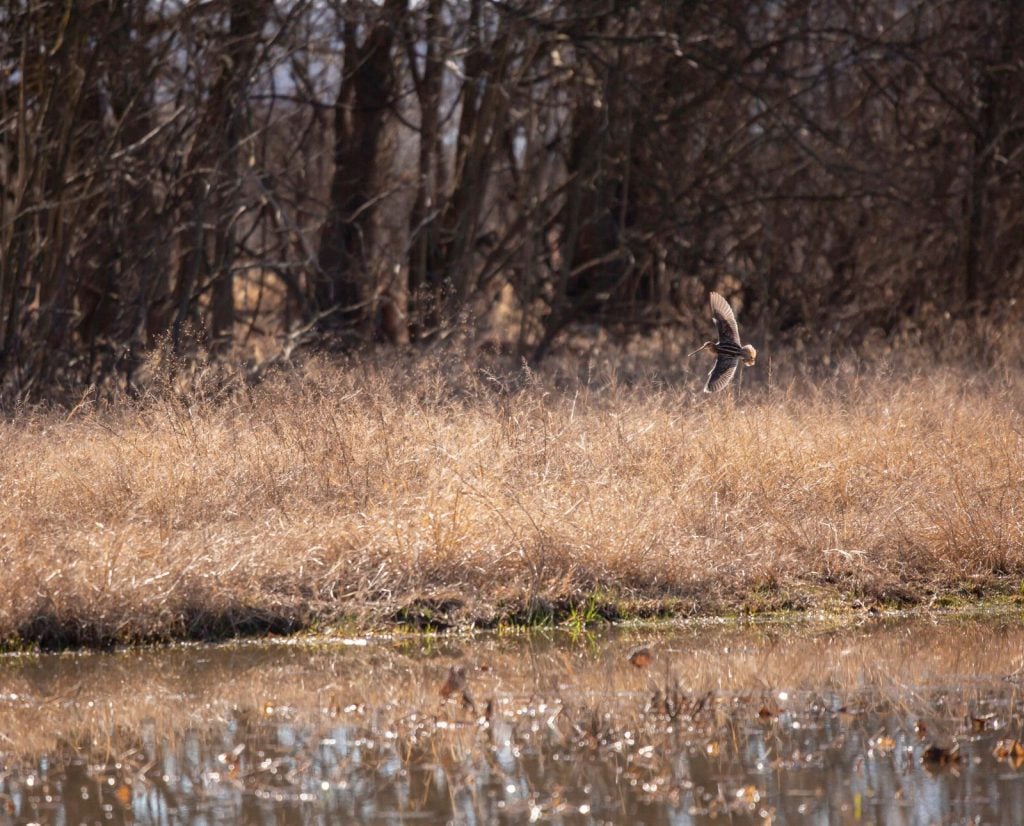
One of the first things to look for in the field are mostly solitary birds. If you flush a large flock of shorebirds, they’re not snipe. The next identifying characteristic of snipe is their zig-zagging flight pattern—which also makes them challenging to shoot. But in my experience, the best way to field ID a snipe is by listening for the sound they make when they take to wing, which is somewhat similar to a rasping noise and an exaggerated kissing sound. Once you figure out this distinctive call, it’s relatively easy to identify snipe in the field.
Wilson’s Snipe Hunting: Shot Size, Gear, Dogs, and Decoys
I often come across snipe while duck hunting the large marshes of California’s Central Valley and the river bottoms of western Montana. Because they’re found in the same habitat as ducks and other waterfowl, it can be tempting to take pot shots at them. Don’t do this with typical duck shells. It will render any snipe you hit entirely inedible. Regardless of what hunting tactics you use for snipe, the most important thing to remember is to use light, nonlead shot, ideally No. 8 with an open choke.
The most common way of hunting snipe is essentially by jump shooting or flushing them. Simply walk through snipe habitat, whether it’s a levee or a river bottom, and be ready for one to take to wing. To do this, you’ll certainly want waders or at least knee-high rubber hunting boots. But other than that, this method of snipe hunting is relatively accessible in terms of equipment requirements.
On that note, dogs aren’t typically needed to hunt snipe, which don’t hold tight enough to necessitate a flusher, though one can certainly help with finding downed birds. They also aren’t known to hold well for pointing breeds. I’ve heard rumors of some exceptions to this rule, mostly in online message boards, but I’ve never seen this in the field, so I can’t confirm the conditions needed to successfully point snipe.
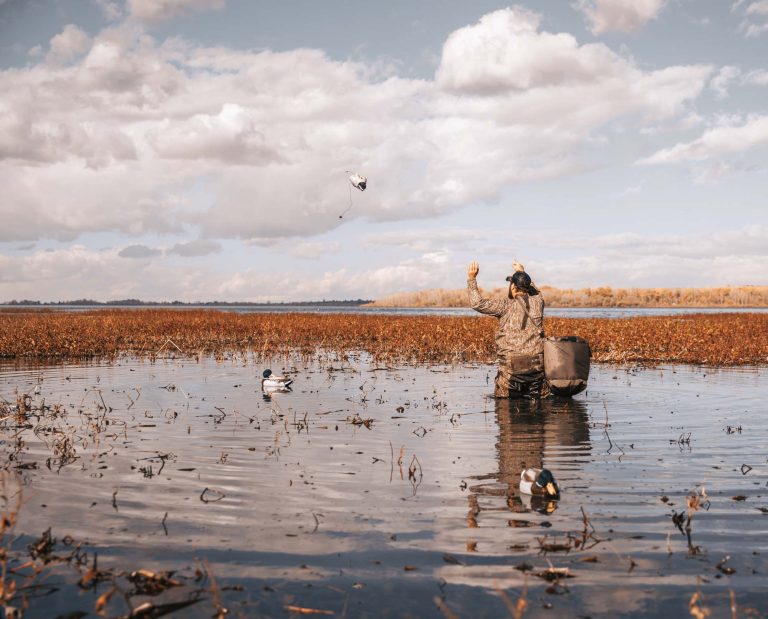
Another less common but effective way of hunting snipe is by decoying them. This tactic is relatively simple: all you need is a good ground blind or hide and a few decoys. Perhaps the most difficult aspect of this tactic is actually finding snipe decoys, which aren’t a common product. According to Project Upland writer R. K. Sawyer, you can find decent snipe decoys through Knutson’s Sporting Goods online catalogue.
Regardless of what method you use for bagging snipe, you’ll likely come home with small but tasty morsels of meat that can be breasted out or roasted whole. Another popular way of cooking snipe is frying them with the feet attached. But beyond the table, snipe offer a reminder that even the most overlooked birds can provide both challenge and reward. Snipe hunting turns a joke into one of the uplands’ most surprising challenges.


Hi everyone! My name is Rodolphe, I am a French Navy retired Senior Chief Petty officer Assistant to Command living now in Beaufort County Belhaven NC and I have seen two couples of Wilson Snipes last winter. Coming from France I hunted the three species that exist with pointing dogs, very good ones, Gordon setters and Blue Picard French Spaniels, and that’s the way to hunt them…. Here I have seen on his YouTube channel Fish to Film Keith Elliott with his remarkable Trax, a wirehaired GSP, doing exactly that on some of his family farmlands in Eastern North Carolina… They are some of the best to eat too if you know how… Thanks again for all these wonderful articles. Boujou amical Carolinien du Nord des USA.
I’ve hunted snipe regularly for the last 15 years in Louisiana marshes and other wetlands. Most of that was over flushers. Cover and pressure dictates how snipe react to dogs. In burns, mowed areas and other pretty bare spots they are very spooky and may flush wild even without dogs. In ankle to calf high loose/thin cover dogs will significantly increase the number of birds flushed. Most time snipe won’t be in knee high cover but if they are they won’t often flush without dogs. I would not have thought hunting them with pointers would be as effective as it has but my young Munsterlander points them and holds them well so far when there is at least a little cover. They do walk off points occasionally but wild flushes haven’t been a problem.
The gentleman from France who lives in Belhaven, NC has access to good snipe hunting. The fields in that eastern part of NC are surrounded by drainage ditches. When the crops are harvested snipe can be found along the ditches. I’ve hunted them along those water filled ditches numerous times and the birds I hunted did not hold for my dog to point. But, my dogs all retrieve so when you have a downed bird on the other side of the ditch, the dog gets it, and you have your bird. There were lots of snipe in the winter during duck season in the fields I hunted. Mostly I was trying to hunt doves but the fields are so large that was almost an impossibility. The snipe can be prepared like doves or woodcock, rare and maybe marinated lightly in red wine before grilling. they are darn good to eat.