

Chukar Home Ranges, Habitat Types, and Plant Communities: A Biologist’s Perspective
A wildlife biologist’s in-depth, technical look at chukar ecology and how birds use the landscapes they inhabit
Chukars are often understated, a little misunderstood, and thought of as an upland bird of a simple mind and simple means. Everywhere you look, chukar habitat is described only as “steep rocky hillsides with cheatgrass.” Thirty years ago, when I was wanting to become a chukar hunter, I asked the veteran hunters where to look for this devil in the hills. The reply was always the same and given with a smirk: “Go look for the steepest rockiest hillside with cheatgrass.”
What did this even mean? Steep rocky hillsides are everywhere, and this smug reply didn’t provide me with meaningful information in my search for chukars.
Now as a veteran chukar chaser myself, I realize those remarks about chukar habitat weren’t meant as non-information. I believe then, as much as now, chukar hunters really think a chukar and its habitat is just that simple. I’m here to tell you chukars and their habitat are more than just steep rocky hillsides with cheatgrass. They deserve the recognition other upland species get for being smart and complex. They make specific habitat decisions in order to survive in difficult environments.
Chukar Home Ranges
In ecology, habitat and home range are two sides of the same coin, and both deserve attention. “Habitat” is the actual resources used to survive like plants and water, while “home range” is the physical space an animal lives in to access those resources.
Early research indicated chukars have short daily movements of less than 1,000 feet and small home ranges of less than 0.63 square miles, or 404 acres. However, current research with chukars captured at guzzlers and fitted with GPS transmitters in the Fish Springs area of Utah indicate regular movements of distances of over one mile in a day, suggesting home ranges more in the 640-acre size.
Other research referenced in the Western States Chukar and Gray Partridge Management Guidelines have shown coveys may move two to three miles to access water during dry periods, which would suggest home ranges of 1,200 to 1,900 acres. And documented cases of chukars moving even further do exist. For example, in the 1970s within a three month period, a researcher reported a chukar that was trapped, released 17 miles away from the trap site, returned, and was killed 82 days later. In the late 1950s, a researcher recorded a chukar moving 32 miles away in two years.
The point being, on a map, these “horizontal” home ranges seem small in size. But given the verticality of the slopes chukars live on (40 percent slope on average), they can cover a large amount of both horizontal and vertical distances in a day, week, month, and year.
Additionally, as a general rule of thumb, when habitat quality or resource density increases, home range size decreases. This principle is known as the Habitat Productivity Hypothesis, and in my thirty-year hunting experience, I find this rule to be true for chukars. In the salt desert shrublands where vegetation and water is more sparse, the miles per covey are greater compared to dense sagebrush grasslands because it takes more land to sustain a covey of birds.
Primary Chukar Habitat Types in the Western United States
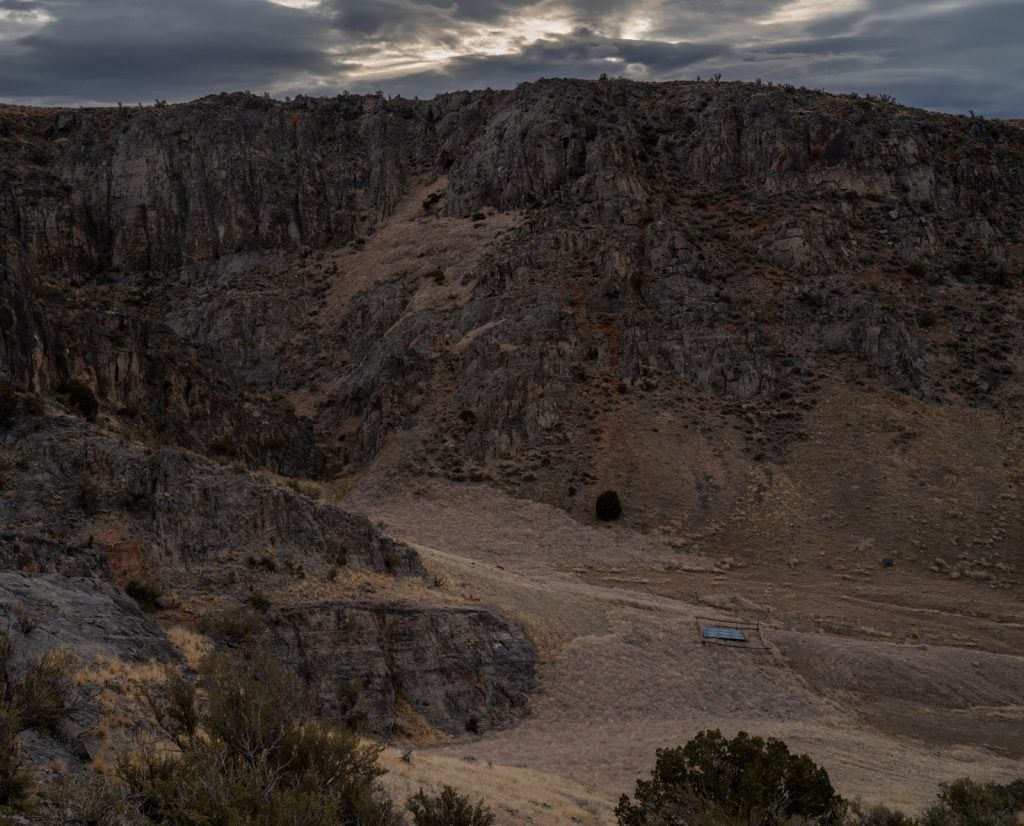
As both a hunter and biologist, my observations are that chukars most commonly are found in three habitat types across their range: mountain brush, sagebrush steppe, and salt desert shrublands.
Each habitat type is unique while also having some similarities with the others. For example, bare ground can make up as much as 60 percent of salt desert shrublands, while mountain brush habitat types can be as low as five percent. Also, some plant species are unique to their habitat type while others can be found across all three habitat types, such as Indian ricegrass.
Plants Commonly Found in Chukar Habitat
It was hunting and the curiosity of plant-wildlife relationships that led me down the path of a biologist. It’s no surprise I receive questions from other hunters also curious and trying to understand what plants make up the habitats they enjoy. Throughout the year, I receive texts with a photo from friends and acquaintances asking, “What’s this plant?”
To satisfy myself and other plant- and habitat-curious chukar hunters out there, below is a list of common plants chukars use for food, shelter, and even water. The plant list is not exhaustive, and some plants in the table have several more species within the genera than listed.
I would encourage readers to research some of the chukar plant species below and become more familiar with them as a way to gain an appreciation for what makes chukar country what it is.
| Trees and Shrubs | Flowering Plants | Grasses |
| Juniper | Buttercup (Anderson’s, sagebrush) | Cheatgrass (I) |
| Pinyon pine | Groundsel (lobeleaf, western) | Indian ricegrass |
| Gambel oak | Sagebrush agoseris | Galleta |
| Sagebrush (black, mountain, big, basin big) | Spring parsley | Bluebunch wheatgrass |
| Cliffrose | Redstem fillaree (I) | Blue grama |
| Bitterbrush | Annual mustard (I) | Crested wheatgrass (I) |
| Ephedra | Globemallow (gooseberryleaf, Munro’s) | Squirreltail |
| Alderleaf mahogany | Western yarrow | Needle and thread |
| Rabbitbrush | Hoary aster | Sandberg’s bluegrass |
| Spiny hopsage | Showy goldeneye | Idaho fescue |
| Horsebush | Penstemon (Rocky Mountain, Palmer) | Purple three awn |
| Snakeweed | Buckwheat (sulfur, cushion) | Western wheatgrass |
| Shadscale | Wild onion | Sand dropseed |
| Fourwing saltbush | Prickly pear cactus | Smooth brome (I) |
| Snowberry | Cryptantha (basin yellow, Snake River) | Muttongrass |
| Quailbush | Small burnett (I) | |
| Winterfat | Forage kochia (I) | |
| Phlox (sagebrush, longleaf) |
What Hunters and Conservationists Need to Know About Chukar and Cheatgrass
Cheatgrass and chukars seemingly go together like bread and butter. It’s true—chukars live amongst this non-native invasive grass and use it for food because they evolved alongside it in Asia.
We need to remember, though, that cheatgrass is an extremely problematic invader and has caused tens-of-millions of acres of habitat loss through displacing native plants and increasing fire frequency and intensity.
On the flip side, where cheatgrass becomes the dominant plant species across large areas, chukar population productivity decreases and birds stop using the habitat. Where chukar thrive is in habitat consisting of native shrubs with a diverse understory of flowering species and perennial grasses, even with some cheatgrass present.
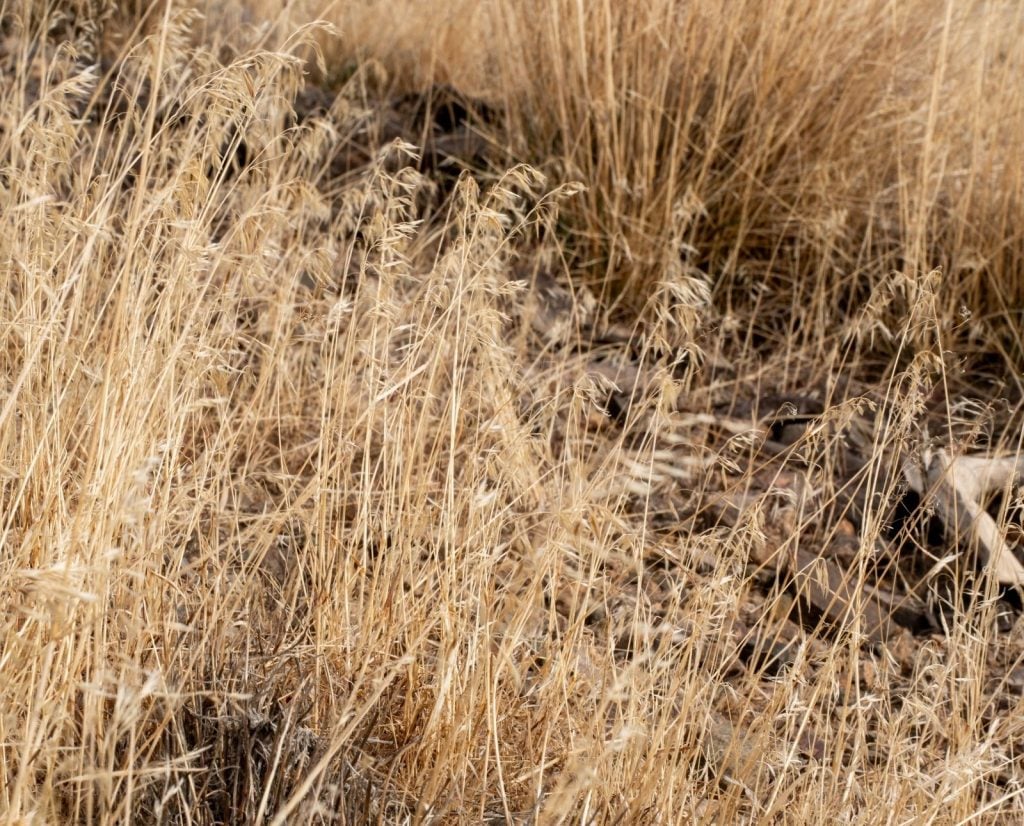
Chukar hunters and conservationists should never promote cheatgrass spread as a conservation tool for chukars, because it is absolutely not. We should also learn to identify it properly. Time and again, I’ve seen chukar hunters call every clump of yellowed grass “cheatgrass.” All yellow grass is not cheatgrass. Cheatgrass is a very specific non-native weedy grass known scientifically as Bromus tectorum and is decreasing the productivity and quality of our native habitat. Learn to recognize it.
Water Sources for Chukar: Free Water vs. Pre-formed Water
Free water and pre-formed water are two terms used to describe water sources chukars use in their arid environments.
Free water is pretty self explanatory. Seeps, springs, streams, troughs, ponds, guzzlers, and water trapped in depressions of rocks are all examples of free water. During winter, snow can even be considered free water.
Guzzlers have been used across chukar country as a way to both establish and increase chukar populations by providing free water through collecting rainwater, and has been generally successful. Habitat in terms of vegetation matters though, with research in Utah showing guzzler use by chukars needs to have at least 11 percent or higher shrub cover around it.
Pre-formed water is found in food items, and varies greatly from item to item and at different times of year. For instance, seeds contain relatively little pre-formed water, whereas insects and tubers or bulbs have relatively high amounts. Flowering species play an integral role in pre-formed water as they often are more succulent while at the same time attracting more insects.
Why Forbs Matter for Chukar Survival and Recruitment
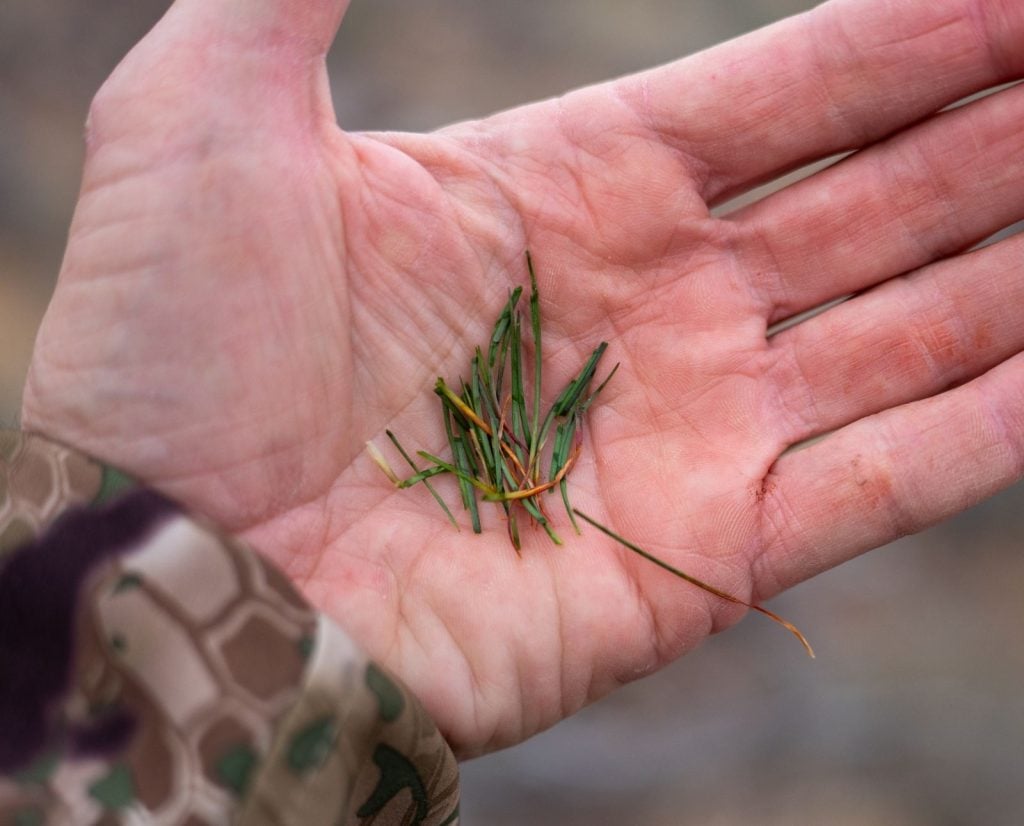
Let’s discuss a little more about flowering species, also known as forbs. Forbs are a critical component of healthy chukar country, and healthy populations of any upland game species for that matter. For chukar chicks to make it to adulthood, forb species are important for a couple reasons. One, birds eat the succulent plant parts. However, most importantly, forbs attract insects. Young chicks need the high protein that insects bring in order to grow rapidly and be ready to fly within ten days of hatching, then reach adulthood by fall.
Time in the Field Matters
Another popular answer folks share when asked where to find chukars is to “wear out some boot leather.” Although it can be said in jest, it’s true.
Read: Avoiding Common Chukar Hunting Mistakes
Chukar hunting is a pastime experienced in miles. The more miles in your boots spent, the more you’ll experience chukar behavior and habitat, equipping you with the tools to effectively recognize good habitat, important plant species, and potential water sources. This will narrow down other areas to search.
In my opinion, the greatest characteristic of the wild chukar is its affinity for unmolested natural landscapes. Because of this, chukar hunting will lead you far from human existence, places where land is valued by the song of a coyote, the caw of the crow, the krawking of a flock of pinyon jays, and in the chukar hunter’s case, the sudden bursts of displaced air under a covey of devil bird wings.