


Find Chukar All Season Long: How Food, Water, and Weather Shift Bird Locations
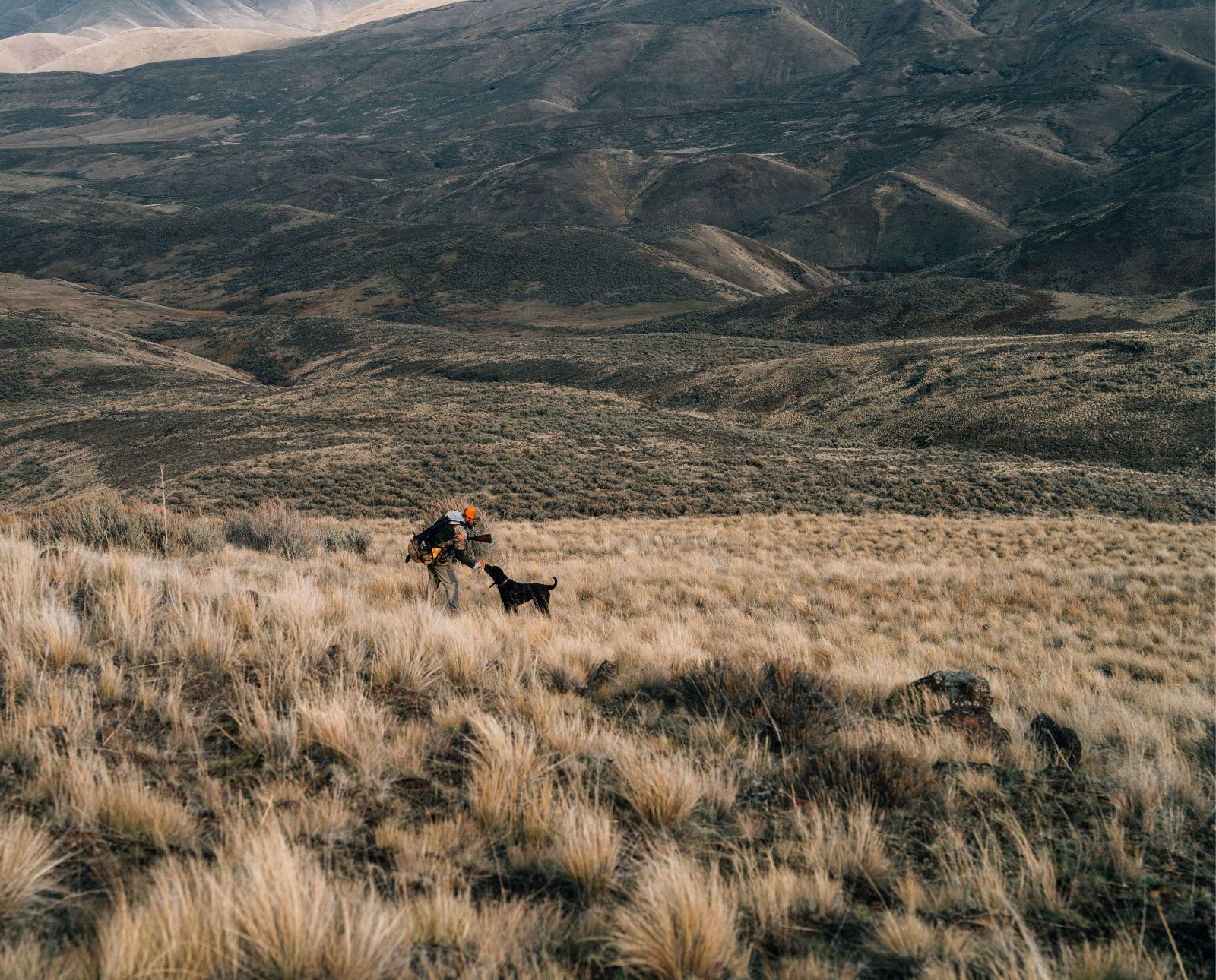
Whether you’re chukar hunting on opening day or in the snow, use food, water, and cover to your advantage
Born of sagebrush, spring rain, winds, and rocks, chukar partridge (Alectoris chukar) are tough birds and considered one of the most difficult upland birds to hunt. Chukar hunting takes us to the wilds of nature every fall and winter. Chukar habitat in the western United States tests the grit of the hunter and toughness of the dog. Not only that, but chukar are hard to find, wary, and difficult to approach, which makes them even harder to hit.
Chukar are native to the massive mountainous and arid regions of central-eastern Afghanistan, northern Pakistan, northwest India, and the foothills of the Himalayas into Nepal. They were brought as a game bird to North America in 1893 when five pairs were introduced in Illinois, but they didn’t survive. Between the 1930s and the 1960s, additional introductions in the western U.S., more similar to their native lands, helped establish wild populations where they have managed to thrive in some of the most rugged and inhospitable places in the American West.
The vast majority of chukar in the western states are found on Bureau of Land Management, National Forest, and some state-owned public lands. Currently, there are plenty of places where these birds reside. The most established populations are in Nevada, Idaho, Oregon, Utah, and Washington. Other western states like California, Colorado, Montana, and Wyoming have also introduced these birds to create hunting opportunities.
Key Tactics for Locating Chukar Habitat During Hunting Season:
- Find food, water, and cover throughout the early, mid-, and late season
- Understand that chukar face predators year-round and rely on shelter
- Scout potential habitat online and confirm it with boots on the ground
- Recognize what high-quality chukar habitat looks like
- Identify poor-quality habitat and eliminate it quickly
- Avoid areas with heavy hunting pressure
Finding Food, Water, and Cover
The sport of chukar hunting is highly addictive. The culture of chukar hunting—even in the off-season—posits that you are always thinking about it and plotting and scheming your next hunt. Whether you’re fairly new to chukar hunting or a seasoned upland hunter, you’ll agree that hunting new areas adds excitement and that means you need to recognize potential chukar habitat in order to do that.
READ: Complete Guide to Chukar Hunting
Locating birds may be one of the hardest parts of chukar hunting. Just like us, chukar need shelter, water, and food to survive. High-quality chukar habitat has ample amounts of all three. To find chukar, you need to be able to identify potential habitat during the three parts of the season: early (before green-up), mid-season (green-up), and late (in the snow, wind, and cold).
Early Season Chukar Habitat
In the early hot season, chukar need water from nearby lakes, rivers, creeks, springs, cattle troughs and—in super dry states like Nevada or Utah—water guzzlers. I’ve found chukar hunkered down in dry-as-a-bone grass a thousand feet up from the nearest water source. Chukar are highly mobile and will walk up and down the slopes, back and forth every morning and late afternoon to get a sip and snack on dried cheatgrass, seeds, berries, leaves, and insects along the way.
Mid-Season Chukar Habitat
Mid-season to late fall after it rains, cheatgrass shoots begin germinating and succulent food becomes available. Chukar flocks disburse throughout their range, including to waterless sites that may have been unoccupied during summer. At this time of year (which will vary depending on location and climate), focus more on hunting in areas with lots of green-up.
Late Season Chukar Habitat
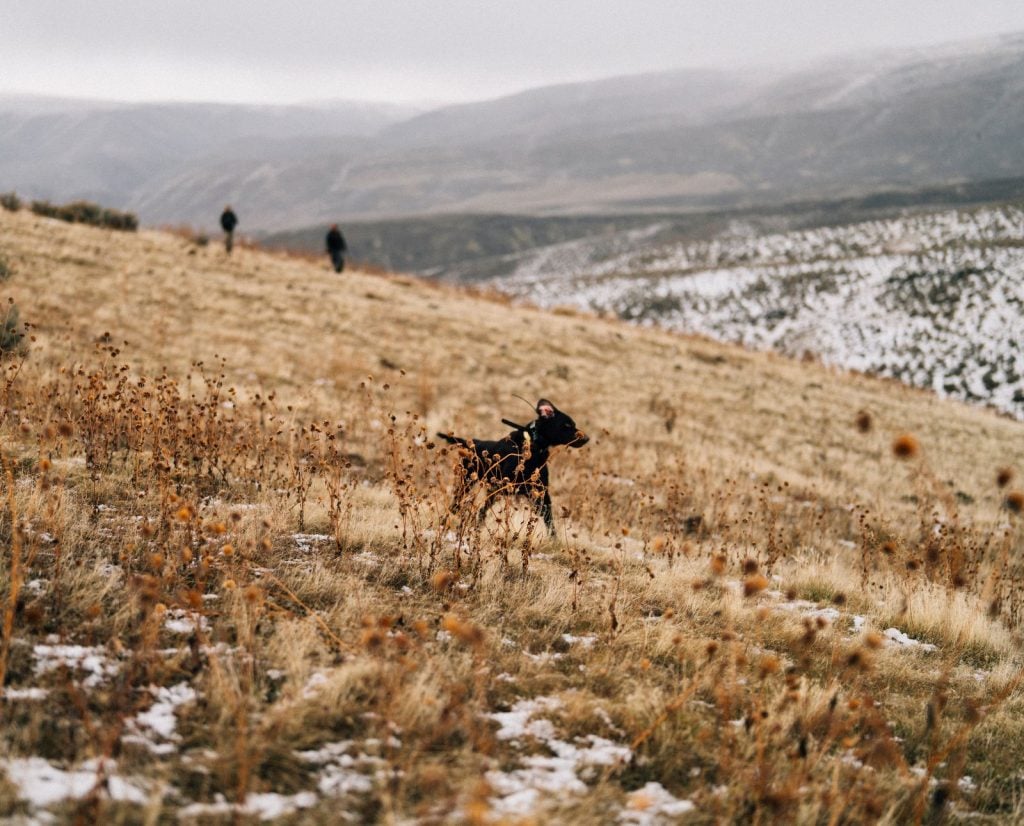
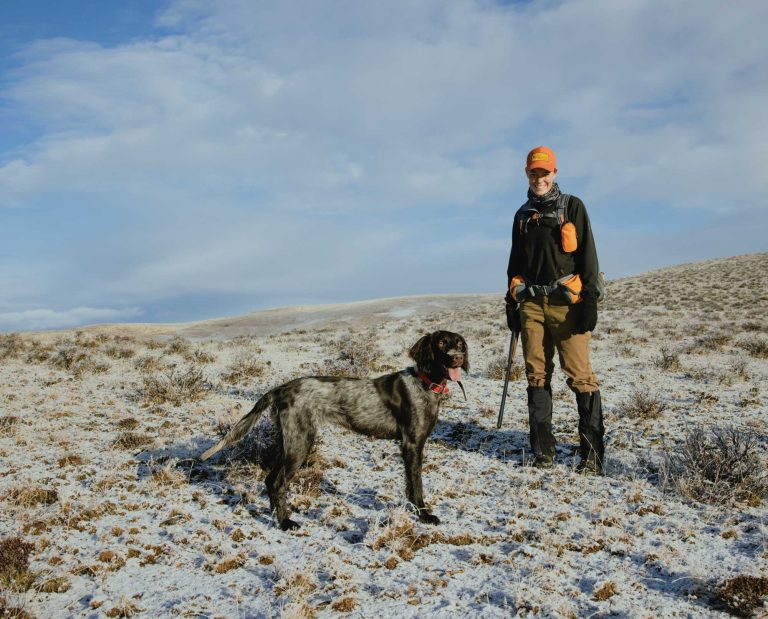
Late season, snowfall accumulations may cause chukar to move to lower elevations where feed is available. However, they return to higher elevations as the snow recedes. Southeast-facing slopes in the sun where it is warmer, the snow has burned off, and there is some greenup usually is a good place for chukar to hang out during the late season.
Chukar Are Alert All Year Long
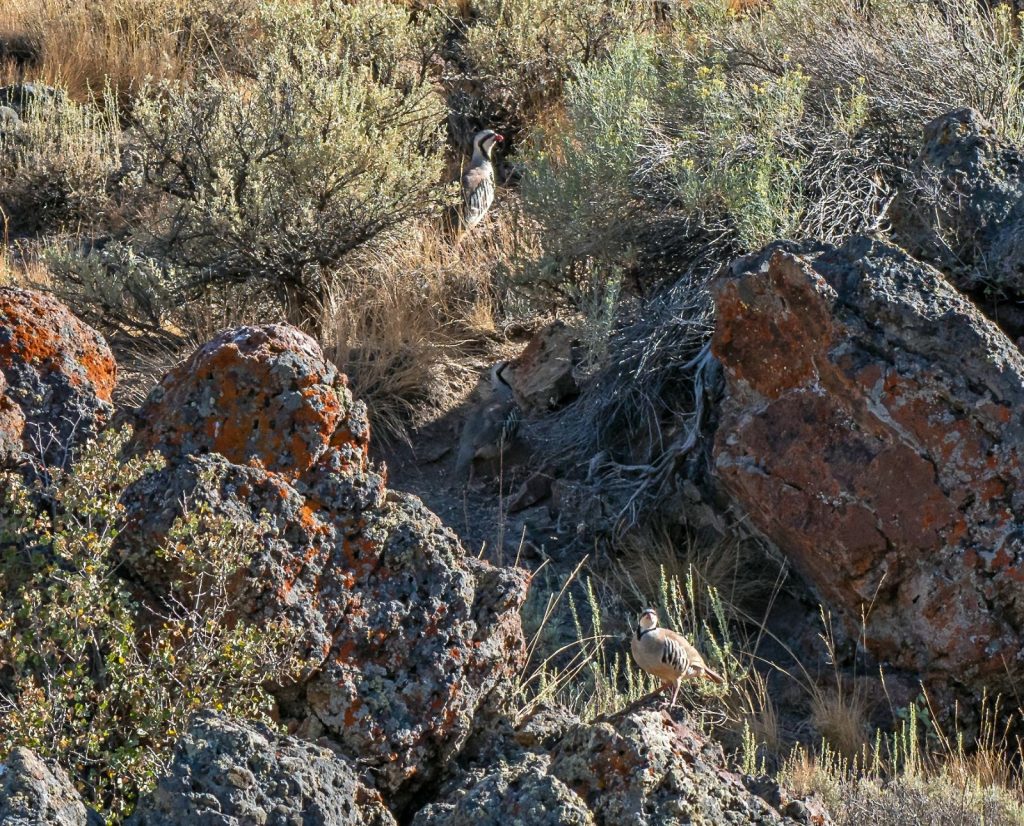
All year long, chukar have their eyes looking at the sky. Chukar possess excellent vision and prefer to inhabit mountains and canyons with unimpeded vistas from which to monitor approaching danger from aerial predators like eagles, hawks, and falcons. Rocky outcroppings and shrubs and grasses offer shelter and escape cover. Even the threat of ground predators, including coyotes, bobcats, humans, and their dogs, influence where chukar will be. They see you and hear predators from miles away and flee from threats by running uphill, flying downhill, or hiding.
When I’ve been able to shoot a chukar, there always seems to be a common theme: plenty of medium to large rocks and some sort of cover like grass or shrubs nearby. These birds are rarely out in the open, and even more rarely will you ever see them there.
Scouting for Chukar Habitat
When scouting out new areas to hunt, I research potential areas using onX’s 3D mode and Google Earth to get a lay of the land. USFS maps are great for finding out what gates on logging roads are open all year long or have seasonal closures. For example, in Idaho, most gates are closed and locked on Oct 15th. onX shows springs and guzzlers on its maps, but I’ve always been hesitant to hunt in these areas because they probably get hunted frequently.
Characteristics of High-Quality Chukar Habitat Out West
From my experiences hunting chukar in western Idaho and eastern Oregon, the best chukar habitats are a mix of big open areas with some rocks plus adequate vegetation. Preferred vegetation includes cheatgrass, some sagebrush, bunchgrass, and rabbitbrush. Also, a water source needs to be nearby, especially during the early season.
Ideal habitat contains rocky mountain-top ridges with good contours, canyons, and draws. These landscape features allow you to approach chukar more easily without being detected. While vertical slopes are critical to chukar habitat, I’ve often found them on the plateau above that steep terrain.
What Poor-Quality Habitat Looks Like
Once you identify what makes up good habitat, eliminate what seems like poor habitat. Poor-quality habitat includes areas that have been overgrazed by cattle, have sparse vegetation, have no places for birds to hide from predators, lots of invasive weeds, or a mixture of these attributes.
Think like a bird. Areas a mile from water probably won’t hold birds. Avoid areas overrun by invasive weeds like medusahead, yellow star thistle, and the nasty rush skeletonweed that seems to have spread like crazy over the past few years.
Don’t totally rule out areas that have burned in the past. Places that have been burned by wildfires where the sagebrush and bitterbrush has been totally wiped out still may hold chukar, but only if new grasses have grown back and there are some scattered rocks for protection. Just this season, I’ve found good bird numbers in areas that suffered wildfires before, but it seems to take a couple of seasons for the grasses to fully recover and the birds to return.
Look For Habitat That Doesn’t Get Hunted Often
Most chukar hunters, including myself, won’t tell you their secret/hot spots or even the general area for fear of these places being over-hunted. Chukar are territorial and found in the same general areas from one season to the next, but hunting pressure spooks these birds. Chukar are fast learners and may abandon an area or bust wild before you can even get remotely close. The only way to really know if chukar are in a specific area is to find out for yourself the old fashioned way: with boots on the ground.
One thing overlooked when scouting potential habitat is not focusing on the places that probably don’t get hunted often. For example, my hunting partner and I exclusively seek out roadless areas where ATVs and vehicles can’t go. If you decide to hunt in an area where someone else is parked or you see tons of dog and bootprints or a few spent shells on the ground, it’s probably not a good place to hunt. Besides not finding birds you’ll probably piss off the other hunter that arrived there first. Always have a plan B and move along. There’s plenty of more places out there to explore.
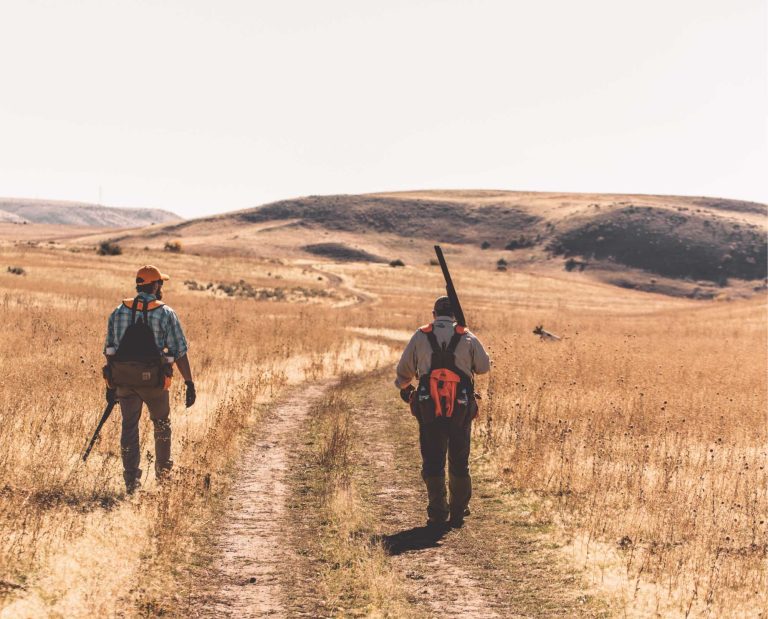
Chukar hunting is not always productive and quite often most hunts involve long hikes on rugged, steep terrain with a gun in your hand and little actual shooting. I’ve been totally skunked in places that looked like good habitat and those days are what I call “hiking with a gun.” It’s not a bad thing. I promise you’ll still have a great day and once you get to the top of the ridge, stop and take in the great views with nobody else around.

Great Article, I was fortunate enough to have some people show me the ropes, and places that helped get me started. I think about why the birds are there a lot, and I think my article would be – You find the birds where they are at, walk until your dog points and you find birds to shoot. – this is much more helpful.