

Drahthaars, Langhaars, Bretons, and other International Breeds in America: HDC Episode #32
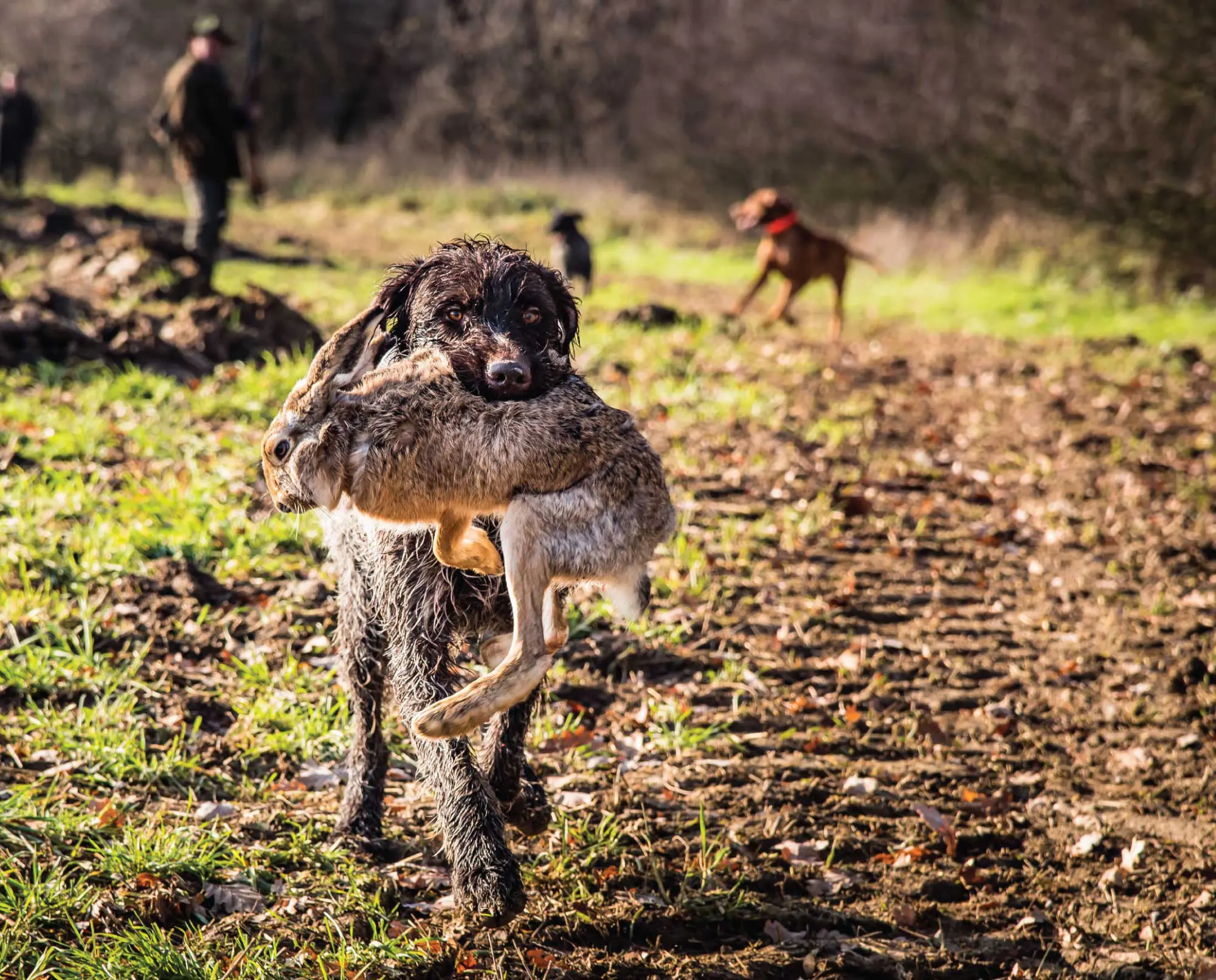
Is there a difference between a Deutsch Drahthaar and a German Wirehaired Pointer? Explore breeds with a foot in both North American and European Breed Clubs
We’ve been talking about the role of “place” in the history and culture of hunting dog breeds, but not every breed fits neatly within geographical boundaries. There are several breeds in North America who have a foot in two worlds: the parent country (often Germany) as well as North America.
We explore breeds such as the Deutsch Drahthaar, Deutsch Langhaar, and Deutsch Kurzhaar which are known by their German language names in order to differentiate from the German Wirehaired Pointer, German Longhaired Pointer, and German Shorthaired Pointer. Even though the names directly translate, the use of the German name signifies a very specific system and methodology that exists behind the individual dog. Each of these breeds is managed by a U.S.-based chapter of the German parent club, rather than an AKC or NAVHDA-based breed club.
The German clubs, along with their U.S.-based chapters, tie together a dog’s performance, health, and conformation into a single system. Before a dog can be bred, it must successfully complete a series of tests and evaluations. The purpose of this system is to ensure that the dogs maintain their consistent form and function, generation after generation. This fits in with the German hunting culture which requires “certified” hunting dogs in the field—in other words, it’s based on qualification rather than competition.
So is a Drahthaar the same thing as a GWP? We settle on the answer of “it depends”—when it comes to an individual dog. One dog may be the offspring of two Drahthaars but if the parents weren’t tested and certified for breeding within the regulations, then the puppies can’t be considered Drahthaars…even if the genetics are the same. But if this continues for five, ten, or twenty generations, at which point do enough differences creep in that they could be considered different breeds altogether? So rather than studying any one individual dog, it’s more productive to look at the GWP vs. DD discussion at the larger population level. In that case, they are absolutely not the same thing, since the breeds are managed in entirely different manners.
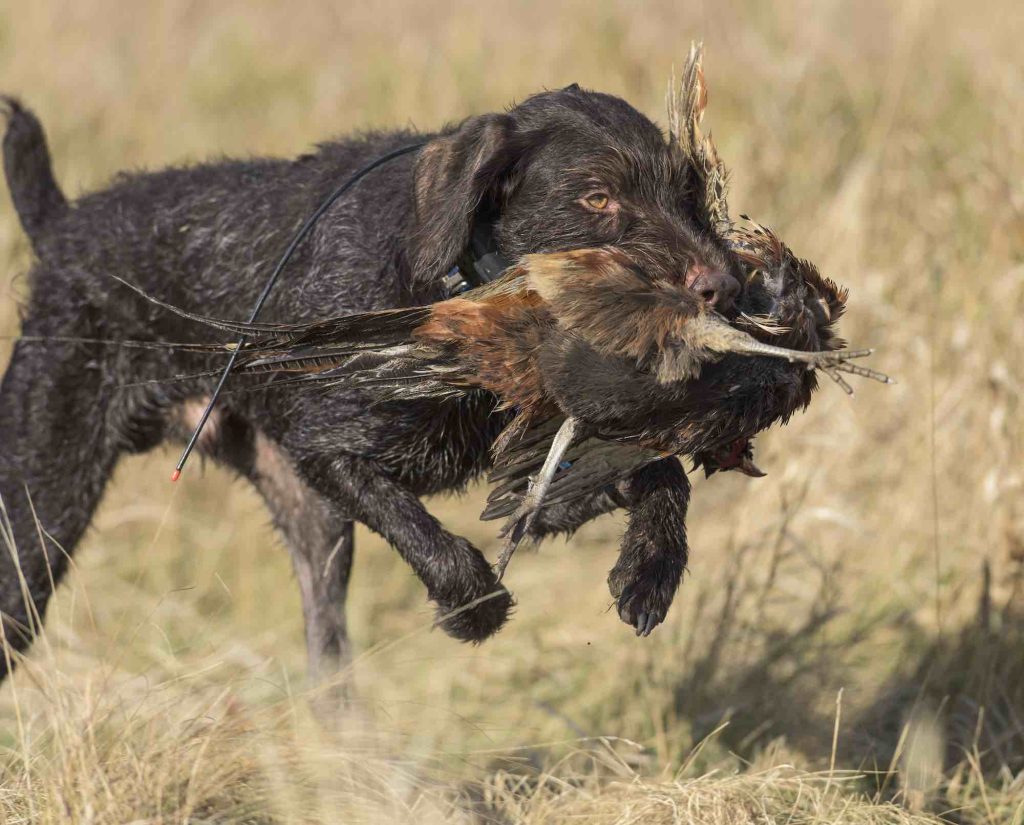
Is a German-bred dog right for you? Again, it depends. Jennifer talks about what drew her to the Deutsch Langhaar club, ultimately causing her to jump in feet first. But as with anything else, it’s a matter of personal preference. If the idea of a standardized system with strict protocols resonates with you, then it could be a great fit. No matter what, it’s helpful to understand the history and culture that surrounds these breeds in order to better appreciate them.
Enjoy the show and don’t forget to rate, review, subscribe, and share this podcast.
Share | Comment, review and discuss this episode of the podcast in our Project Upland Community Facebook group.


A question for Jennifer:
First, congratulations on becoming Breed Warden! (Were you pulling Craig’s leg about your badge? If not, pictures!) [N.B. I only just listened to this.]
As a scientist who works quite a bit with genetics and spent part of my career developing corn inbreds, I am fascinated by the Large Munsterlander/DL story. If I understand it correctly, longhaired pointing dog breeders in Germany in the 19th century disagreed over whether to allow black in the coats of their breeding stock. There was such a row that the “brown” and “black” contingents split, subsequently only allowing their respective colors in their dogs. A century-plus later, both breeds produce excellent hunting dogs. [N.B. Before people knew about DNA and complex alleles, fixing traits like coat color was a quick proxy for “breeding true” for behavioral traits like “hunting prowess.”]
If you’re familiar with hybrid vigor – think about driving past a miles long field of tall, perfectly uniform, and very high yielding corn; that’s a hybrid variety, which is typically about twice as tall and high yielding as its inbred parents – you might, like me, see these two dog breeds as an ideal opportunity to take advantage of it by reuniting the two related lines of longhaired pointers from Germany to produce a robust (likely tricolor and quite beautiful) gun dog whose hunting prowess ought to be at least as good as its parents’ (if you’re worried that such a hybrid would combine the worst qualities of its respective parents, hybrid vigor, or “heterosis,” is a well documented phenomenon based on a preponderance of heterozygous alleles and is more or less the opposite of “inbreeding depression,” which is what low inbreeding coefficients are designed to avoid).
With all that as prelude, my question is, “Under the current state of breed clubs, if I owned a female LM, would I be able to impregnate her with DL semen (whether from a cooler or the natural way) to produce a beautiful and talented litter of “Reconstructed Germanic Tricolor Setters”? Or vice versa (i.e. male LM x female DL)?” I wouldn’t try to pass the offspring off as DLs or LMs for breeding or any other reason – the coat color would prevent that anyway – but I would have used DL germplasm in an unprescribed way. As Breed Warden of the DL-GNA, how would you respond to such a proposal?
If you made it this far, thanks, especially for your response.
Hi Brian,
Yes, that’s how DLs and LMs split once upon a time. More specifically, there were two DL clubs – one allowed black and one didn’t, and when they joined to form the single Deutsch Langhaar Verband, the decision was made to stick with the “no black” standard.
As a breed warden of a DL club, I could not approve a mating between the two breeds. The role of the breed warden is simply to ensure the breeding regulations are followed and to advise on breeding decisions. We don’t get to make or interpret rules (there’s a committee for that!) – which is really the start and end of this scenario. Any request involving a different breed would run afoul of the requirement that both parents must be in the DL breed register.
DLs and LMs may have been the same breed once upon a time, but they’ve had closed and separate studbooks for over 100 years – making them categorically different breeds with their own characteristics beyond coat color. Yes, breeds are a manmade construct, but breed clubs are also manmade organizations that observe these constructs.
That’s not to say the clubs don’t recognize the value of reaching outside of the breed when necessary to address genetic bottlenecks. It’s interesting to note, though, that when the Deutsch Langhaar Verband elected to do this in 2001, they selected the Kurzhaar (shorthair) as the breed with which to test the outcross. But this was done in a very official, voted-upon, and monitored way by the governing organization, not by one individual who wanted to try something new.
We run into versions of this conversation a fair amount, asking why we can’t just loan our dogs to stud for breeders who don’t participate in the German system. The short (?) answer is that the whole system depends upon the participation of the members and our collective agreement to play by the same set of rules. Without that, we have no cohesive breed or club, and thus lose the whole point of maintaining performance, conformation, and health requirements for all the breeding dogs. It’s not useful if only a handful of people do that.
I’ll note my own observation that the JGHV and the DLV places a higher emphasis on the population as a whole than on individual dogs. For example, our DL males cannot sire more than 12 litters over their lifetime and no more than 4 per year, which ensures that any one dog and his genes cannot have an outsized influence on the breed’s population. The goal leans toward consistency within the breed – producing offspring that reliably look and perform as expected – rather than experimentation.
No badge, sadly.