

Can Dog Shows Judge Hunting Dog Performance?
Where show-ring standards collide with real-world hunting dogs—and why field-proven breeding matters.
In this episode, host and hunting dog historian Craig Koshyk joins co-host Jennifer Wapenski—co-owner and director of operations at Project Upland—to unpack where show-ring conformation meets real field performance. Can the show ring judge a dog’s ability to hunt? Are parts of show-ring culture promoting lines that haven’t hunted for generations? They trace how standards originated, question assumptions such as straight-set legs and “ideal” shoulder angles, and compare Europe’s performance-anchored evaluations with North America’s ring-centric culture—arguing that form and function are inseparable for true working dogs.
They also dig into ethics and honesty in breeding: what “champion” really means without field proof, why lifetime records of structure and performance matter, and how breeders can give hunters clear, evidence-based guidance. Whether you come from the show side, the field side, or somewhere in between, the conversation offers a practical path forward—education, transparent evaluation, and testing that prioritizes real-world work.
Podcast Episode Transcript
Craig: Hey, everybody. Look who’s over here—uh, it is Jennifer. She’s back by popular demand. I’m Craig Koshyk. This is the Hunting Dog Confidential podcast.
Jennifer: And I’m Jennifer Wapenski, special returning guest host of the Hunting Dog Confidential podcast.
Craig: Well, it’s sure great to have you back, Jennifer. I can’t tell you how many texts and emails I got from people who missed your velvet tones—your wit, and, uh, gentle nature around here. I’ve been on a couple of rants on some episodes, and I’m gonna go on a rant today, too, so maybe you can help me calm down a little bit. You gotta steer that ship. You know what? We’re like a kite: I’m the kite; you’re the string that holds me down.
Right. Without each other, we’re useless, right? Isn’t that the way it goes? I think it is. So listen: we decided to put this episode together relatively quickly because just yesterday, I believe it was—late last night—Project Upland published the second in a series of articles that I wrote about dog shows.
The very first article was about the history of dog shows. The second part—basically about dog shows and especially how they relate to hunting dogs—was published just late last night, and boy, oh boy, this morning I woke up to a hundred different messages and emails. Now I’m looking and that post has been shared from your platform, from the Project Upland page, as well as my own Facebook page, to a bunch of other people. The comments have been fantastic, both pro and con. Some people think I’m crazy—some people think I’m completely nuts. Other people have supported my position.
But what I thought we should do today, Jennifer, is just go over some of the finer details that we couldn’t fit into an article, as well as maybe clarify some of the things that, if I were a better writer, wouldn’t need to be clarified at this point. But it seems that there are certain points that I just didn’t make strongly enough or convincingly enough, and that there were other portions of the article that have been slightly misinterpreted by some people—perhaps I just didn’t explain it well enough.
Let’s take this opportunity to take a deep dive into dog shows today—into what I wrote in that article, what I claimed about dog shows, and my solution for maybe going forward with them. Shall we?
Jennifer: Sounds good. Well, Craig, we’re not ones to shy away from controversial topics, but let’s just dive right in. So, what is your position on the dog show?
Craig: Well, let me also clarify that I’m Canadian, so I am shy about picking bones with people. I am very meek and mild-mannered. But no, I do have strong opinions about dog shows—both for and against. I actually kind of like dog shows. I think they’re pretty cool. I go to them—as I mentioned in the article—to watch some of the dogs, because I just like dogs, right? And I especially like Italian Greyhounds, which tend to shine at shows. You know, I love looking at Whippets, and if I see an Irish Water Spaniel, I’m over the moon.
So I do enjoy going to shows. I’ve met a lot of show people; they’re fine people. I’ve had a lot of fun with them—some great discussions. And I hold no grudge against shows per se: how they’re structured, how they’re run. They ripple the local economy, my goodness. You know, there are millions of people around the world that absolutely love dog shows—and good on them. It’s a great activity for everybody, for the whole family.
So I’m not against shows or any organization that organizes them. And that’s one of the things that I noticed in some of the comments. Some folks took my article as an attack on a particular show platform or a particular organization or kennel club, and I had no intention of doing so. Some pointed out the AKC. Well, I’m in Canada, so for me it would be the CKC. And I really was talking about shows around the world, and that’s actually one point that I think I should clarify at this point in the discussion about dog shows. In the article I wrote that in certain countries they actually get right to the point.
In France, when you earn a show title, you are called a beauty champion. You’re not called a show champion or “champion” at all. In Italian you are Camp De Beza, which is “beauty champion.” They also have different regulations.
You can’t earn that title unless you also have a title in the field. It’s the same with a field-trial championship: you can’t earn a field-trial or working-champion title in some of these countries unless you also earn a title in the show ring. So they cover both bases.
Nevertheless, their shows are still structured around conformation and standards, and I’m going to get into standards and conformation as they apply to hunting dogs in a minute or two. If you move a little west of there, you’re in the UK. The Kennel Club in the UK runs shows and field trials, and they make a clear differentiation.
You can become a champion in the show ring, but your championship title will have the letters SH in front of it, so everybody knows you are a show champion. If you then have AFTCH in front of your title, everybody knows that you are now a field champion.
One of the main issues here in North America, with the CKC and the AKC, is that it’s just CH—simply “champion”—and that has led to some confusion among hunting-dog enthusiasts. It implies “best.”
My main issue is that I get a lot of emails and texts from newcomers to the hunting-dog world who are looking for a hunting dog.
And what’s more impressive than someone saying, “I have this dog of a hunting-dog breed”? “This is my breed of choice. It’s the XYZ pointing breed,” or “It’s the XYZ retriever.” “I love the retrievers; I love the pointing breeds. I want to get one of these breeds because I saw it in a book, and right down the road there’s a person with dogs—just look at all the championships in their pedigree.”
Must be a good pedigree. Well, slow your horses there; maybe it isn’t. There are show champs out there, from long lines of show champs, that are fantastic field dogs—but that’s not necessarily your best route to finding a good, solid dog that’s going to hunt for you.
So there’s that issue. First of all, here in North America we’re at a bit of a disadvantage in that we’re not clear on what we mean by “champion.” In other countries it’s a little clearer, or at least more explicit.
My main argument against the show ring and the show system when it comes to hunting dogs is this: show people, show organizers, people who write standards, and people who adhere to the standards and really believe in them make certain claims.
They have a lot of evidence—claims they can back up. Somebody who says a dog must conform to the standard is correct. Saying that, in a show ring, we can make sure that the dog is the right color—they’re correct. When they say that, in a show ring, we can make sure, more or less, that it’s the right size—they’re correct.
Many show rings will actually measure dogs. Some don’t, but we can eyeball it within certain limits. I’m not a judge of dogs. I don’t know what a “noble bearing” is. I have no idea what “aristocratic” means or what a “kind eye” is, but I’m sure experienced judges could write it out and explain what those things are.
Fine, I’ll trust them on that. The issue, especially with hunting dogs, comes down to structure: bones, muscles, angles, and how this Lego piece fits on that other Lego piece in a moving, living, breathing body that is meant to do a specific job. There are parts of it that we can do, right?
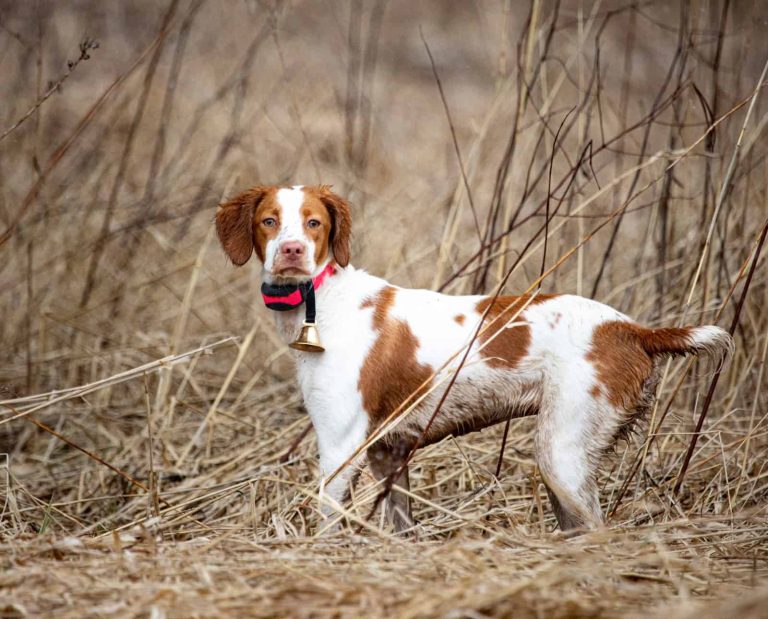
The conformation standard for a Brittany requires that it be of a certain size, and that is important for the Brittany because, for a long time, it’s been identified as a dog that is a maximum of qualities in a minimum size. There is speculation that it became very popular because it was smaller than the other dogs. People were getting cars for the first time in the 1950s, especially in Europe after the war. Lots of families said, “Finally, we can afford a car; we can take the dog out hunting”—but it’s a tiny little French car. Well, that big old braque grandpa had isn’t going to fit in there. So, great.
There is a purpose to the size of a Brittany. There’s a purpose to the size of a Borzoi. It’s a wolfhound; it needs to be able to tackle a damn wolf. So it needs to be big. Certain aspects of conformation that we can judge in a ring have an application in the field. But I’m going to talk specifically about pointing dogs here, because that’s kind of my lane.
When it comes to what a pointing dog does and how it actually does it in the field—and how its body allows it to perform at the highest level, or at least at a level satisfactory to most hunters—there’s a lot of bone and muscle and heart and lung and structure and angles and sockets and all that sort of stuff. There are a lot of moving parts.
None of those moving parts can really be evaluated in a show ring in a couple of minutes by watching a dog trot at the end of a leash, which is usually held very tight to make sure they’ve got this “extensive reach.” And therein lies the rub: shows make all sorts of claims, and they can back up a lot of them—but that one claim says, “I don’t need to run my dog in a field. I don’t need to test it in the field. I don’t need to see, for 15 generations, my dog—or any dog in its pedigree—gallop for an extended period of time, for hours over rough terrain, day after day.” I don’t need to see that. Why? Because judges have watched those dogs trot there and back in the ring and said, “Yep, it’s structurally fine.” That’s my main beef.
I’d like anybody on the show side to explain how they would do that. How would you determine if an Arabian horse is able to go over all of those hurdles or win the Kentucky Derby just by watching it canter or walk?
Jennifer: So, as a point of clarification, it sounds like you agree that conformation itself is very important to a dog’s performance, longevity, and health over its working career—but that a dog show may not be the best way of evaluating that conformation as it applies to its working career.
Craig: Bingo. I should have had you sitting beside me while I was writing my article, because that is exactly it. I’m a hunter. I’m not a field trialer. I don’t really do many NTA tests or anything. I’m just a hunter, and I write my books and articles from a hunter’s perspective.
Why? Because so much has been written about our breeds of hunting dogs from the other side. There are far more show-oriented people and non-hunting people in the hunting breeds than there are hunters in a lot of the hunting breeds. I started with the Weimaraner: it’s 99 to 1—no, a thousand to 1—when it comes to non-hunters versus hunters.
So a lot of what’s been written about that breed and others has been written from that other side. Wonderful people, great books—I’ve got a library full of them. I have no problem with those books. It’s just that the voice of the field-oriented people—the hunters—has never really been out there in the mainstream, and that’s one of the things I want to do.
Yes—exactly the point where we agree. As a field-oriented person, I agree with every show person who says a dog must be built correctly to perform its job correctly, or to the highest degree it can. We are 100% in agreement on that. I also agree that a Brittany should look like a Brittany. It should be a certain size; it should have a certain coat; it should have—well, whatever—a noble bearing or whatever they say. Sure, fine. I’m good with that. I love the look of a Bracco Italiano, and I would be very sad to see them suddenly not looking like that. There’s just something cool about every breed. I want them to look like what they’re supposed to look like. We agree that conformation is important. Where we disagree is how we actually go about saying, “Yep, that dog right there has the proper conformation.”
Jennifer, you’re an engineer, right? You design a particular product—or somebody says, “I need this wing not to fall off this airplane,” or “I need this wheel to stay on the truck.” You evaluate that, right? You don’t just eyeball it. Can you talk to us a little about how structure is evaluated, and how people come to a determination that this is better than that and we should build it this way and not that way?
Jennifer: Sure. It’s data-driven, and you have to start somewhere. You start with science; you start with a hypothesis: “Is this the right way to do it?” But it’s not enough to just do an analysis. You also have to collect data from the field to prove or disprove the design you came up with. So you come up with the best you can on paper with analysis, and then you put it to the test to see if your design—if your work—held up. As applied to coming up with the ideal structure for a dog, there are a lot of things you can theorize about—how legs should be angulated, how bones should be attached to each other—but without being able to apply that in the field. And not only to see whether the dog can run fast and do what it needs to do, but whether that dog, at 12 years old, is still in the field running fast, or whether something about that dog’s conformation impeded its longevity. Is there, as an engineer, a fatigue issue at play where something didn’t allow that dog to perform at a high level for as long as we would have liked it to? So the answer is: it’s very data-driven, and that data has to come from both pen-and-paper analysis and real-world application.
Craig: Again, I wish you were here when I was writing that article, because that is an absolutely fantastic point you just made there: data-driven. And if we look back at the history of not just dog shows but dog standards, we realize that a lot of that stuff was—excuse my French—pulled out of people’s keisters. They just invented it, whole cloth. The very first standard that was ever created was in the late 1800s by Stonehenge. Actually, it was a pointer named Major after he saw a— it wasn’t even a photo; it was an engraving—published in the field sometime around 1885. He saw an engraving of a dog named Major, and it was a pointer, and he fell in love with that dog. He thought, “Wow, this is a fantastic-looking dog. That, to my eye, is a pointer. That is the pointer.” And so he wrote a standard. He said, “A dog should look like this,” and the closer it gets to looking like that, the more points it will get. So it would get 10 points—maximum 10—for having a head like that; the tail was eight points; the legs were—he basically took the dog apart by chunks and gave a rating for each part. But all those ratings were based on Major. They weren’t based on anybody saying, “It should have a slope of this or an angle of that, or the legs should be this way; it should be this height.”
It was just a dog he saw in a paper that he liked, and he said, “There you go—that’s the pointer.” Now, obviously, the standard has been changed a number of times over the years, but all standards basically trace back to that same idea: in the mind of somebody—or some committee—is the ideal look of this particular dog.
If you went back to Brittany and looked at all the spaniels—say in 1899, or even 1900, five or six years before the first Brittany was ever shown—and you went to every village in Brittany and gathered two spaniels from each, they were all Brittany Spaniels by definition. But if you looked at them, there would be a lot of variation. At some point somebody said, “No, that one right there—that’s how they’re supposed to look,” even though not all of them looked like that. Not even close.
Your own breed, the Deutsch Langhaar—I believe the standard was written based on one single dog, wasn’t it?
Jennifer: Yeah, and I was going to ask you how that varies between dog breeds, because it’s one thing to have a dog that really existed, that everybody agrees not only looked the part but also performed the way they wanted it to, and to sit down with notebooks and describe that dog—versus a theoretical fantasy of what the perfect dog would be.
So yes, for the Deutsch Langhaar it was one particular dog that was used. But that’s different for other breeds, right?
Craig: It is. It varies. Sometimes it was by committee. Sometimes it evolved over time. Breed standards would get changed; colors would be dropped or accepted. Certain breeds have increased or decreased in size over the years. It’s very arbitrary and subjective. But I don’t really have an issue with that. If a group of people agree that a particular dog should look a certain way, well, that’s how the dog—or the breed—was invented in the first place. I’ve said over and over: dogs are basically a shared idea. People get together, agree on one idea, and there you go. If they put it down on paper and say this is the standard, fine—I’m okay with that.
Again, the line comes at the idea of evaluation—evaluating the underlying mechanical, biomechanical structure of the dog. Some show breeders make the claim that the show ring can assure any purchaser of a puppy, or anyone looking at the breed, that this is a quality animal as it pertains to its biomechanics.
As a hunting dog—I say nothing about personality; they’re wonderful pets. I say nothing about how cuddly or beautiful they are. In fact, many are gorgeous. I’m talking strictly about the biomechanics that underlie the dog’s basic mission in life. For pointing dogs: running fast, running far, running for a long period of time on uneven ground, switching directions a lot, and slamming on point.
For the versatile breeds, add water work, add tracking—add all those other things the dog must do. Add killing coyotes, add killing foxes, staring down a boar, or running after roe deer. Add all of those things and you’ve got a job description that requires a very specific set of angles, muscles, tendons, bone, heart, and lungs—and the show ring isn’t the place to evaluate that.
Let’s circle back to evaluating structure as an engineer. You said you would test it. In the early stages you’d test the product as it comes out—call it Product 1.0, the beta—and you’d put it out there. You’d get feedback from users: “We need to change this, that, and the other thing.” You’d take that feedback; you’d take data from them. (You say “day-tuh,” don’t you? South of the border we say “dat-uh.” Tomato, tomahto.) You’d take all that data, evaluate it, and then launch the product.
Jennifer: It would go, and then you would continue to take data for years afterward. Even before that, you’d take the first beta run and do what shipbuilders call a shakedown run. You’d test it in a particular way and see what rattles, what falls apart, what breaks early. Fix it, go back to the drawing board, and go from there.
And then, as you say, later on you would test it again. You’d take a look at eight, nine, ten years old in your breed. They evaluate dogs for form and function early—at 18 months or two years, max—but do they go back later on in a formal capacity? No. I think it’s incumbent on breeders to be realistic about how their own dogs have performed over their lifetimes.
Performance is one piece. Temperament is another. We’re pushing dogs to excel early on. We do their VJP and HCP before they’re two years of age, and they do their breed show. They have a temperament evaluation then, and we sign it off and say, “This dog is suitable for breeding.”
It is important to watch that dog over the next several years. If I’m going to breed a litter and I’m looking for a stud dog, I’m very interested not only in how he was rated at 18 months, but what he’s like now. How is he with other male dogs? How is he performing in the field? How is his health? Longevity is just as important. In a system that is officially looking at them only early—until they make the grade and then they’re “good”—it’s important to continue to monitor the breeding population to make sure you’re still selecting for things that may occur outside the official evaluation window.
Craig: So we have this idea that dogs need to be evaluated—and in your organization they evaluate them in the field and in a show ring. It’s not really a show ring as we know it; it’s not a competitive event. It’s a ring where dogs are given a rating in terms of how closely they conform to the standard, and that standard is based on the performance of the dog. They do take measurements. They actually pull the wicket out and measure each dog, and all of those measurements and judges’ observations are put in a permanent record. And all of those judges are field judges, right?
Jennifer: Right. In the German system—in the German hunting-dog system—you cannot become a breed-show judge unless you are first a performance judge. The expectation is that you’ve done your training, gained experience, and seen dogs performing in the field; then you can evaluate their conformation.
It’s applied in much the same way as the hunt tests: evaluated against a standard, given a rating, and different breeds do it differently. For the Deutsch Langhaar, they get ratings in form, type, and hair. Form asks: is the dog put together correctly; do we like the way it moves? Type asks: does it look like we think a Deutsch Langhaar should look—that’s where you get things like a noble head or other subjective qualities where people say, “You know it when you see it.” Hair is a third evaluation. Each is graded on a scale—good, very good, excellent, sufficient, or insufficient—and you have to be good or better in each category to get a passing breed-show score.
At the end of the show they may hand out a medal to the one they say is the most beautiful dog—because somebody wants to win, of course—but the event itself is not competitive; you’re looking for the dog’s rating against the standard.
Craig: Why not? It sounds ideal: you have the fun—the trophy, everyone out in their finest dresses or suits, walking around—and it’s cool. Wearing hunting clothes, but fancy hunting clothes. I need to point out that Germans have really fancy hunting clothes. We were at a breed test and breed show in Austria, and some of the outfits people were wearing were unbelievable.
They were—definitely green and definitely hunting gear—but they were really nice. The next day we thought we should buy some of that stuff for ourselves. Have you seen the prices of some stickers? Oh yeah. I’d have to mortgage a house.
Here’s something I’ve always found curious. If you imagine any diagram of a dog conformation standard—say, the Pointer—you’ll find that many countries include a diagram. The Italian Pointer Club and the French Pointer Club have diagrams labeled in extreme detail: every angle, including the angle of the nose and the nostrils. It looks like an engineering blueprint.
Even on the most basic diagrams, if you look at the dog from the front (face-on: nose, eyes, front legs) or from the back (hindquarters and rear legs), the legs are shown as straight—or plumb, if that’s the correct term. They go straight down and are parallel to each other. There’s no bowing out or in at the elbows, and no bowing out or in at the hocks. They’re straight because straight looks good and is easy to evaluate, and it’s assumed to be best for a dog that gallops for long periods over uneven ground.
I’ve never read a peer-reviewed study where a thousand dogs were made to gallop—with instruments and sensors—to determine whether “straight is best,” or whether a slight angle is better or worse. Compare that to a conversation I had years ago with a well-known field trialer—50 years in the pointer world. I noticed one of his dogs looked a little cow-hocked—rear legs turning in slightly. He said, “Yes, that one is—and so is that one, and that one; that one isn’t.” He pointed out that about half his dogs were somewhat cow-hocked and that a lot of dogs in the winner’s circle are cow-hocked. He even knew people who prefer cow-hocked dogs. He didn’t claim to know why, but he’d noticed that many cow-hocked dogs do a lot of winning and seem to run faster. That’s one experienced person’s observation—useful, but still anecdotal.
Now compare that to the show conformation standard that says legs must be straight. Engineer Jennifer, here’s the question: How do we figure out whether straight is truly best, or whether a slight cow-hock is beneficial? And if a slight cow-hock is good, is it one degree, two, five? How much is good, and how much is too much? How do we determine that? And what are we optimizing for—top speed, endurance, or longevity over a lifespan? That’s a lot of factors to isolate.
Yet the answer in show rings and standards tends to be: straight is good for all of them, in every way, across all breeds, all the time. It isn’t limited to dogs, either. I’m dabbling in sheep breeding and have been reading sheep breed standards—same problem. I’ve got knock-kneed sheep out there, but the standard says they need to be straight. Straight legs are a common theme across species.
My guess—and I hope someone will correct me if I’m wrong—is that this idea was, again, pulled from the keister. Straight looks better; straight makes intuitive sense. Think of building construction—the Greek columns are straight. Straight feels more solid, more sturdy.
I’m not a mechanic, but if you look at a truck, car, or any four-wheeled vehicle, the wheels may appear straight, but they’re not exactly perpendicular. There’s usually a slight camber (and sometimes caster and toe settings). You adjust those angles depending on your goals—higher performance, better handling, or higher top speed in a straight line.
So yeah, I guarantee you that some of the very first race cars had perfectly straight wheels—straight up and down. And when they started losing to the ones that had slight camber, well, that proved the point: it was tested. It was tested on a racetrack. It was tested in a wind tunnel for airplanes.
Some early airplanes looked like birds. Why? Because birds fly. So if it looks like a bird, it must fly, right? And when we look at dog standards, I get the feeling that we haven’t really advanced since about 1885 or ’90, when Stonehenge wrote about Major. Basically: “Here’s a good-looking dog. This looks good to my eye; it must therefore be good in the field.”
But we don’t have the data. There’s no data. No show breeder I’ve ever spoken to could say, “Go look at these studies—these peer-reviewed papers—that prove what we claim in the show ring about structure is good.”
In my article I talked about the 45-degree shoulder, which everybody thought was gospel for years: 45-degree shoulder angulation—layback. Then some science nerd came along with lasers and machines to watch dogs’ bones in motion as they trot, walk, or stand. They were shocked to find that the ideal—least stress on other joints, least weight transfer into each foot—was a shoulder at 30 degrees. So everybody did a 180 and said, “Okay, forget 45; make it 30.” They were at least open-minded enough to change when the data came in.
What if a well-funded study tested a bunch of dogs and found that a little cow-hocking is actually a good thing? Would they change the standard? I don’t know. Probably not, because straight looks better and is easier to evaluate.
Again, I’m not against dog shows. If that’s your thing, do it. I really admire people who do both dog shows and field trials—best of both worlds. You’re evaluating your dog in front of a critical judge in the show ring—right color, right size, right shape, beautiful head—and you’re also putting it in front of experienced judges in the field who say, “That dog is good; it does what it’s supposed to do the way it’s supposed to do it.”
But if you’re not into competitions, like me—if you’re into NAVHDA or hunt tests—I like seeing dogs evaluated against a standard, like you do with your Deutsch Langhaar. I like seeing everyone at the end of the day with a big smile because their dog got a great score. Fantastic.
I don’t like competitions, but in the field I have a choice. I can go to NFDA. I can have judges tell me what my dog is doing right and wrong and give me a score. If I want any neutral, qualified judge to evaluate my dog’s conformation against the standard, I have one choice: the show ring.
What if I don’t like the show ring? What if I’m not into competitions? What if I have no clue how to trot around the ring in a tuxedo and have no taste for that—but I do want a judge to look at my dog and say, “Yes, your dog is the right color; yes, the shoulders are correct; the eyes are the right color; the head is the right shape; the ears are the right length”?
I have no other choice. And that is the main point of my article: to propose an alternative—a structure that could be set up for any breeder of any hunting dog to have that dog evaluated by someone who knows what it’s supposed to look like. “Okay, I’ve got this dog from this particular breed. Does it conform to the breed standard? If so, is it a 1 out of 10, a 9 out of 10, a 10 out of 10? Please tell me—and also tell me where it’s deficient.”
Maybe the coat isn’t quite the right shade. Okay, I’m going to look for another dog with a darker shade or a lighter shade. Maybe I can improve it that way. But as it stands right now, we have a show ring making claims it cannot prove. And we have a show ring that requires that anybody who participates in it must agree to being in a competitive environment where, on one day, they could win and, on the next day, they could lose simply by the opinion of a judge—and there is no permanent record of why it lost or why it won.
Some organizations in Europe—and maybe in England as well, I’m not sure—will actually have judges’ comments after. They used to in the U.S.; they used to in Canada. You can find old show catalogs where the judges’ comments are there: “So-and-so got first prize because X, Y, Z; so-and-so got second because of this.” You can, I believe, even solicit the advice or opinion of certain judges in certain cases. Here, I don’t know. But wouldn’t it be nice to have a permanent record of all of your dogs, over generations, of what their “score” was in the conformation evaluation, like you guys do for your breed?
You can go back generations in your breed and find out what their scores were. The ratings and the notes are recorded, and that becomes part of the dog’s record. So yes, you can go back and say, “This line of dogs has always had a really strong topline,” and see that continuing through future generations, or something like that.
So let me ask you—you’re perfectly happy with your organization, and you do all the stuff with the Deutsch Langhaar and they’ve got their system dialed in. Of the people you know who are not within the breed—other hunters you know and people you interact with, perhaps on the Project Upland platform (and people here, let me know in the comments as well)—do you know anybody, or would you, if you weren’t in the Deutsch Langhaar, be interested in doing something like that as a breeder? If you weren’t with the Deutsch Langhaar and had a different breed—say, Vizslas or Weimaraners—would you rather go to a show and have them evaluated by a show judge in a ring, or would you like a venue where, on the 15th of next month, there’s an evaluation session at XYZ arena, and someone who’s been hunting over this breed for years—or an expert in these three breeds—goes over your dog with a fine-tooth comb and tells you if it meets the breed standard?
Jennifer: I think it’s a great idea, and I think it’s especially important to educate someone at an amateur or entry level. Realistically, your average hunter who is just going to hunt with their dog isn’t changing conformation. The reason you wonder how the dog’s conformation stacks up is if you want to use that dog to produce future generations. Now you’re talking about breeder education. Is the breeder familiar with the standard, and how are we helping the breeder learn—everything from what you can assess in a puppy when you stack it at seven weeks (what do the legs look like; is that important; is it going to change?) to how a dog looks as a mature dog?
There’s a lot to learn when you’re looking at mature dogs: What should I be looking for? So yes, it’s a great idea to become educated—by whatever means possible—about what your breed standard is and why it matters. Some things are subjective and preference-based, like “noble heads,” but some things really impact a dog’s longevity and performance over a long time. Educating breeders—and having a desire to be educated—matters if you’re interested in using your dog to produce future generations of high-performing, long-lived, successful hunting dogs.
Craig: That is incredibly well said, Jennifer. Thank you for that, because it really is the crux of the matter, and it goes deeper than my article could. We didn’t have space for everything I wanted to say, and that’s one of the reasons I wanted to do this podcast. The key word in what you just said is “hunting dog.” Is your goal to produce a hunting dog—a healthy, friendly, good-looking, well-conformed hunting dog? Is that your goal?
Unfortunately, in my experience I’ve seen too many breeders within hunting breeds—breeds traditionally known for their hunting abilities—who do not hunt. Many of those non-hunters use the show ring to evaluate their dogs. And, as I’ve mentioned, the show ring can evaluate your dog. It can tell you if it’s the right color. It can tell you if it has a noble head, a regal bearing, or whatever.
Those super subjective terms they use in a lot of standards—yes, a show ring can tell you that. But in a show ring there is very little to learn about how that dog is actually able to do the job for which it was bred.
I’ve argued that, no matter how experienced you are as a judge or how well you can interpret a standard, if that standard—and the notions within it—are faulty to begin with, then we have a problem. In other words, there’s a lot in every standard that says the elbows, legs, feet, and other biomechanical parts of the dog should be this way or that way. But do we really know if those statements are true? Do we have the proof? Do we have data to back them up? I’ve never seen that data. Some of it might be absolutely valid—I’d be willing to accept that—but I’m not going to accept all of it until someone can prove that an experienced person can watch a dog trot or walk for a few seconds—inside a hockey arena in winter or outdoors on nice grass—and then say, “Yes, that dog has the structure appropriate for galloping long periods over rough ground, turning on a dime, stopping on a dime, tackling a fox, swimming across a marsh,” and doing all the things we need our dogs to do.
To my mind, the show ring is not the ideal place to evaluate certain aspects of hunting dogs. Now, add to that the fact that a lot of non-hunters use it to justify their breeding programs. Even then, I wouldn’t have a problem—really, I wish they would hunt with their dogs, because that’s what they’re for. But if someone has a dog from a hunting breed and happens not to hunt, yet gives that dog a long, healthy, happy, active life doing other things, I can accept that.
Here’s where I need to draw the line, and where I, as a hunter, want to speak up for what is basically the minority voice in a lot of breeds. Let’s face it: there are hunting breeds where hunters are in the minority, and hunters are already a minority in our society. Only a few million people in the U.S. actually hunt. In North America—Canada and the U.S. combined—we might have 350–360 million people and maybe 15 million hunters. I’m not sure of the numbers. Fortunately, in some segments the numbers are growing as more women get into hunting—way to go, girls. But hunters are a minority voice in the general population, and in too many hunting breeds we are the minority voice even within the breed.
I could accept all that. I’m a live-and-let-live kind of guy. If that’s what floats your boat—you want a hunting breed because you like some aspect of it and you don’t happen to hunt—okay. But here is the red line, and this is something I want to communicate to my friends in the show crowd. I’ve known a lot of them; they’re, to a person, wonderful people, and I admire them. But there are others I don’t know—fortunately—whom I’ve seen or heard about who take it too far.
This is where it goes too far: they have dogs from a hunting breed—and their line, and the line before that—has never been tested in the field as a hunting dog for 20, 30, 40, 50, 60, 70, even 100 years. Zero proof of ability. Yet if a hunter calls and says, “I’m interested in a puppy; they’re beautiful, I saw them in a brochure, an ad, online, in videos—I want a pup. I’m a hunter. Will they hunt?”—too many non-hunting breeders (many using the show ring to prove their dogs are champions) will answer yes. They’ll say, “Of course—it’s an XYZ hunting breed. They’ve always been bred for hunting. It’s deeply rooted in the breed. Of course they’ll hunt; of course they’ll run; of course they’ll point.”
Meanwhile, they have zero evidence that it’s true. They’ve never seen them run, hunt, and point. They’ve never seen any of their ancestors run, hunt, and point. None of the breeders in prior generations had ever seen those dogs in those lines run, hunt, point, fetch, or swim. They are simply peddling lies. To a hunter like me, this is fraudulent—lying about your line.
Ironically, many breeders who tell hunters their dogs will hunt—without any proof—don’t even realize it. They’re saying it in good faith because they’ve been in the show ring and a judge has told them, “Yes, your dog has what it takes,” or, “It is structured correctly,” or, “It has the conformation, close enough to the ideal of the breed standard, that it should be a good hunting dog.” And every generation before that, judges said the same thing. So they can roll out that piece of paper with all those champions and say to a potential buyer, “Look at what all these judges said to me—and look at what I’ve strived my entire career with dogs to do.”
I am justifiably proud of them. They’re wonderful pets; they’re great-looking. And all the judges told me that these dogs are exactly what they’re supposed to be according to the conformation standard. But at the end of the day, it doesn’t really matter whether this is a blatant lie or outright fraud, or simply a misunderstanding on the part of the breeder about what really goes into a hunting dog and how you need to keep a keen eye on performance by testing them in the field, trialing them, and hunting over them.
Above all, it doesn’t matter. The results are the same and the consequences can be devastating, and that is another big difference between those breeders who hunt over their dogs and those who don’t. To a hunter, the relationship with his or her dog is indescribable. Yes, I understand every breeder out there who’s breeding dogs of a hunting breed and doesn’t hunt—I understand that they love their dogs deeply. I understand that their dogs are a massive part of their life, identity, and family.
But you take that up about ten notches when you start hunting with a dog. There is something magical, mystical, spiritual about engaging in the activity of hunting with a hunting dog. It cuts to the core of a hunter. Their dogs, in a lot of ways, are more important than anything else in their family. So if you get a good dog, that entire relationship is elevated to the nth degree. If you get a not-so-good dog, the consequences can be devastating.
There is nothing worse for a hunter’s heart, for a hunter’s soul, than to go out and realize one day that the dog he has—and loves—is not a good hunting dog. It happens time and time again. And the main culprit in all of this is a system that rewards dogs within a hunting breed for things they do not do, for things they do not have, for things they cannot prove. In the hunting realm, to a hunter, that is not good enough. A hunter will spend some of the most precious moments of his or her life in the field with the dog. If that dog is a disappointment, that is devastating. It is soul-crushing.
So please, if you breed hunting dogs but do not hunt yourself, and do not have any proof that your dogs will hunt or come from a line of dogs that do hunt well, please be honest.
Now, I have a friend who has some of the most beautiful show dogs you will ever see. They are of a hunting breed, and my friend, once in a great while, will get a call from a hunter. Normally, my friend sells the pups only to pet homes, show homes, companion-animal homes, and is very proud of the dogs they produce because they are wonderful dogs. I’ve been around them and every single one was drop-dead gorgeous and a super-nice dog as a pet. But as a hunting dog, I’d never seen one hunt. My friend had never seen one hunt.
Every so often they will get a call from a hunter saying, “I would like one of your dogs. Are they nice with kids?” Yes, they are. “Are they good-looking?” Yes, they are. “Are they show champions?” They certainly are—let me show you the certificates. “Do they hunt?” The answer comes back: I don’t know. They’re perfectly honest about it. They don’t know. There is a chance their dogs might hunt to a degree, but there’s also a chance they won’t really hunt.
In other words, this breeder—whom I know personally—is honest. In fact, when they get these calls, they tell those people to contact me to help connect them with a breeder who hunts with their dogs in that particular breed. I admire that person greatly because not only do they produce fantastic pet dogs, but they’re honest with hunters. When a hunter approaches and asks, they are honest.
So to all the show breeders out there listening to this: first of all, I mean no harm. I mean to insult nobody. I want you to enjoy doing what you do, to enjoy your dogs, and for your dogs to have a long, happy, healthy life. But please, for the sake of all of us, be honest—be honest about the limits of what can be determined about a dog’s biomechanics in a show ring.
And above all, please be honest with any hunter who comes your way looking for a hunting dog. If you do not have solid evidence that the dog—or the pups you’re producing—come from hunting dogs that have proven their worth in the field, either through field trials or hunt tests, or simply generation after generation of hunting with hardcore hunters who are ready to stand up and say, “You betcha, that is a great hunting dog, and it comes from those hunting dogs I’ve seen over the years,” then say so.
If you don’t have that—if you don’t have that knowledge or that evidence—please tell that hunter, “I don’t know. Maybe they’ll hunt; maybe they won’t. But if you want a higher percentage chance of getting a dog that will hunt the way you want, go see that breeder over there.” You probably know hunt-oriented, field-oriented breeders in your breed. Are you referring hunters to them? I bet many of you are, but I also bet some of you aren’t—and therein lies the problem. That is my beef with the “conformation-only” side: the side of any hunting breed that focuses only on the conformation of the dog.
In a future episode, I might go on a rant about the performance-only side of hunting dogs. Everybody knows they’re out there, and everybody has an opinion about breeders who evaluate nothing but performance and forget about conformation—i.e., color, noble head, aristocratic bearing, and so on.
Any ending comments from you, Jennifer? What are your thoughts on dog shows? Have you ever been to one?
Jennifer: I have been to a dog show—a very small local Kennel Club show. But I do enjoy watching Westminster every year on TV. My beef is different: I yell at the TV like some people yell at football games when the announcer gives the whole history of the breed and everything it was bred to do—and then ends with, “And now they make great family dogs.” Nothing grinds my gears more than advocating that people take a breed completely out of the context it was developed for, and that all of its mental drive is honed for, and stick it on a couch—then wonder why their border collie has worn holes in the carpet.
So my beef comes from the same place: the total divorce we have in North America of performance and conformation. It’s the same root, but a slightly different outcome: the disregard for the working mind and purpose of the working breeds, and trying to sell them all as great family pets.
Craig: The parallel is when you get lines of dogs that have been bred for 50 generations and have never been evaluated for field performance. Mother Nature doesn’t actually want our dogs to do what they do. The point in our dogs is an artificially selected trait we must maintain. The run in our dogs is an artificially selected trait we must maintain. You take an eight-week-old English setter, put it down, and it starts running like its tail’s on fire. It has no clue why—it’s because it’s been bred for that forever. But Mother Nature doesn’t want that. Running for no reason makes no sense in nature. Pointing forever and holding that point without seizing an animal makes no sense. The minute you let your foot off the gas—stop selecting specifically for run and for the desire to hunt—it starts going backward. It’s like paddling a canoe against the current: when you stop paddling, you don’t stay still; you drift backward.
If you’ve got a breed that has been selected over centuries to do one particular thing by people who, every generation, make sure it’s still there—“Do they still run? Do they still point?”—they will continue to do that. But you need to keep doing it. The minute you stop, you go backward. You’ll find lines in certain breeds that have not been evaluated for run and point (or other aspects) for 50 generations, and those dogs will have no run, no point, and no hunting desire.
Jennifer: Instead of selling a high-energy dog to a pet family who ends up disappointed because the dog is bouncing off the walls, you get the opposite problem: a dog billed as a hunting dog from a long line of “champions”—a hunting breed, so of course it’s going to hunt—and then it doesn’t hunt. How many times have we all seen this as hunters? I have to underline this for show breeders who do not hunt: they cannot understand the level of disappointment and sadness that grips a hunter when, at age one or two, they realize the dog they spent a bunch of money on, have fallen in love with, and whose family adores is not a good hunting dog. When it dawns on them that they’ve got a dud, that is as deep and affecting a problem as the one you mentioned, where a high-octane dog from a high-octane hunting breed is put in a pet home.
So, in conclusion, I think we can agree that performance and conformation are inseparable—inextricable. Both are important, and we need an effective way of measuring them that is less subjective, more data-driven, and focused on whether our conclusions are producing the dogs we want to produce.
Craig: Bingo. Field side and show side sling way too much mud at each other, when in fact they agree on 90 percent of it. Conformation is important: it’s important for the longevity of your dog, and it’s important because it’s enjoyable to have a good-looking dog. But where they disagree is how you actually evaluate the nuts and bolts of the biomechanics of a hunting dog. That’s where they’re at loggerheads. I come down firmly on the side that you have to test it. You can’t just pull stuff out of your ass and expect it to be true. That’s my conclusion. It’s not very polite. It’s not very Canadian—but what the hell. I’ll just apologize and make it all go away, right?
Listen, Jennifer, it is so great to have you back. I’m thrilled to have you back as a once-in-a-while pop-in guest star.
Jennifer: Yeah—whenever you need a little boost in your ratings, I’ll come on and say my piece. Or, as in today’s case, whenever you need to be held back a little and told to calm down—I’m the one to do it. Thank you very much for sharing this time with us and with me on the episode. I’m looking forward to the next one.
Me too. We’ll talk soon.