

Where Did the Wirehaired Pointing Griffon Come From?
Discover the history of the Wirehaired Pointing Griffon, from Eduard Korthals’s vision to the myths and realities that shaped the breed we know today.
In this episode of Hunting Dog Confidential, host and dog historian Craig Koshyk takes us deep into the fascinating history of the Wirehaired Pointing Griffon. Beginning in the 1800s with Eduard Korthals’s vision as a young Dutchman working for a German prince, through international debates over crossbreeding, nationalism, and breed standards, Craig traces how the Griffon emerged as a versatile gundog with its own unique identity. Along the way, he explores the myths about the breed’s hunting style, its ups and downs through wars and club politics, and the passionate breeders who shaped it into the dog we know today.
Listen to past episodes here: Hunting Dog Confidential Podcast
Podcast Episode Transcript
Hey everybody. Welcome to the Hunting Dog Confidential podcast. My name is Craig Koshyk, and I am a gun dog nerd. In today’s episode, we’re gonna be taking a look at those wild, woolly, wonderful beasts we call wire-haired pointers. So stay tuned for this episode, and if you want to be up to date on all of the episodes and you wanna know exactly when they’re gonna drop,
hit the subscribe button on the YouTube channel or on your platform of choice for podcasts. And, as always, if you want more information about these breeds, you wanna read more details about them, you wanna see more images—photos, paintings, engravings of them—check out my books Pointing Dogs, Volume One and Volume Two, available from Project Upland or from me at dogwilling.ca.
Alright, let’s get into this episode. Let’s see some Griffins and other wiry beasts from way over yonder. Anyone who wants to dig deep into the wirehaired pointing breed’s history has a problem to solve before they even get started. And that problem is: where and when to start. Because it’s hard to say exactly where and when.
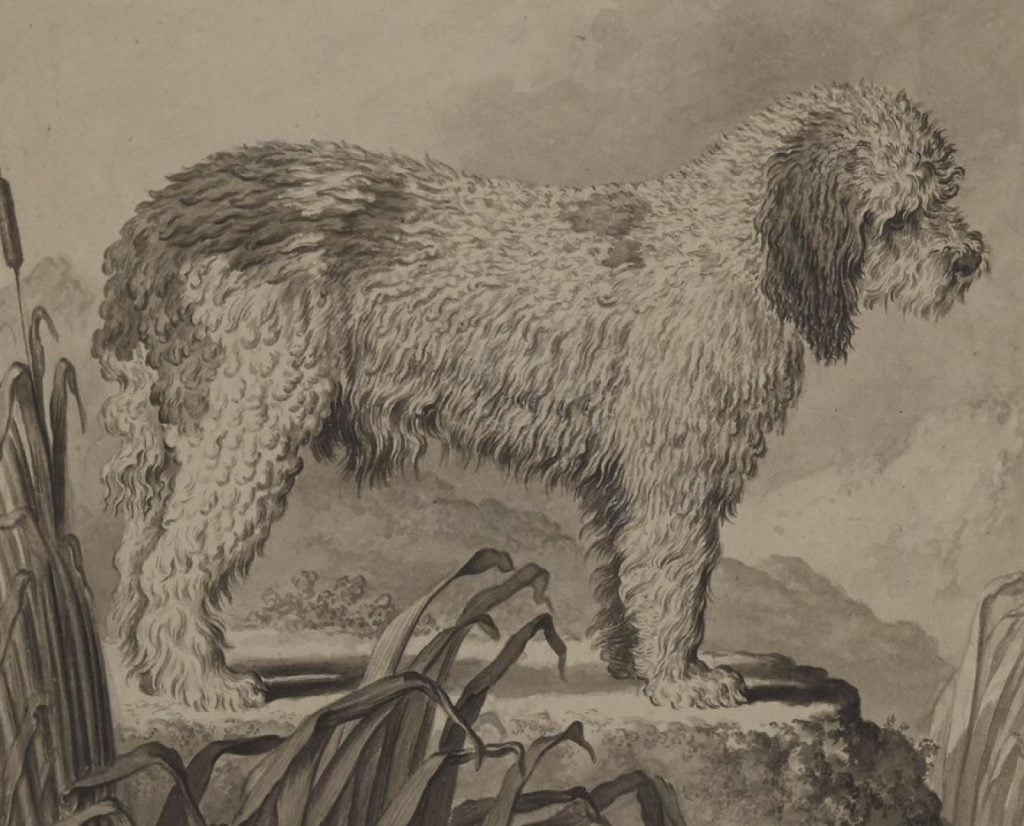
The first overall type of wire-haired pointing dog was developed because woolly, rough-coated, wiry-coated hunting dogs—well, they were found across most of Europe for centuries. Wherever you had shorthaired hunting dogs and curly-haired or woolly-coated dogs—and that was just about everywhere in Europe for centuries—you would find that crosses of those dogs produced at least some puppies with a wire-haired coat.
The genetics are relatively straightforward, so it must have occurred all the time. But the genetics are unstable, as any breeder of any modern wire-haired breed will tell you. Getting a wire-haired coat is pretty easy. The hard part is perfecting it and maintaining it. Back in the day, coats must have popped up here and there randomly all the time, only to disappear just as fast—and just as randomly.
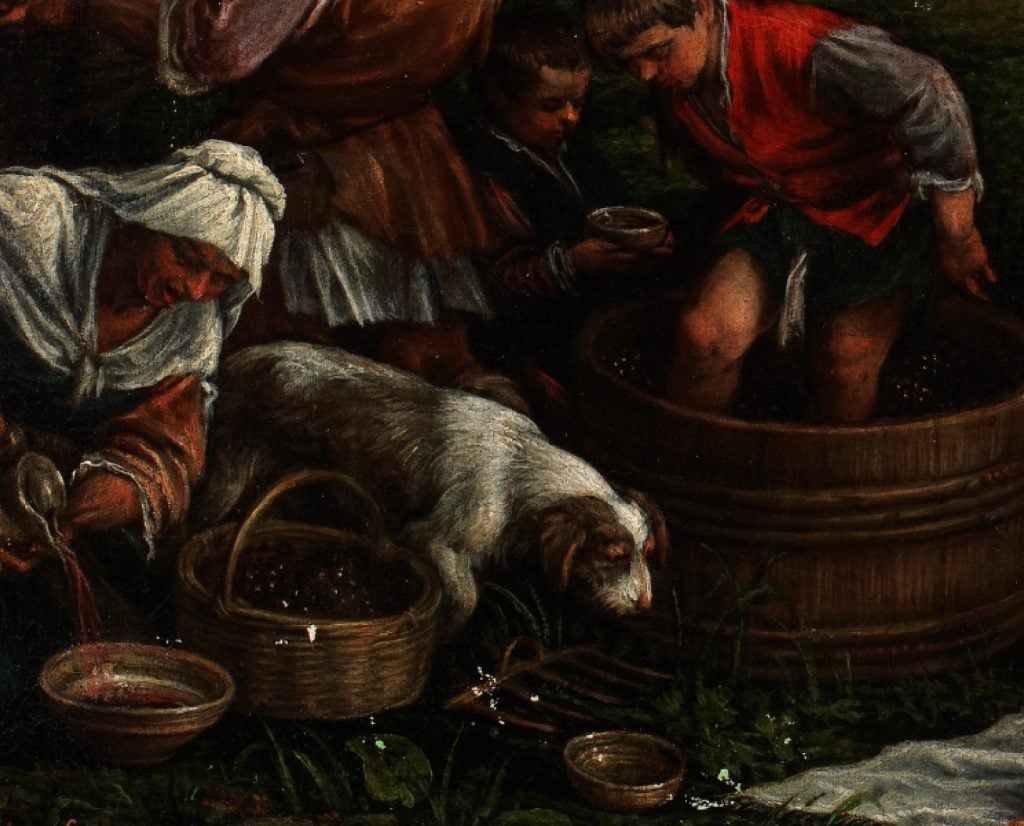
So the further back you go, the fuzzier the story gets. We get glimpses of wire-haired coats in old paintings and descriptions of dogs in the old literature. But it wasn’t really until the mid-1800s that we start to see solid evidence of people actually trying to select for—and, most importantly, to stabilize—a predictable wire-haired coat.
So where, geographically, do we start? We could go east to Germany or Bohemia, Poland, and Russia, but that would be like trying to untangle a wad of fishing line at the bottom of a tackle box in a tippy canoe. So let’s leave that until we’re on firmer ground and start in France, the modern home of the Wirehaired Pointing Griffon—known in most of the world as the Korthals Griffon, named for its founder Edward Korthals, a Dutchman who created the breed while working for a prince in Germany.
And yeah, even that sounds pretty complicated to untangle. And it was. When I was writing my first book, not only did I have to consult German, French, Dutch, and English references to the breed, but I had to cut through a lot of spin. Each one put their own version on the events that led to the creation of the breed and how it should look and perform today.
Heck, even the name of the breed took me an entire page to explain. But if we go over the word “Griffon,” it will help us understand all of the other wire-haired breeds, because just like “Braque” and “Epagneul,” the word “Griffon” can be used as a sort of catch-all term to describe all wire-haired breeds.
Yeah, and let me just back up a bit and add a quick note about pronunciation here. Once again, as I mentioned in previous episodes, I tend to pronounce French names with my French Canadian accent. So when speaking to my wife or any other French speaker, I say it that way. But when I say the name in English, I do it with my Canadian English accent, which in this case follows the British pronunciation.
So I, as a Canadian, say “Griffin,” like the Brits say it. I say “Griffin.” My American friends—well, they say “Griffon.” And that’s cool. It’s just another example of the whole tomato/tomahto, either/eether argument. You say it your way, I’ll say it my way. But if you wanna know how the French say it, they say “Griffon.” The word “Griffon” can be traced back to Greek and Latin roots that mean hook, claw, or even hawk—i.e., a bird that has claws.
Long ago, it was the name of a mythical beast with the head of an eagle and the body of a lion, with clawed feet. Of course, eventually the word “Griffon” became associated with many of the rough-coated dog breeds found throughout Europe.
In North America, the breed is called the Wirehaired Pointing Griffon—or, for my American friends again, the Wirehaired Pointing Griffon. Whereas in much of the rest of the world, it is called the Korthals Griffon. In France, it’s the Griffon d’arrêt à poil dur Korthals.
The word “pointing” is in the name to indicate that, unlike the Blue Gascony Griffon (a type of hound) or the Belgian Griffon (a companion breed), this one is a pointing breed. The name also has the word “wirehaired” in it, to differentiate it from other Griffons that don’t have a wirehaired coat. There was a French woolly-haired Griffon, and there is the Brussels Griffon, which can have a smooth coat. So the Wirehaired Pointing Griffon is the name of a pointing breed with a wirehaired coat that is part of the overall family of Griffon-type dogs.
Simple enough, right? Well, not quite. We need to keep in mind that the term “Wirehaired Pointing Griffon” only came into widespread use after the turn of the 20th century. Depending on the source, rough-haired dogs were called everything from Polish and Hungarian water dogs to Poodles, Boules, Hessian Rough-beards, and a whole bunch of other things.
In fact, when the first Wirehaired Pointing Griffon was imported into the U.S. in 1887, it was listed as a “Russian Setter.” Even Korthals himself didn’t use the name “Griffon” until the 1880s. Originally, he called his dogs Smousbaarden in Dutch. And when he moved to Germany, he switched to using the German term Drahthaariger Vorstehhund, which just means “wirehaired pointing dog.”
Eventually, he and members of a newly formed international breed club settled on the term “Griffon.” Elsewhere in Europe, other breeds of pointing dogs were developed from the same Griffon-type ancestors. The Spinone Italiano, the Český Fousek (Slovak Rough-haired Pointer), the Wirehaired Vizsla, the German Wirehaired Pointer, and the Pudelpointer are all “Griffons” in the broadest sense of the word. They are wirehaired pointing dogs, and the French call all wirehaired pointing dogs “griffons,” or consider them within the larger Griffon family.
And since they all point, and all of those breeds have wirehaired coats, well, in essence, they are all “wirehaired pointing Griffons.” So that’s why a lot of people around the world use the term “Korthals Griffon,” because there are other Griffons in the broadest sense of the word, and there are other wirehaired pointing Griffons in the broadest sense of the word.
Alright, let’s get back to Korthals. How did he go about creating his breed and getting his name stamped on a breed in Germany that eventually became a French breed? Korthals started his development of the breed in the 1870s. He was the son of a wealthy Dutchman, growing up near Haarlem in the Netherlands.
In 1873, at age twenty-two, he left his homeland to further his breeding projects at the estate of a wealthy patron named Prince Albrecht of Solms-Braunfels in Germany. Korthals’s main job at the prince’s castle wasn’t actually breeding his gundogs. I mean, he did that kind of as a sideline. His main job was training and handling Pointers and English Setters in field trials for the prince.
But Korthals wanted to go one further than the Pointers and Setters, which he found magnificent breeds and had a lot of success with in the field. He dreamt of creating a gundog that possessed the best qualities of the Setters and the Pointers, but also had a keen desire for retrieving on land and in water, as well as an excellent ability to track wounded game.
And he wasn’t the only one who wanted those types of dogs. Others had similar goals, and they were also attempting to create their own versions of a rough-haired, wirehaired, all-around gundog. Pudelpointer breeders were using Pudels and Pointers, and others were experimenting with other combinations of dogs and different coat types.
Korthals basically used anything he could get his hands on. In his handwritten kennel book, you can see that between 1863 and 1876, he purchased twenty dogs, including various types of Griffons and Spaniels. He got a Retriever, a three-quarter English Pointer. He bought a German Spaniel, or Hühnerhund. He used a Barbet, which is a curly-coated French water dog.
He got a German Shorthaired Pointer and two Pointer–German Shorthaired Pointer mixes. Eventually, by crossing all of those dogs—and others he didn’t even list—he developed his own strain of wirehaired pointing dog that would eventually make him famous around the world.
But success didn’t come easily. You see, Korthals was a Dutchman, but he was living in Germany, developing an international breed of gundog with a French-sounding name.
And that was during a time when political tensions were still running high after a war between France and Prussia in 1871. So there were plenty of naysayers and Negative Nellies around, ready to dismiss his dogs as curs or mutts or worse. One German writer even wrote that, quote, We will leave the Griffons and the water spaniels unnoticed. Otherwise we would have to pay attention to the pig as well, because that animal is also trained for hunting poultry, unquote.
The vast majority of Korthals’s work was done under the patronage of Prince Albrecht, and that prince was one of the most influential personalities on the German gundog scene at that time.
Yet Korthals never really achieved the level of acceptance among German hunters that he had hoped for. It’s now clear that he fell victim to two powerful forces: competition and nationalism.
You see, as Korthals was working on his breed, there were other gundog breeds under development in Germany, which were promoted as being more desirable than the Wirehaired Pointing Griffon—mainly because it had a French-sounding name and there was a Dutchman in charge of it.
Korthals was also accused of using foreign blood, something he always denied. And “foreign blood” to a German at that time would almost automatically mean English Pointers and English Setters. And yeah, it makes sense to accuse the guy of doing it. What was he doing for his main full-time job? Well, he was training and handling Pointers and Setters in the world’s largest kennel of Pointers and Setters.
Meanwhile, his Griffons were in another barn a little ways back, where he was breeding his own strain. Now, did he use some of those Pointers and Setters? Well, you make up your own mind. But that’s what the Germans were accusing him of. Because at that time, to actually do that—to actually cross your breed to Pointers and Setters—was seen as a no-no. The Germans at that time, many of them in the gundog community, were nationalists, and they kind of hated anything that was English. They wanted to get as far away from anything English as they possibly could. So that’s why they made the accusation, and that’s why Korthals—well, that’s why he denied it. He didn’t want that around his shoulders.
Eventually, within the overall rough-haired or wirehaired breeding community, two sides formed. On the one hand, you had these nationalistic supporters of the German breeds, and they believed that their dogs were the only true rough-haired or wirehaired pointing dogs, and whatever Korthals had was nothing more than impure mutts. On the other hand, there were internationalists. They believed that all rough-haired breeds—all the wirehaired breeds, everything from Pudelpointers to Stichelhaars to Griffons to Spinoni—belonged in the same larger family.
They were all in one family with various strains, simply reflecting the personal preference of their breeders. And for a while, the international “one big family” opinion held sway, and breeders would simply cross between any of the breeds. They crossed Pudelpointers to Stichelhaars, to Griffons, to Spinoni.
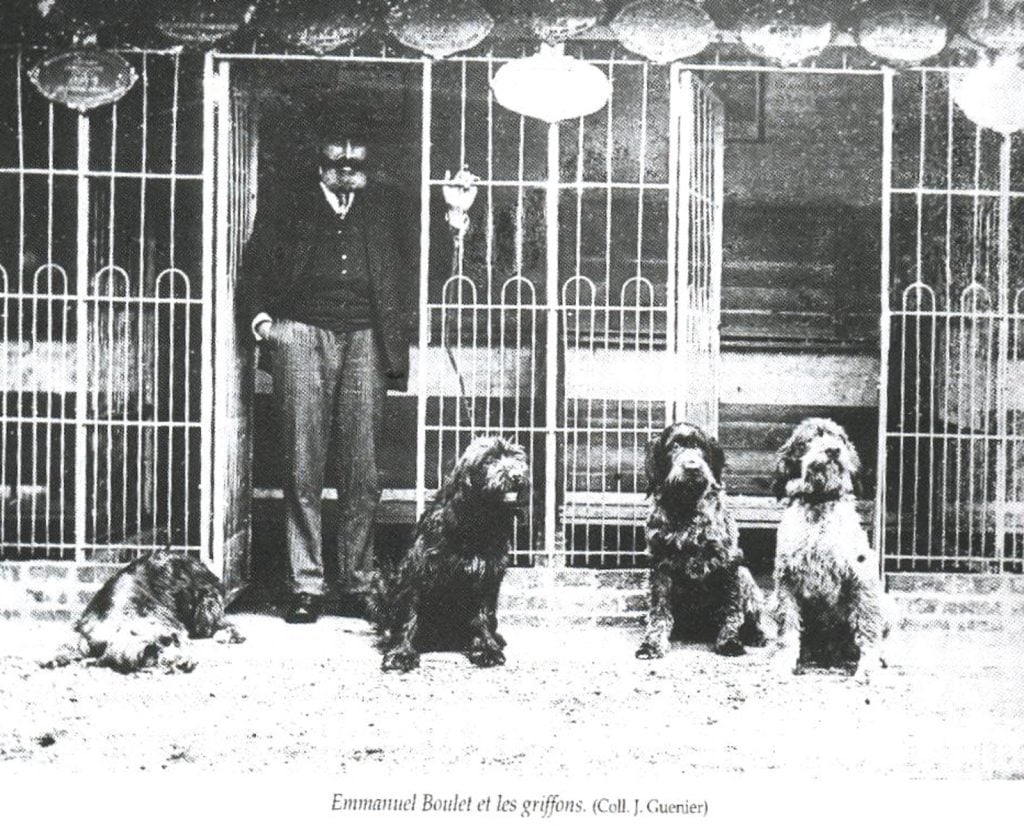
They were just happy to do it within the whole family. But when some breeders began to also cross their rough-haired dogs to shorthaired dogs—in particular, German Shorthaired Pointers—well, that unity fell apart. In 1888, a club was formed for the Wirehaired Pointing Griffon. It was international in scope with German, French, Dutch, and Belgian members, and they created a studbook.
And that studbook was kept in German, French, and Dutch. When it was published in 1888, the Wirehaired Pointing Griffon actually became the first breed to have an official studbook and the first to be represented by an international club. Throughout the 1880s and into the 1890s, Korthals continued to develop his breed, and he was instrumental in establishing the first formal testing system for versatile dogs.
His dogs really did well in these tests and soon gained a strong following in Germany, France, Belgium, and the Netherlands. Tragically, just as he was winning the highest praises of the sporting dog press, Korthals developed cancer of the larynx. He eventually died of the disease on July 4, 1896. The dude was only forty-four years old.
After the death of Korthals, and in the years leading up to the First World War, the Wirehaired Pointing Griffon in Germany became more or less marginalized. A lot of its supporters just abandoned it, and they joined the German Wirehaired Pointer movement, taking some of their best dogs with them. By the 1930s, there were practically no Wirehaired Pointing Griffons left in Germany.
Surprisingly, after the Second World War, the original breed club was reformed in Germany, where a few diehard breeders managed to keep their lines alive. In France, after the death of Korthals, the men who continued his work tried to follow his vision and did their best to keep their lines pure—at least at first.
In the 1920s, probably motivated by competition from Pointers and Setters in field trials, some French breeders attempted to reinvigorate or regenerate their lines by crossing to those English breeds. Former president of the club Jacques Clément wrote about this period in his book published in 1998. He claims that in 1925, as breeders became worried about the state of the breed, and especially concerned about its ability to compete with other breeds in field trials, a French dog expert “set fire to the powder” by advocating a cross to the Pointer, unquote.
Apparently, a number of prominent club members agreed with the man’s suggestion and did indeed cross Pointers and Setters into some lines. Clément mentions that a well-known breeder actually had a dark pseudo-Griffon named Homer that was out of Pointer lines, and that dog was exported to the U.S., where it was used for breeding.
He wrote, quote, The results of the offspring were terrible, and at the time undoubtedly brought a hard knock to American Griffons. Unquote. Nobody knows just how much crossbreeding actually did occur in France in the twenties and thirties. In all likelihood, there was some, but with the onset of World War II, dog breeding of any kind came to a standstill.
But interest in the breed was rekindled after the war. The Griffon population expanded and continued to expand throughout the fifties, sixties, and by the seventies, the Wirehaired Pointing Griffon was one of the most popular gundogs in all of France.
In North America, despite a very early start—I mean, the first Griffon arrived in the U.S. in 1887—the breed has always played a relatively minor role on the gundog scene. Unlike the Brittany and the German Shorthaired Pointer, which coincidentally were promoted by some of the same individuals who imported some of the first Wirehaired Pointing Griffons, the Griffon has never really caught the attention of mainstream hunters and field trialers in the U.S. or Canada.
A breed club was formed in the U.S. in 1916, and the Wirehaired Pointing Griffon managed to gain some notoriety in the twenties and the thirties. But like every other breed, the Second World War dealt a hard blow, and the club eventually folded. Interest was rekindled in the fifties, and there were soon enough Wirehaired Pointing Griffon breeders in the U.S.
To form an AKC-affiliated club for the breed, the Wirehaired Pointing Griffon Club of America (WPGCA), members worked with some of the original stock brought over from before the war, as well as a number of newly imported dogs from France and Germany. Members of the WPGCA made some progress toward developing solid hunting lines.
However, without a formal breeding program and with no tests or trials to really evaluate their dogs, it was slow going. Even when the club established its own testing and breeding program in the 1970s, the situation didn’t really improve. There were still too many dogs from untested and unproven—and unknown—parents being bred in the U.S. And despite a few outstanding individuals, the overall quality of the breed—for hunters anyway—remained relatively uneven.
By the 1980s, club members were sounding the alarm. They could see that they were in deep trouble and that something had to be done. But they only had three options: keep breeding in the same circle of dogs they had with only the good ones (but that would really limit the gene pool), import Griffons from France or Germany, or use foreign blood—cross to another related breed.
And as we shall see, all three ways were eventually attempted, but not without some heated debate that would eventually lead to deep divisions in the breed that remain to this day. On one side of the divide were breeders who chose a combination of the first two options. They felt that they could improve the situation by using the good dogs they already had in North America and by simply going to Europe and importing some new blood from Griffon lines.
And they have made tremendous progress in the last thirty years, and they’re now producing gundogs that are the equal of any of the other versatile breeds. Many of these breeders are members of the American Wirehaired Pointing Griffon Association (AWPGCA), a club formed by members of the original club who disagreed with a crossbreeding program that the WPGCA eventually embarked upon. In 1991, the AKC formally recognized the American Wirehaired Pointing Griffon Association as the breed’s parent club in the U.S.
On the other side of the divide were members of the original club, the Wirehaired Pointing Griffon Club of America (WPGCA). Those people chose that third option. After much debate, they decided to embark on a crossbreeding program involving a breed from the Czech Republic called the Český Fousek. (We’re gonna take a look at that breed in a future episode.)
In her book Gun Dog Supreme, author and club member Joan Bailey explained the circumstances that led to their decision:
“In 1983, we held our annual board of directors meeting in conjunction with the field test in Redding, California. Early in the meeting, someone asked, ‘Well, what females do we have for breeding?’ The answer was few to none. So we faced the problem squarely. We acknowledged that there were only three ways to rejuvenate a failing breed. It was agreed that we had tried the first two methods over and over without lasting results. So we accepted the fact that the only way to save the Griffon was to inject ‘foreign blood.’”
The club chose the Český Fousek in part because, like Eduard Korthals, the members figured that all rough-haired pointing dogs were of the same family. They claimed that Fousek breeders in the Czech Republic had actually used Wirehaired Pointing Griffons after the Second World War to revive their own breed, and therefore felt that using the Fousek to revive the Griffon was not nearly as extreme a step as breeding to another breed, like, let’s say, the German Shorthaired Pointer. They figured they were simply keeping it all in the family.
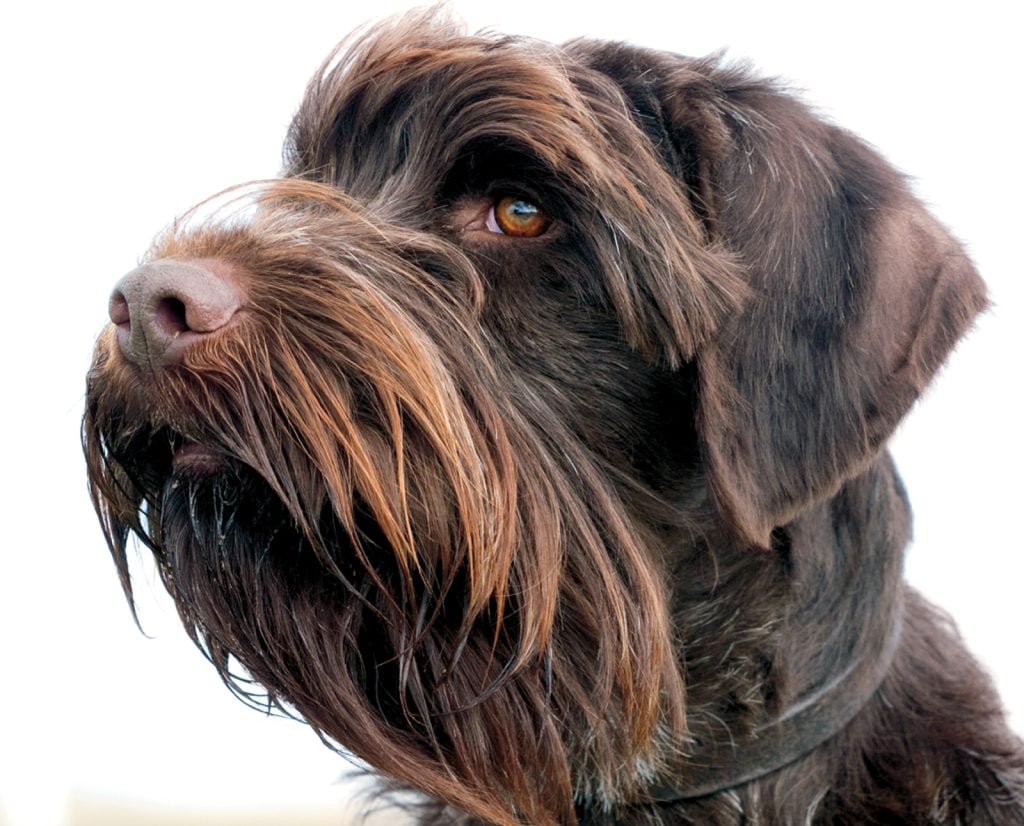
The first Griffon–Fousek pups were born in 1986, and more litters soon followed. The results were generally positive, and the club decided to continue with the program. Eventually, however, due to the fact that breeders no longer had access to Korthals’s Wirehaired Pointing Griffon breeding stock and had been using mostly Český Fousek stock since 1985, members decided to simply rename the club and officially convert it to representing the Český Fousek as a standalone breed in North America. Today, the club is now known as Český Fousek North America.
More recently, another club has been set up for the Griffon in the U.S. In December of 2022, this club, called the Korthals Griffon United States—or I should say it the way Americans would, the Korthals Griffon United States Club—was established. Basically, they are set up in a similar way to the French club, the parent club for the breed in France.
The Korthals Griffon Club in the U.S. follows the FCI standard for conformation as well as the FCI standard for the field, or what they call the working standard. The club encourages its members to test their dogs in NAVHDA and the Versatile Hunting Dog Federation, as well as setting up their own field trials, which again are based on the same system that the French use in France.
And this is something that I have long advocated for: the French breeds here in North America. There is a great divide between the French breeds and France. There’s not a lot of communication or contact between the two—unlike the German clubs for the German breeds, which actually have affiliated clubs in North America that are fully aligned with the German testing system and the German clubs.
Well, the French breeds are kind of on their own in North America, with very little contact or direction or supervision from the French club in France. This new Korthals Griffon Club in the United States is among the first to actually have that greater degree of contact with the parent club in the home country of the breed, and to actually run field trials under French rules and with French judges here in North America.
I really encourage everybody in any of the French breeds to look into these options. For me, it’s a no-brainer. Just look at how well the German breeds are doing with that great, close contact with the German clubs in Germany. I believe the French breed clubs here in North America, which are quite small and sometimes not working together with each other, are isolated.
So you’ve got the Braque over here, you’ve got the Epagneul over there, and you’ve now got the Korthals Griffon over here. Well, together—and especially with increased contact and connection with France—they could really develop something substantial, something that could benefit all of the French breeds.
Now, I’m sure your head is probably spinning from all of the ups and downs of the history of this breed: different countries, internationalism and nationalism, wars, club splits, renaming, crossbreeding, and this, that, and the other thing. The bottom line is that for any hunter seeking a Griffon, there are really good options out there.
You can find good to excellent Wirehaired Pointing Griffons if you do your homework. There are excellent breeders in the U.S., and there are some fantastic breeders in Quebec as well. If, on the other hand, you’re interested in connecting with those people who went the other way with the Griffon and eventually morphed into the Český Fousek club, well, there are some excellent dogs in that breed as well. I’ll be talking about that breed in a future episode.
The only thing you really need to be cautious about is avoiding some of the show-only lines. Now, I don’t mean to be controversial, and I don’t wanna ruffle anybody’s feathers. There are some fantastic, hard-hunting Griffons out there—you can find one, it’s not that difficult. But there are some that come from lines that are generation after generation after generation untested, untried, and they are a total crapshoot.
You might get one that has twenty generations of show champions in the background, and it can turn out to be a fantastic hunter. Or, more likely, it could be a dud. So just be cautious when you’re looking around for Wirehaired Pointing Griffons. Make the right connections and really connect with a breeder focused on breeding them for hunting and for the field.
In terms of what I’ve seen of Wirehaired Pointing Griffons, I have to say that when I first started seeing them in the field—when I first started researching the breed—I was kind of confused. You see, I’ve had the pleasure of watching a decent number of Wirehaired Pointing Griffons work in the field, forest, and water.
I’ve seen them in North America and in Europe. I’ve hunted over a few right here in my home province of Manitoba, and I’ve watched Griffons run in NAVHDA tests in the pothole country of North Dakota and in the rolling hills of central Quebec. I’ve even seen a good number of them run in field trials in the sprawling wheat fields of northern France.
I even saw a young Griffon hunt in what’s called apporter in the Netherlands. It’s a small field enclosed by dikes. It was near the city of Haarlem, where Korthals himself was raised. And each time I saw one, I came away with an even greater appreciation for the breed.
The vast majority of Wirehaired Pointing Griffons I’ve ever seen have left me with no doubt regarding what they’re meant to do in this life—and that is to hunt.
And while they might not be as hard-charging as some breeds, nor as fast or far-ranging as others, the good ones are outstanding all-around workers with a great personality and a classic rough-haired look. And while there is some variation within the breed, on average, Griffons hunt at a smooth, sustained gallop out to about a medium range.
I’ve seen dogs from field trial lines in France run way faster and way wider than average. Yet for some reason, the idea that Wirehaired Pointing Griffons are slow and super close-working dogs took hold in certain circles—especially in North America. It’s not uncommon to see words like “careful” or “methodical,” or even “plodding,” used to describe a Griffon’s search.
One fellow said that it’s the perfect old man’s dog because it doesn’t really run fast. One American author even wrote that the Griffon was, quote, definitely the closest-working and slowest, most deliberate pointing breed available in North America, unquote. Now, I’m a pretty mild-mannered Canadian guy. I don’t like picking bones with anybody, but I gotta tell you—that statement really grinds my gears.
It almost makes me think that the author, the dude that wrote it, had never actually seen a good Griffon in the field. Because in my thirty years of observing the breed, I have never—ever—seen one that would fit his description as the slowest and closest-working breed available to the North American hunter.
Alright, granted—maybe in the fifties or sixties or even up to the seventies, when the original club was really floundering and struggling to find good dogs—maybe there were a few duds around. And maybe those were the only ones people saw, and so they sort of tarnished the breed name in North America and really gave it that label. I don’t know. I wasn’t there.
From what I’ve seen, and what Korthals himself declared right off the bat, the Griffon is anything but a slow, plodding old man’s dog. Jean Castaing, one of the greatest French experts—who wrote an entire book about Griffons in the 1940s—said this about Korthals Griffons. He said, quote, Korthals Griffons are the bridge between the shorter-range continental pointing dogs and the fast and wide-running English dogs.
All you have to do is read some of the field trial reports from back in the day from Korthals’s own dogs running in field trials. Get this—against Pointers and Setters, and gaining placements and even victories over Pointers and Setters. That’s right, Griffons in the very earliest days didn’t run against the other continental breeds; they ran against Pointers and Setters. That’s because Korthals’s original vision was to get a dog that was almost like a Pointer or Setter—not quite as far-reaching, not quite as fast, but just as dynamic. Except it also had a strong retrieve, a strong tracking nose, and a lot of passion to work in the water. That was his idea.
And there are reports—you can read them online today—from newspapers, from reporters who were eyewitnesses to those particular dogs running in field trials in France, Germany, and Belgium. And they talk about dogs reaching out to the horizon. They talk about dogs that were so fast that they were, quote, astonished by their speed.
That was the original Korthals Griffon. And really, to this day, there are still dogs like that. I have seen rockets in the fields, especially in field trials in northern France. I have seen Griffons that were just—again—rockets. They were hunting like their ass was on fire.
Now, the average Griffon that I’ve seen in France as well as here in North America has been basically a really good, medium-speed, medium-range dog.
Galloping, slamming on point, holding a stylish point gundog. They’re very similar in their running and pointing and searching characteristics to the other wirehaired pointing breeds. They are anything but a slow, plodding old man’s dog. Now, I’ll get off my soapbox for now, but please take that to heart.
Don’t believe these people who are saying that a Griffon is an old man’s plodding dog. They are not. Can you find one like that? Yeah, probably. There are dogs like that in just about every breed. There are a few exceptions to the rule. In any case, if you take the time to seek out a well-bred Wirehaired Pointing Griffon in North America or in Europe, you’ll soon realize that it is not the slowest, most deliberate pointing breed available.
And when it comes to pointing and showing a breed-specific style while it’s going about its job, well, the French standard for the breed gives a detailed description about how the dog should do its job when approaching and pointing game. I’ll quote from the standard here:
“Whether it be a sudden stop or after working into the scent cone, the head and the nose are in line with the back. The body is tense and rigid, the neck extended, and the legs are often bent. The dog may be semi-crouched, and the tail should be rigid and must not flag.
The roading style is always feline and done with determination and drive. The dog crouches more and more as he approaches the hidden game; he can end up with his belly on the ground when he finally stops.
It is only during the act of working into the scent cone and during the act of roading in towards game that Griffons take on this feline movement, which earned them the nickname of ‘Korthals’s Cats’ in the last century.”
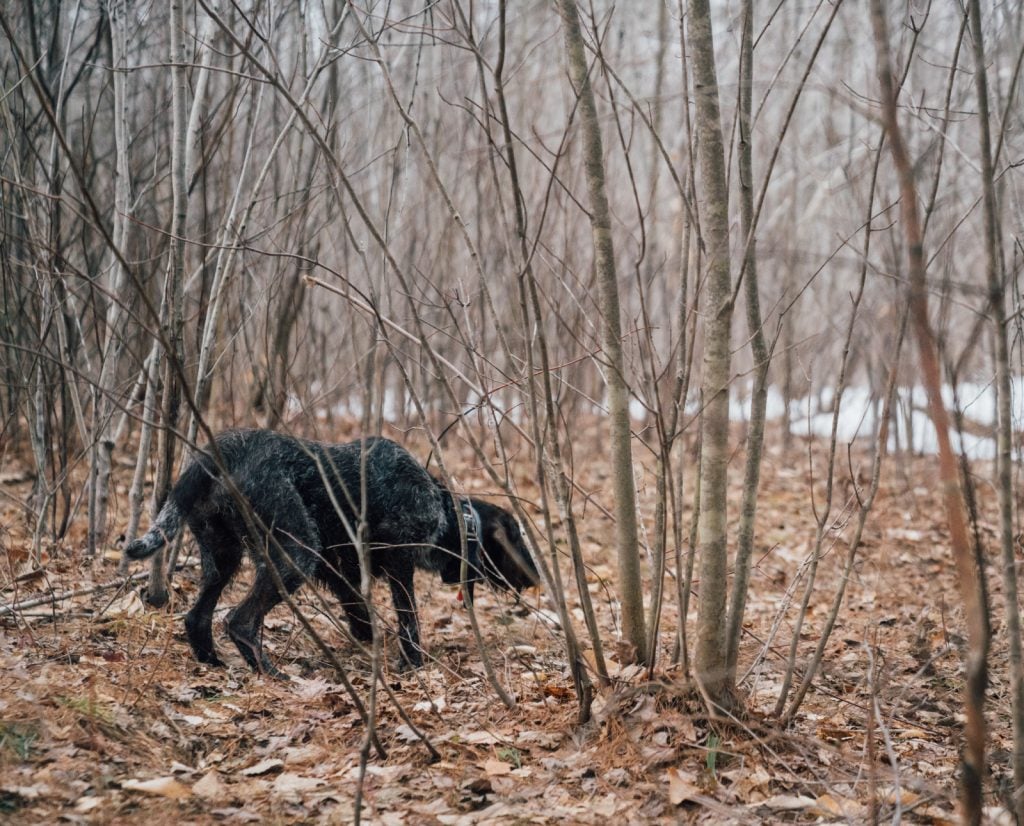
When describing the Wirehaired Pointing Griffon’s personality, owners and breeders often use terms like outgoing, fun-loving, and eager to please. The typical Griffon is said to be a great family dog, good with kids, and easy to get along with. Griffons typically respond best to softer training methods and calm trainers rather than the drill-sergeant approach.
Yet even though a hallmark of the breed is a sweet, friendly personality, the FCI breed standard actually refers to a natural protective instinct within the breed, stating that:
“A Korthals Griffon is attached to his master and his territory, which he guards with vigilance.”
The German Griffon Club seems to agree, stating on their website that the breed is regarded as a good family dog but has a pronounced protection drive. Personally, I’ve never encountered a Griffon that I thought had a super strong protective instinct, but I’m sure they’re out there. A friend of mine used to have them in the 1970s and 80s in France, and he said, yeah, his dogs were quite protective of his yard.
I don’t know. Is your Griffon protective? Why don’t you leave a comment in the comment section of the YouTube video or on the podcast platform and let me know? But generally speaking, these are sweet, cuddly dogs in my mind. And sure, maybe they will protect house and home.
But beyond the dogs themselves, my research into the history and development of the Wirehaired Pointing Griffon really opened my eyes to the fact that dog breeds in general are really just physical manifestations of the hopes and dreams of the people who breed them.
With the Korthals Griffon, well, you’re looking at the physical manifestation of the hopes and dreams of a twenty-two-year-old man in Haarlem who went to work for a German prince in Germany. And over the course of just twenty short years, not only did he and the prince found a testing system that still exists to this day, but he created an entire breed that carries his name today.
And it’s a wonderful breed of wirehaired pointing dog that is enjoyed by many hunters around the world. And we should also keep in mind that Korthals was working in a very troubled era. Yeah, it was sort of the golden age for breeding gundogs and for creating your own breed of gundogs. We’re gonna look at a couple in coming episodes that were invented by other people around that same time—people that had just as much financial backing, just as much vision for their breeds. But those breeds never survived or never reached the levels that the Korthals Griffon has.
But that era was also rife with political dissension, with tensions among groups, with tensions among breeders, with different ideas. Which way should we go? Are all Griffons related? Should we be able to breed between all of the different wirehaired pointing dogs that we have? Should we also be able to take shorthaired dogs and breed them into some of our lines?
Well, all of those questions were eventually answered, and they gave us the breeds that we have today. But it was a rocky period of time, and that is the period of time that we’re gonna take a look at in our next episode—when we see what happens when a Poodle and a Pointer have a one-night stand and set off a revolution in the gundog breeding world.
Well, that wraps up part one of our look at the wirehaired breeds.

What does kbb mean in a WPG’s breeding? My bitch is 15 mos and a real lover but also protective in her own way… she barks at people walking the road in front of the house and scares them because of her deep bark, but she is tremendously shy and will run if they make a step in her direction. She also exercises herself in the yard running and dragging a knotted rope and sliding and rolling over and doing it over and over at top speed. She scored a Prize II 107 pts in her recent NAVHDA NA test. Probably would have been a Prize I but ran over one of the Chukars. All in all, a fun dog… my wife who was against me getting her, after a month said we should have gotten two!
I believe it may be a reference to DNA test results for coat colour genes. Here is an explanation from the UK club for the breed https://www.korthalsgriffonclub.co.uk/breed
“There is a colour anomaly which sees dogs with a yellow/tan coat. This is called ‘tan point’ which was not in Eduard Korthals’ original standard nor is it an acceptable colour under the Kennel Club Standard in the UK.
A simple DNA test identifies lines that carry the tan point anomaly in their genetics. It is called a DNA K-Locus/Colour of Coat Test. The test is painless and the results show if the dog is a carrier of “yellow/tan” or not.
The results would be shown as follows:KB/KB – the ideal result, the dog is not a carrier of yellow/tanKB/KY – carriers of yellow/tanKY/KY – carrier with yellow/tan pattern and markingsDogs that come back KB/KY or KY/KY would pass the anomaly on to their offspring. The Club recommends that all Korthals Griffon breeders obtain a DNA K-Locus/Colour of Coat Test prior to breeding a litter and that care be taken not to breed from a dog having the “Y” indicator.
Ask your dog’s breeder for more information about the test results and what impact (if any) they may have on future breeding decisions.
Thanks Craig. The absolute most comprehensive account of Griff history ever assembled. 100% accurate from every angle especially your description of the modern day Griff in the hands of top shelf breeders. A beautiful piece of work.
Many thanks Harvey!