


The European Hare in Ontario: Rise and Fall of the Province’s Jackrabbit Population
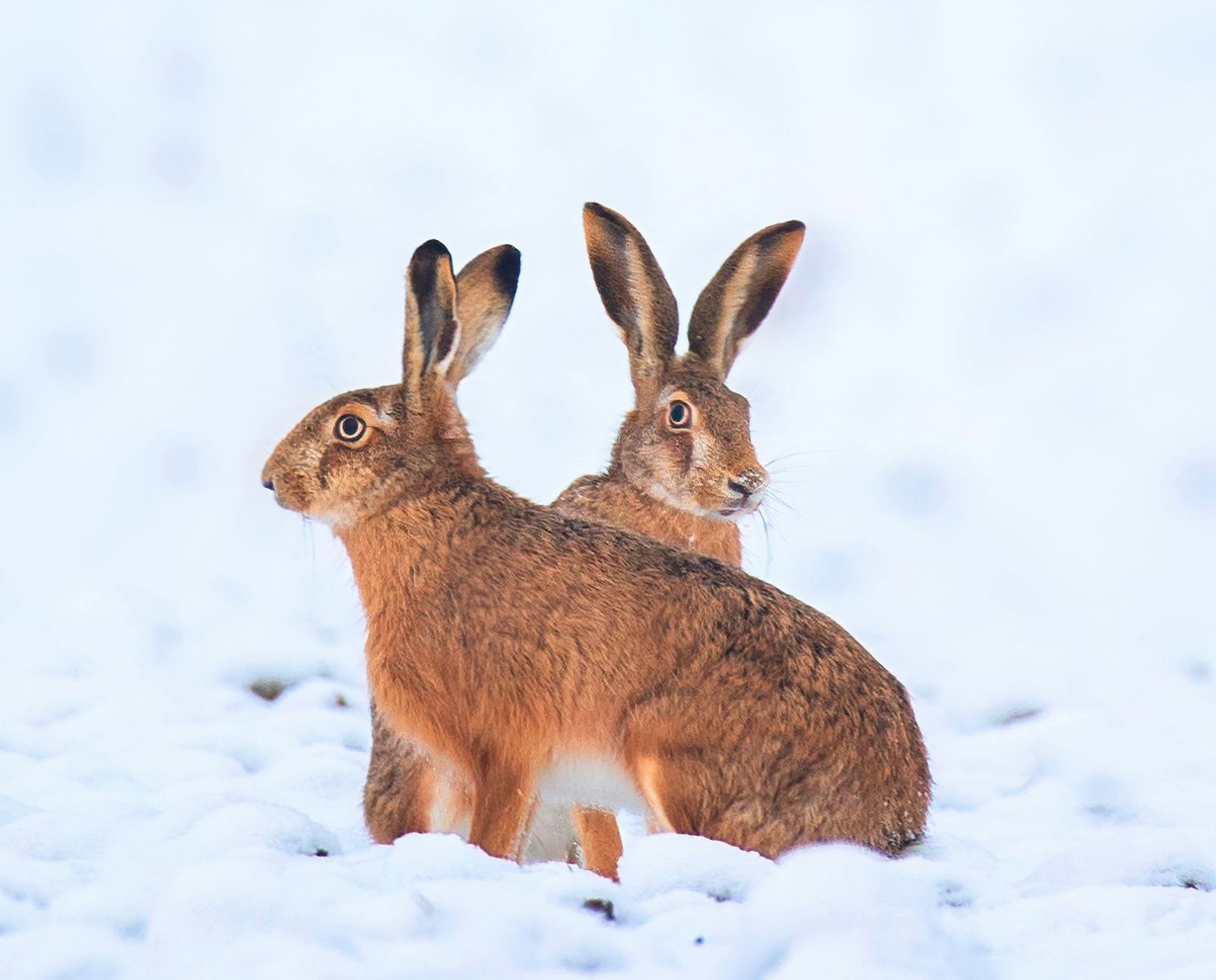
How the European hare (Lepus europaeus) was introduced to Ontario, spread across the province, and influenced the region’s small game hunting culture
The small game enthusiast in me cringes when the topic of European hare in Ontario comes up in conversation. This typically occurs with someone a couple generations ahead of mine, having grown up in the 1960s or 70s in what they commonly refer to as the “good old days.”
If one thing has become clear over the years of gathering subtle bits of information, it’s that at one point in time, many years before I was born, the Canadian province of Ontario had what could only be described as a thriving population of jackrabbits. This species is not native to the region, or even Canada as a matter of fact. Unlike the native black-tailed jackrabbit (Lepus californicus) or the more northerly rendition, the white-tailed jackrabbit (Lepus townsendii), the “jackrabbits” introduced to Ontario were actually European hare (Lepus europaeus). In the end, they were given that misnomer because they resembled native jackrabbit species due their large ears.
The term “jackrabbit” has been around for centuries. It was derived from the term “jackass rabbit,” relating the hare’s ears to that of a donkey, a term that was also allegedly popularized in Mark Twain’s 1872 book, Roughing It.
Farmers of the time might have referred to the jacks as being more along the lines of an infestation, but in any event, those days are long gone. What is surprising is that today, you would never know that they were here at all. On any given morning, I can step out onto my back deck and watch two or three eastern cottontail rabbits run around the backyard, and prime snowshoe hare hunting lives just a couple of hours north of my house. However, in my near 40 years of calling Ontario home, I’ve never seen a jackrabbit.
Where did these non-native hares come from? How were they able to spread across much of the southern portion of a province? And how did they ultimately disappear? These questions all need a better look, if for no other reason than to gain a better understanding of the story of Ontario’s jackrabbits.
How the European Hare Was Introduced to Ontario
Otto Herald had a plan back in 1912. He was the manager of Bow Park Farms near Brantford, Ontario, and is known to have perhaps been the leading cause of Ontario’s future flourishing European hare population when he imported seven female and two male hares to Bow Park from Germany. Things were going great right up until they weren’t, and with hares being hares, they escaped.
Ontario back then was a very different place than in modern times. Agriculture had taken over most of the southern portion of the province, and farmers were quick to shoot any predator on sight, paving the way for ideal conditions for jackrabbits to thrive. Whether these hares were released intentionally by Otto Herald is up for speculation, but the man would live to see his hares expand their range onto both sides of the Grand River in just a couple of years.
With no major predators to stop them, the European hare in Ontario spread all the way to the southern portion of the Canadian Shield, west to Lake St. Clair and east all the way to the banks of the Ottawa River. Later attempts to introduce the species to northern regions such as the north shore of Lake Superior failed miserably due to the inhospitable winter conditions there.
By the 1930s, there was nary a farmer in southwestern Ontario that wasn’t having one issue or another with the jackrabbits. By the 1950s, the population had exploded, causing all kinds of issues in the agricultural industry.
The Golden Age of Jackrabbit Hunting in Ontario
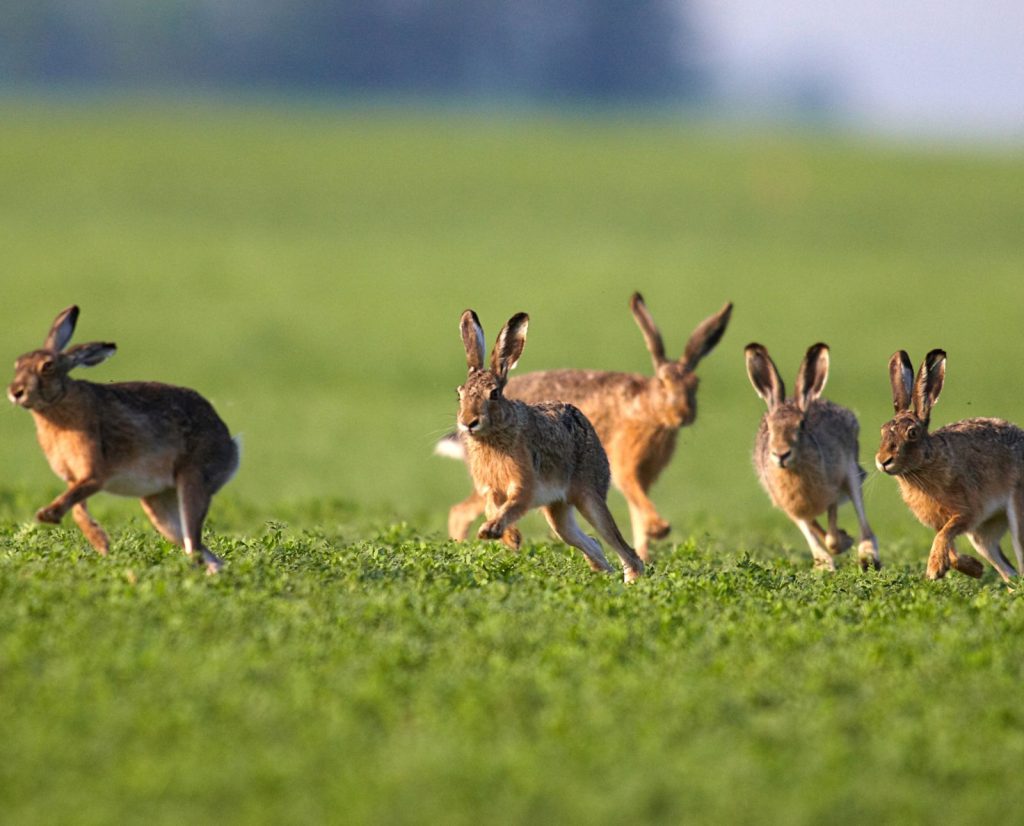
It didn’t take long for hunters to take notice of this new game species that had inexplicably arrived on the scene. Much larger than the native cottontail (the European hares reached weights of up to fifteen pounds) and flourishing in numbers, hunters did what hunters do best: jump on the opportunity to hunt an unregulated nonnative species. No one can blame them, either. How many of us wish that there were more opportunities to go for a walk with a shotgun during the winter months? The jackrabbit was probably the answer to their small game prayers.
By all accounts, hunters were specifically hunting European hares in southwestern Ontario by the early 1920s. As the species spread further throughout the lower end of the province, so too did the opportunity to hunt them. It would remain that way for the next forty years, with the population peaking somewhere around the 1950s.
However, storm clouds were on the western horizon. With that storm came the end of the golden era of hunting jackrabbits in Ontario. No one knew it yet, but the sun was setting on the introduced lagomorph.
Coyotes, Agriculture, and the Decline of the European Hare in Ontario
Right around the time that the jacks were getting themselves established, another species was beginning to make its home in Ontario. Like the jacks, it was a species that hadn’t been present prior. With the elimination of larger competition such as wolves and bears, it pretty much would have free reign over a large majority of the province. In fact, the same rural habitat that had helped the jackrabbit thrive would eventually be a part of the species’ undoing.
This new creature was the coyote.
As the coyote, in its colonizing tendencies, progressed further and further to the east and away from the plains, it was only a matter of time before they crossed the Great Lakes. By the 1930s, there were reports of coyotes in the western portion of Ontario, having crossed through Michigan as well as Minnesota, and their expansion would echo that of their newfound food source: the jackrabbit.
Habitat destruction was likely another reason for the European hares to nosedive into oblivion in Ontario as modern agricultural practices did away with the types of cover that the jackrabbits needed for protection. In particular was the new movement of removing edge habitat and hedgerows, both of which were crucial to the jackrabbit survival. This was a province-wide occurrence that saw the expansion of fields as an opportunity to increase overall yield. Though for a while it meant that there might be a lot more food available to the jackrabbits, it also meant that they had nowhere to hide from danger.
Another shift in the times took place right around then. Farmers began to grow less of what the jacks liked to eat, and more of what they didn’t. Grain crops diminished significantly, swapped out for more corn and soybean growth. While no studies have been done, few folks who remember the era when jacks ruled the landscape disagree that the prevalent use of DDT may have played a role in the disappearance of the jacks.
What most old timers can agree on is that by the 1970s, it was all over. By the 1980s, seeing a jackrabbit was such a rare occurrence in the south, it wasn’t uncommon for a sighting to make the local paper.
Are European Hares Still Found in Ontario Today?
Someone told me that with time comes balance, and maybe that’s what the jackrabbit of Ontario needed. By the turn of the century, something was growing in the southwestern corners of the province. Something that perhaps no one thought ever possible.
Folks were hunting jacks again.
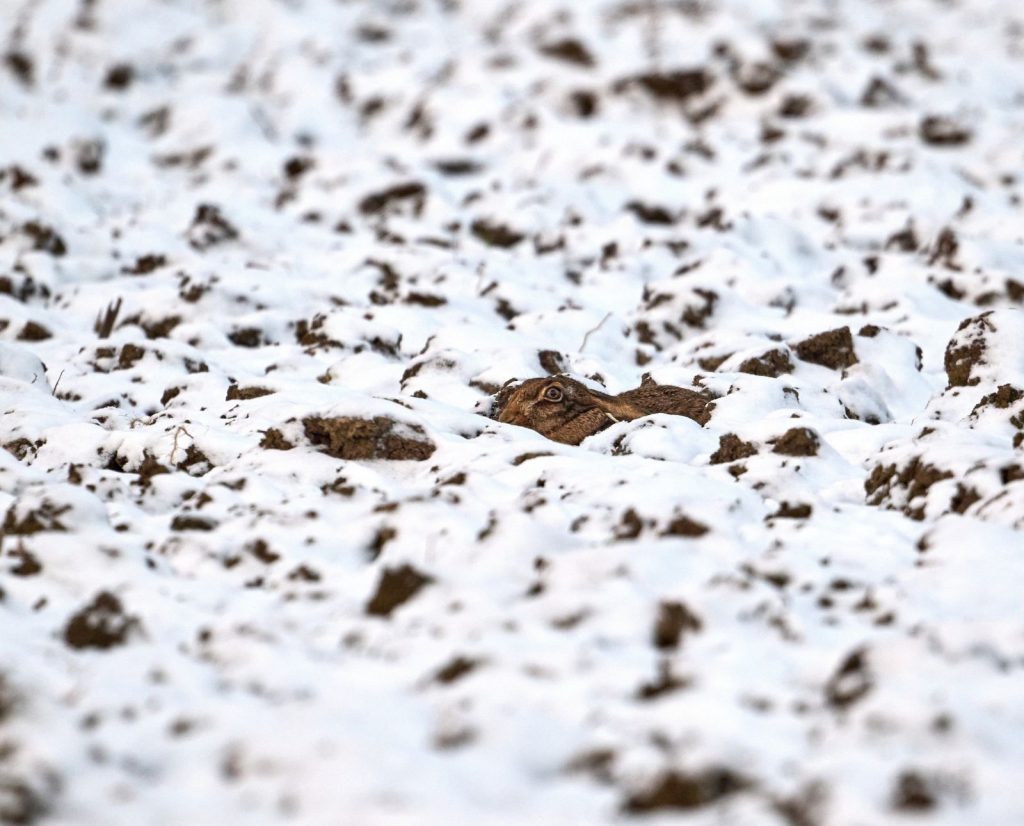
As farming practices changed, predator populations stabilized, and deadly chemicals became less widely accepted, the European hare started to make a modest comeback, mostly in the southwest portion of the province. Once again, folks took notice. It has never been nearly the same as those first thirty years of hop-happy expansion, but with the return of the European hare onto a landscape by its own means, despite being an introduced species, most hunters were happy to see them.
Something fascinating began to happen, too. A tradition occurred, mostly regionally, where large groups of hunters would gather in the snowy gloom before the sun came up in late December. They would socialize, warm themselves, and eat breakfast together before taking to the wide open fields, some with shotguns, others with rimfire rifles, and the Ontario jackrabbit drive once again returned to the barren agricultural landscape where the hunters would fan out and start pushing.
Hares would break from cover and forms every now and again, and shotguns retorted. This became something that was held every Boxing Day and still is in a few places. The hares have gone on the decline once again, settling into a “boom and bust” population trend that seems to swing every decade or so. But they never did repopulate the rest of southern Ontario the way they once had.
The story of the European hare in Ontario remains one of the most fascinating examples of an introduced game species in Canada: a population born from just nine animals that expanded across an entire region, shaped hunting traditions, and eventually faded from the landscape that once suited it so well.

Very interesting story of the European Hare.
In the early 70s it was nothing to bring home 12 to 14 between three hunters–when I started out in the early 80s a good day you may see 10 and bring home a couple–Twenty years ago I purchased some land in Bryce county along Lake Huron, lots of tracks and decent population back then. I have not seen a jack track or live one to speak of in over a decade. The coyotes have for the most part completely annihilated the population.