

What Do Cottontail Rabbits Eat? Important Plants for Food and Cover
Rabbits aren’t picky eaters, but forbs, grasses, and brushy cover are key food sources and habitat for cottontails
The cottontail rabbit is a ubiquitous critter found in one subspecies or another across most of the United States. Because they are so widespread, they consume a wide range of foods and use a wide range of plants. From shrubs to garden flowers, clovers to grasses, these little eating machines will dine on and hide in almost anything. However, they do have their preferences.
Let’s take a quick look at the top plants that rabbits eat and use as cover . Learning about the plants rabbits rely on for survival can help you identify rabbit habitat and improve your rabbit hunting in the future.
A Quick Breakdown: Plants Wild Rabbits Eat
- Clover, including wild bush clover
- Alfalfa
- Both cool and warm season grasses
- Forbs, including dandelion, mint, sunflowers, ragweed, and desmodium leaves
- Brush and shrubs, including blackberry canes, sumac, honey locust, serviceberry, and dogwood
Brushy Cover Provides Food and Shelter for Cottontails
Before we get deep into this subject, it’s important to mention that brushy, shrubby cover is critical to cottontails. It’s the first place they go to hide, which makes it a hub for everyday cover and looking for food. Stems and leaves of shrubs are favored foods for cottontails. The list of shrubby items that they’ll eat is too long for this article, but some of the stems I’ve noticed that rabbits browse are sumac, honey locust stems, and serviceberry. As you are walking through shrubby areas, keep an eye out for stems that appear to have been chewed on from ground level to about as tall as a rabbit can reach. This is very apparent after a snow—these stems are targeted as a food source because other foods are buried in the snow where rabbits cannot get to them.
Once you’ve found places like this, you can be sure that rabbits are close by because they are using the shrubs for both food and cover. Move very slowly and look for the tell-tell impression of a rabbit as it suns itself on a cold day.
Read: Stand Hunting Rabbits and Hares
One cannot mention a top plant for rabbits and not include blackberry briars. It seems blackberry canes and rabbits were just made for each other. Blackberries provide excellent cover from predators due to their large crowns and nearly impenetrable thorns, but they are also thin enough underneath that rabbits can run through them quite easily. Another plant that serves a similar function are shrub dogwood thickets. Any blackberry or dogwood clump is worth a quick stomp while rabbit hunting.
Common Rabbit Food Sources: Clover and Alfalfa
We’ve all seen rabbits in closely mowed yards feeding happily in suburban and rural areas. Chances are they are eating the freshly exposed clover that often grows too closely to the ground for the mower to cut. If I was going to plant a food plot, especially with rabbits in mind, it would be clover of some type (but remember to have brush around). Clover provides optimal nutrition for lactating female rabbits, so they eat clover extensively in the early spring. However, as long as clover is growing, rabbits will be consuming it.
Another food rabbits relish is closely related to clover: alfalfa. Alfalfa also provides excellent nutrition sources for females and throughout the year, but it is typically found in more agricultural settings. Locating weedy or shrubby edges near alfalfa fields is a sure place to find cottontails.
Old Fields: Prime Habitat and Food Sources for Cottontail Rabbits
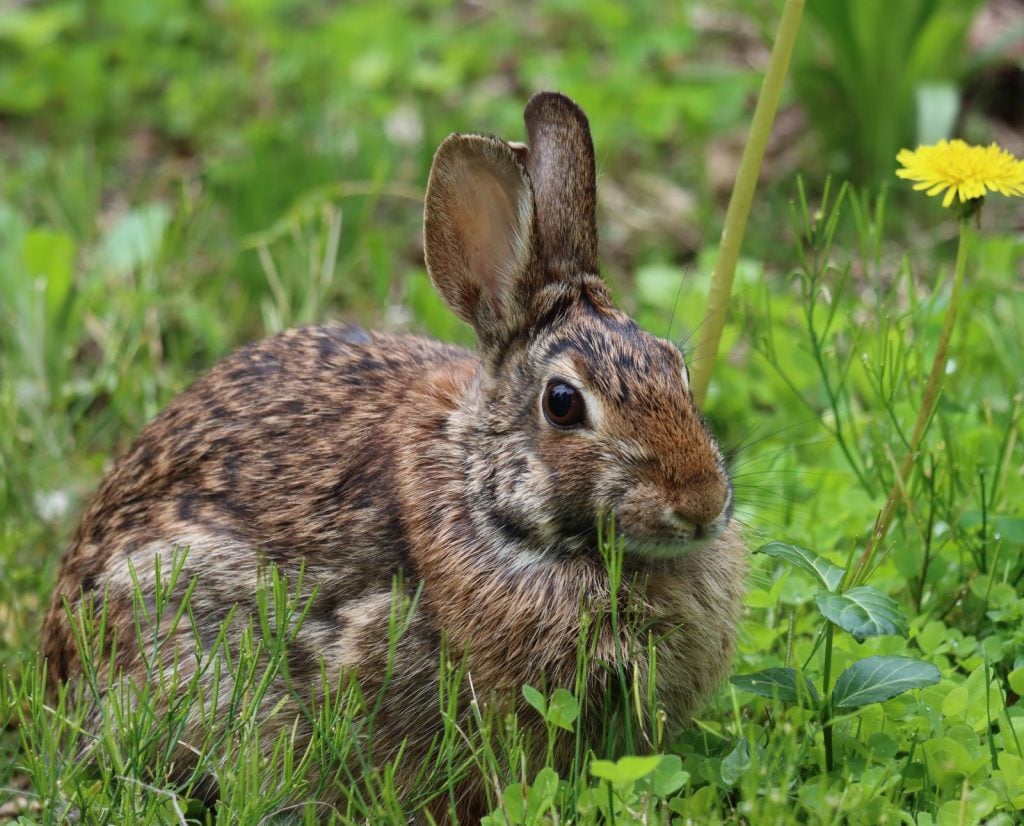
Old fields, often called go-back or idle land, really shine for rabbits. These fields are usually hayfields or pastures that have been allowed to grow up into a myriad of diverse grasses, forbs, and brush, including blackberry and sumac. These areas consistently produce rabbits and are some of the best places to look when trying to find good rabbit hunting spots.
Rabbits are not picky eaters, and old fields typically have a base layer of some type of grasses that provide near constant food year-round if there are both warm and cool season grasses present. Additionally, a variety of forbs grow in old fields. Dandelions are especially favored, as are various mints, desmodium leaves, wild bush clovers, sunflowers, and ragweed. The food resources in old fields are nearly endless. If the grass decays over the summer, then various wildflowers take their place. Plus, the shrubby cover in these fields provide maximum protection from predators and another food resource. Old fields really are rabbit hotspots in terms of food and cover.
Read: Rabbit Hunting with Dogs: Strategies for Running Cottontails
When scouting an area for rabbit hunting, look for the familiar pellets they leave on the ground but also examine any bitten off stem of a small shrub, grass, or wildflower. Rabbits will chew off stems at a 45-degree angle while deer leave a ragged edge on anything they’ve eaten.
The loss of old fields is likely one of the reasons cottontails have declined over the last several years. Most people need to get some production from their land, and an idle field does not pay the taxes. Also, folks like to have manicured land, and an overgrown, brushy field just looks out of place. That’s why so many brush hogs are sold every year; to make sure everything looks spic and span. But that spells disaster for rabbits as the loss of brushy fields eliminates one of their primary food and cover sources.
Putting It Together: Food, Cover, and Rabbit Hunting Success
I must admit, the number of plants important for rabbits would exceed the length of any single article. Hopefully, hunters looking to find good rabbit hunting spots now have an idea what plants wild rabbits prefer within commonly available habitats. Remember, start with brushy cover and look for food items within and nearby. Rabbits rarely hurt for food, except when heavy snow conditions force them to feed exclusively on shrubs. Even then, they can obtain the nutrition they need until conditions improve.
When traveling around, keep an eye out for old fields and shrubby, weedy areas near clover plots and alfalfa fields. These resources will be your ticket to a great rabbit hunt. The food is there in abundance, and so should be the rabbits!