

How to Hunt Ring-necked Ducks: Habitat, Decoy Spreads, and Calling Tips
Learn how to find ring-necked duck habitat and hunt them using decoys and duck calls
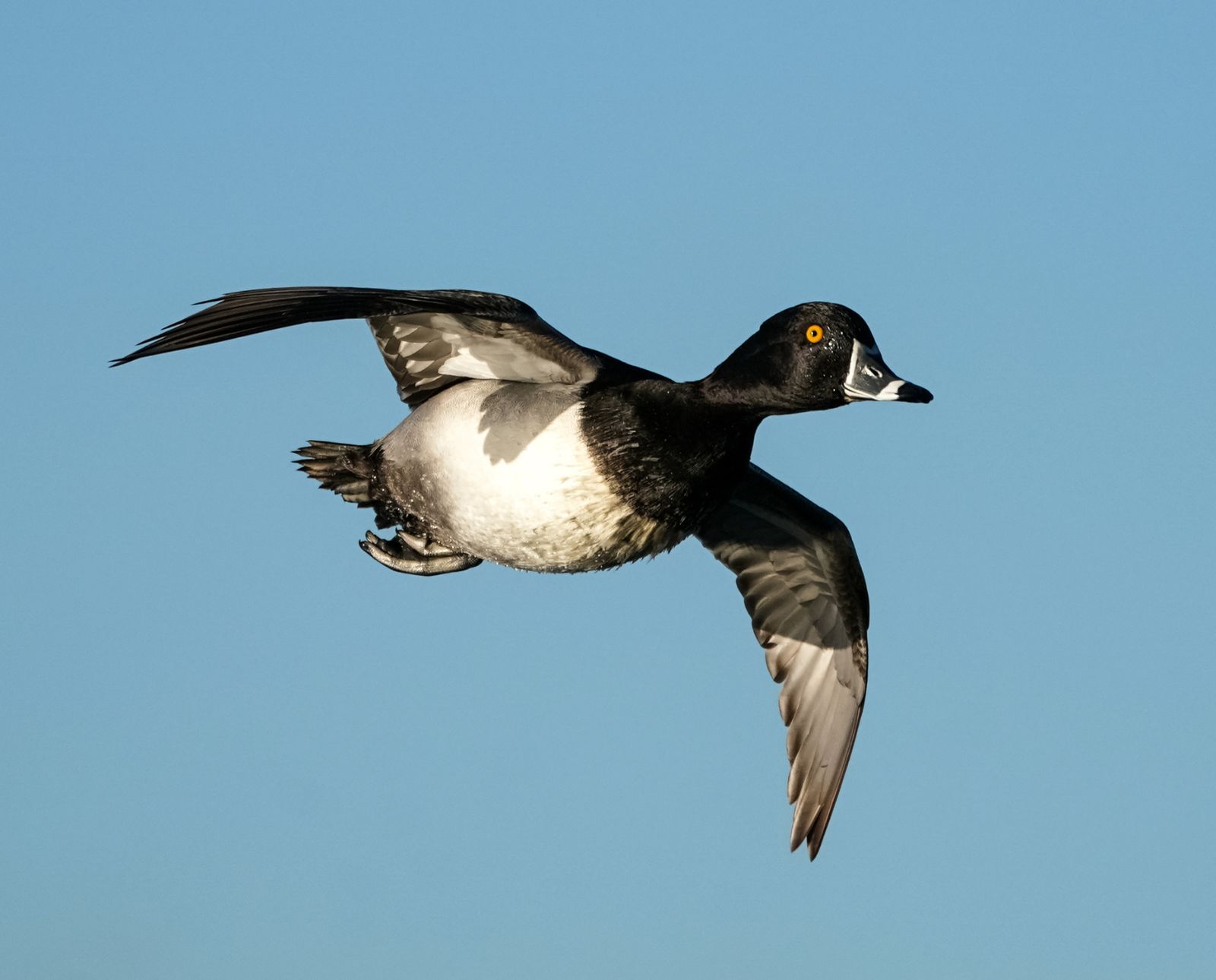
It wasn’t all that long ago that the priviness of understanding why, in some of my hunting spots, I was consistently shooting ring-necked ducks, a duck species also referred to as ringers, black jacks, ring-bills, black caps, and bullnecks. To my untrained eye, my other duck hunting spots seemed entirely identical, but they were missing the ring-necks I was used to finding elsewhere by the hundreds. However, now I know that these locations were missing subtle key habitat features.
In fact, of all the waterfowl that show up in my quiet corner of the Great Lakes Region each autumn, the ring-necked duck is the species that I knew the least about. Ultimately, this translated into a lack of consistency when attempting to target them specifically. Why on earth would someone specifically want to chase after these smaller, seemingly not as popular species, you ask? Well, anyone who has plucked and roasted a ring-necked duck whole knows exactly why.
As it turns out, my common misconceptions about these little ducks were holding me back from putting a few more in the freezer each autumn. Now that my understanding of how ring-necked ducks use shallow freshwater marsh habitat during migration has strengthened, so too has my ability to hunt them more effectively.
Ring-necked Duck Habitat
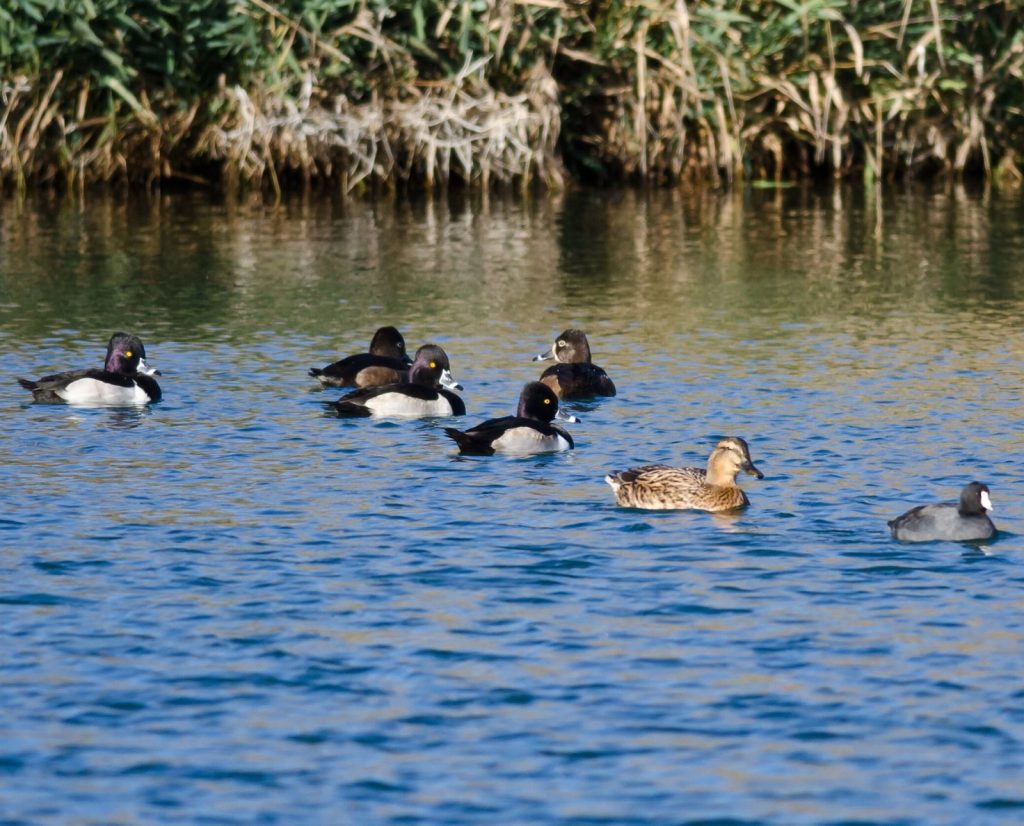
Ring-necked ducks are most commonly found in shallow freshwater marshes, flooded agricultural fields, and wild rice wetlands during migration. They prefer feeding in areas with aquatic invertebrates and submerged vegetation such as pondweed, wild celery, and rice beds where water depth ranges between one and four feet. These shallow feeding areas allow ring-necked ducks to dive for aquatic plants and invertebrates during migration staging periods.
According to All About Birds, “They also eat mollusks as well as snails, caddisflies, dragonfly nymphs, midges, earthworms, and leeches…[but] plant foods become much more important in the diet during fall migration.”
As an example of ring-necked duck habitat, there’s this marsh that I used to canoe into while it’s still dark. I would tuck into the cattails, dragging the small little canoe up into that same dense foliage with me. It was a great spot up until four years ago when the wild rice had more or less choked it completely to the point where attempting to force a canoe through it was all but impossible. It was right around then also that I started to shoot a lot more ringnecks there. Sure, the spot had changed, but for the better. Prior to that, we might see the ducks roosting back there in the evenings, but the next morning, those same ducks were gone before legal light rolled around.
Scouting for Ring-necked Ducks
Location is often a large part of the general picture when it comes to consistently finding ring-necked ducks during their annual migrations. For me, scouting for ducks has become a large part of putting the puzzle pieces together.
When these ducks migrate south from the boreal forest or the Prairie Pothole Region each fall, they don’t immediately know where the reliable food sources are. It often takes them a few days to start hitting particular locations consistently. If you know of a location where the ducks were thick the year prior, but you haven’t seen any there yet, start looking in other locations like shallow bays, weed flats that touch the surface of the water, or even flooded farm fields. A quality pair of binoculars will help you with this, and so will understanding the food sources that these ducks love and then being able to locate them reliably.
If you’re starting out fresh with attempting to locate reliable ringer spots, asking local hunters is a good way to start as well. Most hunters don’t really pay much mind to the ring-necked duck and won’t think twice about letting you know if they’ve been seeing them in one particular area or another. This has helped me out on new bodies of water several times over the last few years.
Remember that if you’ve got yourself a place that the ducks are consistently using, be sure to mark it to remember exactly where it was. Ring-necked ducks are creatures of habit and will use these areas every single year with exceptional reliability.
Hunting Ring-necked Ducks: Decoy Spreads and Setup Tips
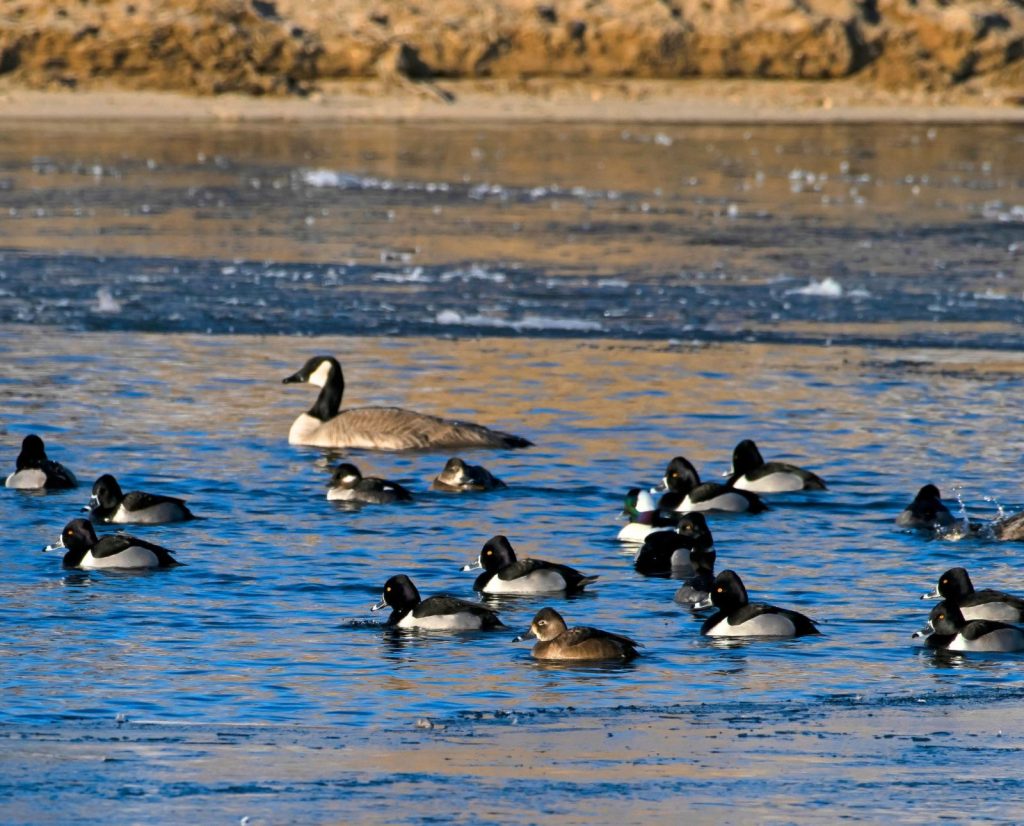
Don’t overthink your decoy spread when it comes to the actual number of decoys. Alternatively, use a natural-looking decoy spread. Consider how you deploy them and what species you are putting out there. Though ring-necked ducks are considered a diving species, they certainly love to intermingle in and amongst both diver ducks as well as puddle ducks. My current ringneck hunting decoy setup reflects this.
Read: Decoying Diver Ducks on a Budget
I keep roughly ten ringneck decoys on hand from opening day at the end of September straight through to December, and while I’ve never specifically run a spread made up of nothing else, it can generally be agreed that ring-necked ducks are known to decoy nicely. This species enjoys the company of other ducks, not just their own kind. If you’re noticing the ring-necked ducks in your area favor joining in with a particular species, make note of it. Sometimes ringnecks get a touch obsessed when it comes to who their friends are, and they only want to be around that one species.
Decoy Spread Size and Shape
I like to run roughly six to eight mallard decoys tight to cover, closer to my blind than I might normally think was necessary. Among those will be a couple motion decoys to stir the surface of the water a bit. On the flanks of the block of mallard decoys will be three or four ringneck decoys, bunched together and out much further from the mallards. The point of this spread is to leave three individual landing zones for any incoming ring-necked ducks that you anticipate.
As a visual, imagine a horseshoe. You and your mallard decoys are hunkered down on the inside bend of the shoe, while your ringneck decoys act like sentries on each end of the shoe, leaving those aforementioned landing zones. I’m not sure what it is about this layout of decoys that these ducks seem to like, but I kill more ring-necked ducks over this decoy deployment than any other.
Motion Decoys and Goose Decoys
Motion decoys aren’t entirely necessary for attracting ring-necked ducks. However, most other hunters who get into this species are usually out hunting other kinds of ducks. In this case, having a little bit of motion more than likely does help the cause. I’ve had good success rigging my ringneck decoys to a jerk rig when the water is glass, but I’ve also had days when the birds couldn’t get enough of the spread even though there was nary a ripple on the water. Ultimately, the ducks want what they want.
Later in the season when more and more diver species show up, I’ve had good success mixing several species of diver decoys with Canada goose decoys in a more grid-like spread. I have had plenty of success attracting ring-necked ducks by doing so, though this seems to work better if my area has experienced an unseasonably warm autumn and the ducks have stuck around longer than usual. Something that I’ve noted is that as soon as there is any accumulation of ice in those back bays where ringnecks like to feed, they’re one of the first species to head south.
Hunting Ring-necked Ducks: Mallard and Goose Calls
Over the last few years, I’ve found that calling specifically for ring-necked ducks isn’t particularly efficient. However, like with most things, there are a couple of exceptions.
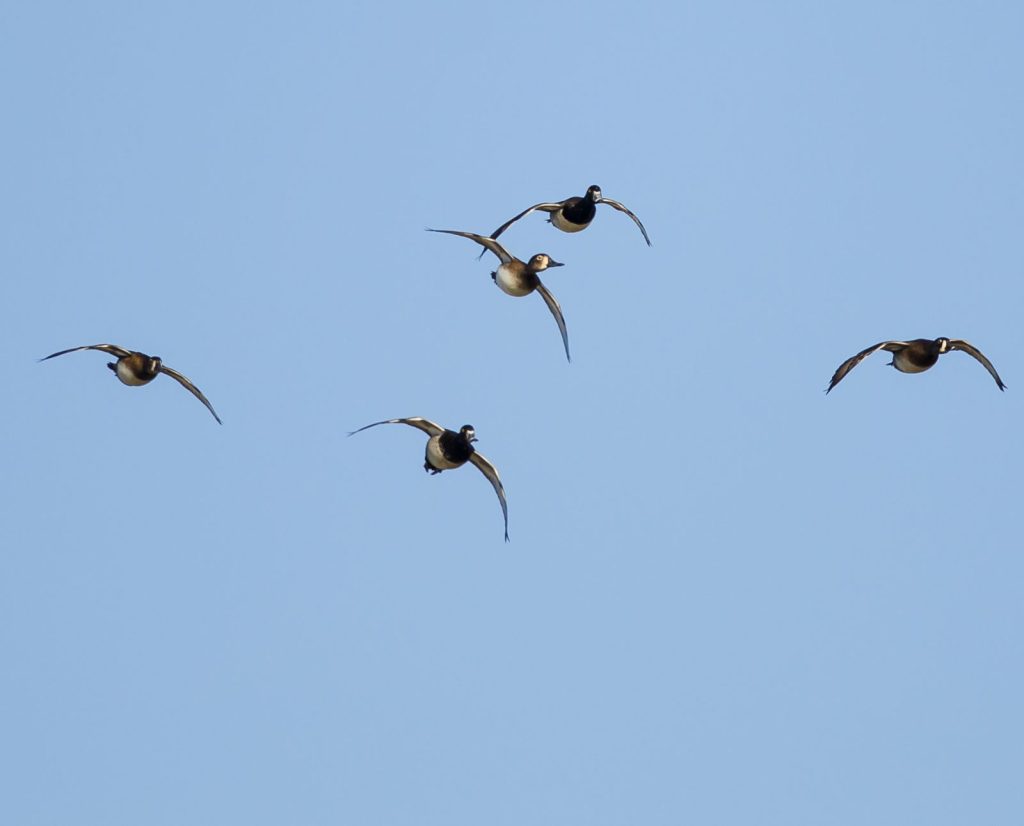
One is that it’s entirely possible, and often exceptionally effective, to use calls to get the attention of flocks of ring-necked ducks that haven’t noticed your spread. I like to use a hail call with whatever mallard whistle I happen to have on hand. There’s no need to be specific, or even particularly good, with the call to get the attention of a nearby flock in the air. As mentioned earlier, ringnecks are exceptionally social ducks, and they seem to prefer the company of other species rather than be on their own.
The second exception is the power of geese. Those in the know are more than well aware that during the autumn migration, sometimes the best mallard decoy is a goose decoy. This also holds true with ring-necked ducks. Last season I watched helplessly as dozens upon dozens of ringnecks piled into the back corner of a rice-choked marsh that I frequent. The birds wouldn’t give my spread the time of day, despite doing everything that had worked in the past. The difference now was that there were two Canada geese back there, honking their bills off and attracting every ringneck within a few miles to come that way. The next morning, I had four goose decoys ready, and the ringnecks didn’t know what hit them.
Over time, I’ve come to realize that consistently hunting ring-necked ducks has far less to do with luck than it does with understanding how they use shallow freshwater marsh habitat during migration. If you can locate their preferred food sources, recognize how quickly they can shift between feeding areas, and set decoy spreads that reflect the other species they naturally associate with, your success rate will improve in a hurry. Like most diving ducks, ringnecks tend to follow predictable patterns once they’ve found reliable staging water, and paying attention to those small habitat details, scouting effectively, and strategic decoy placement can make all the difference when it comes to putting a few more of these underrated ducks on the dinner table.