

Long-tailed Duck (Clangula hyemalis) Identification, Habitat, and Hunting
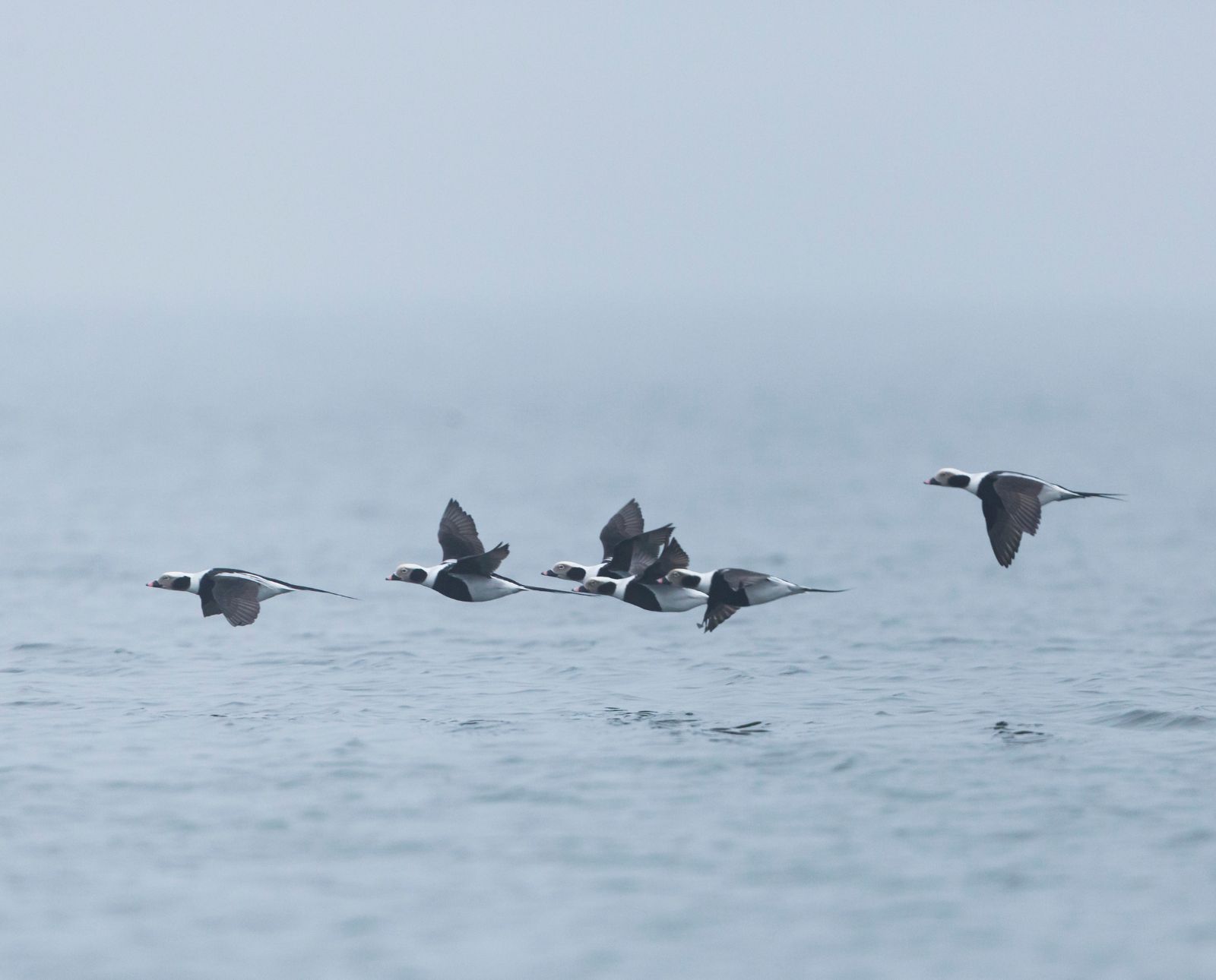
This tough North American sea duck species is built for cold water, deep dives, and late-season hunting
Of all the sea ducks that call the North American continent home, long-tailed ducks (Clangula hyemalis) may very well be one of the most stunning and fascinating specimens. They may also be one of the hardest ducks to hunt based on their habits and seasonal movements, but like with any species of waterfowl, they can be patterned if you understand how they operate.
According to Ducks Unlimited, the three states that annually harvested the most long-tailed ducks, based on annual harvest reports from 2019 to 2022 were Michigan (8,447), New York (5,792) and Maryland (5,755) which typically indicates a strong presence of the duck throughout the Atlantic Flyway.
Long-tailed Duck Identification and Life History
| Characteristic | Comment |
| Scientific Name | Melanitta perspicillata |
| Taxonomic Order and Family | Order Anseriformes, Family Anatidae |
| Average Measurements | Weight: 1.6 to 2.1 pounds Length: 8 to 8.9 inches Wingspan: 27.9 to 28.4 inches |
| Egg Characteristics | Lays one brood of 6-9 pale gray or olive-colored eggs |
| Nest Characteristics | A shallow depression on the ground constructed out of dwarf willow or birch leaves. According to All About Birds, “The first egg is buried under a layer of grasses and sedges; the female adds down feathers once the second egg is laid.” |
| Diet | Aquatic insects, small crustaceans, fish eggs, vegetation, marine fish, mussels, zooplankton |
| Habitat | Freshwater areas in the arctic tundra in summer, ocean coasts and large lakes with sea ice or floe edges in winter |
| Range | The far northern reaches of North America including Alaska, northern Canada, and the Great Lakes Region |
| Estimated Population | 3.2 million birds according to Partners in Flight |
| Conservation Status | Orange Alert Tipping Point Species according to the 2025 State of the Birds Report |
| Conservation Concerns | Unclear reasons for 50% population declines, lead exposure |
| Similar Species | Harlequin duck, northern pintail |
Long-tailed ducks lead extraordinary lives in comparison to most other ducks, especially considering they can dive up to 200 feet below the water’s surface. Considered a medium-sized diving sea duck, the average male weighs 2.1lbs and is around 8.9 inches in length. The female’s average weight is 1.6 lbs and around 8 inches in length (Ducks Unlimited).
Adult longtails undergo a bizarre series of moults throughout the year more than any other species of duck in North America. Ducks Unlimited states that these moults are categorized as alternate (breeding) plumage, supplemental plumage, and basic plumage for both males as well as females of the species. However, most hunters are familiar with the males when they’re sporting the elongated sprig, similar to a pintail duck. These various moults can sometimes make identifying males from females difficult to the untrained eye.
Long-tailed ducks used to have a moniker referring to their chatty vocalizations, where old timers would refer to them as “Old Squaw,” a now socially incorrect name, yet interestingly enough, it’s the males that do most of the talking, especially during breeding season, with their call being a distinct “oh-oh-ohoughlette” When you’ve heard it once, you will never forget it.
These ducks are born on high arctic lakes and ponds where they spend a fast few months before making their migration down either of the coasts, sometimes as far as California, the Gulf Coast, or the Atlantic side of Florida. They also winter in the Great Lakes region where they can be seen in the thousands around piers, harbours, and mouths of rivers or creeks (Ducks Unlimited).
Unique Feeding Behaviors
One of the most fascinating aspects of this duck is their feeding habits, and the lengths they’ll go to. These ducks have been documented diving to depths up to and including 240 feet of water (Audubon Society) and feed on a variety of food items such as mollusks, crustaceans, fish and fish eggs, and occasionally plant materials, though this generally occurs during the breeding season (Ducks Unlimited). Unlike other species of diving ducks, Longtails do not use their feet as a method of propulsion, instead using their partially opened wings to propel themselves to the bottom of a body of water to feed (All About Birds).
Long-tailed ducks don’t like to compete for food, so often if you are observing how a flock moves around each other, you might notice that new birds flying into a group of swimming longtails won’t land at the back of the flock, and almost always land at the head of the group instead. It’s assumed that this is because the new members are trying to get ahead of the feeding activity. Most often these ducks would prefer to expend as little energy as possible in order to feed, so they will seek out shallow rocky structures that don’t require deep diving.
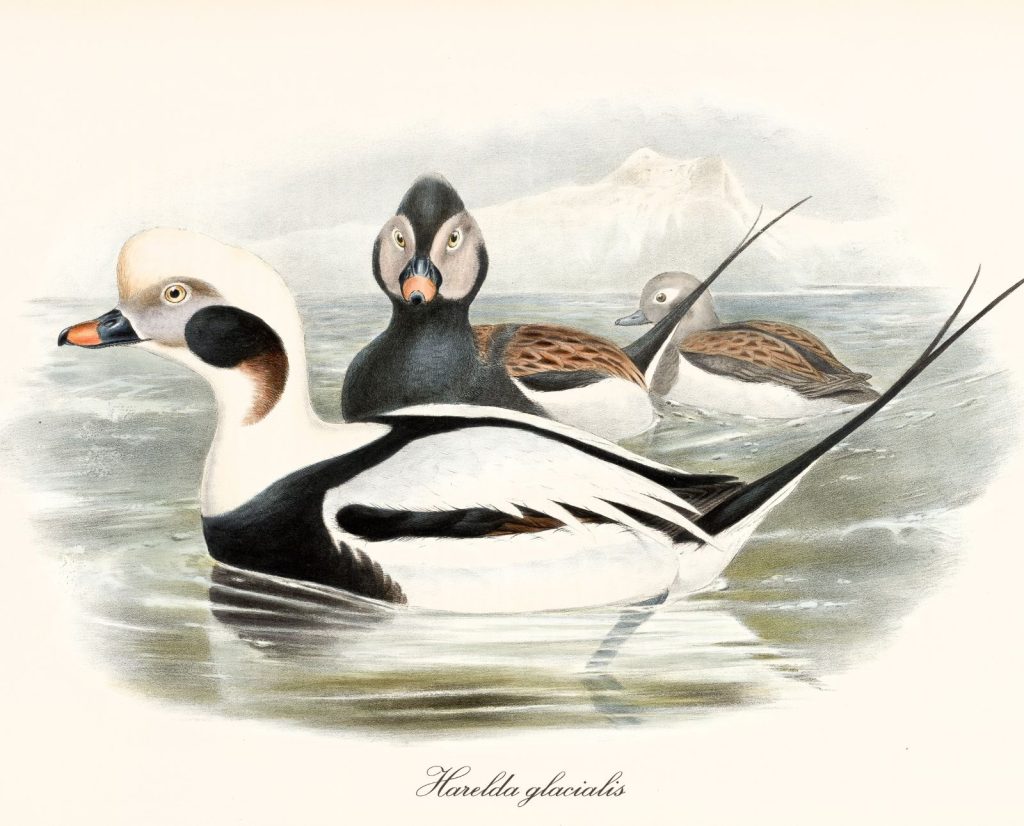
Long-tailed Duck Breeding Season and Nesting Behavior
According to the Audubon Society, breeding habits begin in early to mid winter when the ducks reach two years of age, often prior to migrating back to and around the arctic circle, when the drakes begin to seek out hens. Often, it’s possible to see a half dozen or more drakes chasing a single female, all the while being exceptionally vocal. Actual pairing will occur in early spring.
Nesting takes place on dry land adjacent to water, often in a depression lined with plant material and down. The hen will hide the nest between rocks or partially under brushy vegetation if available (Audubon Society/Ducks Unlimited). Females have also been observed nesting within very close proximity to other nesting females (All About Birds).
A female long-tailed duck will typically lay a clutch of six to nine eggs, without the help of the male rearing the young, and the eggs commonly being a pale grey colour. A typical incubation time period for a clutch of eggs is roughly 24 to 29 days to hatching, though if a clutch of eggs fails to hatch, these ducks are not known to attempt any renesting (Ducks Unlimited). Ducklings leave the nest with the hen almost immediately after they dry out after hatching (All About Birds).
Population Status and Conservation Concerns
Several issues face long-tailed ducks and current population densities. Mortality rates were considered high in the 1950s with these ducks becoming victims to entanglement in commercial fishing nets, especially in the Great Lakes region. and they’ve shown certain levels of sensitivity to lead exposure, especially around nesting areas in Alaska. At current time, it’s estimated that more than 50 percent of the population has been lost in the last fifty years (All About Birds).
It would be assumed that water quality and protection of nesting habitat would be a good starting point to ensure that populations of long-tailed ducks begin a process where they can rebound.
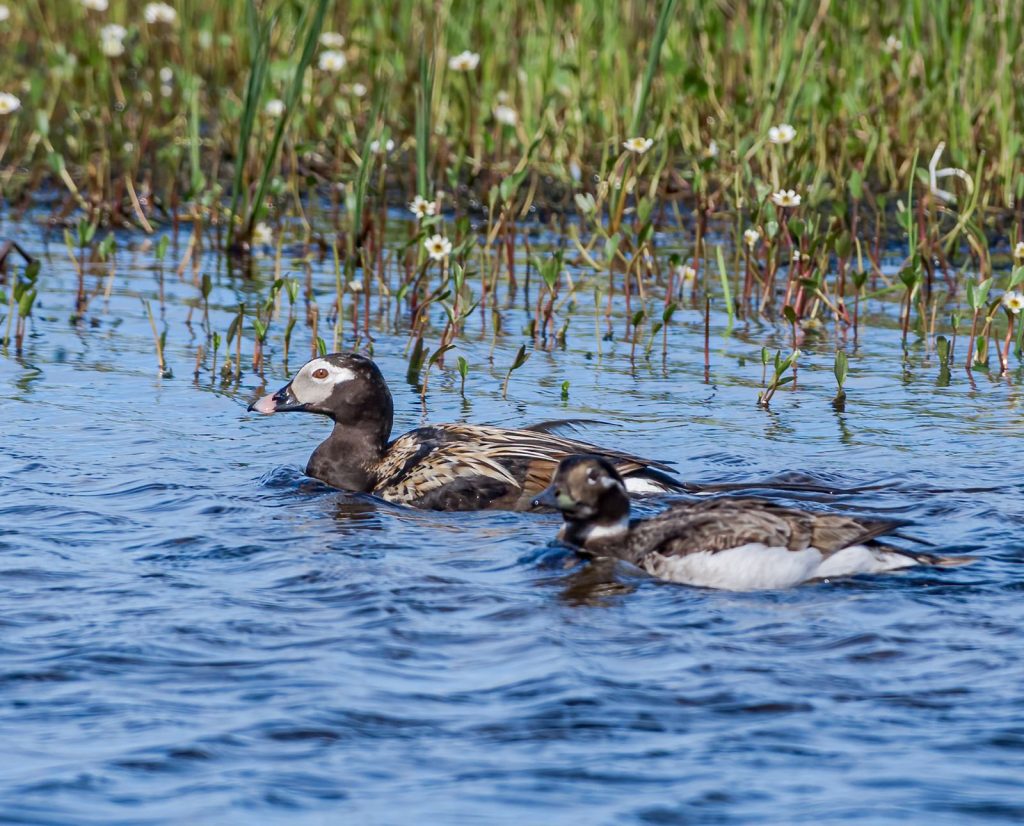
How to Hunt Long-Tailed Ducks
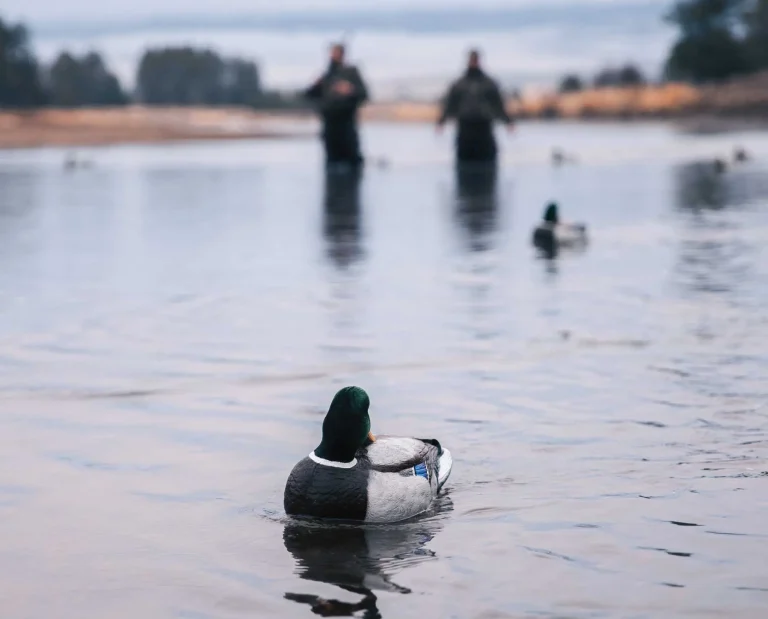
Hunting long-tailed ducks is considered a late season affair and most often involves layout boats with mixed spreads of decoys involving other species. Though they tend to flock toward their own species, long-tailed ducks will co-mingle with other sea and diving ducks, like buffleheads, scoters, and goldeneyes. Shore hunters need not fret though, because along the coasts as well as the Great Lakes regions, these ducks tend to use shoreline structure in order to feed without having to dive to great lengths in order to do so. Scouting ahead of time will help to locate potential areas of interest, but one thing that a hunter should keep in mind is how far they are willing to walk (or, if possible, kayak or canoe) to a location, how much equipment they intend to bring, and whether or not they will be able to wade out in order to both set up decoys as well as retrieve birds if they don’t have a dog trained to do so.
Read: Shore Hunting Sea Ducks – The Great Lakes and Coastal Waters
Long-tailed ducks tend to feed throughout the day, and if you know of a location that is shallow, protected from the late season gales as well as offers shoreline cover for a hiding waterfowl hunter, then this is the sort of place where you would want to start your search. Some of the best hunting for longtails occurs in the worst weather, and so having hunting locations picked out well in advance, as well as knowing how and when the ducks use them will work to the hunters’ advantage.
These ducks have a thick skin and dense layers of fat to insulate themselves in those cold subzero temperatures, and this can make them notoriously difficult to kill in one shot. Crippled birds, if a hunter isn’t careful, are a nasty reality and because of this, using a twelve gauge shotgun with No. 2s and a full choke is strongly recommended. Avoid shooting outside your range of comfort, and always be ready with that follow-up shot.