

Shore Hunting Sea Ducks: Tactics for the Great Lakes and Coastal Waters
Watch the wind, find feeding areas, and use simple decoy setups to hunt long-tailed ducks, buffleheads, and other big-water species from shore
It wasn’t all that long ago that I thought that hunting sea ducks was something that only those with seaworthy boats and piles of decoys could participate in. This notion, of course, was brought on by the countless online videos of giant, deep-hauled skiffs camouflaged with elaborate paint schemes floating around the middle of places like the Chesapeake Bay. But it’s funny how one trip can change everything.
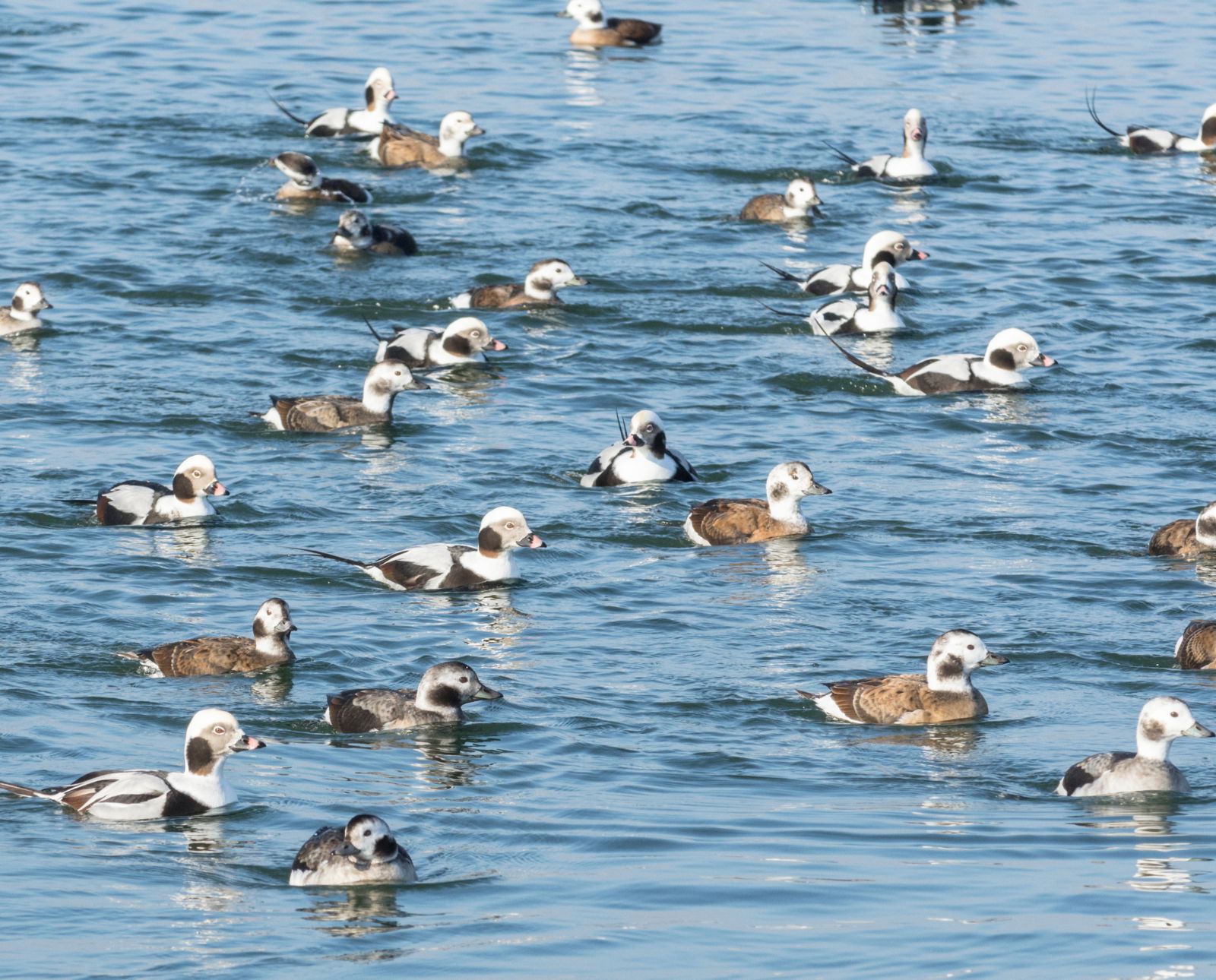
In this case, it was a chilly December morning. While in a friends’ boat trolling for lake trout, I noticed piles of long-tailed ducks banking into a shallow rocky bay sheltered from the wind by a tall bluff. They happily bobbed in the residual waves rippling in from the big lake. With a pair of binoculars, I could see that many of them were as close as ten yards from the shoreline. That’s when it clicked—these stereotypically hard-to-reach sea ducks were within shooting distance from shore.
The term “sea duck” is a broad term that paints several species of ducks onto one canvas. Eiders, scoters, goldeneyes, harlequin and long-tailed ducks all fit into this category, with species like buffleheads sort of living on the fringe. Often, it’s these species of ducks that are the very last to migrate. In my area, we don’t often start to see species like scoters and long-tails until December.
In the years since that lake trout trip, I’ve found that sea ducks can indeed be hunted successfully from shore. Sometimes, at least during the late season, it can be the most lucrative waterfowl hunting that I experience all year. Here’s how I learned to key in on some of the most fascinating species of ducks that I’ll hunt long after the mallards and scaup have moved south.
Shoreline Sea Duck Hotspots
Sea ducks can be notoriously fickle about the places where they like to feed. Additionally, they certainly get nervous about being close to shore when you add hunting pressure to the equation. However, there are a few common denominators about where to find them.
All these shore-bound locations will be entirely dependent on what the wind is doing, so keep this in mind. These ducks are hardy, but just like most animals, they don’t want to work any harder for their food then they already have to.
Secluded bays adjacent to wide open water, especially in and around the Great Lakes region, often attract sea ducks in huntable numbers. More specifically, they favor bays that get all kinds of sunlight as well as provide protection from the wind and subsequent late autumn swells. Goldeneyes, long-tailed ducks, and buffleheads especially seem to be attracted to these areas, but you never truly know what might show up. Ice flows can lock a good sea duck spot pretty quickly, and sea ducks tend to be more active as the temperatures drop. Keeping an eye on wind direction as the season progresses will prevent you from unnecessary disappointment.
Listen: History of the Labrador and Chesapeake Bay Retrievers – HDC Podcast
Another great place that sea ducks love to congregate around are points of land that jut out into open water. These points often create a pocket of calm water on the leeward side that isn’t getting blasted by wind and where ducks can feed. This is especially useful if you’re hunting the coast where ebbing tides alter the depth, creating bars of shallower water and where sea ducks can rest or feed for a while.
Boulder fields, broken dock pilings, and any other structures that could potentially harbor food items for sea ducks are all likely places where you should be exploring. Other areas that tend to attract sea ducks include jetties, harbour mouths, near-shore shoals, and especially for the dapper-looking long-tailed duck, the mouths of creeks and rivers.
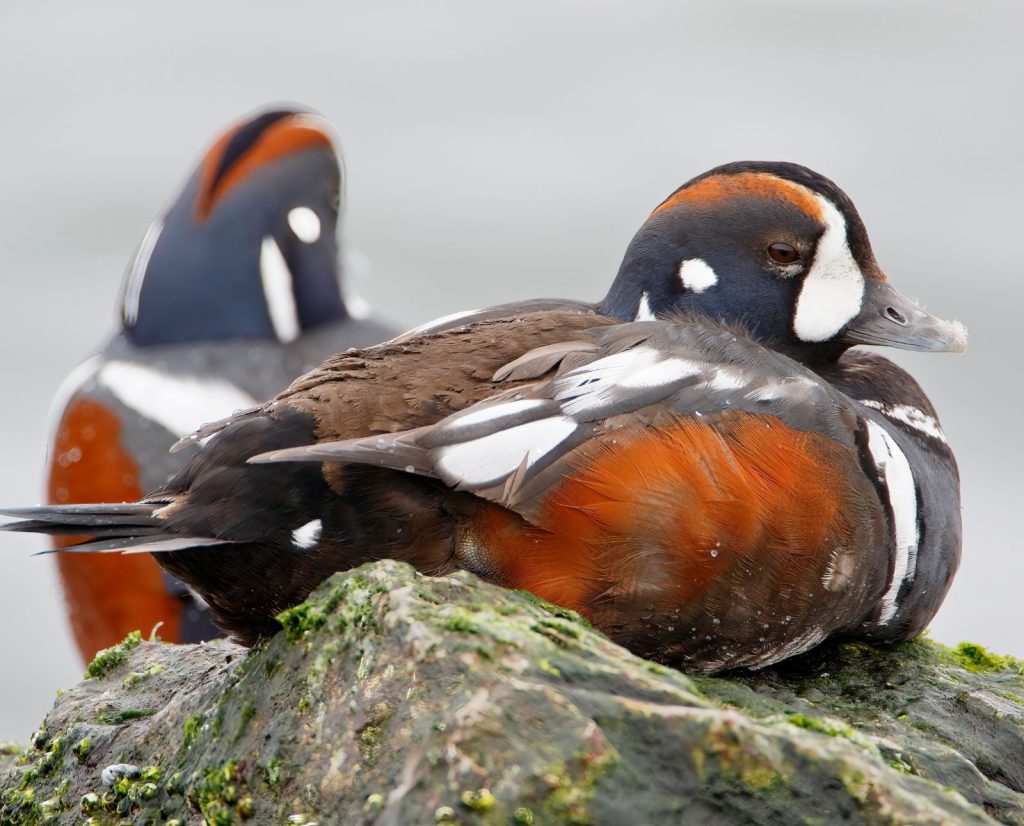
Scouting Sea Ducks Near Shore
Using a great pair of binoculars will help you to spot birds during peak feeding times without having to spook them from those areas that you’re scouting. However, when you’re scouting for sea ducks, it’s important to have specific points of interest picked out long before you actually begin scouting. Finding points of access that allow you to get to a prospective area will cut down on travel time and increase the number of locations that you can actually scout productively. Get an early start and cover as much ground as possible. With sea ducks, sometimes it pays to approach scouting the same way you might if you were looking for big game.
Timing is everything, and some sea ducks don’t migrate proper until quite late into autumn. Be sure to scout throughout the late autumn season prior to hunting. You’ll be glad that you did once the birds show up en-masse.
Great Lakes Region Sea Duck Tactics
Once you have established a few different areas that sea ducks are frequenting and you’ve answered the ever-important question of when they’re frequenting them, the next step is hunting. Being in your newfound spot early is important because you want time to get situated.
While concealment isn’t as important for hunting sea ducks (sometimes you can sit right out in the open, but it’s not always that way), I don’t put a whole lot of weight into how I set my decoy spread. However, I create a wider pocket than you might otherwise make for other species. Long-tailed ducks especially love to land in front of each other, which I suspect is out of competition for food with one another. For this reason alone, I set myself upwind of what would be considered the “head” of the spread.
If you’re hunting around shoreline structures, the birds will more or less tell you exactly where to be, but you have to be paying attention. If you’re noticing numbers landing one hundred yards down the shoreline from you, it pays to investigate why they want to be there. Don’t stick to a spot that isn’t producing and believe me, the ducks will let you know within about fifteen minutes prior to legal light.
In and around the Great Lakes, sea ducks sometimes seek the company of Canada geese. Adding a few geese to your sea duck decoys and shoreline can be very beneficial, especially if you’re hunting a flat, featureless section of shoreline and the ducks may need some extra coaxing in order to get them within shooting range.
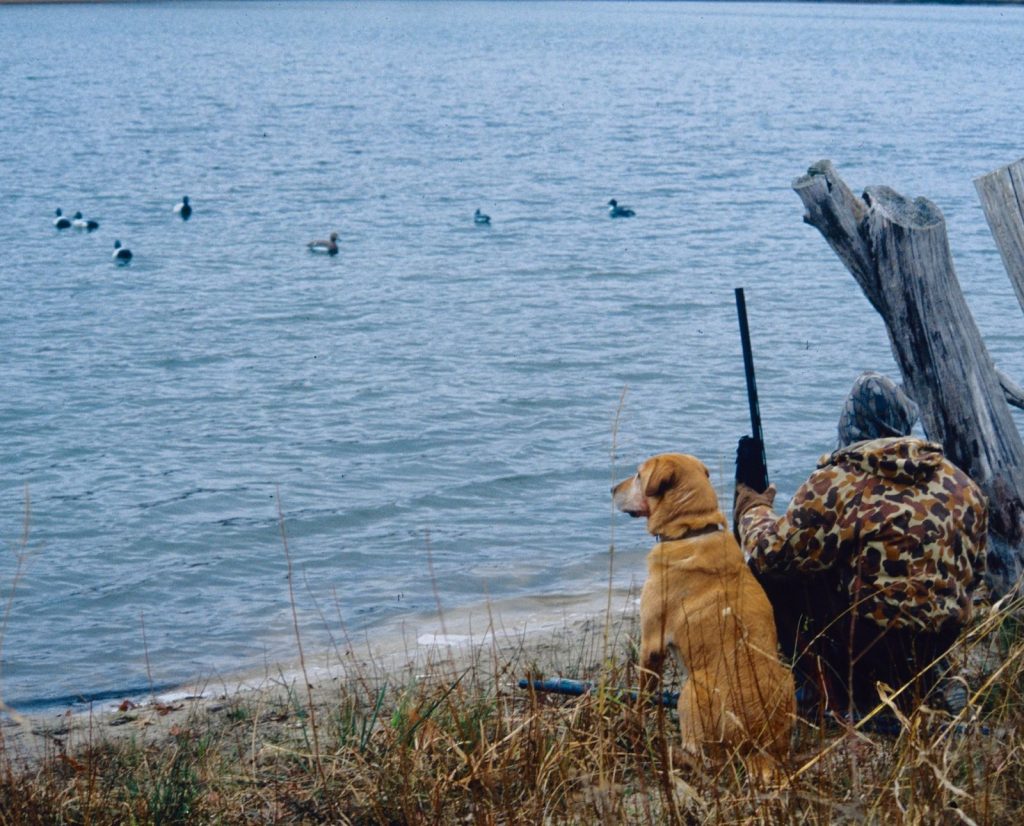
Shore Hunting Sea Ducks in Saltwater
For the ocean-going shore hunters, pay close attention to the tides and when the birds are using any given area. Then, plan your hunt accordingly. Sea ducks’ habits change drastically in regard to feeding and loafing areas when you start to incorporate significant tidal activity, and so should you. A feeding location during an outgoing tide may not be worth a damn during an incoming tide.
If I can offer any advice on setting decoys in saltwater, it’s to not overthink them too much. There have been many mornings of hunting where I got by just fine with a hiking pack loaded with a few bufflehead and long-tailed duck decoys. What I recommend is equipping your decoys with heavier anchors, as current and tides will potentially have your dekes bouncing out into open water where they can’t be retrieved.
Read: History of the Sinkbox – An Outlawed Waterfowling Rig
While I’m on the subject, because of those same tides and currents, it’s of the utmost importance that you have a plan on how you’re going to retrieve your birds, especially if you don’t have a good dog that’s going to accompany you on your sea duck hunt. My go-to solution is to set my decoys at a depth that won’t involve difficult wading. Sea ducks can be notoriously hard to kill on the first shot, so being confident enough to send a follow up shot downrange quickly will prevent you from watching a crippled scoter float off into the horizon.
Cooking Sea Ducks: Skinning vs. Plucking, Fat Color, and Flavor
It should go without saying that if you’re planning to hunt sea ducks, you better have a plan to eat them. Folks sometimes get really weird about consuming sea ducks mostly because they don’t know what to do with them. They might not necessarily understand that because of the duck’s unique diet, plucking the ducks may not be the best practice.
When you’re deciding whether to skin or pluck your ducks, look for the fat coloration that you see underneath their skin. If it looks reddish or an off-colored orange, that’s indicative of a bird that has been feeding on fish, crabs, crustaceans, or mollusks. The rendering fat will subsequently have an unpleasant odor while being cooked and an equally unpleasant taste.
If you’re seeing that sort of fat color—essentially anything other than creamy white—take the liberty of skinning those ducks (don’t be lazy, keep the legs). Be sure to remove all of the fat from the breasts, thighs, and legs. If you would like to err on the side of caution, you can also brine your sea duck breasts in red wine with chopped rosemary overnight.
Sea ducks are, if nothing else, a wonderful opportunity to keep hunting long after the mass migrations of puddle ducks have passed us by. Naturally, the question then becomes, “Why not?” When you consider the various species, unique hunting opportunities, and the places where sea ducks might take you, shore hunting sea ducks offers a well-rounded reason to keep the shotguns ready to go even after all of the mallards, wigeon, teal, and wood ducks have all come and gone.