


Tactics for Hunting Wood Ducks in Skinny Water
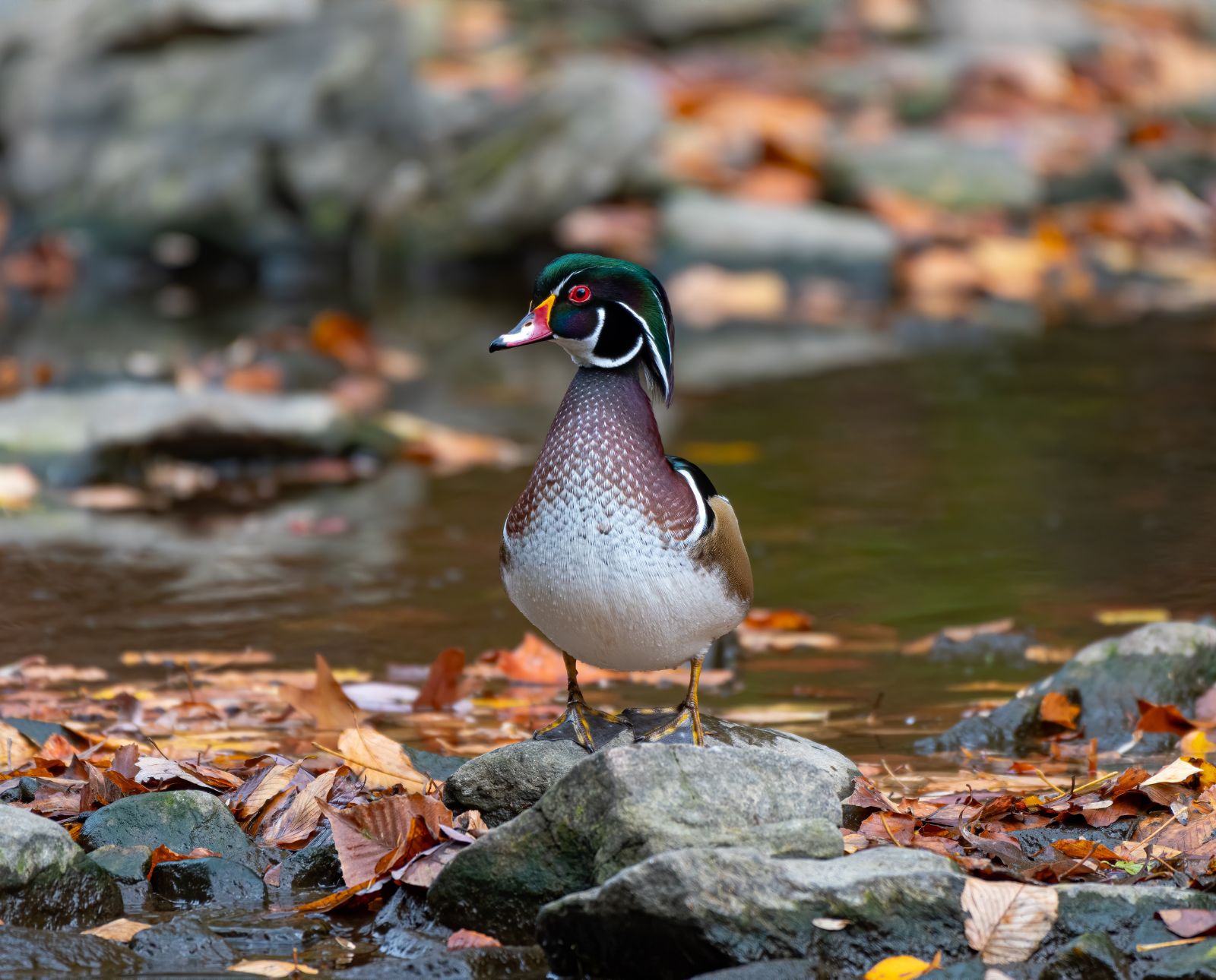
Beaver ponds, thin creeks, or other small water in ruffed grouse habitat can hold wood ducks. Here’s how to hunt them
In retrospect, I should have expected to run into wood ducks. A couple of oak trees towered over top of the shallow water. Acorns lined the steep shore where springtime flows eroded it away. We’d packed for upland birds, but when a flush came from underneath the eroded shoreline, neither myself nor my hunting partner were prepared for it.
Those wood ducks flew off, whistling and screeching the whole time while I studied the tiny creek they’d rushed out from. It was a trickle no more than six feet wide and twelve inches deep. But all the plucked feathers indicated those four woodies spent significant time here, and that was something we couldn’t help but note.
Wood ducks can be sneaky like that. How they find locations so seemingly insignificant still baffles me. However, what I have learned is that these skinny water puddle ducks are worth the time it takes to find these spots and hunt them effectively. Let’s dig right into how to go about it.
Scouting For Wood Ducks
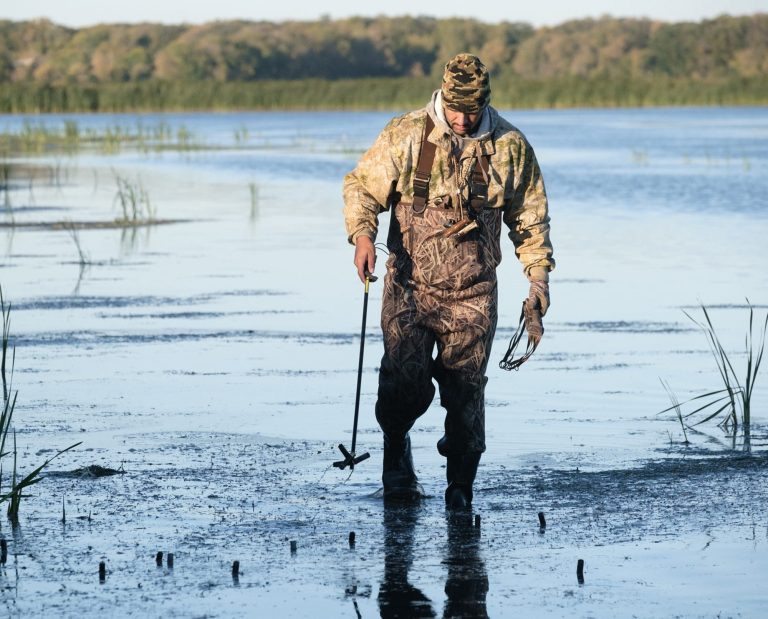
First of all, you’re going to want to scout. A lot. I start scouting essentially while I’m spring turkey hunting and continue throughout the summer while I’m foraging in the woods. These bodies of water, if you can even call them that, range anywhere from tiny wooded potholes in the middle of the woods, half-dried streams, flooded irrigation ditches, and anything in between. It’s important not to overlook a collection of H2O that you might otherwise walk right by, especially if it has the other important factor in this equation: food.
As mentioned, my first experience with these tiny water denizens was in a creek I could easily jump across at its widest point. I’m not entirely sure if those woodies would have been in there if it weren’t for the heavy crop of acorns that were constantly dropping onto the ground and into the creek. Up until that point, I didn’t realize wood ducks would even bother with acorns, but I couldn’t have been more wrong. The next day, we went back with some non-toxic shot and flushed those same four ducks, bagging two of them. When we processed those birds, they were full of acorns waiting to be crushed in their gizzards. Go figure.
Oak trees hanging over any body of water is going to attract wood ducks, but they’re not their only food source. Keep an eye out for things like wild grapes, which can be wood duck magnets, beech nuts, that sort of thing. All of those, and a whole lot more, are prime candidates for creating a wood duck smorgasbord. Insects round out the platter nicely, too.
Using Trail Cameras on Wood Ducks
One trick that has cut down the amount of times I walk into a spot is setting up trail cameras in mid-August and not bothering with them until roughly a week before waterfowl season opens. I know, I know, most folks with a good head on their shoulders won’t use a trail camera on a puddle, hoping to get eyes on a handful of wood ducks that may or may not use it. But hear me out because these microscopic watering holes often attract all the other wild game that I’ll be looking for later anyway. It never hurts to know who else is wandering the neighborhood.
Trail cameras allow you to gather the necessary intel without having to stick around too long, showing exactly which spots are shaping up to be productive while eliminating the spots that aren’t. Believe me, there will be quite a few of them.
When you find a spot that is consistently holding wood ducks, don’t take the camera down just because the season opened. Keep one there after you’ve hunted that particular location. Even though there may have been only a handful of ducks using it, I’ve found that these places will attract more birds as the early season progresses.
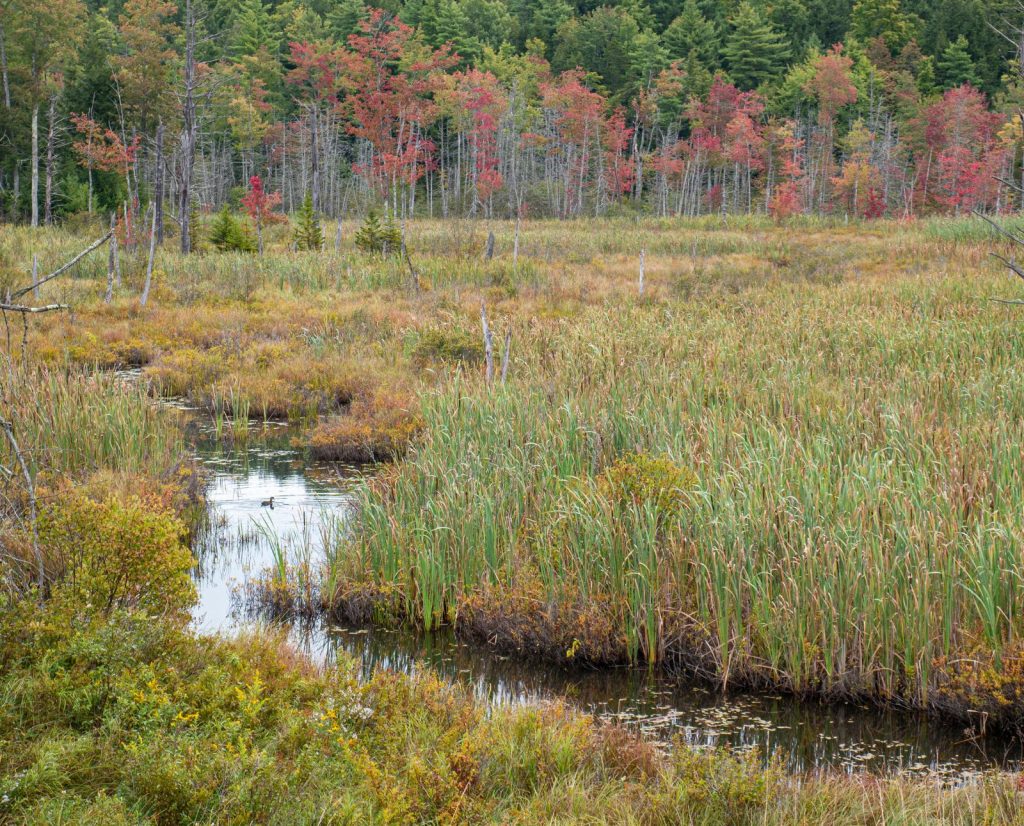
Choose Shot for Both Wood Ducks and Ruffed Grouse
Unexpected encounters with these deep forest wood ducks has made me reconsider how I set up hunts in those particular areas.
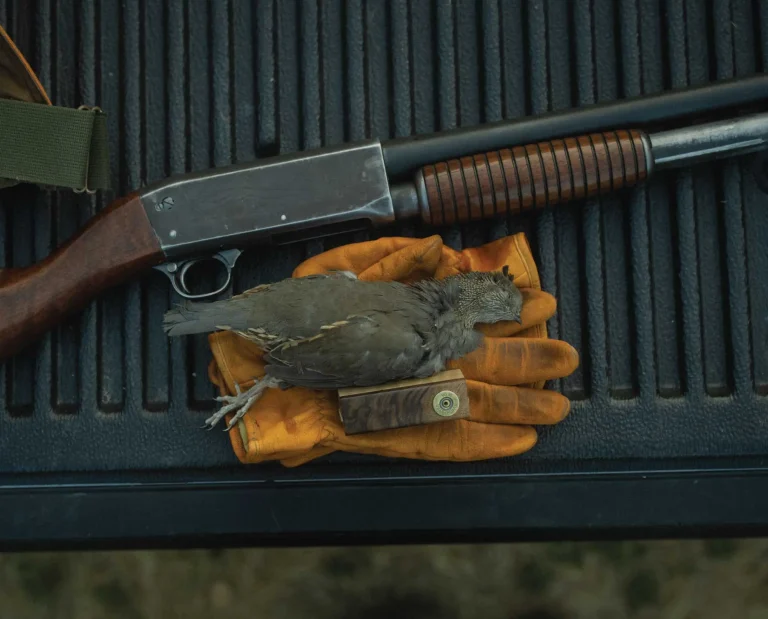
The places I find wood ducks are often where I also hunt ruffed grouse. When I head into the field, I almost exclusively run three inch shells loaded with No. 4 shot. It is still small enough to avoid ruining a ruffy that pops out of nowhere, but is also big enough to bring down a bulky wood duck drake, too. My shotgun has a modified choke, which really helps those number fours punch through heavier brush, which is almost a certainty when wood ducks pop out from nowhere.
Even though you’ve been to a spot a few times and know it well, you would not believe how tight wood ducks in small water will hold and how close they will let you get before they break from said cover. In some instances, it almost has a pheasant hunting feel about it, but the scenery is all wrong. Study the layout of the water you intend to hunt and make mental (or physical, if it helps) notes about which angle of approach will best conceal you and allow for the best shooting opportunity when the wood ducks inevitably take flight. Knowing these things ahead of time will put more birds belly up.
Conditions Will Vary—Note When and Where You Find Wood Ducks
One of the biggest lessons I’ve learned through the seasons of employing this tactic is from year to year the conditions will vary, often drastically. For example, three years ago, the area that I hunt had one of the wettest summers I’ve ever seen. Spots that normally would be dry in September were practically ponds. Because of this, we found far more birds in weird places, sometimes bathing right in the middle of ATV trails. The hunting was fantastic, the autumn stayed warm, and we took wood ducks straight through until the end of October.
Last year, not one spot where I would normally look for skinny water woodies survived the summer drought. I think I took a single wood duck and that was that. All this to say that some years will be prime, and some years it won’t be worth it to check wood duck spots out at all. As the years transpire, you will gain an intimate knowledge of which places tend to hold water better than others. From there, you can form an educated guess as to which places will be productive and which will not.
To close this out, I want to be very open and upfront about one thing: hunting wood ducks this way is not a numbers game. In fact, it’s the furthest thing from it. If you’re the kind of person who needs to hunt limits, this is definitely not for you. The best day I’ve had was four ducks, and that was after going to six different spots. But I will tell you this: each and every one of the wood ducks I’ve taken have been worth all the effort.


I enjoyed your article. Especially about the food they eat. I live in NC so wood ducks are locally born and also migratory. The locals early in the year are feeding where acorns and beech nuts are found. I guess they’d eat corn as well around flooded corn fields but here the two nuts, primarily acorns, are their normal food source. Scouting is really important for early ducks and during the year as well. Never thought about the trail camera for ducks, mostly I use one to see deer and turkeys, or whatever else goes thru the bottom at my house where a big lake is. Ducks are there too. I even had wood ducks try to nest in a hole in a big maple right behind my house at least 70 yds from any water. Coons eventually got into the hole and probably ate eggs, so no more nesting there. As for beech nuts I never knew anywhere to find them over water but did so when the lake was being built and saw numbers of woodies going to roost. Didn’t realize beech trees were hanging over the water. The next afternoon with a limit of 5 at that time, I shot an 870 as fast as I could load two more shells and my dog picked up 5 in roughly 2 minutes. They all were full of beech nuts. I left that spot as fast as I could, still hearing ducks coming in. Several days later and they were still coming in. Season was over then, October early season in NC. Thanks again for the information. Great for hunter and the reason we hunt, for the dog… Bryan Pennington, NC.
It’s important to note that in the US, at least, the Migratory Bird Treaty Act makes it is illegal to hunt waterfowl with lead shot, even while in posession of lead shot. For those who hunt ruffies with lead shot and stumble across a flushing pair of wood ducks, be sure to hold your fire.