

Maple-Smoked Pheasant
Demystify the perfect smoked game bird with this easy recipe for smoked whole pheasant
I think, for a lot of food lovers, there is a mysticism surrounding smoked meats. It could be because amazing smoked brisket is a rare art form, one that may take a decade or longer for a pitmaster to perfect.
Any upland hunter who has traveled state to state chasing quail likely has his or her short list of must-visit BBQ joints in Texas, Kansas, or Missouri (are there really any other BBQ states?).
The good news is that you don’t have to travel outside your backyard or spend more than a couple days learning how to smoke a great-tasting pheasant. There are a few crucial, simple steps, which I break down below.
To the best of my understanding, pitmasters debate the necessity of a pellicle on meat when smoking. What is a pellicle? It is basically an adhesive texture on the meat to which smoke can adhere. It could be a tacky layer of salt residue or a sugary marinade. In my experience, a solid pellicle is more crucial for smoking fish. What is certain is that you want your meat dry when placed in your smoker. Mushy or wet meat won’t smoke well.
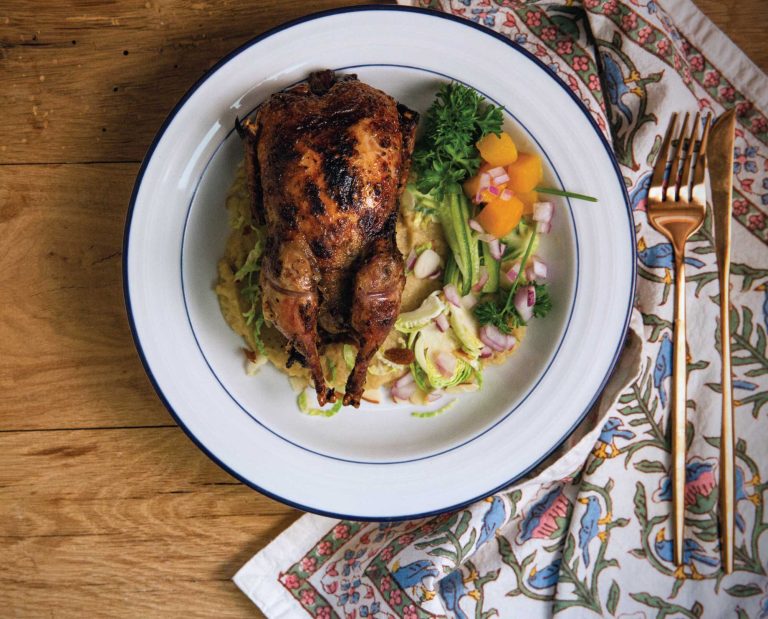
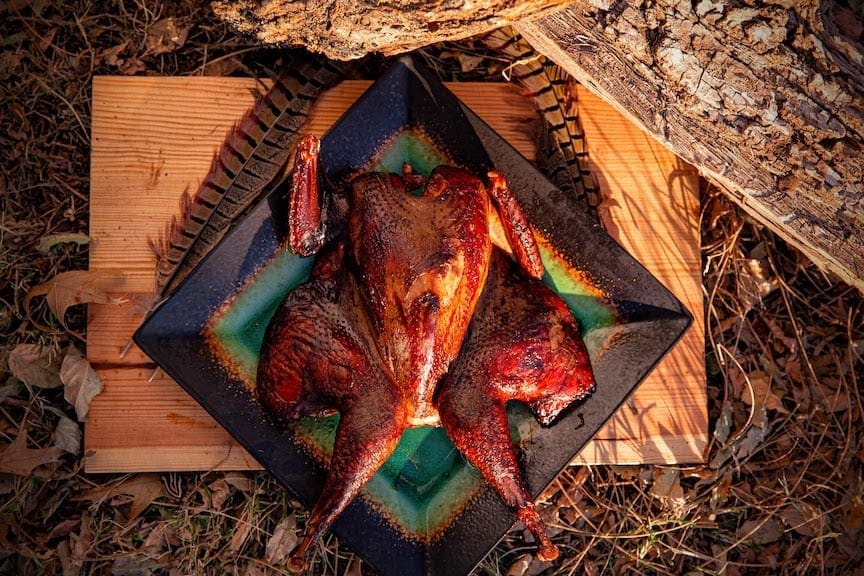
Because pheasant is so lean, a brine is crucial. I would suggest 12 hours of brining ahead of smoking (steps below). For similar reasons, I like to coat a lot of my birds in oil so as to not dry out the exterior. If you’re a pellicle believer, you may wish to coat the bird in a semi-drying oil like grapeseed. I used olive oil for the bird pictured here and can confirm it worked quite well, noting that smoke will penetrate a thin layer of olive oil.
Lastly, a word on spatchcocking. Removing the spine with sharp kitchen shears and opening the bird like a book allows the bird to cook more evenly. The cavity of a whole bird prevents complete efficiency in terms of heat circulation, which is a major reason why experts recommend never stuffing your Thanksgiving turkey with dressing while roasting.
With any wild bird, the time at which you pull the bird from the heat is often a matter of compromise. Wild bird thighs don’t have the fat content of domestic chickens, so they remain tough if undercooked; on the other hand, cooking them to ideal temperatures (~180F) can potentially overcook the breasts. In this procedure for smoking, an adequate brine will help the breast meat retain moisture even if it is slightly overcooked. However, if you don’t mind tougher thigh meat, you can aim for that pinpoint 160F internal temperature for breast meat.
Glazing with maple syrup while smoking is optional. I did not glaze the bird pictured here, but that is a method you may wish to try, especially if someone joining you at the table isn’t the most hardcore smoked meat fan. A glaze can make the meal a little more accessible to someone who might be unsure.
Ingredients for maple-smoked pheasant (makes 3-4 servings)
1 whole dressed plucked pheasant, spatchcocked, approximately 2 to 2-1/2 pounds
Maple wood for smoking
Maple syrup (optional)
For the brine:
1 gallon cold water
1/2 cup kosher salt
1/2 cup white sugar
1/2 cup whole black peppercorns
1 cup fresh garlic, smashed
8 ounces (1/2 pound) fresh ginger, smashed
Directions for making maple-smoked pheasant
- Follow brining instructions (including rinsing thoroughly), then spatchcock (remove spine with sharp kitchen shears) and pat the pheasant dry. Allow to fully dry in the fridge for 6-8 hours.
- An hour prior to smoking, coat with oil (either olive or grapeseed) and leave in fridge.
- Heat smoker with maple wood to 170-190 degrees Fahrenheit.
- Place pheasant in smoker breast-side-up and make sure there is adequate air flow to all sides.
- For the first hour and a half, check temps every 45 minutes. Ideal temps are 160F for inner-most portion of the breast and 170F-180F for inner-most portion of the thigh.
Optional: Apply a thin coat of maple syrup after checking temps. - Pheasant may take anywhere from 1-1/2 hours to 2 or more to reach ideal internal temperature.
- Once ideal temperatures are met, remove and cover with aluminum foil for 15 minutes prior to carving.
Enjoy! Reach out to me on Instagram (@WildGameJack) with any questions or comments and find my other wild game recipes here.