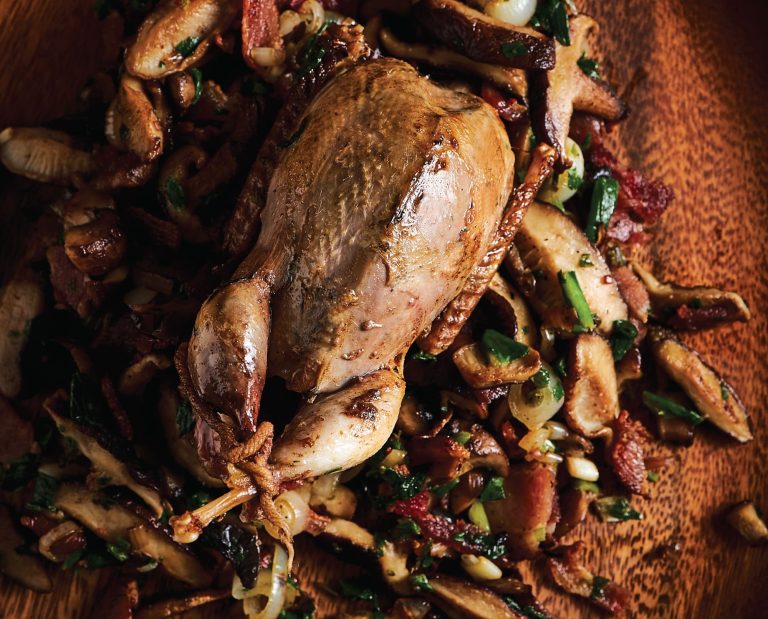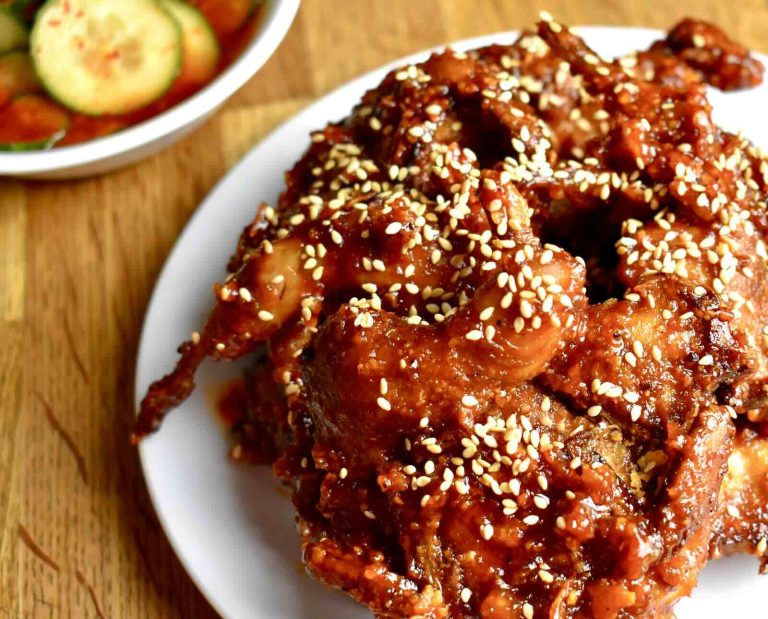


Roasted Ruffed Grouse with Wild Rice Stuffing
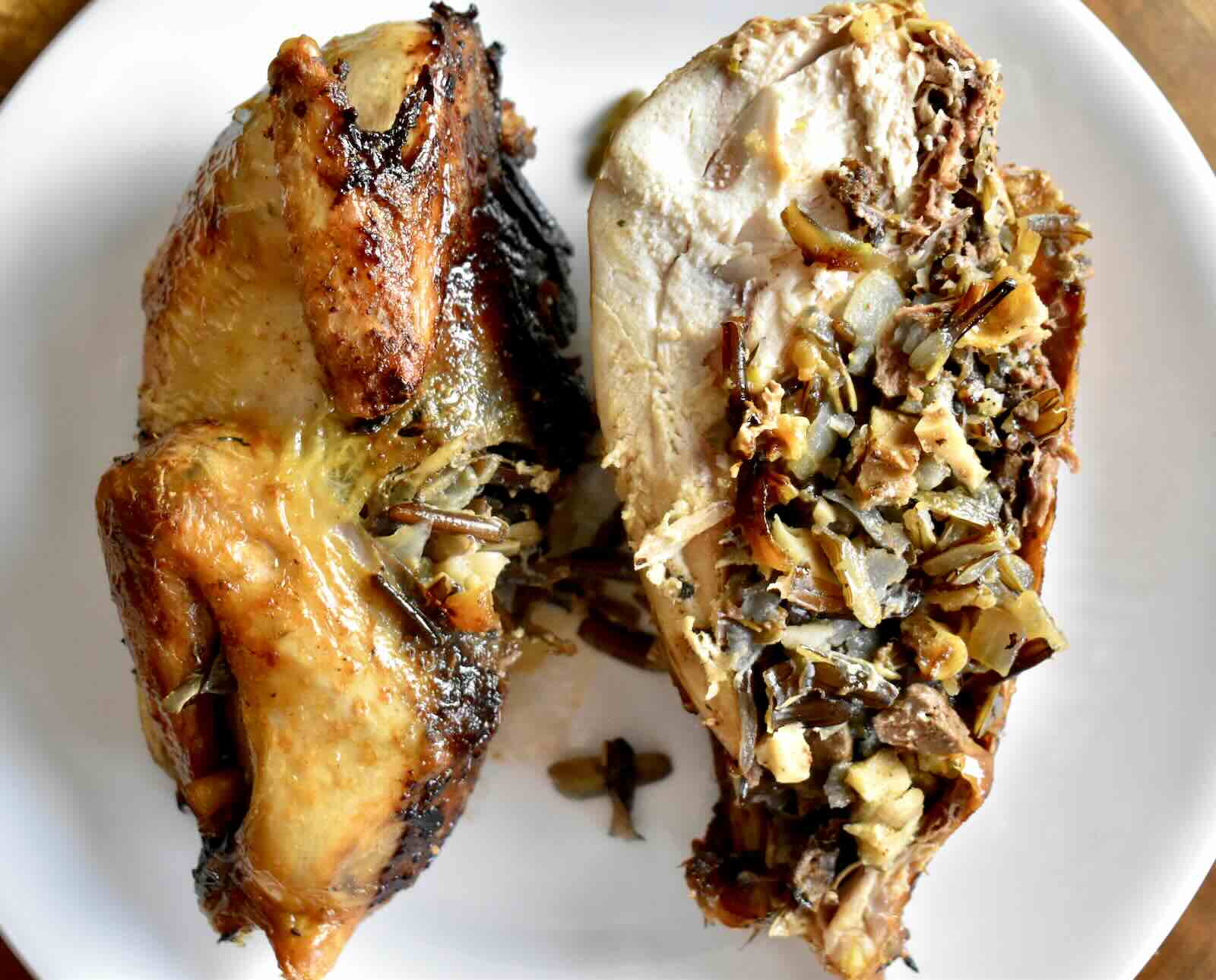
A wild, foraged bird stuffing using grouse giblets, hen of the woods mushrooms, and wild rice
The first time I cooked wild rice, I wasn’t expecting it to surprise me. I’d eaten “wild rice” before, the kind you find in commercial boxed blends: stiff, chewy, and more texture than flavor. What I had this time was something different. The grains were long and slender, almost black, with the faintest iridescent sheen. It came from a small producer in northern Minnesota and was labeled manoomin, hand-harvested by members of the Red Lake Nation.
I simmered it gently in water until the grains puffed and split, then tossed it with browned butter and mushrooms. It was earthy, nutty, almost smoky; nothing like what I remembered from those grocery store blends. I was quickly learning that the traditional grain of Canada and the northern states was something else entirely.
Wild rice is not technically rice at all, but an aquatic grass; Zizania palustris is the most commonly harvested species in the United States. It’s native to North America, and for thousands of years it has played a central role in the food systems and traditions of many Indigenous peoples, particularly the Anishinaabe (Ojibwe) of the Great Lakes region. According to Anishinaabe oral history, their ancestors migrated west from the Atlantic Coast, guided by a prophecy that told them to settle where “food grows on the water.” When they found the vast beds of wild rice waving in the shallow lakes and slow rivers of present-day Minnesota, Wisconsin, and Ontario, they knew they had arrived.
Harvesting wild rice is a labor-intensive act, done by canoe in late summer or early fall, when the grains are mature but haven’t yet dropped into the water. One person paddles while another gently knocks ripe grains into the boat using a pair of cedar sticks. It’s a rhythm, a partnership between people and plant that hasn’t changed much in centuries. The canoes may not necessarily be made from birch bark, and the parching equipment may be modern, but the family gathering around the harvest probably looks the same as it always has.
Of course, not all wild rice is created equal. Much of what’s sold in supermarkets today comes from large-scale cultivated paddies, mostly in California. These “wild rice” operations were developed in the 20th century and use controlled flooding and modern harvesting equipment, producing a more uniform product that’s generally darker, denser, and less flavorful than true hand-harvested rice. Most people’s introduction to “wild rice” has been this non-traditional paddy rice that is anything but wild.
Strains of paddy rice have caused alarm in First Nations communities as ducks move the seeds from lake to lake, causing hybridization with native strains. Knowledge keepers in said communities have been working hard to keep their rice patches pure and to keep them growing sustainably.
In a time when many are looking back to traditional foods for meaning, health, and sustainability, wild rice stands tall. It is a wild food that has not yet been fully tamed; a grain that resists commodification; a seed that still honors its roots. To eat it is to taste history, to support Indigenous sovereignty, and to celebrate a uniquely North American heritage.
I find that it always goes best with other wild ingredients. In this case, that happens to be roasted ruffed grouse and foraged hen of the woods mushrooms, all of which can be harvested around the same time.

Roasted Ruffed Grouse with Wild Rice Stuffing
Ingredients
Method
- Heat up the water in a pot and add the salt and sugar. Stir until completely dissolved. Let the water cool down to at least room temperature, then add the whole grouse, ensuring they’re submerged in the water. Put the pot in the fridge and brine the grouse for 5-8 hours.
- Drain and dry the birds with paper towels.
- Boil rice for 45 minutes or until tender.
- In a skillet over medium heat, melt the 2 tablespoons of butter and add the mushrooms and the onion. Cook for 8 minutes. Add the giblets and garlic and cook for another 5 minutes. Add the cooked wild rice. Add the thyme leaves, salt, and pepper to taste.
- Stuff the rice mixture into the cavities of the birds. Rub the 1/4 cup of butter all over each bird. If the skin is still intact, be sure to rub some butter in under the skin, especially over the breasts. Season the exterior of the birds generously with salt and pepper.
- Preheat oven to 475°F.
- Put the birds on a sheet pan fitted with a rack, or in an oven-proof skillet and put in the oven for 15 minutes. Reduce the temperature to 350°F and continue cooking the grouse for an additional 15-20 minutes, basting with any accumulated butter from the bottom of the skillet.
- Remove the grouse from the oven, cover with foil, and let rest for 10-15 minutes before serving. Enjoy!