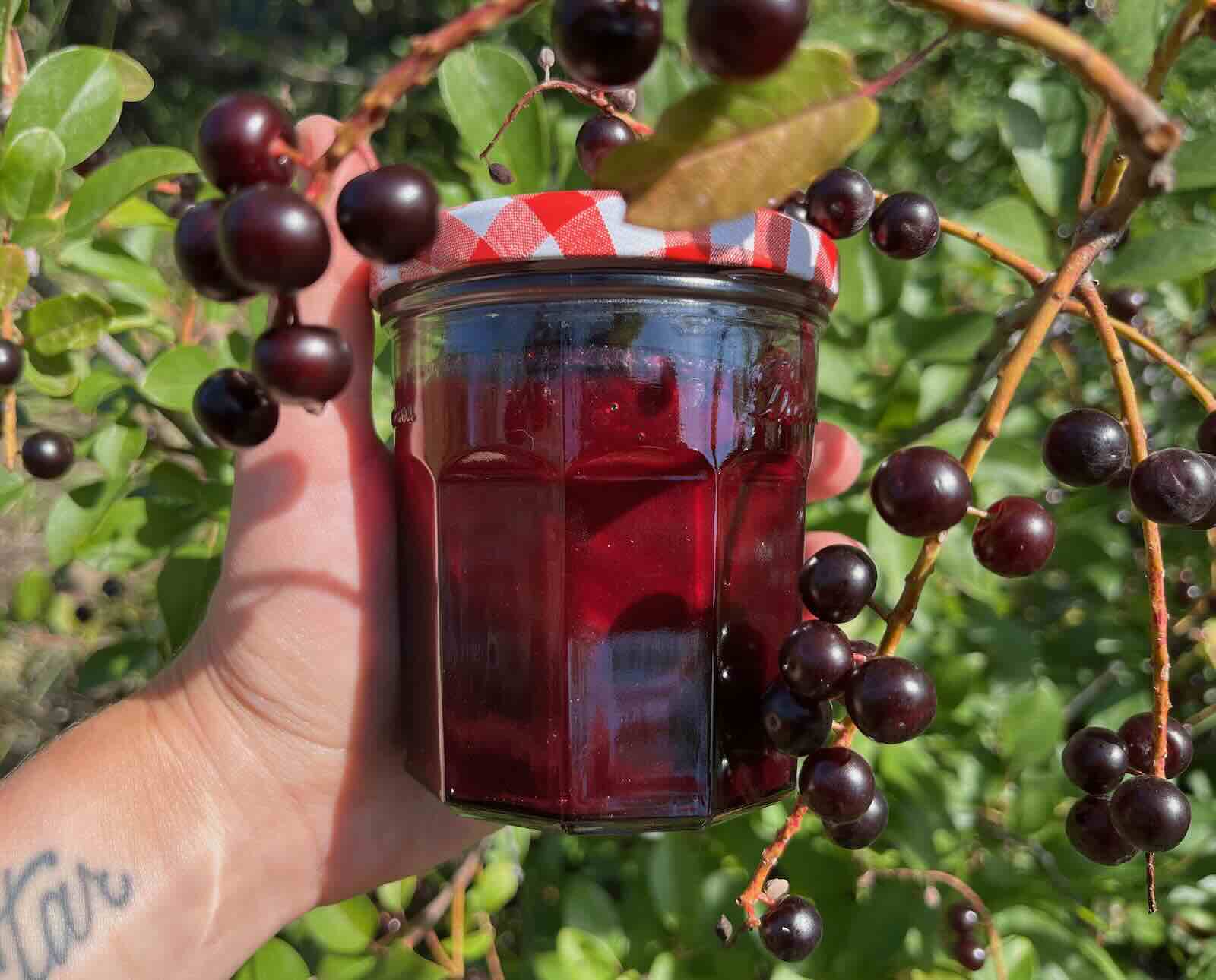
Clean your chokecherries. Remove stems, leaves, bugs, twigs, and other debris from your berries. Rinse the berries well, removing dust and dirt, especially if your berries grew next to a road.
Make chokecherry juice. Place your berries in your jam pot along with 1.5 cups of water. Bring it to a simmer. Cook the berries for 30-45 minutes, stirring occasionally and mashing them until they release all their juices.
Strain the juice mixture. Set your fine mesh strainer over another large pot and spoon the berry mixture into the strainer. If you want a clear jelly, allow gravity to pull the juice into the pot; don’t squish any berries. If you don’t mind cloudy jelly and prefer to get every ounce of juice available, squeeze your berries through the cheesecloth over the strainer. Personally, I like to squish the berries while wearing nitrile gloves without using cheesecloth. I think it’s more effective than using cheesecloth, and the gloves keep my hands from getting stained. Measure your strained juice. If you started with 10 lbs of berries, you’ll likely have about 5 cups of juice. Place the measured juice into the jam pot and add at least 2.5 cups of sugar. You can add up to 5 cups of sugar, depending on how sweet you want your jelly to be. Taste the juice to see if you’d like more sugar after adding 2.5 cups.
Bring your juice-sugar mixture to a boil over medium-high heat. Stirring frequently, continue to boil it until it comes to temperature. Because of my elevation, I removed my jelly from the heat when it reached 205 F. It took about 30 minutes for it to reach 205 F.Your jelly will bubble aggressively as it reaches your ideal temperature. Be careful not to let it boil over. Additionally, the near-temp bubbling looks different from the initial boiling. Look for this change in bubbling characteristics to avoid removing your jelly from the heat too soon, in which case, you’ll end up with syrup. Test the readiness of your jelly by dripping a bit of it onto a plate that’s been in the freezer. If the drops keep their shape and don’t run after 30 seconds, it’s entered the gel stage. If your drips run, your mixture is still in the syrup stage.
When your jelly reaches the gel stage, pull it from the heat and let it cool. While it’s still warm but not hot, pour it into your 12 oz glass jars. If you plan to freeze your jelly, leave an inch of space at the top of your jar.
Refrigerate, freeze, or can your jelly. It will last several months in the refrigerator and indefinitely in the freezer or a sealed can.